×
Request Free Sample ×

Kindly complete the form below to receive a free sample of this Report

* Please use a valid business email

Leading companies partner with us for data-driven Insights

clients tt-cursor
Hero Background

South Korea Mitochondrial Myopathy Diagnosis Treatment Market

ID: MRFR/HC/55214-HCR
200 Pages
Rahul Gotadki
February 2026

South Korea Mitochondrial Myopathy Diagnosis and Treatment Market Research Report: Size, Share, Trend Analysis By Types (Mitochondrial Encephalomyopathy, Lactic Acidosis and Stroke-Like Episodes, Progressive External Ophthalmoplegia, Myoclonic Epilepsy with Ragged Red Fibers, Mitochondrial Neurogastrointestinal Encephalopathy Syndrome, Kearns–Sayre Syndrome, Mitochondrial DNA Depletion Syndrome, Pearson Syndrome, Leigh Syndrome, Neuropathy, Ataxia, others), By Diagnostic Test (Genetic Tests, Muscle Biopsy, Biochemical Test), By Deployment Models (On-Premise, Cloud-Based) and By Therapy (Supportive Therapy, Targeted Therapy) - Growth Outlook & Industry Forecast 2025 To 2035

Share:
Download PDF ×

We do not share your information with anyone. However, we may send you emails based on your report interest from time to time. You may contact us at any time to opt-out.

South Korea Mitochondrial Myopathy Diagnosis Treatment Market Infographic
Purchase Options

South Korea Mitochondrial Myopathy Diagnosis Treatment Market Summary

As per Market Research Future analysis, the South Korea mitochondrial myopathy-diagnosis-treatment market size was estimated at 650.0 USD Million in 2024. The South Korea mitochondrial myopathy-diagnosis-treatment market is projected to grow from 699.21 USD Million in 2025 to 1450.0 USD Million by 2035, exhibiting a compound annual growth rate (CAGR) of 7.5% during the forecast period 2025 - 2035

Key Market Trends & Highlights

The South Korea mitochondrial myopathy-diagnosis-treatment market is experiencing significant growth driven by technological advancements and increasing awareness.

  • Advancements in genetic testing are enhancing the accuracy of mitochondrial myopathy diagnoses.
  • The integration of innovative therapies is transforming treatment options for patients with mitochondrial disorders.
  • Collaboration between research institutions and industry stakeholders is fostering rapid development in the market.
  • Rising prevalence of mitochondrial disorders and government support initiatives are key drivers propelling market growth.

Market Size & Forecast

2024 Market Size 650.0 (USD Million)
2035 Market Size 1450.0 (USD Million)
CAGR (2025 - 2035) 7.57%

Major Players

Genzyme Corporation (US), Sarepta Therapeutics (US), Astellas Pharma Inc. (JP), Pfizer Inc. (US), Bristol-Myers Squibb Company (US), Eli Lilly and Company (US), Novartis AG (CH), Roche Holding AG (CH)

Our Impact
Enabled $4.3B Revenue Impact for Fortune 500 and Leading Multinationals
Partnering with 2000+ Global Organizations Each Year
30K+ Citations by Top-Tier Firms in the Industry

South Korea Mitochondrial Myopathy Diagnosis Treatment Market Trends

The mitochondrial myopathy-diagnosis-treatment market in South Korea is currently experiencing notable developments. This growth is driven by advancements in medical technology and an increasing understanding of mitochondrial diseases. The rise in awareness among healthcare professionals and patients regarding mitochondrial myopathy has led to enhanced diagnostic capabilities. This is reflected in the growing adoption of genetic testing and advanced imaging techniques, which facilitate earlier and more accurate diagnoses. Furthermore, the South Korean healthcare system is increasingly prioritizing the integration of innovative treatment options, including enzyme replacement therapies and gene therapies, which may offer new hope for patients suffering from this debilitating condition. In addition, the collaboration between research institutions and pharmaceutical companies appears to be fostering a more robust pipeline of potential therapies. This synergy is likely to enhance the development of targeted treatments tailored to the specific genetic mutations associated with mitochondrial myopathy. As the population ages and the prevalence of mitochondrial disorders potentially rises, the demand for effective diagnostic and therapeutic solutions in the mitochondrial myopathy-diagnosis-treatment market is expected to grow. Overall, the landscape is evolving, with a focus on improving patient outcomes through cutting-edge research and technology.

Advancements in Genetic Testing

The mitochondrial myopathy-diagnosis-treatment market is witnessing a surge in the utilization of genetic testing. This trend is largely attributed to the increasing recognition of the genetic basis of mitochondrial diseases. Enhanced testing methods allow for more precise identification of mutations, which can lead to tailored treatment strategies. As healthcare providers become more adept at interpreting genetic data, the potential for personalized medicine in this field expands.

Integration of Innovative Therapies

There is a growing emphasis on integrating innovative therapies within the mitochondrial myopathy-diagnosis-treatment market. New treatment modalities, such as gene therapy and enzyme replacement therapy, are being explored and developed. These therapies aim to address the underlying causes of mitochondrial dysfunction, potentially improving patient quality of life. The ongoing research and clinical trials in South Korea suggest a promising future for these advanced treatment options.

Collaboration Between Research and Industry

Collaboration between academic research institutions and the pharmaceutical industry is becoming increasingly prevalent in the mitochondrial myopathy-diagnosis-treatment market. This partnership is fostering the development of novel therapies and improving the understanding of mitochondrial diseases. By pooling resources and expertise, stakeholders are likely to accelerate the discovery and commercialization of effective treatments, ultimately benefiting patients.

South Korea Mitochondrial Myopathy Diagnosis Treatment Market Drivers

Growing Patient Advocacy and Awareness

The rise of patient advocacy groups and increased public awareness regarding mitochondrial disorders are driving factors in the mitochondrial myopathy-diagnosis-treatment market. Organizations dedicated to educating patients and healthcare professionals about these conditions are emerging in South Korea, leading to heightened awareness and understanding. This advocacy is crucial for promoting early diagnosis and treatment, which can significantly improve patient quality of life. As more individuals become informed about mitochondrial myopathy, the demand for specialized diagnostic and treatment options is likely to increase, thereby propelling market growth. The influence of these advocacy groups may also lead to more comprehensive healthcare policies.

Emerging Therapeutic Options and Research

The development of novel therapeutic options is a significant driver for the mitochondrial myopathy-diagnosis-treatment market. Ongoing research into gene therapy, enzyme replacement therapy, and other innovative treatments is gaining momentum in South Korea. Clinical trials are underway, exploring the efficacy of these new therapies, which could potentially transform the treatment landscape for mitochondrial disorders. The market is expected to see a surge in investment, with estimates suggesting that the therapeutic segment could grow by over 30% in the next five years. As new treatments become available, healthcare providers will likely seek to incorporate these options into their practice, further stimulating market growth.

Government Support and Funding Initiatives

Government support and funding initiatives play a pivotal role in shaping the mitochondrial myopathy-diagnosis-treatment market. In South Korea, the government has implemented various programs aimed at increasing research funding for rare diseases, including mitochondrial disorders. This financial backing is essential for fostering innovation in treatment options and improving diagnostic methodologies. For instance, the South Korean government allocated approximately $50 million in 2025 for research into rare genetic disorders, which is expected to benefit the mitochondrial myopathy-diagnosis-treatment market. Such initiatives not only enhance research capabilities but also encourage collaboration between academic institutions and the pharmaceutical industry.

Rising Prevalence of Mitochondrial Disorders

The increasing incidence of mitochondrial disorders in South Korea is a crucial driver for the mitochondrial myopathy-diagnosis-treatment market. Recent studies indicate that mitochondrial myopathy affects approximately 1 in 5,000 individuals, leading to a growing demand for effective diagnostic and therapeutic solutions. As awareness of these conditions rises, healthcare providers are more likely to seek advanced diagnostic tools and treatment options. This trend is further supported by the South Korean government's initiatives to enhance healthcare access and funding for rare diseases, which could potentially increase market growth. The focus on early diagnosis and personalized treatment plans is likely to drive innovation in the mitochondrial myopathy-diagnosis-treatment market.

Technological Advancements in Diagnostic Tools

Technological innovations in diagnostic tools are significantly impacting the mitochondrial myopathy-diagnosis-treatment market. The introduction of next-generation sequencing (NGS) and advanced imaging techniques has improved the accuracy and speed of diagnosing mitochondrial disorders. In South Korea, the adoption of these technologies is expected to grow, with the market for genetic testing projected to reach approximately $200 million by 2026. Enhanced diagnostic capabilities not only facilitate early detection but also enable tailored treatment approaches, thereby improving patient outcomes. As healthcare providers increasingly rely on sophisticated diagnostic tools, the mitochondrial myopathy-diagnosis-treatment market is likely to experience substantial growth.


Market Segment Insights

By Type: Mitochondrial Encephalomyopathy (Largest) vs. Leigh Syndrome (Fastest-Growing)

The South Korea mitochondrial myopathy-diagnosis-treatment market showcases a diverse array of segment values, with Mitochondrial Encephalomyopathy holding the largest share. This segment is recognized for its notable clinical manifestations and complex treatment regimens, making it the focal point of market activities. In contrast, Leigh Syndrome, while having a smaller market share, is rapidly gaining attention due to rising awareness and advancements in diagnostic technologies. Growth trends within this segment reflect a combination of increasing prevalence rates and enhanced research initiatives. The demand for effective treatment solutions is stimulated by ongoing clinical trials and innovation in therapeutic approaches. As healthcare professionals gain more insights into mitochondrial disorders, segments like Leigh Syndrome are expected to experience accelerated growth, driven by advancements in genetic testing and tailored treatment options.

Mitochondrial Encephalomyopathy (Dominant) vs. Leigh Syndrome (Emerging)

Mitochondrial Encephalomyopathy serves as a dominant segment in the South Korea mitochondrial myopathy-diagnosis-treatment market, characterized by significant clinical challenges and a diverse range of symptoms affecting the nervous system and muscles. This segment stands out due to its established treatment protocols and comprehensive management strategies, attracting a considerable patient base. Conversely, Leigh Syndrome is emerging as a key segment, fueled by advancements in genetic understanding and a growing need for innovative therapeutic solutions. With a unique presentation and evolving treatment landscape, Leigh Syndrome is capturing the interest of both researchers and healthcare providers, indicating its potential for rapid market expansion.

By Diagnostic Test: Genetic Tests (Largest) vs. Muscle Biopsy (Fastest-Growing)

In the South Korea mitochondrial myopathy-diagnosis-treatment market, Genetic Tests currently hold the largest market share among the diagnostic test segments, attributed to their high accuracy and the increasing awareness of genetic disorders. Muscle Biopsy, while smaller in share, is gaining traction due to its effectiveness in diagnosing muscle-related conditions directly, making it a crucial option for clinicians. The growth trends within the diagnostic segment are being driven by advancements in genetic testing technologies and an increasing prevalence of mitochondrial myopathy disorders. With an emphasis on personalized medicine, genetic tests are expected to continue dominating the market. Simultaneously, the rising adoption of muscle biopsy techniques reflects the demand for precise diagnostics, positioning it as the fastest-growing segment in this realm.

Genetic Tests (Dominant) vs. Muscle Biopsy (Emerging)

Genetic Tests are characterized by their ability to provide definitive diagnoses through the identification of specific genetic mutations associated with mitochondrial myopathy. This dominance is underscored by their widespread acceptance in clinical practice, driven by greater healthcare access and advancements in testing methodologies. On the other hand, Muscle Biopsy serves as an emerging alternative, offering direct insights into muscle tissue pathology. Its growing utilization is influenced by the need for comprehensive diagnostic approaches. While Genetic Tests remain the dominant choice for initial diagnosis, Muscle Biopsy is quickly gaining recognition for its relevance in complex cases, thereby enhancing the overall diagnostic landscape.

By Therapy: Supportive Therapy (Largest) vs. Targeted Therapy (Fastest-Growing)

In the South Korea mitochondrial myopathy-diagnosis-treatment market, the distribution of market share between Supportive Therapy and Targeted Therapy showcases distinct characteristics. Supportive Therapy holds the largest share due to its established role in managing symptoms and improving the quality of life for patients. In contrast, Targeted Therapy, though initially smaller in market share, is gaining traction quickly as advancements in genetic understanding lead to tailored treatment options that address the specific needs of patients more effectively. The growth trends in the therapy segment reflect a broader shift towards personalized and more effective treatment modalities. Factors driving this growth include increased awareness of mitochondrial myopathy, ongoing research and development efforts, and the potential for novel treatments to enter the market. As healthcare providers and patients alike recognize the benefits of targeted approaches, it is expected that the adoption of Targeted Therapy will accelerate, bringing innovation and improved outcomes to this domain.

Supportive Therapy (Dominant) vs. Targeted Therapy (Emerging)

Supportive Therapy remains the dominant approach within the South Korea mitochondrial myopathy-diagnosis-treatment market, primarily due to its focus on alleviating symptoms and enhancing patient comfort through various supportive measures. This therapy is well-established and widely practiced, addressing issues like muscle weakness and fatigue. Conversely, Targeted Therapy is emerging as a viable alternative, leveraging the latest scientific insights and biotechnology innovations to create more specific interventions. This segment is gradually capturing the interest of healthcare providers as it promises to address the underlying causes of mitochondrial disorders. Together, these therapies represent a balanced approach to treating mitochondrial myopathy, blending established practices with cutting-edge advancements.

Get more detailed insights about South Korea Mitochondrial Myopathy Diagnosis Treatment Market

Key Players and Competitive Insights

The mitochondrial myopathy-diagnosis-treatment market is characterized by a dynamic competitive landscape, driven by increasing awareness of rare diseases and advancements in genetic therapies. Key players such as Genzyme Corporation (US), Astellas Pharma Inc. (JP), and Roche Holding AG (CH) are actively shaping the market through innovative product development and strategic partnerships. Genzyme Corporation (US) focuses on enhancing its portfolio of enzyme replacement therapies, while Astellas Pharma Inc. (JP) emphasizes research into gene therapies, indicating a trend towards personalized medicine. Roche Holding AG (CH) is leveraging its strong diagnostic capabilities to improve patient outcomes, suggesting a collective shift towards integrated treatment approaches that combine diagnostics and therapeutics.
In terms of business tactics, companies are increasingly localizing manufacturing to reduce costs and enhance supply chain efficiency. The market appears moderately fragmented, with several players vying for market share, yet the influence of major companies remains substantial. This competitive structure fosters innovation, as firms strive to differentiate their offerings in a crowded marketplace.
In October 2025, Genzyme Corporation (US) announced a collaboration with a leading South Korean biotech firm to develop a novel mitochondrial-targeted therapy. This partnership is strategically significant as it not only expands Genzyme's research capabilities but also enhances its presence in the Asian market, which is witnessing a surge in demand for advanced therapies. Similarly, in September 2025, Astellas Pharma Inc. (JP) launched a clinical trial for a groundbreaking gene therapy aimed at treating mitochondrial myopathy, reflecting its commitment to pioneering treatment options that could redefine patient care.
Moreover, in August 2025, Roche Holding AG (CH) unveiled a new diagnostic tool designed to identify mitochondrial disorders more accurately and swiftly. This innovation is crucial as it aligns with the growing emphasis on early diagnosis, which is essential for effective treatment. Roche's initiative underscores the importance of integrating diagnostics with therapeutic strategies, potentially setting a new standard in the market.
As of November 2025, current competitive trends are increasingly defined by digitalization, sustainability, and the integration of artificial intelligence (AI) in research and development processes. Strategic alliances are becoming more prevalent, as companies recognize the value of collaboration in accelerating innovation. The competitive landscape is likely to evolve, with a shift from price-based competition towards differentiation through technology, innovative therapies, and reliable supply chains. This transition suggests that companies that prioritize R&D and strategic partnerships will be better positioned to thrive in the future.

Key Companies in the South Korea Mitochondrial Myopathy Diagnosis Treatment Market include

Industry Developments

Recent developments in the South Korea Mitochondrial Myopathy Diagnosis and Treatment Market have highlighted advancements in drug development and diagnostic technologies. Companies such as Medytox and Samsung BioLogics are actively engaged in Research and Development efforts to improve treatment protocols. In particular, Medytox has been collaborating with global pharmaceutical leaders to enhance therapeutic options for mitochondrial disorders, while Samsung BioLogics has expanded its biomanufacturing capabilities to support drug supply chains. Notably, in September 2023, DongA ST announced its focus on clinical trials for mitochondrial myopathy therapies, showcasing an increase in investment and innovation in this niche area. 

There is also growing interest from Astellas Pharma and Janssen Biotech in gene therapy approaches, which are gaining traction as potential treatment avenues. Additionally, the market valuation is experiencing significant growth, driven by rising disease awareness and healthcare investments within South Korea, which totaled approximately $186 billion in 2022, according to the Ministry of Health and Welfare. The trend of pharmaceutical mergers and acquisitions remains significant, with companies like Green Cross Corporation exploring strategic alliances to enhance their pipeline in mitochondrial therapies, reflecting a proactive market landscape in this field.


Future Outlook

South Korea Mitochondrial Myopathy Diagnosis Treatment Market Future Outlook

The mitochondrial myopathy diagnosis and treatment market is projected to grow at a 7.57% CAGR from 2025 to 2035, driven by advancements in genetic testing and personalized therapies.

New opportunities lie in:

  • Development of telemedicine platforms for remote patient monitoring
  • Investment in AI-driven diagnostic tools for early detection
  • Expansion of specialized rehabilitation programs for mitochondrial myopathy patients

By 2035, the market is expected to achieve substantial growth, driven by innovative treatment solutions.

Market Segmentation

South Korea Mitochondrial Myopathy Diagnosis Treatment Market Type Outlook

  • Mitochondrial Encephalomyopathy
  • Lactic Acidosis and Stroke-like Episodes
  • Progressive External Ophthalmoplegia
  • Myoclonic Epilepsy with Ragged Red Fibers
  • Mitochondrial Neurogastrointestinal Encephalopathy Syndrome
  • Kearns–Sayre Syndrome
  • Mitochondrial DNA Depletion Syndrome
  • Pearson Syndrome
  • Leigh Syndrome
  • Neuropathy
  • Ataxia
  • and Retinitis Pigmentosa

South Korea Mitochondrial Myopathy Diagnosis Treatment Market Therapy Outlook

  • Supportive Therapy
  • Targeted Therapy

South Korea Mitochondrial Myopathy Diagnosis Treatment Market Diagnostic Test Outlook

  • Genetic Tests
  • Muscle Biopsy
  • Biochemical Test

Report Scope

MARKET SIZE 2024 650.0(USD Million)
MARKET SIZE 2025 699.21(USD Million)
MARKET SIZE 2035 1450.0(USD Million)
COMPOUND ANNUAL GROWTH RATE (CAGR) 7.57% (2025 - 2035)
REPORT COVERAGE Revenue Forecast, Competitive Landscape, Growth Factors, and Trends
BASE YEAR 2024
Market Forecast Period 2025 - 2035
Historical Data 2019 - 2024
Market Forecast Units USD Million
Key Companies Profiled Genzyme Corporation (US), Sarepta Therapeutics (US), Astellas Pharma Inc. (JP), Pfizer Inc. (US), Bristol-Myers Squibb Company (US), Eli Lilly and Company (US), Novartis AG (CH), Roche Holding AG (CH)
Segments Covered Type, Diagnostic Test, Therapy
Key Market Opportunities Advancements in genetic testing and personalized therapies enhance prospects in the mitochondrial myopathy-diagnosis-treatment market.
Key Market Dynamics Rising demand for innovative therapies drives competition in the mitochondrial myopathy-diagnosis-treatment market in South Korea.
Countries Covered South Korea
Leave a Comment

FAQs

What is the expected market size of the South Korea Mitochondrial Myopathy Diagnosis and Treatment Market in 2024?

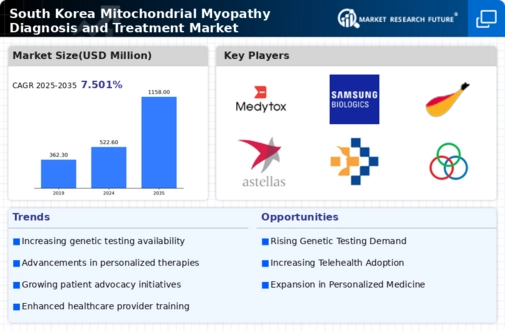
The South Korea Mitochondrial Myopathy Diagnosis and Treatment Market is expected to be valued at 522.6 million USD in 2024.

What will be the market value in 2035 for South Korea's Mitochondrial Myopathy Diagnosis and Treatment Market?

By 2035, the market is projected to reach a value of 1158.0 million USD.

What is the expected CAGR for the South Korea Mitochondrial Myopathy Diagnosis and Treatment Market from 2025 to 2035?

The market is anticipated to grow at a CAGR of 7.501% from 2025 to 2035.

Which type of mitochondrial myopathy is projected to have the highest market value in 2035?

Mitochondrial Neurogastrointestinal Encephalopathy Syndrome is expected to dominate the market with a valuation of 503.0 million USD in 2035.

What are the market values for Mitochondrial Encephalomyopathy in 2024 and 2035?

Mitochondrial Encephalomyopathy is valued at 104.5 million USD in 2024 and is expected to reach 225.0 million USD by 2035.

Who are the key players in the South Korea Mitochondrial Myopathy Diagnosis and Treatment Market?

Major players include Medytox, Samsung BioLogics, DongA ST, and Astellas Pharma.

What is the projected market size for Lactic Acidosis and Stroke-Like Episodes by 2035?

The market size for Lactic Acidosis and Stroke-Like Episodes is expected to reach 165.0 million USD in 2035.

How much is the market value for Myoclonic Epilepsy with Ragged Red Fibers in 2024?

In 2024, the market value for Myoclonic Epilepsy with Ragged Red Fibers is estimated at 60.0 million USD.

What challenges are currently influencing the South Korea Mitochondrial Myopathy Diagnosis and Treatment Market?

Challenges include the complexity of diagnosis and the need for advanced treatment options.

What growth opportunities exist within the South Korea Mitochondrial Myopathy Diagnosis and Treatment Market?

Significant growth opportunities are present due to rising awareness of mitochondrial diseases and increased research funding.

Download Free Sample

Kindly complete the form below to receive a free sample of this Report

Compare Licence

×
Features License Type
Single User Multiuser License Enterprise User
Price $4,950 $5,950 $7,250
Maximum User Access Limit 1 User Upto 10 Users Unrestricted Access Throughout the Organization
Free Customization
Direct Access to Analyst
Deliverable Format
Platform Access
Discount on Next Purchase 10% 15% 15%
Printable Versions