×
Request Free Sample ×

Kindly complete the form below to receive a free sample of this Report

* Please use a valid business email

Leading companies partner with us for data-driven Insights

clients tt-cursor
Hero Background

South Korea Medical Drones Market

ID: MRFR/MED/49507-HCR
200 Pages
Garvit Vyas
February 2026

South Korea Medical Drones Market Research Report: Size, Share, Trend Analysis By Applications (Emergency Blood Logistics, Vaccine logistics, Emergency Organ Logistics, Others) andBy End Users (Emergency Medical Service, Blood Bank, Hospital, Others) - Growth Outlook & Industry Forecast 2025 To 2035

Share:
Download PDF ×

We do not share your information with anyone. However, we may send you emails based on your report interest from time to time. You may contact us at any time to opt-out.

South Korea Medical Drones Market Infographic
Purchase Options

South Korea Medical Drones Market Summary

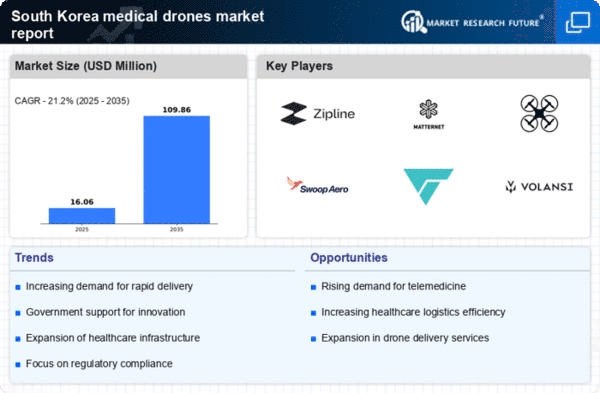
As per Market Research Future analysis, the South Korea medical drones market size was estimated at 13.25 USD Million in 2024. The South Korea medical drones market is projected to grow from 16.06 USD Million in 2025 to 109.86 USD Million by 2035, exhibiting a compound annual growth rate (CAGR) of 21% during the forecast period 2025 - 2035

Key Market Trends & Highlights

The South Korea medical drones market is poised for substantial growth driven by technological advancements and regulatory support.

  • The largest segment in the South Korea medical drones market is the delivery of medical supplies, while the fastest-growing segment is telemedicine applications.
  • Regulatory support and innovation are fostering a conducive environment for the adoption of medical drones in healthcare.
  • Technological advancements in drone capabilities are enhancing the efficiency and reliability of medical deliveries.
  • Rising healthcare costs and government initiatives are key drivers propelling the growth of the medical drones market.

Market Size & Forecast

2024 Market Size 13.25 (USD Million)
2035 Market Size 109.86 (USD Million)
CAGR (2025 - 2035) 21.2%

Major Players

Zipline (US), Matternet (US), Drone Delivery Canada (CA), Swoop Aero (AU), Wingcopter (DE), Volansi (US), Flirtey (US), Drones for Health (TZ)

Our Impact
Enabled $4.3B Revenue Impact for Fortune 500 and Leading Multinationals
Partnering with 2000+ Global Organizations Each Year
30K+ Citations by Top-Tier Firms in the Industry

South Korea Medical Drones Market Trends

The medical drones market is currently experiencing notable growth. This growth is driven by advancements in technology and increasing demand for efficient healthcare delivery systems. In South Korea, the integration of drones into medical logistics is becoming more prevalent, as these unmanned aerial vehicles offer rapid transportation of medical supplies, vaccines, and even organs for transplantation. The government has been supportive of this innovation, implementing regulations that facilitate the safe operation of drones in urban areas. This regulatory framework is crucial for fostering an environment where medical drones can operate effectively, thereby enhancing the overall healthcare infrastructure. Moreover, the rising focus on telemedicine and remote healthcare services is further propelling the medical drones market. As healthcare providers seek to reach patients in remote or underserved regions, drones present a viable solution for overcoming geographical barriers. The potential for drones to deliver essential medical products quickly and efficiently is particularly appealing in a country like South Korea, where urbanization and population density pose unique challenges. As the market evolves, it appears that collaboration between government entities, healthcare providers, and technology firms will be essential in maximizing the benefits of medical drones, ensuring they are integrated seamlessly into existing healthcare systems.

Regulatory Support and Innovation

The South Korea government is actively promoting the use of medical drones through supportive regulations and initiatives. This regulatory environment encourages innovation and investment in drone technology, facilitating the development of new applications in healthcare logistics. As a result, companies are increasingly exploring ways to integrate drones into their operations, enhancing efficiency and service delivery.

Technological Advancements

Ongoing advancements in drone technology are significantly impacting the medical drones market. Innovations in battery life, payload capacity, and navigation systems are enabling drones to operate more effectively in various healthcare scenarios. These improvements are likely to enhance the reliability and safety of drone deliveries, making them a preferred choice for medical logistics.

Increased Demand for Remote Healthcare Solutions

The demand for remote healthcare solutions is rising, particularly in rural and underserved areas. Medical drones are emerging as a practical solution to bridge the gap in healthcare access, allowing for timely delivery of medical supplies and services. This trend indicates a shift towards more efficient healthcare delivery models that leverage technology to meet patient needs.

South Korea Medical Drones Market Drivers

Rising Healthcare Costs

The escalating costs associated with healthcare in South Korea are driving the medical drones market. As the government and private sectors seek to optimize healthcare delivery, the use of drones for medical supply transport appears to be a viable solution. By reducing the need for traditional transportation methods, which can be costly and time-consuming, drones may help lower overall healthcare expenses. Reports indicate that logistics costs in healthcare can account for up to 30% of total expenses. The medical drones market could potentially alleviate some of these costs by providing efficient and rapid delivery of essential medical supplies, thus enhancing the overall economic sustainability of healthcare services.

Public Awareness and Acceptance

Increasing public awareness and acceptance of drone technology is a crucial factor influencing the medical drones market. As citizens become more familiar with the benefits of drones in various sectors, including healthcare, the likelihood of widespread adoption increases. Educational campaigns and successful pilot programs have demonstrated the efficacy of drones in delivering medical supplies, which may enhance public trust. Surveys indicate that a growing % of the population supports the use of drones for medical purposes, suggesting a favorable environment for the expansion of the medical drones market.

Government Initiatives and Funding

The South Korean government is actively promoting the integration of advanced technologies in healthcare, which is positively impacting the medical drones market. Various initiatives aimed at fostering innovation and supporting research in drone technology are underway. For instance, funding programs have been established to encourage the development of drone applications in healthcare logistics. The government’s commitment to enhancing healthcare delivery through technology is likely to stimulate growth in the medical drones market, as stakeholders seek to capitalize on available resources and support.

Aging Population and Chronic Diseases

South Korea's aging population is a significant driver for the medical drones market. With a growing number of elderly individuals requiring regular medical attention and management of chronic diseases, the demand for efficient healthcare solutions is on the rise. Drones can facilitate the timely delivery of medications and medical supplies to patients' homes, thereby enhancing adherence to treatment regimens. According to recent statistics, the proportion of individuals aged 65 and older is projected to reach 20% by 2025. This demographic shift suggests a burgeoning market for medical drones, as healthcare systems adapt to meet the needs of an aging society.

Urbanization and Infrastructure Challenges

The rapid urbanization in South Korea presents unique challenges for healthcare delivery, thereby influencing the medical drones market. As cities expand, traditional transportation methods often face congestion and delays, which can hinder timely access to medical services. Drones offer a promising alternative, capable of bypassing traffic and reaching remote or densely populated areas swiftly. This capability is particularly crucial in emergencies where every minute counts. The medical drones market may see increased adoption as urban planners and healthcare providers recognize the potential of drones to bridge gaps in infrastructure and improve patient outcomes.


Market Segment Insights

By Logistical Application: Emergency Blood Logistics (Largest) vs. Emergency Organ Logistics (Fastest-Growing)

In the South Korea medical drones market, the logistical application segment showcases a diverse distribution of market shares among key areas. Emergency Blood Logistics leads the sector, capturing the largest share particularly due to the increasing demand for rapid blood delivery in critical healthcare situations. In contrast, the Vaccine Logistics and Emergency Organ Logistics segments are also gaining traction, catering to the urgent demands for vaccines and organ transfers, reflecting a shift in operational logistics in healthcare. Growth trends within this segment indicate a robust expansion driven by advancements in drone technology and an increasing emphasis on reducing delivery times for critical medical supplies. The emerging healthcare landscape post-pandemic has propelled investments in innovative logistics solutions, especially for emergency criteria. As a result, logistics applications are expected to evolve, with Emergency Organ Logistics emerging swiftly due to technological integration and heightened healthcare responsiveness.

Emergency Blood Logistics (Dominant) vs. Vaccine Logistics (Emerging)

The Emergency Blood Logistics segment stands out as the dominant player in the South Korea medical drones market, characterized by its established infrastructure and critical service role in urgent medical situations. It effectively utilizes drone technology to ensure timely blood supply during emergencies, directly influencing patient outcomes. Conversely, the Vaccine Logistics segment emerges as a significant growth area, benefiting from the increasing push for effective vaccination campaigns amid ongoing public health initiatives. This segment is seeing enhanced capabilities through specialized drones that handle temperature-sensitive vaccines, showcasing innovation. Both segments highlight the growing interdependence of technology and healthcare logistics, marking a transformative time for medical support services.

By End User: Emergency Medical Services (Largest) vs. Blood Banks (Fastest-Growing)

The South Korea medical drones market exhibits a notable share distribution among various end-user segments. Emergency Medical Services currently lead the market with significant adoption rates driven by the need for rapid response solutions. Following closely, Blood Banks are gaining traction as they increasingly recognize the potential benefits of drone technology for swift blood delivery, thus enhancing their operational efficiency. Hospitals, while substantial, are yet evolving in their integration of drone services, alongside other emerging user segments. Growth trends indicate that Emergency Medical Services will continue to dominate due to heightened demand for quick medical supplies in emergencies. In contrast, the Blood Banks segment is poised for rapid expansion as technological advancements improve drone capabilities and regulatory frameworks become more accommodating. This combo drives the adoption rate in hospitals and other segments, reflecting an overall trend of increasing integration of drone technology in healthcare operations.

Emergency Medical Services (Dominant) vs. Blood Banks (Emerging)

Emergency Medical Services represent the dominant segment in the South Korea medical drones market, characterized by high priority given to rapid response capabilities in life-threatening situations. This segment benefits from established frameworks and protocols that align with drone deployments in emergency scenarios. Conversely, the Blood Banks sector is emerging rapidly, with organizations recognizing the efficiency gains in logistics and the potential to save lives through timely deliveries of crucial supplies. The integration of drones into blood transportation is becoming more common, supported by innovations in drone design and functionality, leading to more reliable and faster retrieval methods, which complement the existing healthcare infrastructure.

Get more detailed insights about South Korea Medical Drones Market

Key Players and Competitive Insights

The medical drones market in South Korea is currently characterized by a dynamic competitive landscape, driven by technological advancements and increasing demand for efficient healthcare logistics. Key players such as Zipline (US), Matternet (US), and Wingcopter (DE) are at the forefront, each adopting distinct strategies to enhance their market presence. Zipline (US) has focused on expanding its operational footprint through strategic partnerships with local healthcare providers, thereby enhancing its service delivery capabilities. Meanwhile, Matternet (US) emphasizes innovation in drone technology, particularly in payload capacity and flight range, which positions it favorably against competitors. Wingcopter (DE) is leveraging its expertise in vertical take-off and landing (VTOL) technology to penetrate underserved regions, indicating a trend towards regional expansion and tailored solutions.The business tactics employed by these companies reflect a concerted effort to optimize supply chains and localize manufacturing processes. The market structure appears moderately fragmented, with several players vying for dominance. However, the collective influence of these key players is shaping a competitive environment that encourages collaboration and innovation, as companies seek to differentiate themselves through advanced technology and operational efficiency.

In October Zipline (US) announced a partnership with a major South Korean healthcare provider to enhance its drone delivery network, which is expected to significantly reduce delivery times for critical medical supplies. This strategic move underscores Zipline's commitment to improving healthcare logistics and demonstrates the potential for rapid scalability in urban areas. The partnership is likely to enhance Zipline's competitive edge by integrating local knowledge and resources into its operations.

In September Matternet (US) launched a new drone model designed specifically for urban environments, featuring advanced navigation systems and increased payload capacity. This development is pivotal as it aligns with the growing demand for efficient urban logistics solutions, potentially positioning Matternet as a leader in the urban medical delivery segment. The introduction of this model may also stimulate further innovation within the industry, prompting competitors to enhance their offerings.

In August Wingcopter (DE) secured a contract with a South Korean government agency to deploy its drones for rural healthcare delivery. This contract not only highlights the increasing recognition of drone technology in public health initiatives but also reflects a broader trend towards government support for innovative logistics solutions. Wingcopter's ability to address rural healthcare challenges could set a precedent for future projects, emphasizing the importance of accessibility in healthcare delivery.

As of November the competitive trends in the medical drones market are increasingly defined by digitalization, sustainability, and the integration of artificial intelligence (AI) into operations. Strategic alliances are becoming more prevalent, as companies recognize the value of collaboration in enhancing technological capabilities and market reach. Looking ahead, it is anticipated that competitive differentiation will increasingly pivot from price-based strategies to a focus on innovation, technological advancements, and the reliability of supply chains. This shift may redefine the competitive landscape, fostering an environment where companies that prioritize cutting-edge solutions and operational excellence will thrive.

Key Companies in the South Korea Medical Drones Market include

Industry Developments

The South Korea Medical Drones Market has recently seen significant developments, particularly with Korean Air launching a medical drone delivery service to transport medical supplies and blood to remote areas as of September 2023. Hanwha Aerospace has also been making strides in drone technology, focusing on innovations that enhance delivery systems for healthcare logistics. In terms of mergers and acquisitions, a noteworthy partnership was established in August 2023 when KKR announced a strategic investment in Drone Trek, aiming to scale up drone applications in the medical field.

Additionally, SK Telecom has been collaborating with Naver Labs on advanced drone technology, seeking to leverage artificial intelligence in medical logistics. The valuation of companies in this sector is on an upward trajectory, with strong investor interest contributing to the growth of the medical drone industry in South Korea. Over the past two to three years, significant agreements and collaborations between industry leaders like Korea Aerospace Industries and AeroVironment have also highlighted a push towards integrating drones within the national healthcare infrastructure.

Such initiatives contribute positively to addressing the challenges faced by healthcare delivery systems in rural and underserved regions of South Korea.

Future Outlook

South Korea Medical Drones Market Future Outlook

The Medical Drones Market in South Korea is projected to grow at a 21.2% CAGR from 2025 to 2035, driven by technological advancements and increasing healthcare demands.

New opportunities lie in:

  • Development of autonomous delivery networks for medical supplies.
  • Integration of AI for real-time health monitoring via drones.
  • Partnerships with hospitals for emergency response drone services.

By 2035, the medical drones market is expected to be robust, driven by innovation and strategic partnerships.

Market Segmentation

South Korea Medical Drones Market End User Outlook

  • Emergency Medical Services
  • Blood Banks
  • Hospitals
  • Others

South Korea Medical Drones Market Logistical Application Outlook

  • Emergency Blood Logistics
  • Vaccine logistics
  • Emergency Organ Logistics
  • Others

Report Scope

MARKET SIZE 202413.25(USD Million)
MARKET SIZE 202516.06(USD Million)
MARKET SIZE 2035109.86(USD Million)
COMPOUND ANNUAL GROWTH RATE (CAGR)21.2% (2025 - 2035)
REPORT COVERAGERevenue Forecast, Competitive Landscape, Growth Factors, and Trends
BASE YEAR2024
Market Forecast Period2025 - 2035
Historical Data2019 - 2024
Market Forecast UnitsUSD Million
Key Companies ProfiledZipline (US), Matternet (US), Drone Delivery Canada (CA), Swoop Aero (AU), Wingcopter (DE), Volansi (US), Flirtey (US), Drones for Health (TZ)
Segments CoveredLogistical Application, End User
Key Market OpportunitiesIntegration of advanced technologies enhances efficiency in the medical drones market, addressing urgent healthcare delivery needs.
Key Market DynamicsRegulatory advancements and technological innovations drive growth in South Korea's medical drones market.
Countries CoveredSouth Korea
Leave a Comment

FAQs

What is the expected market size of the South Korea Medical Drones Market in 2024?

The South Korea Medical Drones Market is expected to be valued at 18.5 million USD in 2024.

How much is the South Korea Medical Drones Market projected to grow by 2035?

By 2035, the South Korea Medical Drones Market is projected to grow to a valuation of 148.2 million USD.

What is the anticipated compound annual growth rate (CAGR) for the South Korea Medical Drones Market from 2025 to 2035?

The anticipated CAGR for the South Korea Medical Drones Market from 2025 to 2035 is 20.824%.

Which application segment is expected to lead the market share in 2024?

Emergency Blood Logistics is expected to lead the market share with a value of 6.0 million USD in 2024.

How much is the Emergency Organ Logistics segment expected to be valued by 2035?

The Emergency Organ Logistics segment is anticipated to be valued at 36.0 million USD by 2035.

Who are the major players in the South Korea Medical Drones Market?

Key players in the market include Korean Air, Hanwha Aerospace, DJI, and Korea Aerospace Industries among others.

What is the projected market size of the Vaccine Logistics segment in 2035?

The Vaccine Logistics segment is projected to reach a market size of 43.0 million USD by 2035.

What is the expected market valuation for 'Others' application segment in 2024?

The 'Others' application segment is expected to be valued at 2.5 million USD in 2024.

What growth opportunities exist in the South Korea Medical Drones Market?

There are significant growth opportunities in emergency logistics and fast-paced delivery of medical supplies.

What challenges could impact the growth of the South Korea Medical Drones Market?

Challenges such as regulatory hurdles and technological limitations may impact the growth of the market.

Download Free Sample

Kindly complete the form below to receive a free sample of this Report

Compare Licence

×
Features License Type
Single User Multiuser License Enterprise User
Price $4,950 $5,950 $7,250
Maximum User Access Limit 1 User Upto 10 Users Unrestricted Access Throughout the Organization
Free Customization
Direct Access to Analyst
Deliverable Format
Platform Access
Discount on Next Purchase 10% 15% 15%
Printable Versions