×
Request Free Sample ×

Kindly complete the form below to receive a free sample of this Report

* Please use a valid business email

Leading companies partner with us for data-driven Insights

clients tt-cursor
Hero Background

South Korea Formal Shoes Market

ID: MRFR/CG/45982-HCR
128 Pages
Pradeep Nandi
February 2026

South Korea Formal Shoes Market Size, Share, Industry Trend & Analysis Research Report By Product Type (Ballerina, Mules, Oxfords, Derbies, Boots, Others), By End User (Men, Women) and By Distribution Channel (Store Based, Non-Store Based) - Forecast to 2035

Share:
Download PDF ×

We do not share your information with anyone. However, we may send you emails based on your report interest from time to time. You may contact us at any time to opt-out.

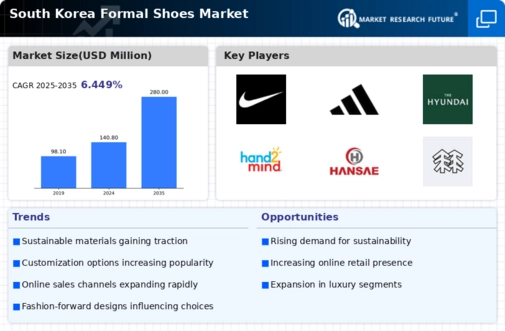
South Korea Formal Shoes Market Infographic
Purchase Options

South Korea Formal Shoes Market Summary

As per Market Research Future analysis, the South Korea formal shoes market size was estimated at 140.8 USD Million in 2024. The South Korea formal shoes market is projected to grow from 155.13 USD Million in 2025 to 409.1 USD Million by 2035, exhibiting a compound annual growth rate (CAGR) of 10.1% during the forecast period 2025 - 2035

Key Market Trends & Highlights

The South Korea formal shoes market is experiencing a shift towards sustainability and personalization.

  • The largest segment in the South Korea formal shoes market is the business professional category, while the fastest-growing segment is the casual formal shoes segment.
  • Sustainable materials are increasingly being adopted, reflecting a broader trend towards eco-conscious consumerism.
  • Customization and personalization options are gaining traction, allowing consumers to express their individuality through footwear.
  • Rising corporate employment and a growing focus on comfort and functionality are driving market expansion.

Market Size & Forecast

2024 Market Size 140.8 (USD Million)
2035 Market Size 409.1 (USD Million)
CAGR (2025 - 2035) 10.18%

Major Players

Nike (US), Adidas (DE), Puma (DE), Bata (IN), Clarks (GB), Geox (IT), ECCO (DK), Rockport (US), Allen Edmonds (US)

Our Impact
Enabled $4.3B Revenue Impact for Fortune 500 and Leading Multinationals
Partnering with 2000+ Global Organizations Each Year
30K+ Citations by Top-Tier Firms in the Industry

South Korea Formal Shoes Market Trends

The formal shoes market in South Korea is currently experiencing a dynamic evolution, driven by changing consumer preferences and lifestyle choices. As the nation embraces a more formalized work culture, there is a noticeable shift towards high-quality, stylish footwear that complements professional attire. This trend is further influenced by the increasing participation of women in the workforce, leading to a demand for diverse styles that cater to both men and women. Additionally, the rise of e-commerce platforms has transformed the way consumers shop for formal shoes, providing greater accessibility and convenience. Moreover, sustainability has emerged as a key consideration among consumers, prompting brands to adopt eco-friendly practices in their production processes. This growing awareness of environmental issues is likely to shape purchasing decisions, as consumers seek products that align with their values. The formal shoes market is thus poised for continued growth, with brands that prioritize quality, style, and sustainability likely to thrive in this competitive landscape.

Sustainable Materials

There is a rising trend towards the use of sustainable materials in the production of formal shoes. Brands are increasingly adopting eco-friendly practices, utilizing materials such as recycled plastics and organic leather. This shift not only appeals to environmentally conscious consumers but also aligns with broader societal movements towards sustainability.

Customization and Personalization

Consumers are showing a growing interest in customized and personalized formal shoes. This trend allows individuals to express their unique style and preferences, leading to a more tailored shopping experience. Brands that offer customization options are likely to attract a dedicated customer base.

Technological Integration

The integration of technology in the formal shoes market is becoming more prevalent. Innovations such as smart shoes that track health metrics or provide comfort adjustments are gaining traction. This trend reflects a broader movement towards merging fashion with functionality, appealing to tech-savvy consumers.

South Korea Formal Shoes Market Drivers

Sustainability Awareness

Sustainability has emerged as a crucial consideration for consumers in the formal shoes market. In South Korea, there is a growing awareness of environmental issues, leading to increased demand for eco-friendly products. As of November 2025, approximately 30% of consumers express a preference for sustainable footwear options. This trend is prompting brands to explore sustainable materials and ethical production practices. The formal shoes market is likely to see a rise in offerings that emphasize sustainability, as companies strive to align with consumer values. Brands that successfully communicate their commitment to sustainability may gain a competitive edge in this evolving market.

Growing E-commerce Adoption

The formal shoes market is witnessing a shift towards online shopping, driven by the increasing adoption of e-commerce platforms in South Korea. As of November 2025, online retail sales are projected to account for approximately 25% of total retail sales in the country. This trend is particularly relevant for the formal shoes market, as consumers appreciate the convenience of browsing and purchasing footwear from home. E-commerce platforms often provide a wider selection of styles and sizes, catering to diverse consumer preferences. The formal shoes market must leverage this trend by enhancing online shopping experiences, including virtual fitting tools and easy return policies, to attract and retain customers.

Influence of Fashion Trends

Fashion trends play a pivotal role in shaping consumer preferences within the formal shoes market. In South Korea, the influence of K-pop and celebrity endorsements significantly impacts purchasing decisions. As of 2025, it is estimated that the fashion industry contributes around 3.5% to the national GDP, highlighting its importance. Consumers are increasingly inclined to invest in formal shoes that reflect current styles and trends, which may include unique designs, colors, and materials. The formal shoes market must adapt to these evolving trends to remain competitive. Retailers that successfully align their offerings with popular fashion trends are likely to see increased sales and customer loyalty.

Rising Corporate Employment

The formal shoes market in South Korea is experiencing growth due to the increasing number of corporate job opportunities. As the economy continues to expand, more individuals are entering the workforce, leading to a higher demand for formal footwear. In 2025, the employment rate in South Korea is projected to reach approximately 62%, which indicates a robust job market. This rise in employment correlates with a growing need for professional attire, including formal shoes. Companies often enforce dress codes that necessitate formal footwear, thereby driving sales in this segment. The formal shoes market is likely to benefit from this trend, as new employees seek stylish yet professional options to enhance their workplace image.

Focus on Comfort and Functionality

In recent years, there has been a noticeable shift in consumer preferences towards comfort and functionality in the formal shoes market. South Korean consumers are increasingly seeking footwear that not only meets professional standards but also provides comfort for all-day wear. This trend is reflected in the growing popularity of ergonomic designs and materials that enhance comfort. As of 2025, it is estimated that around 40% of consumers prioritize comfort when selecting formal shoes. The formal shoes market must respond to this demand by incorporating innovative materials and designs that cater to the need for both style and comfort, thereby appealing to a broader audience.


Market Segment Insights

By Type: Oxfords (Largest) vs. Boots (Fastest-Growing)

In the South Korea formal shoes market, Oxfords command a significant market share, largely favored for their classic design and versatility in formal settings. They appeal to both men and women, contributing to their dominant position in the segment. Meanwhile, Boots have seen an impressive rise in their market presence, fueled by changing fashion trends and consumer preferences for comfort along with style. The growth of the Boots segment is driven by an increased demand for versatile footwear that combines practicality with aesthetics. Consumers are more inclined toward shoes that suit various occasions, leading to a shift towards boots that can be easily dressed up or down. Additionally, the emergence of sustainable materials and designs has made boots appealing to the eco-conscious consumer, further enhancing their growth potential.

Oxfords: Dominant vs. Boots: Emerging

Oxfords are widely recognized for their classic appeal, characterized by their closed lacing system and sleek silhouette, making them a staple in professional and formal attire. They cater to a demographic that values tradition, elegance, and reliability in their footwear choices. Boots, on the other hand, are rapidly becoming an essential part of the formal shoes lineup, combining fashion-forward styles with comfort features. They attract a younger audience looking for trendy yet functional options, benefitting from a broader range of designs that include ankle, knee-high, and dress variations. This ongoing trend signifies a shift in consumer priorities, favoring practicality while maintaining formal aesthetics.

By End User: Men (Largest) vs. Women (Fastest-Growing)

In the South Korea formal shoes market, the men segment commands a significant share, reflecting traditional preferences and established buying patterns. This segment benefits from a strong demand for classic styles, particularly in business and official settings, solidifying its dominance. Conversely, the women segment, while smaller in share, is the fastest-growing, driven by evolving fashion trends and increased participation of women in the workforce, which has led to a surge in demand for stylish and professional footwear. The growth trends in this market indicate an increasing diversification in styles for both segments. Men are opting for more casual yet formal designs like loafers and brogues, blurring the lines between formal and informal shoes. Women, on the other hand, are witnessing a rapid evolution in styles with a focus on aesthetics and comfort, thereby fostering a robust growth trajectory. This shift is supported by changing social dynamics and lifestyle needs, combined with enhanced marketing that resonates with female consumers.

Men (Dominant) vs. Women (Emerging)

In the South Korea formal shoes market, the men's segment stands as the dominant force, characterized by loyalty to established brands offering classic styles that blend comfort with professionalism. This segment thrives on traditional values where quality and brand heritage play a crucial role in purchasing decisions. On the other hand, the women's segment is emerging rapidly, showcasing a dynamic shift as brands cater to evolving preferences for fashionable and versatile styles. Women's formal shoes are increasingly embracing innovative designs that prioritize both comfort and aesthetics, making them particularly appealing to working women. As a result, the competition is intensifying, with brands innovating to meet the distinct needs of each gender.

By Distribution Channel: Store Based (Largest) vs. Non-Store Based (Fastest-Growing)

In the South Korea formal shoes market, the distribution channel breakdown reveals that Store Based channels dominate, capturing the largest share of the market. Traditional retail stores, including department stores and specialty shoe retailers, play a crucial role in how consumers access formal shoes, benefiting from established brand presence and customer loyalty. On the other hand, Non-Store Based channels, which include online platforms, are rapidly gaining traction, although they currently represent a smaller part of the market share. Despite their smaller share, Non-Store Based channels are witnessing significant growth driven by the increasing trend of online shopping and changing consumer preferences. The COVID-19 pandemic has accelerated this shift, leading to greater investment in e-commerce by brands. As more consumers seek the convenience of online purchasing, the Non-Store Based channel is expected to continue its upward trajectory, becoming a vital part of the distribution landscape for formal shoes.

Store Based (Dominant) vs. Non-Store Based (Emerging)

The Store Based distribution channel is characterized by a robust network of brick-and-mortar retail outlets that allow customers to physically try on and purchase formal shoes. This channel is marked by the high level of customer service and experience it provides, with knowledgeable staff assisting consumers in their selections. Conversely, the Non-Store Based channel represents an emerging presence in the market, with brands increasingly focusing on e-commerce strategies. Although currently less dominant, it appeals to a tech-savvy demographic that favors the convenience of online shopping, showcasing a diverse range of formal shoe options. This channel's growth potential indicates a shift in purchasing behavior that is becoming increasingly relevant in the South Korea formal shoes market.

Get more detailed insights about South Korea Formal Shoes Market

Key Players and Competitive Insights

The formal shoes market in South Korea is characterized by a competitive landscape that is both dynamic and multifaceted. Key growth drivers include an increasing demand for premium footwear, a shift towards sustainable practices, and the integration of technology in product offerings. Major players such as Nike (US), Adidas (DE), and Clarks (GB) are strategically positioned to leverage these trends. Nike (US) focuses on innovation and digital transformation, enhancing customer engagement through advanced e-commerce platforms. Adidas (DE) emphasizes sustainability, aiming to reduce its carbon footprint while expanding its product lines. Clarks (GB) is concentrating on regional expansion and partnerships to strengthen its market presence, particularly in urban centers. Collectively, these strategies shape a competitive environment that is increasingly focused on differentiation through quality and sustainability.Key business tactics in the formal shoes market include localizing manufacturing and optimizing supply chains to enhance efficiency and responsiveness to consumer demands. The market structure appears moderately fragmented, with several key players exerting influence while also allowing for niche brands to thrive. This fragmentation fosters a competitive atmosphere where innovation and customer-centric approaches are paramount.

In October Nike (US) announced the launch of its new line of eco-friendly formal shoes, utilizing recycled materials and sustainable production methods. This strategic move not only aligns with global sustainability trends but also positions Nike as a leader in environmentally conscious footwear. The introduction of this line is likely to attract environmentally aware consumers, enhancing brand loyalty and market share.

In September Adidas (DE) unveiled its partnership with a local South Korean designer to create a limited-edition collection of formal shoes. This collaboration aims to tap into the growing trend of personalized and culturally relevant products. By leveraging local talent, Adidas enhances its brand image and connects more deeply with the South Korean market, potentially increasing its customer base.

In August Clarks (GB) expanded its distribution network by entering into a strategic alliance with a prominent South Korean retail chain. This partnership is expected to improve Clarks' accessibility and visibility in urban areas, catering to the rising demand for stylish formal footwear. Such strategic alliances are crucial for enhancing market penetration and driving sales growth.

As of November current competitive trends in the formal shoes market include a pronounced focus on digitalization, sustainability, and the integration of artificial intelligence in product development and customer service. Strategic alliances are increasingly shaping the landscape, allowing companies to pool resources and expertise. Looking ahead, competitive differentiation is likely to evolve from traditional price-based competition to a focus on innovation, technology, and supply chain reliability. This shift underscores the importance of adapting to consumer preferences and market demands in a rapidly changing environment.

Key Companies in the South Korea Formal Shoes Market include

Industry Developments

In recent months, the South Korea Formal Shoes Market has shown significant activity with brands like Nike and Adidas launching new collections aimed at enhancing both style and comfort, which reflect a growing consumer demand for fashionable yet functional footwear. Notably, in October 2023, Adidas announced a partnership with local designers to create limited edition collections that resonate with Korean culture, enhancing their market presence. Meanwhile, Hyundai Department Store has been expanding its premium shoe sections, showcasing both local and international brands, thus catering to the high-end consumer segment.

Recently, the market has seen an increase in growth valuation, largely driven by rising disposable incomes and a cultural shift towards formal government and corporate dressing in the post-pandemic era. Major happenings include the merger between Kolon Industries and Eland Group in August 2023, designed to strengthen their supply chain in formal and casual footwear sectors. LG Fashion also reported a strategic collaboration with Hansae in September 2023 to enhance their sustainable footwear lines, which has been well received by environmentally conscious consumers. These trends indicate a dynamic and evolving landscape in the formal shoe sector in South Korea.

Future Outlook

South Korea Formal Shoes Market Future Outlook

The Formal Shoes Market is projected to grow at a 10.18% CAGR from 2025 to 2035, driven by rising disposable incomes, urbanization, and evolving fashion trends.

New opportunities lie in:

  • Expansion of e-commerce platforms for direct-to-consumer sales.
  • Development of eco-friendly materials for sustainable product lines.
  • Collaboration with fashion influencers for targeted marketing campaigns.

By 2035, the formal shoes market is expected to achieve robust growth and increased market share.

Market Segmentation

South Korea Formal Shoes Market Type Outlook

  • Ballerina
  • Mules
  • Oxfords
  • Derbies
  • Boots
  • Others

South Korea Formal Shoes Market End User Outlook

  • Men
  • Women

South Korea Formal Shoes Market Distribution Channel Outlook

  • Store Based
  • Non-Store Based

Report Scope

MARKET SIZE 2024 140.8(USD Million)
MARKET SIZE 2025 155.13(USD Million)
MARKET SIZE 2035 409.1(USD Million)
COMPOUND ANNUAL GROWTH RATE (CAGR) 10.18% (2025 - 2035)
REPORT COVERAGE Revenue Forecast, Competitive Landscape, Growth Factors, and Trends
BASE YEAR 2024
Market Forecast Period 2025 - 2035
Historical Data 2019 - 2024
Market Forecast Units USD Million
Key Companies Profiled Nike (US), Adidas (DE), Puma (DE), Bata (IN), Clarks (GB), Geox (IT), ECCO (DK), Rockport (US), Allen Edmonds (US)
Segments Covered Type, End User, Distribution Channel
Key Market Opportunities Growing demand for sustainable materials in the formal shoes market presents significant opportunities for innovation.
Key Market Dynamics Rising consumer preference for sustainable materials drives innovation in the formal shoes market.
Countries Covered South Korea
Leave a Comment

FAQs

What was the market size of the South Korea Formal Shoes Market by 2024?

The South Korea Formal Shoes Market was valued at 140.8 million USD by the year 2024.

What is the projected market size of the South Korea Formal Shoes Market by 2035?

By 2035, the market size of the South Korea Formal Shoes Market is projected to reach 280.0 million USD.

What is the expected CAGR for the South Korea Formal Shoes Market between 2025 and 2035?

The expected Compound Annual Growth Rate (CAGR) for the South Korea Formal Shoes Market between 2025 and 2035 is 6.449%.

Which product type holds the highest value in the South Korea Formal Shoes Market in 2024?

In 2024, Oxfords are expected to hold the highest market value among product types in the South Korea Formal Shoes Market, valued at 35.0 million USD.

How much is the Ballerina segment projected to be valued by 2035?

The Ballerina segment in the South Korea Formal Shoes Market is projected to be valued at 50.0 million USD by 2035.

Who are some of the major players in the South Korea Formal Shoes Market?

Key players in the South Korea Formal Shoes Market include brands such as Nike, Adidas, and Puma, among others.

What was the market value of the Mules segment expected to be in 2024?

The Mules segment of the South Korea Formal Shoes Market was valued at 20.0 million USD in 2024.

What growth opportunities exist for the South Korea Formal Shoes Market?

The South Korea Formal Shoes Market presents opportunities driven by emerging fashion trends and increasing disposable incomes.

What is the projected market value for the Boots segment by 2035?

The Boots segment in the South Korea Formal Shoes Market is projected to be valued at 60.0 million USD by 2035.

What challenges might the South Korea Formal Shoes Market face in the coming years?

Challenges for the South Korea Formal Shoes Market may include fluctuating raw material costs and changing consumer preferences.

Download Free Sample

Kindly complete the form below to receive a free sample of this Report

Compare Licence

×
Features License Type
Single User Multiuser License Enterprise User
Price $4,950 $5,950 $7,250
Maximum User Access Limit 1 User Upto 10 Users Unrestricted Access Throughout the Organization
Free Customization
Direct Access to Analyst
Deliverable Format
Platform Access
Discount on Next Purchase 10% 15% 15%
Printable Versions