×
Request Free Sample ×

Kindly complete the form below to receive a free sample of this Report

* Please use a valid business email

Leading companies partner with us for data-driven Insights

clients tt-cursor
Hero Background

South Korea Continuous Renal Replacement Therapy Market

ID: MRFR/Pharma/49768-HCR
200 Pages
Garvit Vyas
February 2026

South Korea Continuous Renal Replacement Therapy Market Research Report: Size, Share, Trend Analysis By Product Type (Continuous Veno-Venous Hemofiltration, Continuous Veno-Venous Hemodialysis, Continuous Veno-Venous Dialysis), By End Users (Hospitals, Dialysis Centers, Home Care Settings), By Techniques (Filtration, Dialysis, Both Filtration and Dialysis) and By Applications (Acute Kidney Injury, Chronic Kidney Disease, Multiple Organ Failure) - Growth Outlook & Industry Forecast 2025 To 2035

Share:
Download PDF ×

We do not share your information with anyone. However, we may send you emails based on your report interest from time to time. You may contact us at any time to opt-out.

South Korea Continuous Renal Replacement Therapy Market Infographic
Purchase Options

South Korea Continuous Renal Replacement Therapy Market Summary

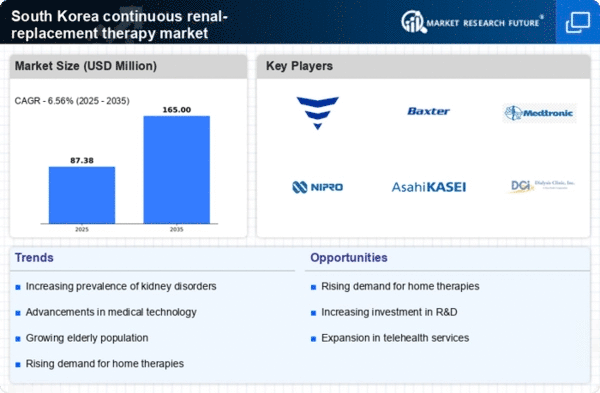
As per Market Research Future analysis, the South Korea Continuous Renal Replacement Therapy Market size was estimated at 82.0 USD Million in 2024. The Continuous Renal-replacement-therapy market is projected to grow from 87.38 USD Million in 2025 to 165.0 USD Million by 2035, exhibiting a compound annual growth rate (CAGR) of 6.5% during the forecast period 2025 - 2035

Key Market Trends & Highlights

The South Korea continuous renal-replacement-therapy market is poised for growth driven by technological advancements and demographic shifts.

  • Technological advancements in medical devices are enhancing the efficacy of continuous renal-replacement therapy.
  • The aging population in South Korea is contributing to an increased demand for renal care solutions.
  • Government support and initiatives are likely to bolster the market landscape for renal therapies.
  • Rising incidence of kidney diseases and growing awareness of renal health are key drivers propelling market expansion.

Market Size & Forecast

2024 Market Size 82.0 (USD Million)
2035 Market Size 165.0 (USD Million)
CAGR (2025 - 2035) 6.56%

Major Players

Fresenius Medical Care (DE), Baxter International (US), Medtronic (US), Nipro Corporation (JP), Asahi Kasei Medical (JP), Dialysis Clinic, Inc. (US), Kawasumi Laboratories (JP), Terumo Corporation (JP), Gambro (SE)

Our Impact
Enabled $4.3B Revenue Impact for Fortune 500 and Leading Multinationals
Partnering with 2000+ Global Organizations Each Year
30K+ Citations by Top-Tier Firms in the Industry

South Korea Continuous Renal Replacement Therapy Market Trends

The South Korea Continuous Renal Replacement Therapy Market in South Korea is currently experiencing notable advancements, driven by an increasing prevalence of chronic kidney diseases and a growing aging population. The healthcare system in South Korea is characterized by its high standards and technological innovations, which facilitate the adoption of advanced renal therapies. Continuous renal-replacement therapy is becoming a preferred choice in critical care settings due to its ability to provide hemodynamic stability and better fluid management for patients with acute kidney injury. Furthermore, the integration of sophisticated monitoring systems and automated devices is enhancing the efficacy and safety of these therapies, thereby attracting more healthcare providers to adopt them. In addition, the South Korean government is actively promoting research and development in the medical technology sector, which is likely to bolster the continuous renal-replacement-therapy market. Initiatives aimed at improving healthcare infrastructure and increasing access to advanced treatment options are expected to further stimulate market growth. As healthcare professionals become more aware of the benefits associated with continuous renal-replacement therapy, the demand for these services is anticipated to rise. Overall, the continuous renal-replacement-therapy market appears poised for expansion, driven by technological advancements and supportive government policies.

Technological Advancements

The continuous renal-replacement-therapy market is witnessing rapid technological innovations, including the development of automated systems and advanced monitoring devices. These advancements enhance patient safety and treatment efficacy, making continuous renal-replacement therapy more appealing to healthcare providers.

Aging Population

The demographic shift towards an older population in South Korea is contributing to an increased incidence of chronic kidney diseases. This trend is likely to drive demand for continuous renal-replacement therapy, as older patients often require more intensive renal support.

Government Support and Initiatives

The South Korean government is implementing various initiatives to improve healthcare access and promote research in medical technologies. Such support is expected to facilitate the growth of the continuous renal-replacement-therapy market, ensuring that advanced treatment options are available to a broader patient base.

South Korea Continuous Renal Replacement Therapy Market Drivers

Increased Healthcare Expenditure

The continuous renal-replacement-therapy market is benefiting from the rising healthcare expenditure in South Korea. Government and private sector investments in healthcare are on the rise, with spending projected to reach approximately 9% of GDP by 2025. This increase in funding allows for better access to advanced medical treatments, including continuous renal-replacement therapy. As healthcare facilities upgrade their infrastructure and technology, the demand for effective renal replacement therapies is likely to grow. Additionally, the focus on improving healthcare services and patient care quality is driving hospitals to adopt more comprehensive treatment options. Consequently, the continuous renal-replacement-therapy market is poised for growth as healthcare expenditure continues to rise.

Growing Awareness of Renal Health

There is a notable increase in public awareness regarding renal health in South Korea, which is positively impacting the continuous renal-replacement-therapy market. Educational campaigns and health initiatives are encouraging individuals to prioritize kidney health, leading to earlier diagnosis and treatment of kidney diseases. This heightened awareness is likely to result in a greater demand for renal replacement therapies, as patients seek effective management options. Furthermore, healthcare providers are responding to this trend by offering more comprehensive renal care services, including continuous renal-replacement therapy. As the population becomes more informed about the importance of kidney health, the market for continuous renal-replacement therapy is expected to expand, driven by the need for timely and effective interventions.

Rising Incidence of Kidney Diseases

The continuous renal-replacement-therapy market is experiencing growth due to the increasing prevalence of kidney diseases in South Korea. Chronic kidney disease (CKD) affects a significant portion of the population, with estimates suggesting that around 10% of adults are impacted. This rising incidence necessitates advanced treatment options, including continuous renal-replacement therapy, to manage patients effectively. The healthcare system is adapting to these needs, leading to an increased demand for renal replacement therapies. Furthermore, the economic burden associated with kidney diseases is substantial, prompting healthcare providers to invest in innovative solutions. As a result, the continuous renal-replacement-therapy market is likely to expand, driven by the urgent need for effective management of kidney-related ailments.

Technological Innovations in Medical Devices

Technological advancements in medical devices are significantly influencing the continuous renal-replacement-therapy market. Innovations such as portable dialysis machines and automated systems enhance the efficiency and effectiveness of renal replacement therapies. In South Korea, the integration of advanced technologies into healthcare practices is becoming more prevalent, with hospitals increasingly adopting state-of-the-art equipment. This trend is expected to improve patient outcomes and streamline treatment processes. The market for continuous renal-replacement therapy is projected to grow as healthcare facilities invest in these technologies, which not only improve the quality of care but also reduce operational costs. The potential for enhanced patient monitoring and data management further supports the expansion of this market.

Aging Population and Increased Demand for Care

The aging population in South Korea is a critical driver of the continuous renal-replacement-therapy market. As the demographic shifts towards an older population, the incidence of age-related kidney diseases is likely to rise. Older adults are more susceptible to chronic conditions, including kidney dysfunction, which necessitates advanced treatment options. The demand for continuous renal-replacement therapy is expected to increase as healthcare systems adapt to the needs of this demographic. Additionally, the growing number of elderly patients requiring renal care is prompting healthcare providers to enhance their services and invest in effective treatment modalities. This trend indicates a robust growth trajectory for the continuous renal-replacement-therapy market in the coming years.


Market Segment Insights

By Product Type: Continuous Veno-Venous Hemofiltration (Largest) vs. Continuous Veno-Venous Hemodialysis (Fastest-Growing)

In the South Korea continuous renal-replacement-therapy market, Continuous Veno-Venous Hemofiltration (CVVH) holds a significant share compared to its counterparts. It is well-established, being the predominant choice among clinicians due to its proven efficacy in critical care settings. Continuous Veno-Venous Hemodialysis (CVVHD) follows closely, but its adoption has been buoyed by recent advancements in technology that enhance patient outcomes. Continuous Veno-Venous Dialysis (CVVD) remains a smaller portion of the market yet plays a vital role in specific patient demographics. The growth trends in this market segment highlight an increasing preference for Continuous Veno-Venous Hemodialysis, driven by its adaptability in treatment protocols and better patient monitoring techniques. The rising incidence of kidney-related disorders in South Korea contributes significantly to the demand for these therapies. Innovations and better training for healthcare professionals further fuel the expansion of CVVH and CVVHD, propelling them towards heightened adoption rates in various healthcare facilities.

Continuous Veno-Venous Hemofiltration (Dominant) vs. Continuous Veno-Venous Dialysis (Emerging)

Continuous Veno-Venous Hemofiltration (CVVH) is firmly entrenched as the dominant modality in the South Korea continuous renal-replacement-therapy market, favored for its efficiency in removing solutes and preserving fluid balance in critically ill patients. Its established protocol and reliable outcomes have made it a staple in ICUs. On the other hand, Continuous Veno-Venous Dialysis (CVVD) is emerging as a complementary option, particularly in complex cases where individualized treatment is essential. While CVVD currently commands a smaller market share, its unique benefits, including suitability for specific patient groups and innovative approaches to renal therapy, indicate potential for growth as awareness and acceptance increase among healthcare providers.

By End User: Hospitals (Largest) vs. Dialysis Centers (Fastest-Growing)

In the South Korea continuous renal-replacement-therapy market, hospitals dominate the end-user segment, contributing significantly to overall market share. This is primarily due to the higher patient intake and advanced facilities that hospitals offer for renal therapies. Dialysis centers follow, catering to a specific patient demographic and specializing in renal care, while home care settings, although important, hold a smaller market share as they are still developing in terms of technology and patient acceptance. The growth trends in this market are particularly noteworthy. Hospitals are expected to maintain their leading position, driven by increased healthcare expenditures and advancements in medical technology. However, dialysis centers are emerging rapidly, fueled by an increasing number of patients requiring specialized care. Home care settings are also gaining traction as patients seek more comfortable treatment options, benefiting from the shift towards personalized healthcare, though they still lag behind the other two segments.

Hospitals (Dominant) vs. Dialysis Centers (Emerging)

Hospitals are the dominant end-user segment in the South Korea continuous renal-replacement-therapy market, attributed to their capacity to handle complex cases and provide comprehensive medical services. They typically offer state-of-the-art technology, highly skilled medical personnel, and a wide range of treatment options, which enhance their appeal to patients requiring renal replacement therapy. On the other hand, dialysis centers are emerging as a vital segment, characterized by their focus on renal care exclusively. These centers cater to patients who require regular dialysis treatment and often offer a more personalized approach, which can lead to better patient outcomes. The distinction between these two segments highlights the growing need for specialized renal care facilities alongside established hospital services.

By Techniques: Dialysis (Largest) vs. Both Filtration and Dialysis (Fastest-Growing)

In the South Korea continuous renal-replacement-therapy market, Dialysis holds the largest market share due to its longstanding presence and established efficacy in treating patients with acute renal failure. This segment continues to dominate, commanding significant attention among healthcare providers, who recognize the benefits of dialysis systems in critical care settings. Meanwhile, the segment that includes Both Filtration and Dialysis is rapidly gaining traction, witnessing a surge in adoption as it offers comprehensive patient management options. The growth of the Both Filtration and Dialysis segment is driven by advancements in technology and the increasing healthcare expenditure in South Korea. As medical facilities seek to enhance patient outcomes, the integration of filtration techniques with dialysis is viewed as an innovative solution. The rising prevalence of chronic kidney diseases and advancements in therapeutic methodologies are propelling this segment further, making it the fastest-growing in the market.

Dialysis: Dominant vs. Both Filtration and Dialysis: Emerging

Dialysis is recognized as the dominant technique in the South Korea continuous renal-replacement-therapy market, largely owing to its effectiveness and the established protocols among healthcare practitioners. This technique focuses on removing waste and excess fluids from the blood, thereby restoring electrolyte balance and ensuring patient stability. On the other hand, the combination of Both Filtration and Dialysis is categorized as an emerging segment, reflecting a growing trend towards integrated approaches to renal therapy. This segment capitalizes on the strengths of both methodologies, providing a more versatile treatment option. The synergy created through this combination addresses varied patient needs, optimizing care delivery in critical settings and representing the future of renal replacement therapies.

By Application: Acute Kidney Injury (Largest) vs. Chronic Kidney Disease (Fastest-Growing)

In the South Korea continuous renal-replacement-therapy market, Acute Kidney Injury (AKI) holds the largest share among the application segments, reflecting the significant demand for effective treatment options. Chronic Kidney Disease (CKD) follows closely, gaining attention due to increasing patient prevalence. Multiple Organ Failure, while crucial, represents a smaller segment in comparison to the dominant roles of AKI and CKD, indicating a focused market on immediate kidney care needs. Growth trends in this sector underscore the rising incidences of AKI linked to various medical conditions and surgeries, propelling demand for advanced renal-replacement therapies. The CKD segment is also experiencing rapid growth, driven by heightened awareness of kidney health and early diagnosis. Innovative therapies tailored for these applications are being developed, indicating a shift in market dynamics. Though Multiple Organ Failure plays a vital role at critical care junctures, its market growth remains steady but does not match the explosive potential showcased by AKI and CKD treatments.

Acute Kidney Injury (Dominant) vs. Chronic Kidney Disease (Emerging)

Acute Kidney Injury (AKI) is the dominant application in the South Korea continuous renal-replacement-therapy market, characterized by its rapid onset and need for immediate intervention. The therapies developed for AKI cater to various clinical scenarios, making them essential in emergency situations. On the other hand, Chronic Kidney Disease (CKD) is emerging as a vital segment, driven by rising chronic illness rates and a growing awareness of kidney-related health issues. CKD therapies are focusing on long-term management, reflecting a shift towards proactive healthcare solutions. While AKI treatments concentrate on acute episodes, CKD therapies aim for ongoing care, showcasing diversification in treatment approaches within the market.

Get more detailed insights about South Korea Continuous Renal Replacement Therapy Market

Key Players and Competitive Insights

The continuous renal-replacement-therapy market in South Korea is characterized by a competitive landscape that is increasingly shaped by innovation and strategic partnerships. Key players such as Fresenius Medical Care (Germany), Baxter International (US), and Medtronic (US) are at the forefront, each adopting distinct operational focuses. Fresenius Medical Care (Germany) emphasizes technological advancements in dialysis solutions, while Baxter International (US) is enhancing its product portfolio through strategic acquisitions. Medtronic (US) appears to be concentrating on integrating digital health solutions into its offerings, thereby enhancing patient management and monitoring capabilities. Collectively, these strategies not only bolster their market positions but also contribute to a dynamic competitive environment that is responsive to evolving healthcare needs.In terms of business tactics, companies are increasingly localizing manufacturing to reduce costs and improve supply chain efficiency. This approach is particularly relevant in a moderately fragmented market where several players vie for market share. The competitive structure is influenced by the collective actions of these key players, who are not only competing on product quality but also on operational efficiency and customer service.

In October Fresenius Medical Care (Germany) announced a partnership with a local South Korean tech firm to develop AI-driven solutions for patient monitoring. This strategic move is likely to enhance their service offerings and improve patient outcomes, positioning them as a leader in innovative renal care solutions. The integration of AI into their systems could streamline operations and provide real-time data analytics, which is crucial for effective patient management.

In September Baxter International (US) launched a new line of portable dialysis machines tailored for home use, aiming to expand its market reach. This initiative reflects a growing trend towards home-based therapies, which are increasingly preferred by patients for their convenience. By focusing on this segment, Baxter is not only addressing patient preferences but also potentially increasing its market share in the home dialysis sector.

In August Medtronic (US) unveiled a digital health platform designed to integrate seamlessly with its renal products, enhancing patient engagement and adherence to treatment protocols. This platform is indicative of a broader trend towards digitalization in healthcare, where technology plays a pivotal role in improving patient outcomes. Medtronic's focus on digital health solutions may provide a competitive edge by fostering stronger patient-provider relationships and improving overall treatment efficacy.

As of November the competitive trends in the continuous renal-replacement-therapy market are increasingly defined by digitalization, sustainability, and the integration of AI technologies. Strategic alliances are becoming more prevalent, as companies recognize the value of collaboration in enhancing their product offerings and market reach. Looking ahead, it is anticipated that competitive differentiation will evolve, shifting from traditional price-based competition to a focus on innovation, technological advancements, and supply chain reliability. This transition underscores the importance of adaptability in a rapidly changing healthcare landscape.

Key Companies in the South Korea Continuous Renal Replacement Therapy Market include

Industry Developments

The South Korea Continuous Renal Replacement Therapy Market has witnessed significant developments recently, with advancements and increased adoption of technologies aimed at enhancing patient care and outcomes. Companies like Fresenius Medical Care have expanded their offerings, providing innovative dialysis solutions that cater to the rising demand for renal replacement therapies in the country. In August 2023, Nipro Corporation announced an increase in production capacity for its renal care products to meet growing market needs.

Furthermore, the sector experienced notable mergers, with Baxter International acquiring certain assets from Asahi Kasei Medical for synergistic growth in the renal therapy segment, formally disclosed in July 2023. Additionally, Medtronic has been investing in Research and Development initiatives in South Korea to improve its technological infrastructure and service capabilities. The market is projected to grow, driven by the increasing prevalence of chronic kidney diseases and an aging population, underscoring the importance of Continuous Renal Replacement Therapy services.

Major healthcare providers, such as Sakra Premium Hospital and the Shinagawa Group, are integrating these technologies to enhance their nephrology departments, reflecting a collaborative effort toward elevating healthcare standards in South Korea's renal care landscape.

Future Outlook

South Korea Continuous Renal Replacement Therapy Market Future Outlook

The Continuous Renal Replacement Therapy Market in South Korea is projected to grow at a 6.56% CAGR from 2025 to 2035, driven by technological advancements and increasing patient demand.

New opportunities lie in:

  • Development of portable CRRT devices for home use
  • Integration of AI for patient monitoring and data analysis
  • Expansion of training programs for healthcare professionals in CRRT techniques

By 2035, the market is expected to achieve substantial growth and innovation.

Market Segmentation

South Korea Continuous Renal Replacement Therapy Market End User Outlook

  • Hospitals
  • Dialysis Centers
  • Home Care Settings

South Korea Continuous Renal Replacement Therapy Market Techniques Outlook

  • Filtration
  • Dialysis
  • Both Filtration and Dialysis

South Korea Continuous Renal Replacement Therapy Market Application Outlook

  • Acute Kidney Injury
  • Chronic Kidney Disease
  • Multiple Organ Failure

South Korea Continuous Renal Replacement Therapy Market Product Type Outlook

  • Continuous Veno-Venous Hemofiltration
  • Continuous Veno-Venous Hemodialysis
  • Continuous Veno-Venous Dialysis

Report Scope

MARKET SIZE 2024 82.0(USD Million)
MARKET SIZE 2025 87.38(USD Million)
MARKET SIZE 2035 165.0(USD Million)
COMPOUND ANNUAL GROWTH RATE (CAGR) 6.56% (2025 - 2035)
REPORT COVERAGE Revenue Forecast, Competitive Landscape, Growth Factors, and Trends
BASE YEAR 2024
Market Forecast Period 2025 - 2035
Historical Data 2019 - 2024
Market Forecast Units USD Million
Key Companies Profiled Fresenius Medical Care (DE), Baxter International (US), Medtronic (US), Nipro Corporation (JP), Asahi Kasei Medical (JP), Dialysis Clinic, Inc. (US), Kawasumi Laboratories (JP), Terumo Corporation (JP), Gambro (SE)
Segments Covered Product Type, End User, Techniques, Application
Key Market Opportunities Integration of advanced monitoring technologies enhances patient outcomes in the continuous renal-replacement-therapy market.
Key Market Dynamics Rising demand for advanced continuous renal-replacement-therapy solutions driven by regulatory support and technological innovations in South Korea.
Countries Covered South Korea
Leave a Comment

FAQs

What is the expected market size of the South Korea Continuous Renal Replacement Therapy Market in 2024?

The South Korea Continuous Renal Replacement Therapy Market is expected to be valued at 98.4 million USD in 2024.

What is the projected market size for the South Korea Continuous Renal Replacement Therapy Market by 2035?

By 2035, the market is expected to reach a value of 295.2 million USD.

What is the expected CAGR for the South Korea Continuous Renal Replacement Therapy Market from 2025 to 2035?

The market is anticipated to grow at a CAGR of 10.503% between 2025 and 2035.

Which product type holds the largest market share in the South Korea Continuous Renal Replacement Therapy Market?

Continuous Veno-Venous Hemodialysis is projected to hold a substantial portion of the market share in the upcoming years.

How much is the Continuous Veno-Venous Hemofiltration segment valued at in 2024?

The Continuous Veno-Venous Hemofiltration segment is valued at 30.0 million USD in 2024.

What will the market value of Continuous Veno-Venous Hemodialysis be in 2035?

By 2035, the market value for Continuous Veno-Venous Hemodialysis is expected to be 120.0 million USD.

What are the key players in the South Korea Continuous Renal Replacement Therapy Market?

Major players include Fresenius Medical Care, Baxter International, and Terumo Corporation among others.

How does the Continuous Veno-Venous Dialysis segment perform by 2035?

The Continuous Veno-Venous Dialysis segment is projected to reach a market value of 85.2 million USD in 2035.

What growth opportunities exist within the South Korea Continuous Renal Replacement Therapy Market?

There are various growth opportunities driven by the increasing prevalence of kidney diseases and advancements in treatment technologies.

How has the competitive landscape changed for the South Korea Continuous Renal Replacement Therapy Market recently?

The competitive landscape has evolved with increased collaboration among major players to enhance product offerings and market reach.

Download Free Sample

Kindly complete the form below to receive a free sample of this Report

Compare Licence

×
Features License Type
Single User Multiuser License Enterprise User
Price $4,950 $5,950 $7,250
Maximum User Access Limit 1 User Upto 10 Users Unrestricted Access Throughout the Organization
Free Customization
Direct Access to Analyst
Deliverable Format
Platform Access
Discount on Next Purchase 10% 15% 15%
Printable Versions