Aging Population
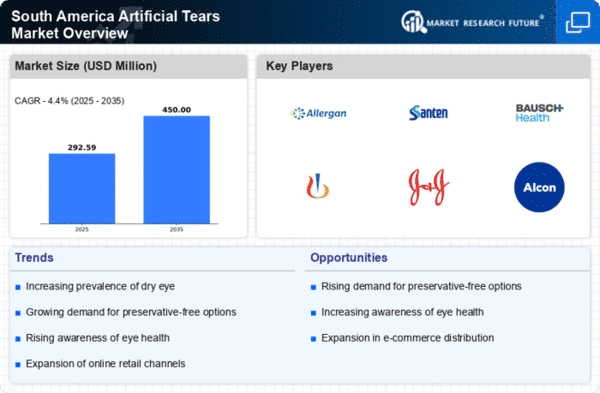
The demographic shift towards an aging population in South America is significantly influencing the artificial tears market. Older adults are more susceptible to dry eye conditions due to age-related changes in tear production and quality. By 2025, it is projected that individuals aged 65 and older will constitute around 15% of the total population in several South American countries. This demographic trend suggests a growing need for artificial tears, as older adults often require regular use of these products to maintain eye comfort. Consequently, the artificial tears market is likely to expand in response to the increasing demand from this age group.
Expansion of Distribution Channels
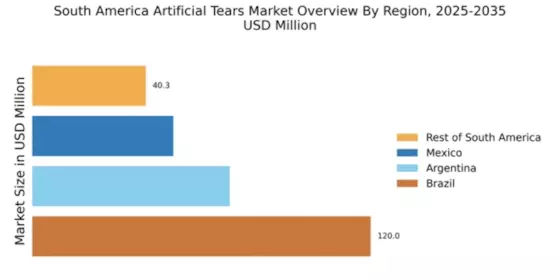
The expansion of distribution channels for artificial tears in South America is facilitating greater accessibility for consumers. Pharmacies, online platforms, and healthcare facilities are increasingly stocking a variety of artificial tear products, making them more readily available to the public. This trend is particularly relevant in urban areas, where consumers prefer the convenience of purchasing eye care products online. The artificial tears market is likely to benefit from this increased accessibility, as it encourages more individuals to seek out and purchase artificial tears for their eye care needs.
Increasing Awareness of Eye Health
The growing awareness of eye health among the South American population is a crucial driver for the artificial tears market. As individuals become more informed about the implications of dry eye syndrome and its impact on quality of life, the demand for artificial tears is likely to rise. Educational campaigns by healthcare professionals and organizations are contributing to this trend. In 2025, it is estimated that the prevalence of dry eye conditions in South America could reach approximately 20%, leading to a corresponding increase in the consumption of artificial tears. This heightened awareness is expected to drive the artificial tears market, as consumers actively seek solutions to alleviate their symptoms.
Rising Urbanization and Lifestyle Changes
Urbanization in South America is leading to lifestyle changes that contribute to dry eye conditions, thereby driving the artificial tears market. Increased screen time due to work and leisure activities, coupled with exposure to environmental pollutants, is exacerbating eye dryness among urban dwellers. Reports indicate that urban populations are experiencing a 30% higher incidence of dry eye symptoms compared to rural counterparts. As a result, the demand for artificial tears is expected to surge, prompting manufacturers to innovate and diversify their product offerings. This trend is likely to shape the artificial tears market in the coming years.
Technological Advancements in Product Development
Technological advancements in the formulation and delivery of artificial tears are driving innovation within the market. Manufacturers are investing in research and development to create products that offer longer-lasting relief and improved comfort. For instance, the introduction of preservative-free formulations and advanced delivery systems is appealing to consumers who are concerned about the side effects of traditional products. As these innovations gain traction, the artificial tears market is expected to experience growth, with consumers increasingly opting for advanced solutions that cater to their specific eye care requirements.