North America : Market Leader in Packaging
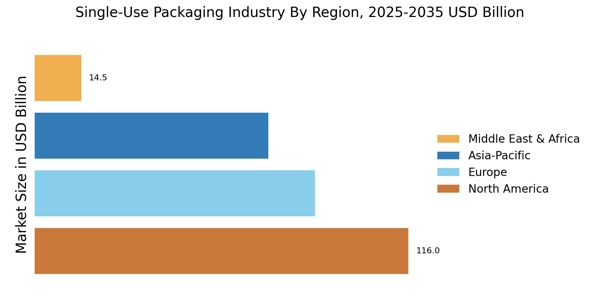
North America is the largest market for single use packaging, holding a significant share of 120.0 in 2024. The growth is driven by increasing consumer demand for convenience, coupled with stringent regulations promoting sustainable packaging solutions. The region's focus on innovation and technology in packaging materials further enhances its market position. Regulatory catalysts, such as the push for reduced plastic waste, are shaping the industry landscape, encouraging companies to adopt eco-friendly practices.
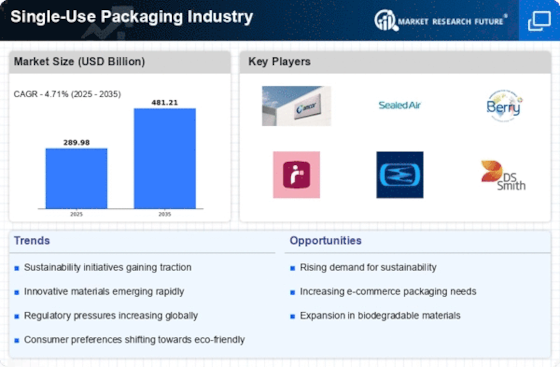
The competitive landscape in North America is robust, featuring key players like Amcor, Sealed Air, and Berry Global. These companies are investing heavily in R&D to develop sustainable packaging solutions that meet consumer preferences. The U.S. leads the market, followed by Canada and Mexico, with a growing emphasis on recycling and waste management initiatives. The presence of major corporations and a well-established supply chain contribute to the region's dominance in the single use packaging sector.
Europe : Sustainability Focused Market
Europe's single use packaging market is valued at 80.0, reflecting a strong commitment to sustainability and regulatory compliance. The region is witnessing a shift towards biodegradable and recyclable materials, driven by consumer awareness and government policies aimed at reducing plastic waste. The European Union's directives on single-use plastics are significant regulatory catalysts, pushing companies to innovate and adapt to new standards, thereby enhancing market growth.
Leading countries in this region include Germany, France, and the UK, where major players like Mondi and Smurfit Kappa are actively involved in developing sustainable packaging solutions. The competitive landscape is characterized by a mix of established companies and startups focusing on eco-friendly innovations. The presence of stringent regulations and consumer demand for sustainable options is shaping the market dynamics, making Europe a key player in the global single use packaging industry.
Asia-Pacific : Rapidly Growing Market
The Asia-Pacific region, with a market size of 70.0, is experiencing rapid growth in the single use packaging sector. This growth is fueled by increasing urbanization, rising disposable incomes, and changing consumer lifestyles that favor convenience. Additionally, regulatory frameworks are evolving to address environmental concerns, promoting the use of sustainable packaging materials. The demand for single use packaging is expected to rise as e-commerce continues to expand across the region.
Countries like China, India, and Japan are leading the market, with significant contributions from local and international players. Companies such as Constantia Flexibles and Novolex are focusing on innovative packaging solutions tailored to regional needs. The competitive landscape is dynamic, with a mix of established firms and emerging startups, all vying for market share in this burgeoning sector. The region's diverse consumer base and growing environmental awareness are key factors driving market expansion.
Middle East and Africa : Emerging Market Potential
The Middle East and Africa (MEA) region, with a market size of 19.98, presents emerging opportunities in the single use packaging industry. The growth is driven by increasing demand from sectors such as food and beverage, healthcare, and retail. Urbanization and a growing middle class are contributing to the rising consumption of packaged goods. Regulatory initiatives aimed at reducing plastic waste are also influencing market dynamics, encouraging the adoption of sustainable practices.
Leading countries in this region include South Africa, UAE, and Saudi Arabia, where companies are beginning to invest in sustainable packaging solutions. The competitive landscape is evolving, with both local and international players entering the market. Key players are focusing on innovation and sustainability to capture the growing demand, making MEA a region to watch in the single use packaging sector.