×
Request Free Sample ×

Kindly complete the form below to receive a free sample of this Report

* Please use a valid business email

Leading companies partner with us for data-driven Insights

clients tt-cursor
Hero Background
English
Chinese
French
Japanese
Korean
German
Spanish

Seborrheic Keratosis Market Share

ID: MRFR/Pharma/4313-HCR
100 Pages
Rahul Gotadki
October 2025

Seborrheic Keratosis Market Research Report Information By Type (Reticulated, Stucco, Clonal, Dermatosis Papulosa Nigra and Others), By Treatment (Medication, Surgery and Laser Therapy), By Diagnosis (Skin Biopsy and Others), And By Region (North America, Europe, Asia-Pacific, And Rest Of The World) –Market Forecast Till 2035

Share:
Download PDF ×

We do not share your information with anyone. However, we may send you emails based on your report interest from time to time. You may contact us at any time to opt-out.

Seborrheic Keratosis Market Infographic
×
Seborrheic Keratosis Market Infographic Full View
Purchase Options

Market Share

Seborrheic Keratosis Market Share Analysis

Initiate with an in-depth analysis of the seborrheic keratosis market, encompassing its size, growth potential, key players, and prevalent treatment options. Understand factors such as patient demographics, treatment preferences, and emerging trends to inform your positioning strategies effectively. Divide the tactics being used on the seborrheic keratosis market into the target audience and the members including patients, dermatologists, skincare clinics and aesthetic medicine practitioners. Market the product according to age, skin type, severity of marks, and the past history of interventions of patients to fine-tune your strategy. Put forward seborrheic keratosis treatment options that are bespoke to your brand, such as having distinctive formulations, delivery methods, or treatment modalities. Consider the attributes of speedy wound healing, safety, strong lesion removal, or cosmetic outcomes to deal with the concerns and desires of the various groups of people. Notably, it is necessary to emphasize the importance of your seborrheic keratosis products and services to patients and healthcare providers mentioned. Highlight the advantages such as lesion removal, skin gets better, scarring is minimal, less time on treatment and it is possible sympathy with their treatment goal and expectations. Roll educational programs to educate patients about the symptoms, causes and treatment for skerproxy. The patients to be given materials for skincare regimens and guidance on how to monitor lesions and protect themselves from the sun, so that they can be active participants in their treatment. Finding the suitable forms of strategic alliance with the dermatology clinics is likely to widen market penetration and the area of research. Coordinate with other entities with regard to educational campaigns, referral programs and co-marketing aspects that will enlarge the options for the patients of seborrheic keratosis at their disposal.

Ensure compliance with regulatory requirements and quality assurance standards in the development, manufacturing, and marketing of seborrheic keratosis products or services. Adherence to ethical promotion practices and transparency in communication are essential for building trust and credibility in the market. Provide exceptional customer support and service throughout the patient journey, from initial consultation to post-treatment follow-up. Offer personalized care, educational resources, and treatment adherence programs to improve patient satisfaction and retention.
Author
Rahul Gotadki
Assistant Manager

He holds an experience of about 7+ years in Market Research and Business Consulting, working under the spectrum of Life Sciences and Healthcare domains. Rahul conceptualizes and implements a scalable business strategy and provides strategic leadership to the clients. His expertise lies in market estimation, competitive intelligence, pipeline analysis, customer assessment, etc. In addition to the above, his other responsibility includes strategic tracking of high growth markets & advising clients on the potential areas of focus they could direct their business initiatives

Leave a Comment

FAQs

What is the projected growth of the Seborrheic Keratosis market?

The Seborrheic Keratosis market is the expected increase in total market value of 4.56 USD billion over a defined forecast period 2025–2035. It is driven by factors such as demand trends, technological advances, regulatory changes, and geographic expansion.

What is the size of the Seborrheic Keratosis market?

Seborrheic Keratosis market size was valued at approximately 2.45 billion USD in 2024. This figure will reach 4.56 billion USD covering all regions (America, Europe, Asia, MEA and ROW), focusing its segments / services / distribution channels till 2035.

What is the CAGR of the Seborrheic Keratosis market?

Seborrheic Keratosis market is expected to grow at a CAGR of 5.8% between 2025 and 2035.

How much will the Seborrheic Keratosis market be worth by 2035?

Seborrheic Keratosis market is expected to be worth of 4.56 billion USD, reflecting growth driven by usage, technology and global demands by the end of 2035.

How will the Seborrheic Keratosis market perform over the next 10 years?

Over the next 10 years the Seborrheic Keratosis market is expected to shift from usd billion 2.45 to 4.56 billion USD, led by adoption of advanced tech, demographic trends, regulatory approvals, with potential headwinds from 2025 to 2035.

Which region held the largest market share in the seborrheic keratosis market?

North America had the largest share in the market.

Market Summary

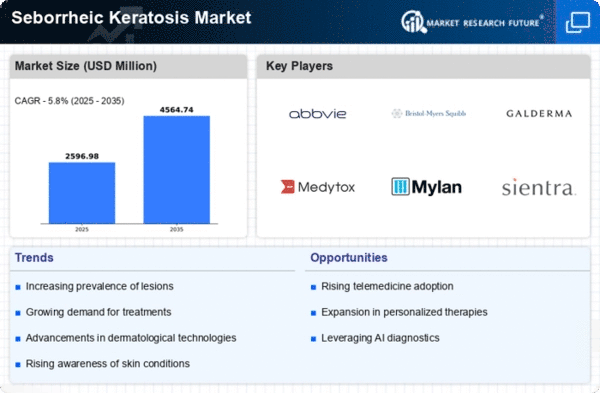
As per MRFR analysis, the Seborrheic Keratosis Market Size was estimated at 2454.61 USD Million in 2024. The Seborrheic Keratosis industry is projected to grow from 2597.02 in 2025 to 4564.74 by 2035, exhibiting a compound annual growth rate (CAGR) of 5.8 during the forecast period 2025 - 2035.

Key Market Trends & Highlights

The Seborrheic Keratosis Market is experiencing notable growth driven by increased awareness and advancements in treatment options.

  • Rising awareness of skin health is propelling demand for seborrheic keratosis treatments, particularly in North America.
  • Advancements in treatment options, including both topical and surgical methods, are enhancing patient outcomes and satisfaction.
  • The integration of telemedicine is facilitating access to dermatological care, especially in the Asia-Pacific region.
  • The increasing incidence of seborrheic keratosis and growing demand for aesthetic treatments are key drivers of market expansion.

Market Size & Forecast

2024 Market Size 2454.61 (USD Million)
2035 Market Size 4564.74 (USD Million)
CAGR (2025 - 2035) 5.8%
Largest Regional Market Share in 2024 North America

Major Players

AbbVie Inc (US), Bristol-Myers Squibb Company (US), Galderma S.A. (FR), Medytox Inc (KR), Mylan N.V. (US), Sientra Inc (US), Sun Pharmaceutical Industries Ltd (IN), Valeant Pharmaceuticals International, Inc. (CA)

Market Trends

The Seborrheic Keratosis Market is currently experiencing notable developments, driven by an increasing awareness of skin health and the rising prevalence of skin disorders. This condition, characterized by non-cancerous growths on the skin, has garnered attention due to its impact on individuals' quality of life. As more people seek effective treatment options, the market is witnessing a surge in demand for innovative therapies and products. Healthcare providers are also becoming more proactive in diagnosing and managing seborrheic keratosis, which further propels market growth. Moreover, advancements in dermatological research and technology are likely to enhance treatment modalities available for seborrheic keratosis. The emergence of minimally invasive procedures and topical treatments appears to be reshaping patient preferences, as individuals increasingly favor options that minimize discomfort and recovery time. Additionally, the integration of telemedicine in dermatology may facilitate access to care, allowing patients to consult specialists remotely. This trend could potentially expand the market reach, making it easier for individuals to receive timely interventions for seborrheic keratosis.

Rising Awareness of Skin Health

There is a growing recognition of the importance of skin health among the general population. This trend is likely to drive more individuals to seek information and treatment for conditions like seborrheic keratosis, thereby expanding the market.

Advancements in Treatment Options

Innovations in dermatological treatments are emerging, with a focus on less invasive procedures and effective topical therapies. These advancements may enhance patient satisfaction and encourage more individuals to pursue treatment for seborrheic keratosis.

Integration of Telemedicine

The incorporation of telemedicine into dermatological practices is becoming more prevalent. This development could improve access to care for patients with seborrheic keratosis, allowing for timely consultations and treatment recommendations.

Seborrheic Keratosis Market Market Drivers

Aging Population

The demographic shift towards an aging population is a significant factor influencing the Global Seborrheic Keratosis Market Industry. As individuals age, the likelihood of developing skin conditions, including seborrheic keratosis, increases. This trend is particularly evident in developed countries where life expectancy is rising. The aging population is anticipated to drive demand for dermatological services and treatments, contributing to market growth. With a projected market value of 2.45 USD Billion in 2024, the industry is poised to expand further as the population ages. This demographic trend is likely to persist, reinforcing the need for effective management of skin conditions.

Market Growth Projections

The Global Seborrheic Keratosis Market Industry is projected to experience substantial growth over the next decade. With a market value of 2.45 USD Billion in 2024, it is expected to reach 4.56 USD Billion by 2035. This growth trajectory indicates a compound annual growth rate of 5.81% from 2025 to 2035. Factors contributing to this growth include increasing prevalence, advancements in treatment options, and heightened awareness among the population. The market's expansion is likely to be supported by ongoing research and development efforts aimed at improving treatment efficacy and patient outcomes.

Growing Awareness and Education

The increasing awareness and education regarding skin health and conditions like seborrheic keratosis are pivotal for the Global Seborrheic Keratosis Market Industry. Public health campaigns and educational initiatives by dermatological associations are enhancing understanding of skin disorders. This heightened awareness encourages individuals to seek medical advice and treatment, thereby driving market growth. As more people recognize the signs and symptoms of seborrheic keratosis, early diagnosis becomes more prevalent. Consequently, this trend is expected to contribute to the market's expansion, with projections indicating a market value of 4.56 USD Billion by 2035, reflecting the impact of improved public knowledge.

Regulatory Support and Approvals

Regulatory support and the approval of new treatment options are crucial drivers for the Global Seborrheic Keratosis Market Industry. Government agencies are increasingly recognizing the need for effective therapies for skin conditions, leading to streamlined approval processes for new treatments. This regulatory environment fosters innovation and encourages pharmaceutical companies to invest in research and development. As new therapies receive approval, they become available to patients, enhancing treatment options. The anticipated growth in the market, with a CAGR of 5.81% from 2025 to 2035, reflects the positive impact of regulatory support on the availability of effective treatments.

Advancements in Treatment Options

Innovations in treatment modalities for seborrheic keratosis are significantly influencing the Global Seborrheic Keratosis Market Industry. New therapies, including topical agents and minimally invasive procedures, are being developed and introduced. These advancements not only enhance patient outcomes but also increase the demand for effective treatment solutions. The introduction of laser therapies and cryotherapy has shown promising results, leading to higher patient satisfaction. As healthcare providers adopt these novel treatments, the market is likely to experience robust growth. The anticipated compound annual growth rate of 5.81% from 2025 to 2035 underscores the potential for continued expansion driven by these advancements.

Increasing Prevalence of Seborrheic Keratosis

The rising incidence of seborrheic keratosis globally is a primary driver of the Global Seborrheic Keratosis Market Industry. As populations age, the prevalence of this benign skin condition is expected to increase. In 2024, the market is projected to reach 2.45 USD Billion, reflecting a growing awareness and diagnosis of skin disorders. Factors such as environmental influences and genetic predispositions contribute to this trend. The increasing number of dermatological consultations and advancements in diagnostic techniques further support the identification of seborrheic keratosis, thereby expanding the market. This trend is likely to continue, with the market expected to grow significantly in the coming years.

Market Segment Insights

By Application: Dermatology (Largest) vs. Cosmetic Procedures (Fastest-Growing)

In the Seborrheic Keratosis Market, the application segment is bifurcated primarily into Dermatology, Cosmetic Procedures, Surgical Removal, Cryotherapy, and Laser Therapy. Among these, Dermatology emerges as the largest segment, capturing a significant portion of the market share due to its fundamental importance in diagnosing and treating skin conditions. Conversely, Cosmetic Procedures have gained traction among patients seeking aesthetic solutions, thus marking a notable increase in their share of the overall market as consumer preferences shift toward appearance-centric treatments.

Surgical Removal: Dominant vs. Cryotherapy: Emerging

Surgical Removal remains a dominant method within the Seborrheic Keratosis market, favored for its effectiveness in completely excising lesions. This traditional approach is often preferred in cases involving larger or more complicated growths. In contrast, Cryotherapy is emerging as a popular alternative, focusing on non-invasive techniques that appeal to patients looking for simpler, less invasive solutions. Cryotherapy uses extreme cold to effectively destroy abnormal tissues, representing a shift toward less traumatic treatment options, especially among patients prioritizing quick recovery times and minimal side effects. As awareness and technological advancements grow, the appeal of Cryotherapy is expected to increase.

By Treatment Type: Topical Treatments (Largest) vs. Surgical Treatments (Fastest-Growing)

The Seborrheic Keratosis Market is primarily composed of various treatment types including Topical Treatments, Surgical Treatments, Cryotherapy, Laser Treatments, and Electrosurgery. Among these, Topical Treatments hold the largest market share, favored for their non-invasive nature and ease of application. Surgical Treatments are gaining attention due to their effectiveness, representing the fastest-growing segment as patients and healthcare providers seek immediate results and permanent solutions to skin lesions. The combined presence of Cryotherapy, Laser Treatments, and Electrosurgery contributes to the diverse treatment landscape, catering to different patient needs and preferences.

Topical Treatments: Dominant vs. Surgical Treatments: Emerging

Topical Treatments for Seborrheic Keratosis, such as creams and ointments, represent a dominant aspect of the market due to their accessibility, minimal side effects, and patient preference for non-invasive options. These treatments are often the first line of defense, providing significant relief for many individuals. In contrast, Surgical Treatments, including excisions and curettage, are emerging rapidly as patients increasingly opt for definitive solutions that promise quicker results. This surge in interest highlights a shift in patient mindset towards more aggressive treatment options, as they seek to eliminate lesions effectively. The growing acceptance of these procedures is further fueled by advancements in technology that improve outcomes and reduce recovery times.

By Patient Demographics: Age Group (Largest) vs. Gender (Fastest-Growing)

In the Seborrheic Keratosis Market, the distribution of patient demographics reveals a significant prevalence among specific age groups. The largest share is held by individuals aged 50 and above, as this demographic tends to experience more skin-related conditions due to aging. In contrast, the gender distribution shows a growing trend of awareness and diagnosis among younger populations, particularly women, leading to an increased market share for this segment.

Age Group: 50+ (Dominant) vs. Gender: Female (Emerging)

The age group of 50 and above is currently dominant in the Seborrheic Keratosis Market, as individuals within this range not only face a higher risk of developing this skin condition but also tend to seek treatment more actively. Conversely, the female demographic is emerging rapidly due to heightened awareness and advocacy in skincare among younger women, reflecting a shift in diagnosis patterns. This demographic is increasingly active in health care decisions and skin care regimens, contributing to their significant growth potential in the market.

By Distribution Channel: Retail Pharmacies (Largest) vs. Online Pharmacies (Fastest-Growing)

In the Seborrheic Keratosis Market, Distribution Channels play a crucial role in defining the accessibility and market penetration of treatment options. Retail Pharmacies have emerged as the largest channel, dominating market share due to their widespread presence and customer trust. They offer convenience to patients seeking immediate treatment options. In contrast, Online Pharmacies are gaining traction, driven by increasing digitalization and preference for home delivery services. This shift towards online platforms is reshaping how consumers access treatments for seborrheic keratosis. The growth trends in this segment indicate a clear transition towards online shopping, particularly driven by the COVID-19 pandemic. Patients are more inclined to purchase their medications digitally, seeking convenience and privacy. Specialty Clinics and Dermatology Clinics also contribute significantly, but their growth rates are overshadowed by the rapid ascension of Online Pharmacies. The surge in telehealth services and digital consultations has further bolstered the online channel, making it the fastest-growing segment in this market.

Retail Pharmacies (Dominant) vs. Online Pharmacies (Emerging)

Retail Pharmacies hold a dominant position in the Seborrheic Keratosis Market, serving as primary healthcare access points for patients. They not only provide over-the-counter medications but also offer personalized advice from pharmacists, fostering customer loyalty and trust. Their established infrastructure and face-to-face interactions make them preferred choices for many. On the other hand, Online Pharmacies represent an emerging segment characterized by growing reliance on digital shopping. With advancements in technology and changing consumer habits, they are quickly adapting to meet demand. Factors like competitive pricing, home delivery services, and the growing acceptance of telemedicine are driving this segment's growth. Both channels reflect the diverse consumer choices in treatment access while highlighting the market's adaptability to evolving trends.

Get more detailed insights about Seborrheic Keratosis Market Research Report - Forecast to 2035

Regional Insights

North America : Market Leader in Innovation

North America continues to lead the Seborrheic Keratosis market, holding a significant share of 1227.31 million in 2024. The growth is driven by increasing awareness of skin conditions, advancements in treatment options, and a robust healthcare infrastructure. Regulatory support for innovative therapies and a growing aging population further fuel demand, making it a key region for market expansion. The competitive landscape is characterized by major players such as AbbVie Inc, Bristol-Myers Squibb, and Galderma S.A. The U.S. remains the largest market, supported by high healthcare spending and a focus on dermatological treatments. The presence of leading pharmaceutical companies enhances innovation and accessibility, ensuring a steady supply of effective therapies for Seborrheic Keratosis.

Europe : Emerging Market with Growth Potential

Europe's Seborrheic Keratosis market is valued at 735.0 million, reflecting a growing demand for effective treatments. Factors such as an increasing prevalence of skin disorders, heightened awareness, and supportive regulatory frameworks contribute to this growth. The European Medicines Agency (EMA) has been instrumental in facilitating the approval of new therapies, enhancing market dynamics and patient access. Leading countries in this region include Germany, France, and the UK, where healthcare systems prioritize dermatological care. Key players like Galderma S.A. and Mylan N.V. are actively involved in developing innovative solutions. The competitive landscape is evolving, with a focus on patient-centric approaches and advanced treatment modalities, positioning Europe as a significant player in the global market.

Asia-Pacific : Rapidly Growing Market Segment

The Asia-Pacific region, with a market size of 396.0 million, is witnessing rapid growth in the Seborrheic Keratosis market. This surge is driven by increasing urbanization, rising disposable incomes, and a growing awareness of skin health. Regulatory bodies are also becoming more supportive of new treatments, which is expected to further stimulate market growth in the coming years. Countries like Japan, South Korea, and Australia are leading the charge, with a strong presence of both local and international players. Companies such as Medytox Inc and Sun Pharmaceutical Industries are focusing on innovative therapies tailored to regional needs. The competitive landscape is becoming increasingly dynamic, with a focus on research and development to meet the rising demand for effective skin treatments.

Middle East and Africa : Emerging Market with Challenges

The Seborrheic Keratosis market in the Middle East and Africa is valued at 96.3 million, reflecting a nascent but growing segment. The market is driven by increasing healthcare access, rising awareness of skin conditions, and a gradual shift towards modern treatment options. However, challenges such as limited healthcare infrastructure and varying regulatory environments can hinder growth. Countries like South Africa and the UAE are at the forefront, with a growing number of healthcare facilities and dermatology specialists. The presence of key players is limited, but companies are beginning to explore opportunities in this region. As awareness and access improve, the market is expected to expand, presenting new opportunities for growth and innovation.

Key Players and Competitive Insights

The Seborrheic Keratosis Market is characterized by a competitive landscape that is increasingly shaped by innovation and strategic partnerships. Key players such as AbbVie Inc (US), Galderma S.A. (FR), and Sun Pharmaceutical Industries Ltd (IN) are actively pursuing strategies that emphasize product development and market expansion. AbbVie Inc (US) has focused on enhancing its dermatological portfolio, which includes treatments for skin conditions like seborrheic keratosis, thereby positioning itself as a leader in the therapeutic space. Meanwhile, Galderma S.A. (FR) has been investing in research and development to introduce novel formulations that cater to diverse patient needs, indicating a commitment to innovation that could redefine treatment standards. Sun Pharmaceutical Industries Ltd (IN) appears to be leveraging its extensive distribution network to penetrate emerging markets, thus broadening its reach and enhancing competitive dynamics within the market.The business tactics employed by these companies reflect a nuanced understanding of market demands. For instance, localizing manufacturing and optimizing supply chains are becoming increasingly vital as companies seek to reduce costs and improve responsiveness to market changes. The Seborrheic Keratosis Market is moderately fragmented, with several players vying for market share. However, the collective influence of major companies is significant, as they drive trends and set benchmarks for quality and efficacy in treatment options.

In November AbbVie Inc (US) announced a strategic partnership with a leading biotechnology firm to co-develop a new topical treatment for seborrheic keratosis. This collaboration is expected to enhance AbbVie’s research capabilities and expedite the development process, potentially leading to a first-in-class product that could capture substantial market share. The strategic importance of this partnership lies in its potential to leverage combined expertise, thereby accelerating innovation in treatment options.

In October Galderma S.A. (FR) launched a new line of dermatological products specifically targeting seborrheic keratosis, which includes advanced formulations designed for sensitive skin. This launch not only diversifies Galderma’s product offerings but also reflects a strategic move to address unmet needs in the market. The introduction of these products is likely to strengthen Galderma’s position as a frontrunner in dermatological care, appealing to a broader patient demographic.

In September Sun Pharmaceutical Industries Ltd (IN) expanded its operations in Southeast Asia by establishing a new manufacturing facility dedicated to dermatological products. This expansion is indicative of Sun’s strategy to enhance its production capabilities and meet the growing demand for effective treatments in the region. The establishment of this facility is expected to improve supply chain efficiency and reduce lead times, thereby positioning Sun favorably against competitors.

As of December the competitive trends within the Seborrheic Keratosis Market are increasingly influenced by digitalization, sustainability, and the integration of artificial intelligence in product development. Strategic alliances are becoming more prevalent, as companies recognize the value of collaboration in fostering innovation and enhancing market presence. Looking ahead, it is anticipated that competitive differentiation will evolve, with a shift from price-based competition to a focus on innovation, technological advancements, and supply chain reliability. This evolution suggests that companies that prioritize these aspects will likely emerge as leaders in the market.

Key Companies in the Seborrheic Keratosis Market include

Industry Developments

October 2020 SeylanMED was purchased by US-based DermBiont, a business focused on the advancement of tailored topical medicines. Our pharmaceutical pipeline, which includes a first-in-class, targeted topical small molecule, reflects the acquisitions' aim to address skin disorders at their root. A seborrheic keratosis targeted therapy is being developed by the US-based biotech company SeylanMED.

Future Outlook

Seborrheic Keratosis Market Future Outlook

The Seborrheic Keratosis Market is projected to grow at a 5.8% CAGR from 2024 to 2035, driven by increasing awareness, technological advancements, and rising healthcare expenditure.

New opportunities lie in:

  • Development of targeted topical therapies for enhanced efficacy.
  • Expansion of teledermatology services for remote consultations.
  • Investment in AI-driven diagnostic tools for early detection.

By 2035, the market is expected to exhibit robust growth and innovation.

Market Segmentation

Seborrheic Keratosis Market Application Outlook

  • Dermatology
  • Cosmetic Procedures
  • Surgical Removal
  • Cryotherapy
  • Laser Therapy

Seborrheic Keratosis Market Treatment Type Outlook

  • Topical Treatments
  • Surgical Treatments
  • Cryotherapy
  • Laser Treatments
  • Electrosurgery

Seborrheic Keratosis Market Distribution Channel Outlook

  • Hospital Pharmacies
  • Retail Pharmacies
  • Online Pharmacies
  • Specialty Clinics
  • Dermatology Clinics

Seborrheic Keratosis Market Patient Demographics Outlook

  • Age Group
  • Gender
  • Skin Type
  • Health Status
  • Socioeconomic Status

Report Scope

MARKET SIZE 20242454.61(USD Million)
MARKET SIZE 20252597.02(USD Million)
MARKET SIZE 20354564.74(USD Million)
COMPOUND ANNUAL GROWTH RATE (CAGR)5.8% (2025 - 2035)
REPORT COVERAGERevenue Forecast, Competitive Landscape, Growth Factors, and Trends
BASE YEAR2024
Market Forecast Period2025 - 2035
Historical Data2019 - 2024
Market Forecast UnitsUSD Million
Key Companies ProfiledAbbVie Inc (US), Bristol-Myers Squibb Company (US), Galderma S.A. (FR), Medytox Inc (KR), Mylan N.V. (US), Sientra Inc (US), Sun Pharmaceutical Industries Ltd (IN), Valeant Pharmaceuticals International, Inc. (CA)
Segments CoveredApplication, Treatment Type, Patient Demographics, Distribution Channel
Key Market OpportunitiesAdvancements in minimally invasive treatments enhance patient outcomes in the Seborrheic Keratosis Market.
Key Market DynamicsRising demand for minimally invasive treatments drives innovation and competition in the Seborrheic Keratosis Market.
Countries CoveredNorth America, Europe, APAC, South America, MEA

FAQs

What is the projected growth of the Seborrheic Keratosis market?

The Seborrheic Keratosis market is the expected increase in total market value of 4.56 USD billion over a defined forecast period 2025–2035. It is driven by factors such as demand trends, technological advances, regulatory changes, and geographic expansion.

What is the size of the Seborrheic Keratosis market?

Seborrheic Keratosis market size was valued at approximately 2.45 billion USD in 2024. This figure will reach 4.56 billion USD covering all regions (America, Europe, Asia, MEA and ROW), focusing its segments / services / distribution channels till 2035.

What is the CAGR of the Seborrheic Keratosis market?

Seborrheic Keratosis market is expected to grow at a CAGR of 5.8% between 2025 and 2035.

How much will the Seborrheic Keratosis market be worth by 2035?

Seborrheic Keratosis market is expected to be worth of 4.56 billion USD, reflecting growth driven by usage, technology and global demands by the end of 2035.

How will the Seborrheic Keratosis market perform over the next 10 years?

Over the next 10 years the Seborrheic Keratosis market is expected to shift from usd billion 2.45 to 4.56 billion USD, led by adoption of advanced tech, demographic trends, regulatory approvals, with potential headwinds from 2025 to 2035.

Which region held the largest market share in the seborrheic keratosis market?

North America had the largest share in the market.

  1. SECTION I: EXECUTIVE SUMMARY AND KEY HIGHLIGHTS
    1. | 1.1 EXECUTIVE SUMMARY
  2. SECTION II: SCOPING, METHODOLOGY AND MARKET STRUCTURE
    1. | 2.1 MARKET INTRODUCTION
    2. | 2.2 RESEARCH METHODOLOGY
  3. SECTION III: QUALITATIVE ANALYSIS
    1. | 3.1 MARKET DYNAMICS
    2. | 3.2 MARKET FACTOR ANALYSIS
  4. SECTION IV: QUANTITATIVE ANALYSIS
    1. | 4.1 Healthcare, BY Application (USD Million)
    2. | 4.2 Healthcare, BY Treatment Type (USD Million)
    3. | 4.3 Healthcare, BY Patient Demographics (USD Million)
    4. | 4.4 Healthcare, BY Distribution Channel (USD Million)
    5. | 4.5 Healthcare, BY Region (USD Million)
  5. SECTION V: COMPETITIVE ANALYSIS
    1. | 5.1 Competitive Landscape
    2. | 5.2 Company Profiles
    3. | 5.3 Appendix

Seborrheic Keratosis Market Segmentation

Market Segmentation Overview

  • Detailed segmentation data will be available in the full report
  • Comprehensive analysis by multiple parameters
  • Regional and country-level breakdowns
  • Market size forecasts by segment
Infographic

Free Sample Request

Kindly complete the form below to receive a free sample of this Report

Get Free Sample

Customer Strories

Compare Licence

×
Features License Type
Single User Multiuser License Enterprise User
Price $4,950 $5,950 $7,250
Maximum User Access Limit 1 User Upto 10 Users Unrestricted Access Throughout the Organization
Free Customization
Direct Access to Analyst
Deliverable Format
Platform Access
Discount on Next Purchase 10% 15% 15%
Printable Versions