×
Request Free Sample ×

Kindly complete the form below to receive a free sample of this Report

* Please use a valid business email

Leading companies partner with us for data-driven Insights

clients tt-cursor
Hero Background
English
Chinese
French
Japanese
Korean
German
Spanish

Sciatica Market Share

ID: MRFR/Pharma/3341-HCR
110 Pages
Rahul Gotadki
October 2025

Sciatica Market Research Report Information By Type (L4, L5, S1), Drug Treatment (Anesthetic, Pain Killer, Muscle Relaxant, Antidepressant, Steroid), Non-Drug Treatment (Physiotherapy, Acupuncture, Stimulation Device), End User (Hospital) - Forecast Till 2035

Share:
Download PDF ×

We do not share your information with anyone. However, we may send you emails based on your report interest from time to time. You may contact us at any time to opt-out.

Sciatica Market Infographic
×
Sciatica Market Infographic Full View
Purchase Options

Market Share

Sciatica Market Share Analysis

Better financial support is becoming available for alternative medicine treatments like acupuncture, presenting a significant opportunity for the market's growth. This increase in funding has been quite noticeable when we look back at previous years. To illustrate, back in October 2004, the National Center for Complementary and Alternative Medicine (NCCAM) granted 9.5 million dollars for research on acupuncture and Traditional Chinese Medicine (TCM). Now, let's fast forward to 2014 when the National Institutes of Health (NIH) reported a substantial leap in funding for complementary and alternative medicine, estimated to be around a massive 367.15 million dollars.

Moreover, the recent years have shown a promising surge in financial support specifically dedicated to acupuncture research. This surge in funding holds the promise of contributing significantly to the growth of the market. For instance, in 2016, the Vermont Legislature allocated a substantial sum of 200,000 dollars specifically to conduct a pilot study. This study aimed to evaluate acupuncture's effectiveness as an additional therapy for chronic pain among people covered by Vermont Medicaid.

The steady increase in financial support for acupuncture research demonstrates a growing interest and belief in its potential benefits. This kind of backing is crucial as it allows for more research and studies, which in turn helps us better understand how acupuncture works and its effectiveness in treating various health issues.

The increased funding in recent years has opened up new avenues for investigating the effectiveness of acupuncture as a complementary therapy. It allows researchers and practitioners to delve deeper into the mechanisms behind acupuncture's positive effects on health conditions, especially chronic pain management.

This financial backing has encouraged scientists, healthcare providers, and policymakers to explore and invest more in acupuncture research. It's providing an opportunity to conduct more comprehensive studies, which will help ascertain the effectiveness of acupuncture across various health conditions. This not only benefits patients by potentially offering more effective treatment options but also adds to the overall knowledge and acceptance of acupuncture in the medical community.

The allocation of substantial funds for specific studies and research projects is a clear indicator of the growing confidence in acupuncture's potential as a valuable therapy. It also encourages a collaborative effort among experts in the field, paving the way for more insightful and groundbreaking discoveries regarding the applications and effectiveness of acupuncture in healthcare.

This financial boost is a significant turning point, marking a shift towards recognizing acupuncture as a credible and worthwhile treatment option. It is hoped that such funding trends will continue to grow, fostering more in-depth research and paving the way for acupuncture to become more integrated into conventional healthcare systems.


Author
Rahul Gotadki
Assistant Manager

He holds an experience of about 7+ years in Market Research and Business Consulting, working under the spectrum of Life Sciences and Healthcare domains. Rahul conceptualizes and implements a scalable business strategy and provides strategic leadership to the clients. His expertise lies in market estimation, competitive intelligence, pipeline analysis, customer assessment, etc. In addition to the above, his other responsibility includes strategic tracking of high growth markets & advising clients on the potential areas of focus they could direct their business initiatives

Leave a Comment

FAQs

What is the expected growth rate of the global sciatica treatment market?

Sciatica treatment market size is projected to expand at 4.73% CAGR from 2024-2035.

What is the expected valuation of the global sciatica treatment market?

Sciatica treatment market valuation can touch USD 26.1 Billion by 2035.

What factors can drive the global sciatica treatment market?

Sciatica treatment market is driven by the large elderly populace and intense screening procedures for detection of Sciatica Pain.

What factors can restrain the global sciatica treatment market growth?

High costs of treatment for sciatica and adverse effects of its drugs can stunt the global sciatica market growth.

Name the key players of the global sciatica market?

Neurotech, Novartis AG, AstraZeneca, Sanofi, Endo Pharmaceuticals, Omega Laser Systems Ltd., Teva Pharmaceutical Industries, Omron Healthcare, Inc., and Nidd Valley Medical are key players of the global sciatica market.

Market Summary

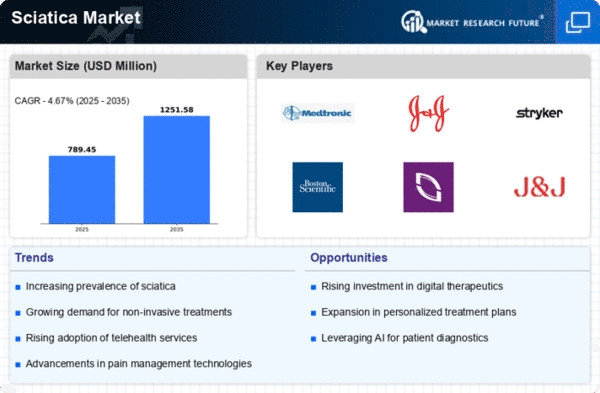
As per MRFR analysis, the Sciatica Market Size was estimated at 754.23 USD Million in 2024. The Sciatica industry is projected to grow from 798.1 in 2025 to 1251.58 by 2035, exhibiting a compound annual growth rate (CAGR) of 4.67 during the forecast period 2025 - 2035.

Key Market Trends & Highlights

The Sciatica Market is experiencing a transformative shift towards non-invasive therapies and technological advancements.

  • Rising awareness of spinal health is driving consumer interest in sciatica treatments across North America.
  • Technological integration in treatment options is enhancing patient outcomes, particularly in the physical therapy segment.
  • The shift towards non-invasive therapies is evident, with acupuncture emerging as the fastest-growing treatment modality in the Asia-Pacific region.
  • Increasing prevalence of sciatica and advancements in medical technology are key drivers propelling market growth.

Market Size & Forecast

2024 Market Size 754.23 (USD Million)
2035 Market Size 1251.58 (USD Million)
CAGR (2025 - 2035) 4.67%
Largest Regional Market Share in 2024 North America

Major Players

<p>Medtronic (US), Johnson & Johnson (US), Stryker (US), Boston Scientific (US), NuVasive (US), DePuy Synthes (US), Globus Medical (US), Zimmer Biomet (US)</p>

Market Trends

The Sciatica Market is currently experiencing a notable evolution, driven by a combination of increasing awareness regarding spinal health and the rising prevalence of conditions leading to sciatica. This market appears to be influenced by a growing demographic of aging individuals, who are more susceptible to back-related ailments. Additionally, advancements in treatment modalities, including both surgical and non-surgical options, seem to enhance patient outcomes, thereby fostering a more informed patient base. As healthcare providers continue to emphasize preventive measures and holistic approaches, the demand for effective sciatica management solutions is likely to rise. Moreover, the integration of technology in treatment protocols, such as telemedicine and digital health applications, indicates a shift towards more accessible care. Patients are increasingly seeking out non-invasive therapies, which may include physical therapy and chiropractic interventions. This trend suggests a potential transformation in how sciatica is managed, with a focus on personalized care plans that cater to individual needs. Overall, the Sciatica Market appears poised for growth, reflecting broader trends in healthcare that prioritize patient-centered approaches and innovative treatment strategies.

Rising Awareness of Spinal Health

There is an increasing recognition of the importance of spinal health among the general population. This trend is likely to drive demand for sciatica-related treatments and preventive measures, as individuals become more proactive in seeking care.

Technological Integration in Treatment

The incorporation of technology into treatment protocols, such as telehealth services and mobile health applications, appears to enhance patient engagement and accessibility. This trend may lead to more efficient management of sciatica.

Shift Towards Non-Invasive Therapies

Patients are increasingly favoring non-invasive treatment options, such as physical therapy and chiropractic care. This shift suggests a growing preference for holistic approaches to managing sciatica, potentially impacting market dynamics.

Sciatica Market Market Drivers

Rising Healthcare Expenditure

The Global sciatica treatment market is also benefiting from rising healthcare expenditure across various regions. Governments and private sectors are increasingly investing in healthcare infrastructure, which enhances access to sciatica treatment. This trend is particularly evident in developing countries, where improved healthcare facilities and services are becoming more accessible. As healthcare spending continues to rise, it is likely that more patients will receive timely and effective sciatica treatment, thereby contributing to the market's growth trajectory. The projected increase in market value to 26.1 USD Billion by 2035 reflects this positive trend

Rising Prevalence of Sciatica

The Global Sciatica Market Industry is experiencing growth driven by the increasing prevalence of sciatica disease among the population. Factors such as an aging demographic and sedentary lifestyles contribute to this trend. The sciatica treatment market is projected to reach USD 15.7 billion by 2024, indicating a growing demand for effective options. As more individuals seek relief from sciatica pain, healthcare providers are likely to expand their offerings, including physical therapy and surgical interventions. This growing patient population necessitates advancements in sciatica treatment modalities, thereby propelling the market forward.

Increased Awareness and Education

There is a growing emphasis on awareness and education regarding sciatica, which is positively impacting the Global Sciatica Market Industry. Healthcare campaigns aimed at informing the public about the causes, treatment for sciatica options are becoming more prevalent. This increased awareness encourages individuals to seek medical advice sooner, potentially leading to earlier interventions and better outcomes.As a result, healthcare providers may see an uptick in patient consultations, further driving market growth. The anticipated compound annual growth rate of 4.73% from 2025 to 2035 underscores the importance of education in shaping patient behavior and treatment pathways.

Growing Demand for Non-Invasive Treatments

The demand for non-invasive treatment options is shaping the Global sciatica treatment market Industry. Patients are increasingly favoring conservative sciatica management strategies, such as physical therapy, chiropractic care, and sciatica pain management techniques, over surgical interventions. This shift is driven by a desire to avoid the risks associated with surgery and to seek holistic approaches to sciatica pain relief. As healthcare providers adapt to this demand, they are likely to expand their offerings of non-invasive treatments, which may lead to a broader patient base. The market's growth, projected at a CAGR of 4.73% from 2025 to 2035, indicates a sustained interest in these alternatives.

Advancements in sciatica treatment technologies

Technological innovations in treatment for sciatica are significantly influencing the sciatica treatment market Industry. The introduction of minimally invasive surgical techniques and advanced imaging technologies enhances the accuracy of diagnoses and the effectiveness of sciatica treatment. For instance, procedures like endoscopic discectomy are gaining traction due to their reduced recovery times and improved patient outcomes. As these technologies continue to evolve, they are expected to attract more patients seeking relief from sciatica, thereby contributing to the market's projected growth to 26.1 USD Billion by 2035. This trend suggests a shift towards more patient-centered care in managing sciatica.

Sciatica Treatment Market: Outlook and Key Trends

The growth in the sciatica treatment market is expected to drive significant growth in the industry, estimated to grow from $15.7 billion in 2024 to $26.1 billion by 2035. This growth trajectory suggests a compound annual growth rate of 4.73% from 2025 to 2035. Factors contributing to this expansion include the rising prevalence of sciatica, advancements in treatment technologies, and increased healthcare expenditure. As the market evolves, stakeholders are likely to focus on innovative solutions and patient-centered care to meet the growing demand for effective sciatica disease management.


Emerging Non-Opioid & Minimally Invasive Innovations

The sciatica treatment landscape is currently undergoing a pivot away from traditional open surgery and opioids toward ultra-minimally invasive technologies. Key among these is the rise of temporary Peripheral Nerve Stimulation (PNS) systems, such as the SPRINT system, which allow for 60-day implantable treatment without permanent hardware.

Simultaneously, the spinal cord stimulation (SCS) market is evolving with "closed-loop" technology, where devices automatically adjust electrical pulses in real-time based on the patient's spinal cord activity, significantly improving long-term sciatica pain management efficacy without manual adjustments.


Pipeline Breakthroughs in Injectables & Regenerative Care

On the pharmaceutical front, the market is anticipating the approval of the first targeted, non-opioid epidural treatments. Semdexa (SP-102), a novel viscous gel formulation of dexamethasone, is in late-stage development and aims to replace off-label liquid steroids by offering extended residence time at the nerve root.

Additionally, regenerative technologies like SoftWave therapy (unfocused acoustic waves) and investigational clonidine micropellets are gaining traction, offering patients non-surgical alternatives that recruit the body's own stem cells to repair tissue and modulate pain pathways without the risks associated with systemic medication.

Market Segment Insights

By Treatment Type: Physical Therapy (Largest) vs. Acupuncture (Fastest-Growing)

<p>The Sciatica Market exhibits a diverse segment distribution with Physical Therapy holding the largest share. This is primarily attributed to its non-invasive nature and growing recognition as a key treatment modality for sciatica. Following Physical Therapy, Medication also plays a significant role in symptom management but has a smaller share. In contrast, Acupuncture is gaining traction as a complementary approach, increasingly endorsed by practitioners aiming to provide holistic care. Growth trends indicate that the shift towards non-invasive treatments is driving the expansion of Physical Therapy and Acupuncture in the Sciatica Market. The growing awareness of the benefits of these treatments, alongside increasing patient preferences for alternative therapies, are pivotal in shaping the treatment landscape. Factors such as the aging population and rising incidences of sciatica further fuel this demand, indicating a robust future for these treatment types.</p>

<p>Physical Therapy (Dominant) vs. Acupuncture (Emerging)</p>

<p>Physical Therapy is recognized as the dominant treatment modality for sciatica, focusing on rehabilitative techniques that enhance mobility and reduce pain. This segment benefits from strong clinical support and patient trust, positioning it as the first line of defense against sciatica symptoms. In contrast, Acupuncture is emerging as a popular alternative, lauded for its therapeutic benefits and a growing body of supportive research. As more patients seek holistic approaches, Acupuncture's appeal is rapidly expanding, especially among those looking for non-pharmaceutical options. Both treatments cater to the modern patient’s desire for personalized care, establishing their vital roles in comprehensive sciatica management.</p>

By Severity Level: Moderate (Largest) vs. Severe (Fastest-Growing)

<p>The Sciatica Market is significantly segmented by the severity level of the condition, with 'Moderate' sciatica representing the largest portion of the segment share. Patients experiencing moderate pain are more commonly treated and seek medical advice, resulting in higher market engagement compared to mild and chronic conditions. Meanwhile, 'Severe' sciatica reflects a potentially underserved demographic, thus attracting increasing investments from healthcare providers and pharmaceutical companies.</p>

<p>Moderate (Dominant) vs. Severe (Emerging)</p>

<p>'Moderate' sciatica constitutes a dominant market segment, as it affects a substantial number of patients who actively seek treatment. This group typically experiences enduring pain that necessitates medical intervention and aids in maintaining a consistent demand for therapies, including physical therapy and pain management medications. In contrast, 'Severe' sciatica is emerging as a significant focus area due to its debilitating nature. Patients with severe symptoms often face profound lifestyle interruptions and seek aggressive treatment options. As awareness of severe sciatica's impact grows, healthcare systems are prioritizing innovative therapies and specialized pain management approaches to cater to this segment, showing strong potential for growth.</p>

By Patient Demographics: Age Group (Largest) vs. Gender (Fastest-Growing)

<p>The Sciatica Market exhibits a notable share distribution across different patient demographics. Among age groups, individuals aged 40-60 years represent the largest segment due to the prevalence of sciatica in this middle-aged cohort. Concurrently, the gender distribution indicates a rising trend in female patients seeking treatment, reflecting a growing awareness and prevalence among women, particularly those who lead sedentary lifestyles or engage in physically demanding occupations. In terms of growth trends, the market is witnessing a significant increase in younger patients (<40 years) as more individuals become aware of sciatica and its long-term implications. The healthcare sector's focus on preventive care and tailored treatment plans for specific demographics further drives this growth. Meanwhile, the increasing participation of women in the workforce is leading to greater incidences of sciatica diagnosed among female patients, contributing to their rapid market expansion.</p>

<p>Age Group: 40-60 (Dominant) vs. Gender: Female (Emerging)</p>

<p>The age group of 40-60 years is currently the dominant demographic in the Sciatica Market, primarily due to physiological factors and lifestyle choices that predispose this cohort to sciatica. Many individuals in this age range experience degenerative changes in the spine, leading to increased incidence rates. Conversely, the female segment is emerging rapidly, driven by lifestyle choices, particularly the rise of sedentary office jobs and increased physical activities that can lead to sciatica. Women are increasingly seeking medical attention for their symptoms, resulting in a growing market share. This demographic shift highlights the need for targeted healthcare solutions that cater to the specific needs and challenges of both age-related and gender-related sciatica cases.</p>

By Symptom Type: Pain (Largest) vs. Numbness (Fastest-Growing)

<p>In the Sciatica Market, the symptom type segment displays a diverse distribution of market demand characterized by pain, numbness, weakness, and tingling sensations. Notably, pain emerges as the largest segment, capturing the majority of consumer experiences associated with sciatica. This is primarily due to the high prevalence of pain as a primary symptom, which correlates strongly with sciatica diagnoses across various demographics. Conversely, numbness is reported to be the fastest-growing segment, indicating an increasing awareness and recognition of this symptom in patients seeking treatment, leading to an escalated demand for targeted therapies.</p>

<p>Pain (Dominant) vs. Tingling (Emerging)</p>

<p>The symptoms of pain and tingling hold distinct positions within the sciatica symptom type segment. Pain remains the dominant symptom, typically presenting as a sharp, shooting discomfort that radiates along the sciatic nerve pathway. This has driven a well-established market for analgesics and pain management therapies. On the other hand, tingling is categorized as an emerging symptom in the market, often noted in patients alongside other symptoms as nerve irritation symptoms. Its rising recognition in therapeutic approaches indicates a shift toward holistic treatments that address not just pain but the full spectrum of sciatica symptoms, possibly harnessing new product innovations and therapies.</p>

By Duration of Symptoms: Chronic (Largest) vs. Acute (Fastest-Growing)

<p>In the Sciatica Market, the segment distribution by duration of symptoms reveals that chronic sciatica constitutes the largest share. This segment accounts for a significant portion of overall cases, primarily due to the long-term nature of the condition, which tends to persist without proper treatment. Subacute cases follow, while acute sciatica has gained attention as the fastest-growing segment, driven by increasing awareness about early diagnosis and the importance of timely intervention.</p>

<p>Chronic (Dominant) vs. Acute (Emerging)</p>

<p>Chronic sciatica represents the dominant segment, characterized by persistent pain lasting longer than three months. This lengthy duration often results in significant lifestyle disruptions and increased healthcare utilization. In contrast, acute sciatica, marked by sudden onset and lasting less than six weeks, is emerging rapidly as healthcare providers emphasize immediate management strategies. The growth in the acute segment is fueled by rising patient education regarding early symptoms and the value of prompt treatment solutions. Both segments are critical in shaping treatment approaches, with chronic cases demanding long-term management and acute cases requiring swift intervention.</p>

Get more detailed insights about Sciatica Market Research Report- Forecast till 2035

Regional Insights

North America : Market Leader in Sciatica Care

North America continues to lead the sciatica market, holding a significant share of 377.12M in 2024. The region's growth is driven by advanced healthcare infrastructure, increasing prevalence of sciatica, and a rising aging population. Regulatory support for innovative treatments and reimbursement policies further enhance market dynamics. The demand for minimally invasive procedures is also on the rise, contributing to market expansion. The competitive landscape in North America is robust, featuring key players such as Medtronic, Johnson & Johnson, and Stryker. These companies are at the forefront of technological advancements, offering a range of treatment options from surgical interventions to pain management solutions. The U.S. remains the largest market, with Canada and Mexico also contributing to regional growth through improved healthcare access and awareness.

Europe : Emerging Market with Growth Potential

Europe's sciatica market is valued at 215.77M, reflecting a growing demand for effective treatment options. Factors such as an aging population, increasing awareness of sciatica, and advancements in medical technology are driving this growth. Regulatory frameworks in countries like Germany and France are supportive of innovative therapies, which is expected to further boost market expansion. The focus on patient-centered care is also influencing treatment modalities. Leading countries in Europe include Germany, France, and the UK, where healthcare systems are increasingly adopting advanced sciatica treatments. The competitive landscape features major players like Johnson & Johnson and Stryker, who are investing in research and development to enhance their product offerings. The presence of a well-established healthcare infrastructure supports the distribution and accessibility of sciatica solutions across the region.

Asia-Pacific : Rapidly Growing Healthcare Sector

The Asia-Pacific sciatica market, valued at 134.34M, is witnessing rapid growth driven by rising healthcare expenditures and increasing awareness of spinal health. Countries like China and India are experiencing a surge in demand for effective sciatica treatments due to their large populations and growing aging demographics. Regulatory bodies are also becoming more supportive of innovative medical solutions, which is expected to enhance market dynamics. In this region, key players such as Medtronic and Boston Scientific are expanding their presence, focusing on localized treatment options. The competitive landscape is evolving, with an increasing number of local companies entering the market. The growing emphasis on healthcare accessibility and affordability is likely to drive further growth in the Asia-Pacific sciatica market, making it a focal point for investment and innovation.

Middle East and Africa : Untapped Market with Opportunities

The Middle East and Africa sciatica market, valued at 27.0M, presents significant growth opportunities due to increasing healthcare investments and a rising prevalence of musculoskeletal disorders. The region is witnessing improvements in healthcare infrastructure, which is essential for the delivery of effective sciatica treatments. Regulatory bodies are beginning to recognize the importance of pain management solutions, which is expected to catalyze market growth. Countries like South Africa and the UAE are leading the way in adopting advanced medical technologies. The competitive landscape is characterized by a mix of local and international players, with companies like Zimmer Biomet making strides in the region. As awareness of sciatica increases, the demand for innovative treatment options is likely to rise, positioning the Middle East and Africa as a promising market for future investments.

Key Players and Competitive Insights

The Sciatica Market is characterized by a competitive landscape that is increasingly shaped by innovation, strategic partnerships, and a focus on patient-centric solutions. Key players such as Medtronic (US), Johnson & Johnson (US), and Stryker (US) are actively engaged in enhancing their product offerings and expanding their market reach. Medtronic (US) has positioned itself as a leader in spinal health solutions, emphasizing the development of advanced technologies that improve patient outcomes. Meanwhile, Johnson & Johnson (US) continues to leverage its extensive research capabilities to introduce novel therapies, while Stryker (US) focuses on integrating digital health solutions into its product lines, thereby enhancing the overall patient experience.

The business tactics employed by these companies reflect a concerted effort to optimize supply chains and localize manufacturing processes. The Sciatica Market appears to be moderately fragmented, with a mix of established players and emerging companies vying for market share. The collective influence of these key players is significant, as they not only drive innovation but also set industry standards that smaller companies often strive to meet.

In November 2025, Medtronic (US) announced the launch of a new spinal implant designed to provide enhanced stability and support for patients suffering from sciatica. This strategic move underscores Medtronic's commitment to innovation and its focus on addressing unmet medical needs in the spinal health sector. The introduction of this product is likely to strengthen Medtronic's market position and could potentially lead to increased adoption among healthcare providers.

In October 2025, Johnson & Johnson (US) revealed a partnership with a leading telehealth platform to facilitate remote monitoring of patients undergoing treatment for sciatica. This collaboration is indicative of the growing trend towards digital health solutions, which aim to improve patient engagement and adherence to treatment protocols. By integrating telehealth capabilities, Johnson & Johnson is not only enhancing its service offerings but also positioning itself as a forward-thinking player in the market.

In September 2025, Stryker (US) expanded its product portfolio by acquiring a startup specializing in AI-driven diagnostic tools for spinal disorders. This acquisition reflects Stryker's strategic focus on integrating artificial intelligence into its offerings, which could lead to more accurate diagnoses and personalized treatment plans for sciatica patients. The move is expected to bolster Stryker's competitive edge in a rapidly evolving market.

As of December 2025, the competitive trends in the Sciatica Market are increasingly defined by digitalization, sustainability, and the integration of AI technologies. Strategic alliances are becoming more prevalent, as companies recognize the value of collaboration in driving innovation and enhancing service delivery. Looking ahead, it is anticipated that competitive differentiation will evolve, shifting from traditional price-based competition to a focus on technological advancements, innovative solutions, and reliable supply chains. This transition may ultimately redefine the landscape of the Sciatica Market, fostering an environment where patient outcomes and satisfaction take precedence.

Key Companies in the Sciatica Market include

Industry Developments

Recent Developments in sciatica treatment market

December 2024

To pave the way for a major advancement in non-opioid pain medications, Vertex Pharmaceuticals has released positive data from the Phase 2 trial of Suvaterizine (VX-548).

Targeting lumbosacral radiculopathy, this selective NaV1.8 inhibitor has demonstrated strong potential in reducing chronic sciatica pain. These findings offer a promising outlook for patients who previously experienced limited relief from traditional sciatica pain management treatments.


June 2024

Silex Holding Company has published the Phase 3 clinical trial results of SP-102 (SEMDEXA), a new injectable corticosteroid gel, in the PAIN journal.

The research revealed that, compared to placebo, this treatment provided long-lasting relief from sciatica symptoms, particularly persistent leg pain and numbness. This indicates that it could become an effective treatment option for patients suffering from sciatica.


February 2024

Ergo-Flex Technologies has received FDA approval for its upgraded therapeutic traction system, specifically designed for professional healthcare facilities.

This device can serve as a non-invasive option for sciatica treatment, as it helps reduce pressure on the sciatic nerve and improves mobility in patients suffering from lower back pain. As a result, individuals with chronic spinal conditions now have access to a safe and effective new treatment option.


In 2023

SpineThera, Inc. has announced the continuation of clinical trials for SX600, a sustained-release injectable medication.

This drug is being developed to provide long-term and consistent management of sciatica pain, potentially reducing the frequent need for injections or oral opioids. This development significantly increases the possibility of making sciatica treatment safer, more convenient, and long-lasting.

Future Outlook

Sciatica Market Future Outlook

<p>The Sciatica Market is projected to grow at a 4.67% CAGR from 2024 to 2035, driven by increasing prevalence, advancements in treatment options, and rising healthcare expenditure.</p>

New opportunities lie in:

  • <p>Development of telehealth platforms for sciatica management</p>
  • <p>Investment in AI-driven diagnostic tools for personalized treatment</p>
  • <p>Expansion of minimally invasive surgical techniques for sciatica relief</p>

<p>By 2035, the Sciatica Market is expected to achieve substantial growth, reflecting evolving treatment paradigms and increased patient demand.</p>

Market Segmentation

Sciatica Market Symptom Type Outlook

  • Pain
  • Numbness
  • Weakness
  • Tingling

Sciatica Market Severity Level Outlook

  • Mild
  • Moderate
  • Severe
  • Chronic

Sciatica Market Treatment Type Outlook

  • Physical Therapy
  • Medication
  • Surgery
  • Chiropractic Care
  • Acupuncture

Sciatica Market Duration of Symptoms Outlook

  • Acute
  • Subacute
  • Chronic

Sciatica Market Patient Demographics Outlook

  • Age Group
  • Gender
  • Occupation
  • Lifestyle

Report Scope

MARKET SIZE 2024754.23(USD Million)
MARKET SIZE 2025798.1(USD Million)
MARKET SIZE 20351251.58(USD Million)
COMPOUND ANNUAL GROWTH RATE (CAGR)4.67% (2024 - 2035)
REPORT COVERAGERevenue Forecast, Competitive Landscape, Growth Factors, and Trends
BASE YEAR2024
Market Forecast Period2025 - 2035
Historical Data2019 - 2024
Market Forecast UnitsUSD Million
Key Companies ProfiledMedtronic (US), Johnson & Johnson (US), Stryker (US), Boston Scientific (US), NuVasive (US), DePuy Synthes (US), Globus Medical (US), Zimmer Biomet (US)
Segments CoveredTreatment Type, Severity Level, Patient Demographics, Symptom Type, Duration of Symptoms
Key Market OpportunitiesIntegration of telehealth solutions enhances access to Sciatica treatment and patient management.
Key Market DynamicsRising demand for non-invasive treatments drives innovation and competition in the sciatica management market.
Countries CoveredNorth America, Europe, APAC, South America, MEA

FAQs

What is the expected growth rate of the global sciatica treatment market?

Sciatica treatment market size is projected to expand at 4.73% CAGR from 2024-2035.

What is the expected valuation of the global sciatica treatment market?

Sciatica treatment market valuation can touch USD 26.1 Billion by 2035.

What factors can drive the global sciatica treatment market?

Sciatica treatment market is driven by the large elderly populace and intense screening procedures for detection of Sciatica Pain.

What factors can restrain the global sciatica treatment market growth?

High costs of treatment for sciatica and adverse effects of its drugs can stunt the global sciatica market growth.

Name the key players of the global sciatica market?

Neurotech, Novartis AG, AstraZeneca, Sanofi, Endo Pharmaceuticals, Omega Laser Systems Ltd., Teva Pharmaceutical Industries, Omron Healthcare, Inc., and Nidd Valley Medical are key players of the global sciatica market.

  1. SECTION I: EXECUTIVE SUMMARY AND KEY HIGHLIGHTS
    1. | 1.1 EXECUTIVE SUMMARY
  2. SECTION II: SCOPING, METHODOLOGY AND MARKET STRUCTURE
    1. | 2.1 MARKET INTRODUCTION
    2. | 2.2 RESEARCH METHODOLOGY
  3. SECTION III: QUALITATIVE ANALYSIS
    1. | 3.1 MARKET DYNAMICS
    2. | 3.2 MARKET FACTOR ANALYSIS
  4. SECTION IV: QUANTITATIVE ANALYSIS
    1. | 4.1 Healthcare, BY Treatment Type (USD Million)
    2. | 4.2 Healthcare, BY Severity Level (USD Million)
    3. | 4.3 Healthcare, BY Patient Demographics (USD Million)
    4. | 4.4 Healthcare, BY Symptom Type (USD Million)
    5. | 4.5 Healthcare, BY Duration of Symptoms (USD Million)
    6. | 4.6 Healthcare, BY Region (USD Million)
  5. SECTION V: COMPETITIVE ANALYSIS
    1. | 5.1 Competitive Landscape
    2. | 5.2 Company Profiles
    3. | 5.3 Appendix

Sciatica Market Segmentation

Market Segmentation Overview

  • Detailed segmentation data will be available in the full report
  • Comprehensive analysis by multiple parameters
  • Regional and country-level breakdowns
  • Market size forecasts by segment
Infographic

Free Sample Request

Kindly complete the form below to receive a free sample of this Report

Get Free Sample

Customer Strories

Compare Licence

×
Features License Type
Single User Multiuser License Enterprise User
Price $4,950 $5,950 $7,250
Maximum User Access Limit 1 User Upto 10 Users Unrestricted Access Throughout the Organization
Free Customization
Direct Access to Analyst
Deliverable Format
Platform Access
Discount on Next Purchase 10% 15% 15%
Printable Versions