Food Safety Regulations
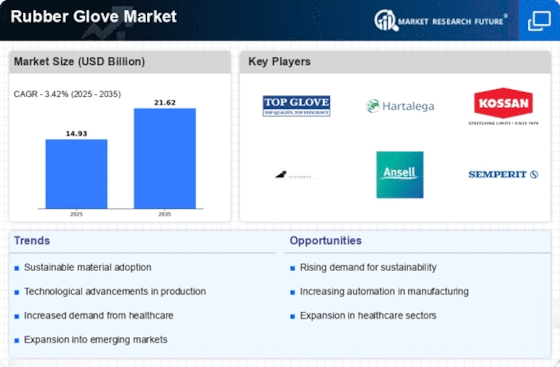
Stringent food safety regulations are increasingly influencing the Rubber Glove Market. As food safety becomes a paramount concern, regulatory bodies are enforcing guidelines that require food handlers to use protective gloves to prevent contamination. This trend is particularly pronounced in the food processing and service sectors, where compliance with safety standards is critical. Market analysis reveals that the demand for rubber gloves in the food industry is expected to grow by approximately 6% annually, driven by these regulatory requirements. Consequently, manufacturers are focusing on producing gloves that meet specific safety standards, thereby enhancing their market presence. The Rubber Glove Market is likely to see a surge in demand as businesses strive to adhere to these regulations.
Rising Health Awareness
The increasing awareness regarding health and hygiene is a pivotal driver for the Rubber Glove Market. Consumers are becoming more conscious of the importance of protective gear in various settings, including healthcare, food service, and industrial applications. This heightened awareness is reflected in the growing demand for high-quality rubber gloves, which are perceived as essential for preventing contamination and ensuring safety. Market data indicates that the healthcare sector alone accounts for a substantial share of the rubber glove consumption, with projections suggesting a compound annual growth rate of approximately 8% over the next few years. As individuals and organizations prioritize health and safety, the Rubber Glove Market is likely to experience sustained growth.
Technological Innovations
Technological innovations are reshaping the Rubber Glove Market, leading to the development of advanced glove materials and manufacturing processes. Innovations such as the incorporation of antimicrobial properties and enhanced durability are becoming increasingly prevalent. These advancements not only improve the performance of rubber gloves but also cater to the evolving needs of consumers across various sectors. Market data suggests that the introduction of new technologies could potentially increase the market share of premium rubber gloves, as consumers seek products that offer superior protection and comfort. As manufacturers invest in research and development, the Rubber Glove Market is expected to witness a transformation that aligns with modern consumer expectations.
Expanding Healthcare Sector
The expansion of the healthcare sector serves as a significant driver for the Rubber Glove Market. With an increasing number of healthcare facilities being established, the demand for medical gloves is on the rise. This trend is particularly evident in emerging economies, where investments in healthcare infrastructure are accelerating. According to recent statistics, the healthcare sector is projected to grow at a rate of 7% annually, leading to a corresponding increase in the consumption of rubber gloves. Furthermore, the ongoing advancements in medical technology and procedures necessitate the use of high-quality gloves to ensure safety and compliance. As the healthcare sector continues to evolve, the Rubber Glove Market is poised to benefit from this upward trajectory.
Environmental Sustainability
The growing emphasis on environmental sustainability is emerging as a crucial driver for the Rubber Glove Market. As consumers and businesses alike become more environmentally conscious, there is a rising demand for eco-friendly rubber gloves made from sustainable materials. This shift is prompting manufacturers to explore biodegradable and recyclable options, thereby reducing the environmental impact of glove production. Market trends indicate that the demand for sustainable rubber gloves is likely to increase by 5% annually, as organizations seek to enhance their sustainability profiles. Consequently, the Rubber Glove Market is adapting to these changes, with companies investing in sustainable practices to meet consumer expectations and regulatory pressures.