Rising Health Concerns
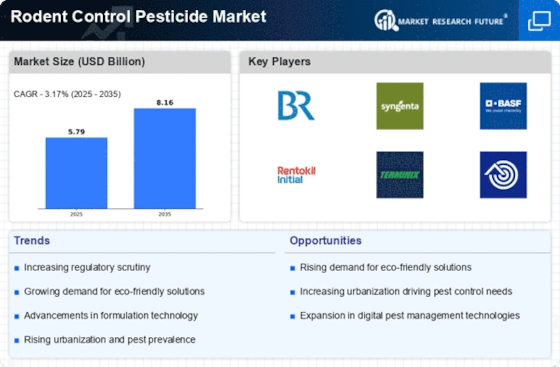
Health concerns related to rodent-borne diseases are likely to propel the Rodent Control Pesticide Market. Rodents are known carriers of various pathogens that can lead to serious health issues in humans, such as hantavirus and leptospirosis. As awareness of these health risks increases, both residential and commercial sectors are expected to invest more in rodent control measures. The World Health Organization has indicated that rodent infestations can lead to significant public health challenges, thereby driving the demand for effective rodent control pesticides. This heightened focus on health and safety is likely to create a robust market for pest control solutions in the Rodent Control Pesticide Market.
Increasing Urbanization
The rapid pace of urbanization appears to be a significant driver for the Rodent Control Pesticide Market. As more people migrate to urban areas, the density of human populations increases, leading to a higher likelihood of rodent infestations. Urban environments provide ample food sources and shelter for rodents, necessitating effective pest control measures. According to recent estimates, urban areas are expected to house over 68% of the world's population by 2050, which could lead to a corresponding rise in demand for rodent control solutions. Consequently, pest control companies are likely to expand their offerings in the Rodent Control Pesticide Market to address these growing challenges.
Growing Demand in Agriculture
The agricultural sector's increasing demand for rodent control solutions is a notable driver for the Rodent Control Pesticide Market. Rodents pose a significant threat to crops, leading to substantial economic losses for farmers. As agricultural practices intensify, the need for effective pest management becomes paramount. Reports indicate that rodent damage can account for up to 20% of crop yields in some regions, prompting farmers to seek reliable rodent control pesticides. This trend suggests that the agricultural sector will continue to be a vital market for pest control companies, thereby bolstering the overall growth of the Rodent Control Pesticide Market.
Regulatory Compliance and Standards
Regulatory compliance is becoming increasingly critical in the Rodent Control Pesticide Market. Governments worldwide are implementing stricter regulations regarding the use of pesticides, particularly concerning their environmental impact and safety. Companies that adhere to these regulations are likely to gain a competitive edge, as consumers become more discerning about the products they use. The Environmental Protection Agency has established guidelines that affect the formulation and application of rodenticides, which could lead to a shift in market dynamics. As a result, businesses that prioritize compliance and invest in safer, more effective products may thrive in the evolving landscape of the Rodent Control Pesticide Market.
Advancements in Pest Control Technology
Technological advancements in pest control methods are transforming the Rodent Control Pesticide Market. Innovations such as smart traps and eco-friendly pesticides are gaining traction, appealing to environmentally conscious consumers. The integration of technology in pest management not only enhances effectiveness but also improves safety for non-target species and humans. For instance, the development of biodegradable rodenticides is expected to capture a significant share of the market, as consumers increasingly prefer sustainable options. This trend suggests that companies focusing on research and development in the Rodent Control Pesticide Market may experience substantial growth opportunities.