Regulatory Frameworks
The establishment of stringent regulatory frameworks governing workplace safety and health standards is likely to bolster the PPE Glove Market. Governments and regulatory bodies are implementing policies that mandate the use of personal protective equipment in various sectors, particularly in healthcare and manufacturing. Compliance with these regulations is essential for organizations to avoid penalties and ensure the safety of their employees. As a result, the demand for PPE gloves is expected to rise, as companies seek to adhere to these guidelines. Market analysis indicates that the PPE Glove Market could benefit from increased investments in safety training and equipment, as organizations prioritize compliance and risk management strategies to protect their workforce.
Sustainability Trends
Sustainability trends are increasingly influencing consumer preferences and purchasing decisions within the PPE Glove Market. As environmental concerns gain prominence, manufacturers are exploring eco-friendly materials and production processes to meet the demand for sustainable products. Biodegradable gloves and those made from recycled materials are gaining traction among environmentally conscious consumers and businesses. This shift towards sustainability not only aligns with The PPE Glove Market. Market data suggests that the PPE Glove Market may see a notable increase in the adoption of sustainable practices, potentially leading to a new segment of eco-friendly gloves that cater to the growing demand for responsible consumption.
Rising Health Awareness
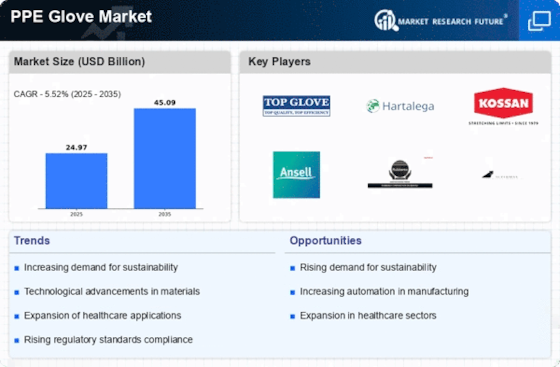
The increasing awareness regarding health and safety among individuals and organizations appears to be a primary driver for the PPE Glove Market. As more people recognize the importance of personal protective equipment, the demand for high-quality gloves is likely to rise. This trend is particularly evident in sectors such as healthcare, food processing, and manufacturing, where the use of gloves is essential for maintaining hygiene and preventing contamination. According to recent data, the PPE Glove Market is projected to experience a compound annual growth rate of approximately 7% over the next few years, driven by this heightened focus on health and safety protocols. Organizations are investing in training and resources to ensure compliance with safety standards, further propelling the demand for PPE gloves.
Technological Innovations
Technological innovations in glove manufacturing are emerging as a significant driver for the PPE Glove Market. Advances in materials science and production techniques are leading to the development of gloves that offer enhanced protection, comfort, and dexterity. For example, the introduction of nitrile and latex alternatives has improved the performance characteristics of gloves, making them more suitable for various applications. Furthermore, smart gloves equipped with sensors are being explored for use in healthcare and industrial settings, providing real-time data on hand hygiene and safety compliance. These innovations not only enhance user experience but also contribute to the overall growth of the PPE Glove Market, as consumers increasingly seek out high-performance products that meet their specific needs.
Expansion of End-User Industries
The expansion of various end-user industries, including healthcare, food service, and construction, is likely to significantly influence the PPE Glove Market. As these sectors continue to grow, the need for protective equipment, particularly gloves, is expected to increase correspondingly. For instance, the healthcare sector is witnessing a surge in demand for disposable gloves due to the rising number of medical procedures and patient care activities. Additionally, the food service industry is adopting stringent hygiene practices, necessitating the use of gloves to prevent foodborne illnesses. Market data suggests that the PPE Glove Market could see a substantial increase in revenue, with estimates indicating a potential market size of over $10 billion by 2026, driven by the expansion of these critical industries.