×
Request Free Sample ×

Kindly complete the form below to receive a free sample of this Report

* Please use a valid business email

Leading companies partner with us for data-driven Insights

clients tt-cursor
Hero Background
English
Chinese
French
Japanese
Korean
German
Spanish

Porcine Vaccines Market Share

ID: MRFR/Pharma/5969-HCR
90 Pages
Rahul Gotadki
February 2026

Porcine Vaccines Market Research Report Information by Type (Inactivated Vaccines, DNA Vaccines), Disease Indication (Diarrhea, Swine Influenza), End User - Forecast Till 2035

Share:
Download PDF ×

We do not share your information with anyone. However, we may send you emails based on your report interest from time to time. You may contact us at any time to opt-out.

Porcine Vaccines Market Infographic
Purchase Options

Market Share

Porcine Vaccines Market Share Analysis

Because pig health is so essential, the porcine vaccines market is competitive. Companies in this industry utilize several strategies to position themselves properly and gain market share. Developing novel pig medications is a key strategy. Companies invest in vaccine research to prevent various swine diseases. The organization is trusted for all pig health requirements since it offers a comprehensive selection of immunizations to guard against various health hazards. Because keeping pigs healthy is crucial, companies are working hard to develop vaccinations for prevalent illnesses. This strategy keeps pigs healthy and happy and makes the corporation a partner in hog farmers' disease prevention efforts, increasing market share. The Porcine Vaccines Market requires collaboration with veterinarians and pig health specialists. Smart partnerships help companies learn about new hazards and disease transmission. This ensures their immunizations are best for those places. These alliances improve new goods and increase medical community esteem, which grows the market. Businesses aim to contact more clients worldwide since the pig industry is global. This includes establishing distribution networks, partnering with area wholesalers and veterinary clinics, and meeting regulatory requirements. Globalization helps companies access new clients and markets. Companies pay to teach pig farmers to use animal medications. People get training, seminars, and awareness about the advantages of vaccination and illness prevention. Educating farmers increases product consumption and builds long-term relationships that increase market share. Because illness rates vary by location, companies ensure sure their vaccinations are effective against the most frequent diseases in each area. The organization differentiates itself by giving personalized remedies for prevalent ailments in pigs. Strategic pricing helps farmers lower vaccination prices while showcasing their disease prevention and crop efficiency benefits. Offering affordable, high-value solutions attracts pig producers and increases market share. A solid brand image is crucial in a competitive market. Companies spend money on traditional and online marketing to promote their brands. Attend agricultural fairs, create targeted web advertisements, and write relevant content. A good marketing strategy boosts brand awareness and market share. In the Porcine vaccinations Market, strong legal criteria and high-quality vaccinations are crucial. Companies invest in quality assurance and update their products to satisfy new regulations. Follow these criteria to gain pig farmers' confidence and protect the company's reputation and market share.


Author
Rahul Gotadki
Research Manager

He holds an experience of about 9+ years in Market Research and Business Consulting, working under the spectrum of Life Sciences and Healthcare domains. Rahul conceptualizes and implements a scalable business strategy and provides strategic leadership to the clients. His expertise lies in market estimation, competitive intelligence, pipeline analysis, customer assessment, etc.

Leave a Comment

FAQs

What is the projected market valuation of the Porcine Vaccines Market by 2035?

The Porcine Vaccines Market is projected to reach a valuation of 3.378 USD Billion by 2035.

What was the market valuation of the Porcine Vaccines Market in 2024?

In 2024, the Porcine Vaccines Market was valued at 1.92 USD Billion.

What is the expected CAGR for the Porcine Vaccines Market during the forecast period 2025 - 2035?

The expected CAGR for the Porcine Vaccines Market during the forecast period 2025 - 2035 is 5.27%.

Which companies are considered key players in the Porcine Vaccines Market?

Key players in the Porcine Vaccines Market include Zoetis, Merck Animal Health, Boehringer Ingelheim, and Elanco Animal Health.

What are the main types of vaccines in the Porcine Vaccines Market?

The main types of vaccines in the Porcine Vaccines Market include inactivated vaccines, live attenuated vaccines, toxoid vaccines, recombinant vaccines, conjugate vaccines, and DNA vaccines.

What was the market size for inactivated vaccines in 2024?

In 2024, the market size for inactivated vaccines was 0.576 USD Billion.

How much is the market for Porcine Reproductive & Respiratory Syndrome (PRRS) vaccines expected to grow by 2035?

The market for PRRS vaccines is expected to grow from 0.576 USD Billion in 2024 to 1.008 USD Billion by 2035.

What is the projected market size for veterinary hospitals as an end-user in 2035?

The projected market size for veterinary hospitals as an end-user is expected to reach 1.68 USD Billion by 2035.

What segment of the Porcine Vaccines Market is expected to see the highest growth?

The segment for live attenuated vaccines is expected to see substantial growth, increasing from 0.384 USD Billion in 2024 to 0.648 USD Billion by 2035.

What is the market size for Porcine Circovirus Associated Disease (PCVAD) vaccines in 2024?

In 2024, the market size for Porcine Circovirus Associated Disease (PCVAD) vaccines was 0.384 USD Billion.

Market Summary

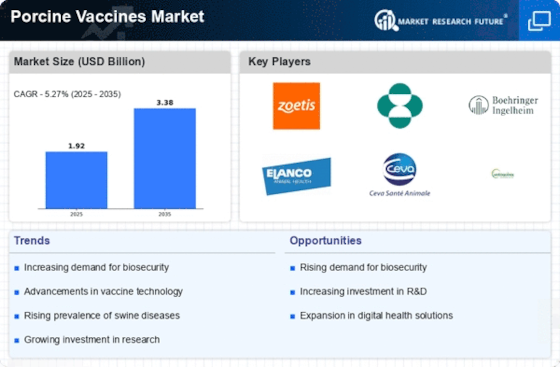
As per Market Research Future analysis, the Porcine Vaccines Market Size was estimated at 1.92 USD Billion in 2024. The Porcine Vaccines industry is projected to grow from 2.021 USD Billion in 2025 to 3.378 USD Billion by 2035, exhibiting a compound annual growth rate (CAGR) of 5.27% during the forecast period 2025 - 2035

Key Market Trends & Highlights

The Porcine Vaccines Market is experiencing robust growth driven by technological advancements and increasing awareness of animal health.

  • North America remains the largest market for porcine vaccines, driven by a well-established livestock industry. The Asia-Pacific region is emerging as the fastest-growing market, reflecting rising investments in animal health. Inactivated vaccines dominate the market, while live attenuated vaccines are witnessing rapid growth due to their effectiveness. Key drivers include the increasing incidence of porcine diseases and regulatory support for vaccine development.

Market Size & Forecast

2024 Market Size 1.92 (USD Billion)
2035 Market Size 3.378 (USD Billion)
CAGR (2025 - 2035) 5.27%
Largest Regional Market Share in 2024 Americas

Major Players

<a href="https://www.zoetisus.com/products/pork/">Zoetis (US),</a> Merck Animal Health (US), Boehringer Ingelheim (DE), <a href="https://farmanimal.elanco.com/us/products-services/swine/prrs">Elanco Animal Health</a> (US), Ceva Santé Animale (FR), Vetoquinol (FR), Huvepharma (BG), Phibro Animal Health (US), IDT Biologika (DE)

Market Trends

The Porcine Vaccines Market is currently experiencing a dynamic evolution, driven by various factors that influence both production and consumption. The increasing global demand for pork, coupled with heightened awareness regarding animal health, has led to a surge in vaccine development aimed at preventing diseases in swine populations. This trend is further supported by advancements in biotechnology, which enable the creation of more effective and targeted vaccines. Additionally, regulatory frameworks are becoming more stringent, prompting manufacturers to innovate and comply with safety standards, thereby enhancing the overall quality of vaccines available in the market. Moreover, the Porcine Vaccines Market is witnessing a shift towards preventive healthcare measures, as stakeholders recognize the economic implications of disease outbreaks in livestock. This proactive approach not only safeguards animal welfare but also ensures food security for the growing global population. The integration of digital technologies in vaccine distribution and monitoring is also emerging, potentially streamlining processes and improving traceability. As the market continues to adapt to these changes, it appears poised for sustained growth, with opportunities for new entrants and established players alike to contribute to advancements in swine health management.

Rising Demand for Sustainable Practices

The Porcine Vaccines Market is increasingly influenced by the demand for sustainable farming practices. Producers are seeking vaccines that not only enhance animal health but also align with environmental stewardship. This trend suggests a shift towards more eco-friendly vaccine formulations and production methods.

Technological Advancements in Vaccine Development

Innovations in biotechnology are playing a crucial role in the Porcine Vaccines Market. The development of novel vaccine platforms, such as mRNA technology, appears to enhance efficacy and reduce production times. This trend indicates a potential for more rapid responses to emerging diseases.

Focus on Preventive Health Strategies

There is a growing emphasis on preventive health measures within the Porcine Vaccines Market. Stakeholders are increasingly recognizing the economic benefits of vaccination programs, which may lead to reduced disease incidence and improved herd productivity. This focus on prevention could reshape market dynamics.

Porcine Vaccines Market Market Drivers

Advancements in Vaccine Technology

Advancements in vaccine technology are significantly influencing the Porcine Vaccines Market. Innovations such as recombinant vaccines and DNA vaccines are emerging as effective alternatives to traditional methods. These new technologies offer enhanced efficacy and safety profiles, which are crucial for gaining acceptance among producers. Moreover, the ability to develop vaccines that target multiple pathogens simultaneously could streamline vaccination processes and reduce costs. As research continues to evolve, the market is likely to see a surge in the availability of advanced vaccine options, catering to the diverse needs of the swine industry. This technological evolution is expected to play a pivotal role in shaping the future landscape of porcine vaccination.

Economic Growth in Emerging Markets

Economic growth in emerging markets is contributing to the expansion of the Porcine Vaccines Market. As these regions experience increased investment in agriculture and livestock production, the demand for effective vaccination solutions is on the rise. The growing middle class in these markets is also driving the demand for high-quality pork products, which necessitates improved animal health management practices. Consequently, producers are more inclined to invest in vaccines to ensure the health of their herds. This trend indicates a promising opportunity for vaccine manufacturers to penetrate these markets, as they seek to meet the rising demand for porcine vaccines that can enhance productivity and animal welfare.

Increasing Incidence of Porcine Diseases

The rising incidence of porcine diseases, such as Porcine Reproductive and Respiratory Syndrome (PRRS) and Swine Influenza, is a primary driver for the Porcine Vaccines Market. These diseases have led to significant economic losses in the swine industry, prompting farmers and producers to seek effective vaccination solutions. According to recent data, the economic impact of PRRS alone can reach billions annually, underscoring the urgency for vaccination. As awareness of these diseases grows, the demand for innovative vaccines that can provide effective protection is likely to increase. This trend indicates a robust market potential for vaccine manufacturers, as they strive to develop products that can mitigate the impact of these diseases on swine health and productivity.

Regulatory Support for Vaccine Development

Regulatory bodies are increasingly supporting the development and approval of vaccines for porcine diseases, which is a significant driver for the Porcine Vaccines Market. Initiatives aimed at streamlining the approval process for new vaccines can enhance market entry for innovative products. For instance, the introduction of expedited review processes for vaccines targeting high-impact diseases may encourage investment in research and development. This regulatory support not only fosters innovation but also ensures that effective vaccines reach the market more swiftly. As a result, the overall growth of the porcine vaccine sector is likely to be bolstered by favorable regulatory environments that prioritize animal health and welfare.

Growing Awareness of Animal Health and Welfare

There is a growing awareness of animal health and welfare among consumers and producers, which is driving the Porcine Vaccines Market. As consumers become more conscious of the conditions under which livestock are raised, there is an increasing demand for products that ensure the health and well-being of animals. This trend is reflected in the rising adoption of vaccination programs aimed at preventing diseases in pigs. Furthermore, producers are recognizing that healthy animals lead to better productivity and profitability. Consequently, the emphasis on animal welfare is likely to propel the demand for effective vaccines, as stakeholders seek to align with consumer expectations and regulatory standards.

Market Segment Insights

By Type: Inactivated Vaccines (Largest) vs. Live Attenuated Vaccines (Fastest-Growing)

In the Porcine Vaccines Market, the type of vaccine significantly influences market share dynamics. Inactivated vaccines dominate the market due to their proven efficacy and safety profile, being a preferred choice among veterinarians and pig farmers. Meanwhile, live attenuated vaccines follow closely, leveraging their ability to provide rapid immunity and stimulate robust immune responses, making them popular for preventive measures against prevalent diseases in swine populations. The growth trends in this segment are propelled by increasing awareness of swine health and a rise in pig farming practices globally. Additionally, advances in vaccine technology, such as the development of recombinant and DNA vaccines, are creating new opportunities within the market. As such, prioritizing health management in livestock is becoming increasingly essential, further driving demand for innovative vaccine solutions.

Inactivated Vaccines (Dominant) vs. Recombinant Vaccines (Emerging)

Inactivated vaccines are a dominant force within the Porcine Vaccines Market, known for their reliability and safety. These vaccines are often preferred in commercial pig farming due to their ability to elicit strong immune responses without the risk of disease transmission. On the other hand, recombinant vaccines are emerging as a significant alternative, utilizing advanced biotechnology to enhance efficacy and safety. They provide specific protection against certain pathogens, showcasing quicker development cycles and the potential for stability in various storage conditions. As<a href="https://www.marketresearchfuture.com/reports/animal-health-market-7163"> animal health </a>protocols evolve, the introduction and acceptance of recombinant vaccines are likely to increase, catering to the industry’s demand for more effective immunization strategies against evolving diseases.

By Disease Indication: PED (Largest) vs. PRRS (Fastest-Growing)

In the Porcine Vaccines Market, the market share distribution is dominated by the Porcine Epidemic Diarrhea (PED) vaccine, which holds the largest share among disease indications. Following PED, the Porcine Reproductive &amp; Respiratory Syndrome (PRRS) vaccine is also significant, emerging as the fastest-growing segment. Other notable competitors in the market include Swine Influenza, Aujeszky's Disease, and Porcine Circovirus Associated Disease (PCVAD), all of which contribute to the overall market landscape, but with lesser shares than the leading segments. The growth trends within this segment are largely driven by rising incidence rates of the diseases and heightened awareness of the economic impacts of these conditions on swine production. Additionally, advancements in vaccine technology and increased investments in research and development are further propelling market growth. The ongoing emphasis on biosecurity and disease prevention among swine producers underscores the critical need for effective vaccination programs, thereby bolstering the demand for these vaccines.

PED (Dominant) vs. PRRS (Emerging)

The Porcine Epidemic Diarrhea (PED) vaccine remains the dominant force in the Porcine Vaccines Market, known for its crucial role in controlling outbreaks of this highly contagious disease, which can significantly impact pig mortality rates and production efficiency. The high levels of awareness and preventive measures taken by producers have reinforced the strong market position of PED vaccines. Conversely, the Porcine Reproductive &amp; Respiratory Syndrome (PRRS) vaccine is positioned as an emerging segment, experiencing rapid growth due to an increase in the prevalence of PRRS in swine herds. The continuous challenges posed by this respiratory disease are leading to heightened innovation and adoption of effective PRRS vaccines, as producers strive to mitigate the health impacts on their livestock.

By End-user: Hog Production Farm (Largest) vs. Veterinary Hospitals (Fastest-Growing)

In the Porcine Vaccines Market, the end-user segment is primarily dominated by hog production farms, which utilize a vast majority of the vaccines to ensure herd health and productivity. These farms require continuous vaccination for disease prevention, making them a key player in the market. Veterinary hospitals, while representing a smaller portion of the market share, are increasingly significant as they often play a vital role in the distribution and administration of porcine vaccines, catering to smaller livestock operations and niche markets.

End-User: Hog Production Farm (Dominant) vs. Veterinary Hospitals (Emerging)

Hog production farms are characterized by their large-scale operations and focus on maximizing health outcomes for their herds through preventive measures, including vaccination. The demand for vaccines in these settings is driven by the need for maintaining herd immunity and productivity. In contrast, veterinary hospitals are emerging as vital players in the market, particularly as awareness of animal health rises among smaller producers. These facilities offer not only vaccination services but also consultations, diagnostics, and treatment, catering to a specialized clientele. As the industry evolves, both segments are crucial to ensuring the overall health of pig populations.

Get more detailed insights about Porcine Vaccines Market Research Report - Forecast till 2035

Regional Insights

North America : Leading Market for Innovation

North America is the largest market for porcine vaccines, holding approximately 45% of the global market share. The growth is driven by increasing pork production, rising awareness of animal health, and stringent regulations promoting vaccination. The U.S. and Canada are the primary contributors, with a focus on innovative vaccine development and regulatory support enhancing market dynamics. The competitive landscape is dominated by key players such as Zoetis, Merck Animal Health, and Elanco Animal Health. These companies are investing in research and development to introduce advanced vaccines. The presence of established veterinary practices and a robust distribution network further strengthens the market position in this region.

Europe : Regulatory Framework and Growth

Europe is the second-largest market for porcine vaccines, accounting for around 30% of the global share. The growth is fueled by increasing pork consumption, advancements in veterinary medicine, and a strong regulatory framework that mandates vaccination for disease control. Countries like Germany and France lead the market, supported by EU regulations that promote animal health and welfare. The competitive landscape features major players such as Boehringer Ingelheim and Ceva Santé Animale, which are actively involved in developing innovative vaccine solutions. The presence of a well-established veterinary infrastructure and collaboration with agricultural organizations enhances market growth. The European Medicines Agency plays a crucial role in regulating vaccine approvals, ensuring safety and efficacy.

Asia-Pacific : Emerging Market with Potential

Asia-Pacific is witnessing rapid growth in the porcine vaccines market, holding approximately 20% of the global share. The increasing demand for pork, driven by population growth and rising incomes, is a significant growth driver. Countries like China and Vietnam are at the forefront, with government initiatives promoting vaccination to enhance livestock health and productivity. The competitive landscape is evolving, with both local and international players like Huvepharma and IDT Biologika entering the market. The region's diverse agricultural practices and varying regulatory environments present both challenges and opportunities for vaccine manufacturers. The focus on biosecurity and disease prevention is expected to further boost market growth in the coming years.

Middle East and Africa : Developing Market with Challenges

The Middle East and Africa region is gradually emerging in the porcine vaccines market, accounting for about 5% of the global share. The growth is driven by increasing awareness of animal health and the need for disease prevention in livestock. Countries like South Africa and Egypt are focusing on improving their veterinary services and vaccination programs to enhance pork production. The competitive landscape is characterized by a mix of local and international players, with companies like Vetoquinol and Phibro Animal Health making strides in the market. However, challenges such as limited access to veterinary services and varying regulatory standards hinder growth. Addressing these issues will be crucial for the region's market expansion.

Key Players and Competitive Insights

The Porcine Vaccines Market is characterized by a dynamic competitive landscape, driven by increasing demand for effective disease management in swine populations. Key players such as Zoetis (US), Boehringer Ingelheim (DE), and Merck Animal Health (US) are at the forefront, leveraging innovation and strategic partnerships to enhance their market positions. Zoetis (US) focuses on developing advanced vaccine formulations, while Boehringer Ingelheim (DE) emphasizes research and development to address emerging health threats in pigs. Merck Animal Health (US) is actively pursuing collaborations with academic institutions to foster innovation in vaccine technology, thereby shaping a competitive environment that prioritizes efficacy and safety in porcine health management.

The market structure appears moderately fragmented, with several players vying for market share through localized manufacturing and optimized supply chains. Companies are increasingly localizing their production facilities to reduce costs and improve responsiveness to regional demands. This tactic not only enhances supply chain efficiency but also allows for tailored vaccine solutions that meet specific local health challenges. The collective influence of these key players contributes to a competitive atmosphere where innovation and operational efficiency are paramount.

In August 2025, Boehringer Ingelheim (DE) announced the launch of a novel vaccine targeting Porcine Reproductive and Respiratory Syndrome (PRRS), a significant advancement in swine health management. This strategic move underscores the company's commitment to addressing critical health issues affecting the swine industry. By introducing this vaccine, Boehringer Ingelheim (DE) aims to enhance herd immunity and reduce economic losses associated with PRRS, thereby reinforcing its position as a leader in the porcine vaccines sector.

In September 2025, Merck Animal Health (US) expanded its portfolio by acquiring a biotechnology firm specializing in vaccine development for swine diseases. This acquisition is likely to bolster Merck's research capabilities and accelerate the introduction of innovative vaccine solutions. The strategic importance of this move lies in Merck's ability to integrate cutting-edge technologies into its existing product lines, potentially leading to enhanced efficacy and broader market reach.

In July 2025, Zoetis (US) entered into a partnership with a leading agricultural technology firm to develop a digital platform aimed at improving vaccine delivery and tracking in swine operations. This initiative reflects a growing trend towards digitalization in the animal health sector, where data-driven solutions are becoming essential for optimizing health management practices. The partnership is expected to enhance Zoetis's service offerings, providing farmers with tools to monitor vaccine efficacy and animal health in real-time.

As of October 2025, the Porcine Vaccines Market is witnessing a shift towards digitalization, sustainability, and the integration of artificial intelligence in vaccine development and distribution. Strategic alliances among key players are increasingly shaping the competitive landscape, fostering innovation and enhancing operational efficiencies. The evolution of competitive differentiation appears to be moving away from traditional price-based competition towards a focus on technological advancements, supply chain reliability, and innovative solutions that address the complex health challenges faced by the swine industry.

Key Companies in the Porcine Vaccines Market include

Industry Developments

In the year 2021

The vaccine was created together and manufactured using CrisBio. This improved the rate of vaccine sales in the market. 

Intended Audience

  • Porcine vaccines manufacturers
  • Porcine vaccines suppliers
  • Private research laboratories
  • Research and development (R&D) companies
  • Market research and consulting service providers
  • Government research laboratories
  • Contract manufacturing organizations

Future Outlook

Porcine Vaccines Market Future Outlook

The Porcine Vaccines Market is projected to grow at a 5.27% CAGR from 2025 to 2035, driven by increasing disease outbreaks, advancements in vaccine technology, and rising demand for pork products.

New opportunities lie in:

  • <p>Development of combination vaccines targeting multiple diseases</p>
  • <p> </p>
  • <p>Expansion into emerging markets with tailored vaccine solutions</p>
  • <p>Investment in <a href="https://www.marketresearchfuture.com/reports/digital-healthcare-market-7636">digital healthcare</a> platforms for vaccine tracking and management</p>

By 2035, the Porcine Vaccines Market is expected to achieve robust growth and enhanced market dynamics.

Market Segmentation

Porcine Vaccines Market Type Outlook

  • Inactivated vaccines
  • Live attenuated vaccines
  • Toxoid vaccines
  • Recombinant vaccines
  • Conjugate vaccines
  • DNA vaccines

Porcine Vaccines Market End-user Outlook

  • Veterinary Hospitals
  • Hog Production Farm

Porcine Vaccines Market Disease Indication Outlook

  • PED (Porcine Epidemic Diarrhea)
  • PRRS (Porcine Reproductive & Respiratory Syndrome)
  • Swine influenza
  • Aujeszky's disease (AD)
  • Porcine Circovirus Associated Disease (PCVAD)
  • Others

Report Scope

MARKET SIZE 2024 1.92(USD Billion)
MARKET SIZE 2025 2.021(USD Billion)
MARKET SIZE 2035 3.378(USD Billion)
COMPOUND ANNUAL GROWTH RATE (CAGR) 5.27% (2025 - 2035)
REPORT COVERAGE Revenue Forecast, Competitive Landscape, Growth Factors, and Trends
BASE YEAR 2024
Market Forecast Period 2025 - 2035
Historical Data 2019 - 2024
Market Forecast Units USD Billion
Key Companies Profiled Zoetis (US), Merck Animal Health (US), Boehringer Ingelheim (DE), Elanco Animal Health (US), Ceva Santé Animale (FR), Vetoquinol (FR), Huvepharma (BG), Phibro Animal Health (US), IDT Biologika (DE)
Segments Covered Type
Key Market Opportunities Advancements in vaccine technology enhance disease prevention in the Porcine Vaccines Market.
Key Market Dynamics Rising demand for porcine vaccines driven by regulatory changes and advancements in veterinary biotechnology.
Countries Covered North America, Europe, APAC, South America, MEA

FAQs

What is the projected market valuation of the Porcine Vaccines Market by 2035?

The Porcine Vaccines Market is projected to reach a valuation of 3.378 USD Billion by 2035.

What was the market valuation of the Porcine Vaccines Market in 2024?

In 2024, the Porcine Vaccines Market was valued at 1.92 USD Billion.

What is the expected CAGR for the Porcine Vaccines Market during the forecast period 2025 - 2035?

The expected CAGR for the Porcine Vaccines Market during the forecast period 2025 - 2035 is 5.27%.

Which companies are considered key players in the Porcine Vaccines Market?

Key players in the Porcine Vaccines Market include Zoetis, Merck Animal Health, Boehringer Ingelheim, and Elanco Animal Health.

What are the main types of vaccines in the Porcine Vaccines Market?

The main types of vaccines in the Porcine Vaccines Market include inactivated vaccines, live attenuated vaccines, toxoid vaccines, recombinant vaccines, conjugate vaccines, and DNA vaccines.

What was the market size for inactivated vaccines in 2024?

In 2024, the market size for inactivated vaccines was 0.576 USD Billion.

How much is the market for Porcine Reproductive & Respiratory Syndrome (PRRS) vaccines expected to grow by 2035?

The market for PRRS vaccines is expected to grow from 0.576 USD Billion in 2024 to 1.008 USD Billion by 2035.

What is the projected market size for veterinary hospitals as an end-user in 2035?

The projected market size for veterinary hospitals as an end-user is expected to reach 1.68 USD Billion by 2035.

What segment of the Porcine Vaccines Market is expected to see the highest growth?

The segment for live attenuated vaccines is expected to see substantial growth, increasing from 0.384 USD Billion in 2024 to 0.648 USD Billion by 2035.

What is the market size for Porcine Circovirus Associated Disease (PCVAD) vaccines in 2024?

In 2024, the market size for Porcine Circovirus Associated Disease (PCVAD) vaccines was 0.384 USD Billion.

  1. SECTION I: EXECUTIVE SUMMARY AND KEY HIGHLIGHTS
    1. EXECUTIVE SUMMARY
      1. Market Overview
      2. Key Findings
      3. Market Segmentation
      4. Competitive Landscape
      5. Challenges and Opportunities
      6. Future Outlook 2
  2. SECTION II: SCOPING, METHODOLOGY AND MARKET STRUCTURE
    1. MARKET INTRODUCTION
      1. Definition
      2. Scope of the study
    2. RESEARCH METHODOLOGY
      1. Overview
      2. Data Mining
      3. Secondary Research
      4. Primary Research
      5. Forecasting Model
      6. Market Size Estimation
      7. Data Triangulation
      8. Validation 3
  3. SECTION III: QUALITATIVE ANALYSIS
    1. MARKET DYNAMICS
      1. Overview
      2. Drivers
      3. Restraints
      4. Opportunities
    2. MARKET FACTOR ANALYSIS
      1. Value chain Analysis
      2. Porter's Five Forces Analysis
      3. COVID-19 Impact Analysis
  4. SECTION IV: QUANTITATIVE ANALYSIS
    1. Porcine Vaccines Market, BY Type (USD Billion)
      1. Inactivated vaccines
      2. Live attenuated vaccines
      3. Toxoid vaccines
      4. Recombinant vaccines
      5. Conjugate vaccines
      6. DNA vaccines
    2. Porcine Vaccines Market, BY Disease Indication (USD Billion)
      1. PED (Porcine Epidemic Diarrhea)
      2. PRRS (Porcine Reproductive & Respiratory Syndrome)
      3. Swine influenza
      4. Aujeszky's disease (AD)
      5. Porcine Circovirus Associated Disease (PCVAD)
      6. Others
    3. Porcine Vaccines Market, BY End-user (USD Billion)
      1. Veterinary Hospitals
      2. Hog Production Farm
    4. Porcine Vaccines Market, BY Region (USD Billion)
      1. North America
      2. Europe
      3. APAC
      4. South America
      5. MEA
  5. SECTION V: COMPETITIVE ANALYSIS
    1. Competitive Landscape
      1. Overview
      2. Competitive Analysis
      3. Market share Analysis
      4. Major Growth Strategy in the Healthcare
      5. Competitive Benchmarking
      6. Leading Players in Terms of Number of Developments in the Healthcare
      7. Key developments and growth strategies
      8. Major Players Financial Matrix
    2. Company Profiles
      1. Zoetis (US)
      2. Merck Animal Health (US)
      3. Boehringer Ingelheim (DE)
      4. Elanco Animal Health (US)
      5. Ceva Santé Animale (FR)
      6. Vetoquinol (FR)
      7. Huvepharma (BG)
      8. Phibro Animal Health (US)
      9. IDT Biologika (DE)
    3. Appendix
      1. References
      2. Related Reports 6 LIST OF FIGURES
    4. MARKET SYNOPSIS
    5. NORTH AMERICA MARKET ANALYSIS
    6. US MARKET ANALYSIS BY TYPE
    7. US MARKET ANALYSIS BY DISEASE INDICATION
    8. US MARKET ANALYSIS BY END-USER
    9. CANADA MARKET ANALYSIS BY TYPE
    10. CANADA MARKET ANALYSIS BY DISEASE INDICATION
    11. CANADA MARKET ANALYSIS BY END-USER
    12. EUROPE MARKET ANALYSIS
    13. GERMANY MARKET ANALYSIS BY TYPE
    14. GERMANY MARKET ANALYSIS BY DISEASE INDICATION
    15. GERMANY MARKET ANALYSIS BY END-USER
    16. UK MARKET ANALYSIS BY TYPE
    17. UK MARKET ANALYSIS BY DISEASE INDICATION
    18. UK MARKET ANALYSIS BY END-USER
    19. FRANCE MARKET ANALYSIS BY TYPE
    20. FRANCE MARKET ANALYSIS BY DISEASE INDICATION
    21. FRANCE MARKET ANALYSIS BY END-USER
    22. RUSSIA MARKET ANALYSIS BY TYPE
    23. RUSSIA MARKET ANALYSIS BY DISEASE INDICATION
    24. RUSSIA MARKET ANALYSIS BY END-USER
    25. ITALY MARKET ANALYSIS BY TYPE
    26. ITALY MARKET ANALYSIS BY DISEASE INDICATION
    27. ITALY MARKET ANALYSIS BY END-USER
    28. SPAIN MARKET ANALYSIS BY TYPE
    29. SPAIN MARKET ANALYSIS BY DISEASE INDICATION
    30. SPAIN MARKET ANALYSIS BY END-USER
    31. REST OF EUROPE MARKET ANALYSIS BY TYPE
    32. REST OF EUROPE MARKET ANALYSIS BY DISEASE INDICATION
    33. REST OF EUROPE MARKET ANALYSIS BY END-USER
    34. APAC MARKET ANALYSIS
    35. CHINA MARKET ANALYSIS BY TYPE
    36. CHINA MARKET ANALYSIS BY DISEASE INDICATION
    37. CHINA MARKET ANALYSIS BY END-USER
    38. INDIA MARKET ANALYSIS BY TYPE
    39. INDIA MARKET ANALYSIS BY DISEASE INDICATION
    40. INDIA MARKET ANALYSIS BY END-USER
    41. JAPAN MARKET ANALYSIS BY TYPE
    42. JAPAN MARKET ANALYSIS BY DISEASE INDICATION
    43. JAPAN MARKET ANALYSIS BY END-USER
    44. SOUTH KOREA MARKET ANALYSIS BY TYPE
    45. SOUTH KOREA MARKET ANALYSIS BY DISEASE INDICATION
    46. SOUTH KOREA MARKET ANALYSIS BY END-USER
    47. MALAYSIA MARKET ANALYSIS BY TYPE
    48. MALAYSIA MARKET ANALYSIS BY DISEASE INDICATION
    49. MALAYSIA MARKET ANALYSIS BY END-USER
    50. THAILAND MARKET ANALYSIS BY TYPE
    51. THAILAND MARKET ANALYSIS BY DISEASE INDICATION
    52. THAILAND MARKET ANALYSIS BY END-USER
    53. INDONESIA MARKET ANALYSIS BY TYPE
    54. INDONESIA MARKET ANALYSIS BY DISEASE INDICATION
    55. INDONESIA MARKET ANALYSIS BY END-USER
    56. REST OF APAC MARKET ANALYSIS BY TYPE
    57. REST OF APAC MARKET ANALYSIS BY DISEASE INDICATION
    58. REST OF APAC MARKET ANALYSIS BY END-USER
    59. SOUTH AMERICA MARKET ANALYSIS
    60. BRAZIL MARKET ANALYSIS BY TYPE
    61. BRAZIL MARKET ANALYSIS BY DISEASE INDICATION
    62. BRAZIL MARKET ANALYSIS BY END-USER
    63. MEXICO MARKET ANALYSIS BY TYPE
    64. MEXICO MARKET ANALYSIS BY DISEASE INDICATION
    65. MEXICO MARKET ANALYSIS BY END-USER
    66. ARGENTINA MARKET ANALYSIS BY TYPE
    67. ARGENTINA MARKET ANALYSIS BY DISEASE INDICATION
    68. ARGENTINA MARKET ANALYSIS BY END-USER
    69. REST OF SOUTH AMERICA MARKET ANALYSIS BY TYPE
    70. REST OF SOUTH AMERICA MARKET ANALYSIS BY DISEASE INDICATION
    71. REST OF SOUTH AMERICA MARKET ANALYSIS BY END-USER
    72. MEA MARKET ANALYSIS
    73. GCC COUNTRIES MARKET ANALYSIS BY TYPE
    74. GCC COUNTRIES MARKET ANALYSIS BY DISEASE INDICATION
    75. GCC COUNTRIES MARKET ANALYSIS BY END-USER
    76. SOUTH AFRICA MARKET ANALYSIS BY TYPE
    77. SOUTH AFRICA MARKET ANALYSIS BY DISEASE INDICATION
    78. SOUTH AFRICA MARKET ANALYSIS BY END-USER
    79. REST OF MEA MARKET ANALYSIS BY TYPE
    80. REST OF MEA MARKET ANALYSIS BY DISEASE INDICATION
    81. REST OF MEA MARKET ANALYSIS BY END-USER
    82. KEY BUYING CRITERIA OF HEALTHCARE
    83. RESEARCH PROCESS OF MRFR
    84. DRO ANALYSIS OF HEALTHCARE
    85. DRIVERS IMPACT ANALYSIS: HEALTHCARE
    86. RESTRAINTS IMPACT ANALYSIS: HEALTHCARE
    87. SUPPLY / VALUE CHAIN: HEALTHCARE
    88. Porcine Vaccines Market, BY TYPE, 2024 (% SHARE)
    89. Porcine Vaccines Market, BY TYPE, 2024 TO 2035 (USD Billion)
    90. Porcine Vaccines Market, BY DISEASE INDICATION, 2024 (% SHARE)
    91. Porcine Vaccines Market, BY DISEASE INDICATION, 2024 TO 2035 (USD Billion)
    92. Porcine Vaccines Market, BY END-USER, 2024 (% SHARE)
    93. Porcine Vaccines Market, BY END-USER, 2024 TO 2035 (USD Billion)
    94. BENCHMARKING OF MAJOR COMPETITORS 7 LIST OF TABLES
    95. LIST OF ASSUMPTIONS
    96. North America MARKET SIZE ESTIMATES; FORECAST
      1. BY TYPE, 2025-2035 (USD Billion)
      2. BY DISEASE INDICATION, 2025-2035 (USD Billion)
      3. BY END-USER, 2025-2035 (USD Billion)
    97. US MARKET SIZE ESTIMATES; FORECAST
      1. BY TYPE, 2025-2035 (USD Billion)
      2. BY DISEASE INDICATION, 2025-2035 (USD Billion)
      3. BY END-USER, 2025-2035 (USD Billion)
    98. Canada MARKET SIZE ESTIMATES; FORECAST
      1. BY TYPE, 2025-2035 (USD Billion)
      2. BY DISEASE INDICATION, 2025-2035 (USD Billion)
      3. BY END-USER, 2025-2035 (USD Billion)
    99. Europe MARKET SIZE ESTIMATES; FORECAST
      1. BY TYPE, 2025-2035 (USD Billion)
      2. BY DISEASE INDICATION, 2025-2035 (USD Billion)
      3. BY END-USER, 2025-2035 (USD Billion)
    100. Germany MARKET SIZE ESTIMATES; FORECAST
      1. BY TYPE, 2025-2035 (USD Billion)
      2. BY DISEASE INDICATION, 2025-2035 (USD Billion)
      3. BY END-USER, 2025-2035 (USD Billion)
    101. UK MARKET SIZE ESTIMATES; FORECAST
      1. BY TYPE, 2025-2035 (USD Billion)
      2. BY DISEASE INDICATION, 2025-2035 (USD Billion)
      3. BY END-USER, 2025-2035 (USD Billion)
    102. France MARKET SIZE ESTIMATES; FORECAST
      1. BY TYPE, 2025-2035 (USD Billion)
      2. BY DISEASE INDICATION, 2025-2035 (USD Billion)
      3. BY END-USER, 2025-2035 (USD Billion)
    103. Russia MARKET SIZE ESTIMATES; FORECAST
      1. BY TYPE, 2025-2035 (USD Billion)
      2. BY DISEASE INDICATION, 2025-2035 (USD Billion)
      3. BY END-USER, 2025-2035 (USD Billion)
    104. Italy MARKET SIZE ESTIMATES; FORECAST
      1. BY TYPE, 2025-2035 (USD Billion)
      2. BY DISEASE INDICATION, 2025-2035 (USD Billion)
      3. BY END-USER, 2025-2035 (USD Billion)
    105. Spain MARKET SIZE ESTIMATES; FORECAST
      1. BY TYPE, 2025-2035 (USD Billion)
      2. BY DISEASE INDICATION, 2025-2035 (USD Billion)
      3. BY END-USER, 2025-2035 (USD Billion)
    106. Rest of Europe MARKET SIZE ESTIMATES; FORECAST
      1. BY TYPE, 2025-2035 (USD Billion)
      2. BY DISEASE INDICATION, 2025-2035 (USD Billion)
      3. BY END-USER, 2025-2035 (USD Billion)
    107. APAC MARKET SIZE ESTIMATES; FORECAST
      1. BY TYPE, 2025-2035 (USD Billion)
      2. BY DISEASE INDICATION, 2025-2035 (USD Billion)
      3. BY END-USER, 2025-2035 (USD Billion)
    108. China MARKET SIZE ESTIMATES; FORECAST
      1. BY TYPE, 2025-2035 (USD Billion)
      2. BY DISEASE INDICATION, 2025-2035 (USD Billion)
      3. BY END-USER, 2025-2035 (USD Billion)
    109. India MARKET SIZE ESTIMATES; FORECAST
      1. BY TYPE, 2025-2035 (USD Billion)
      2. BY DISEASE INDICATION, 2025-2035 (USD Billion)
      3. BY END-USER, 2025-2035 (USD Billion)
    110. Japan MARKET SIZE ESTIMATES; FORECAST
      1. BY TYPE, 2025-2035 (USD Billion)
      2. BY DISEASE INDICATION, 2025-2035 (USD Billion)
      3. BY END-USER, 2025-2035 (USD Billion)
    111. South Korea MARKET SIZE ESTIMATES; FORECAST
      1. BY TYPE, 2025-2035 (USD Billion)
      2. BY DISEASE INDICATION, 2025-2035 (USD Billion)
      3. BY END-USER, 2025-2035 (USD Billion)
    112. Malaysia MARKET SIZE ESTIMATES; FORECAST
      1. BY TYPE, 2025-2035 (USD Billion)
      2. BY DISEASE INDICATION, 2025-2035 (USD Billion)
      3. BY END-USER, 2025-2035 (USD Billion)
    113. Thailand MARKET SIZE ESTIMATES; FORECAST
      1. BY TYPE, 2025-2035 (USD Billion)
      2. BY DISEASE INDICATION, 2025-2035 (USD Billion)
      3. BY END-USER, 2025-2035 (USD Billion)
    114. Indonesia MARKET SIZE ESTIMATES; FORECAST
      1. BY TYPE, 2025-2035 (USD Billion)
      2. BY DISEASE INDICATION, 2025-2035 (USD Billion)
      3. BY END-USER, 2025-2035 (USD Billion)
    115. Rest of APAC MARKET SIZE ESTIMATES; FORECAST
      1. BY TYPE, 2025-2035 (USD Billion)
      2. BY DISEASE INDICATION, 2025-2035 (USD Billion)
      3. BY END-USER, 2025-2035 (USD Billion)
    116. South America MARKET SIZE ESTIMATES; FORECAST
      1. BY TYPE, 2025-2035 (USD Billion)
      2. BY DISEASE INDICATION, 2025-2035 (USD Billion)
      3. BY END-USER, 2025-2035 (USD Billion)
    117. Brazil MARKET SIZE ESTIMATES; FORECAST
      1. BY TYPE, 2025-2035 (USD Billion)
      2. BY DISEASE INDICATION, 2025-2035 (USD Billion)
      3. BY END-USER, 2025-2035 (USD Billion)
    118. Mexico MARKET SIZE ESTIMATES; FORECAST
      1. BY TYPE, 2025-2035 (USD Billion)
      2. BY DISEASE INDICATION, 2025-2035 (USD Billion)
      3. BY END-USER, 2025-2035 (USD Billion)
    119. Argentina MARKET SIZE ESTIMATES; FORECAST
      1. BY TYPE, 2025-2035 (USD Billion)
      2. BY DISEASE INDICATION, 2025-2035 (USD Billion)
      3. BY END-USER, 2025-2035 (USD Billion)
    120. Rest of South America MARKET SIZE ESTIMATES; FORECAST
      1. BY TYPE, 2025-2035 (USD Billion)
      2. BY DISEASE INDICATION, 2025-2035 (USD Billion)
      3. BY END-USER, 2025-2035 (USD Billion)
    121. MEA MARKET SIZE ESTIMATES; FORECAST
      1. BY TYPE, 2025-2035 (USD Billion)
      2. BY DISEASE INDICATION, 2025-2035 (USD Billion)
      3. BY END-USER, 2025-2035 (USD Billion)
    122. GCC Countries MARKET SIZE ESTIMATES; FORECAST
      1. BY TYPE, 2025-2035 (USD Billion)
      2. BY DISEASE INDICATION, 2025-2035 (USD Billion)
      3. BY END-USER, 2025-2035 (USD Billion)
    123. South Africa MARKET SIZE ESTIMATES; FORECAST
      1. BY TYPE, 2025-2035 (USD Billion)
      2. BY DISEASE INDICATION, 2025-2035 (USD Billion)
      3. BY END-USER, 2025-2035 (USD Billion)
    124. Rest of MEA MARKET SIZE ESTIMATES; FORECAST
      1. BY TYPE, 2025-2035 (USD Billion)
      2. BY DISEASE INDICATION, 2025-2035 (USD Billion)
      3. BY END-USER, 2025-2035 (USD Billion)
    125. PRODUCT LAUNCH/PRODUCT DEVELOPMENT/APPROVAL
    126. ACQUISITION/PARTNERSHIP

Porcine Vaccines Market Segmentation

Market Segmentation Overview

  • Detailed segmentation data will be available in the full report
  • Comprehensive analysis by multiple parameters
  • Regional and country-level breakdowns
  • Market size forecasts by segment
Infographic

Free Sample Request

Kindly complete the form below to receive a free sample of this Report

Get Free Sample

Customer Strories

Compare Licence

×
Features License Type
Single User Multiuser License Enterprise User
Price $4,950 $5,950 $7,250
Maximum User Access Limit 1 User Upto 10 Users Unrestricted Access Throughout the Organization
Free Customization
Direct Access to Analyst
Deliverable Format
Platform Access
Discount on Next Purchase 10% 15% 15%
Printable Versions