Technological Innovations
Technological advancements in the production and application of polyferric sulfate are significantly influencing the Polyferric Sulfate Market. Innovations in manufacturing processes have led to the development of more efficient and cost-effective methods for producing polyferric sulfate, enhancing its appeal to various sectors. Additionally, the integration of automation and smart technologies in water treatment facilities is optimizing the use of polyferric sulfate, improving operational efficiency. The market is witnessing a shift towards more sustainable practices, with innovations aimed at reducing chemical usage while maintaining effectiveness. This evolution in technology not only boosts the performance of polyferric sulfate but also aligns with the growing emphasis on sustainability in water treatment solutions, potentially increasing its market share.
Growing Industrial Applications
The expansion of industrial applications for polyferric sulfate is a notable driver for the Polyferric Sulfate Market. Industries such as mining, paper manufacturing, and food processing are increasingly utilizing polyferric sulfate for its effective coagulation properties. In mining, for instance, it is employed to treat process water and manage effluents, thereby enhancing operational efficiency and environmental compliance. The paper industry also benefits from polyferric sulfate in the pulp and paper production process, where it aids in the removal of impurities. As industrial sectors continue to grow and evolve, the demand for effective water treatment solutions like polyferric sulfate is expected to rise, further solidifying its position in the market.
Regulatory Support and Compliance
Regulatory frameworks supporting water quality standards are significantly impacting the Polyferric Sulfate Market. Governments worldwide are implementing stringent regulations to ensure safe drinking water and effective wastewater treatment. These regulations often mandate the use of effective coagulants, thereby driving the demand for polyferric sulfate. Compliance with these regulations is essential for municipalities and industries, leading to increased investments in water treatment technologies. The market is likely to benefit from ongoing regulatory developments that promote the use of advanced coagulants like polyferric sulfate. As these regulations evolve, they may further enhance the market's growth trajectory, ensuring that polyferric sulfate remains a preferred choice in water treatment applications.
Focus on Environmental Sustainability
The heightened focus on environmental sustainability is a crucial driver for the Polyferric Sulfate Market. As industries and governments prioritize eco-friendly practices, the demand for sustainable water treatment solutions is surging. Polyferric sulfate, being a more environmentally benign alternative to traditional coagulants, is increasingly favored in various applications. Its lower sludge production and reduced toxicity contribute to a smaller environmental footprint, aligning with global sustainability goals. The market for sustainable water treatment chemicals is expected to expand, with polyferric sulfate positioned as a key player. This shift towards sustainability not only enhances the market's growth prospects but also encourages further research and development in the formulation of eco-friendly coagulants.
Rising Demand for Water Treatment Solutions
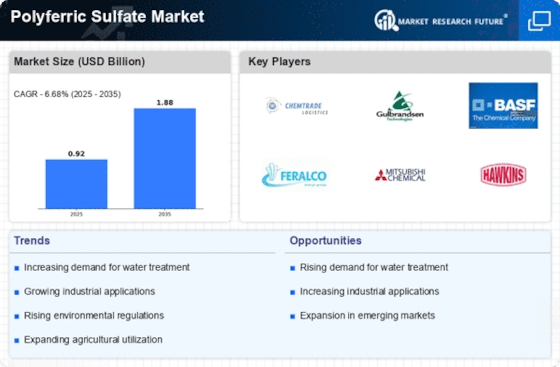
The increasing necessity for effective water treatment solutions is a primary driver for the Polyferric Sulfate Market. As urbanization accelerates, the demand for clean water rises, leading municipalities and industries to seek efficient coagulants for water purification. Polyferric sulfate, known for its superior coagulation properties, is gaining traction in various applications, including drinking water treatment and wastewater management. The market for water treatment chemicals is projected to grow at a compound annual growth rate of approximately 6.5% over the next few years, indicating a robust demand for polyferric sulfate as a preferred solution. This trend is further supported by regulatory frameworks that emphasize the need for improved water quality, thereby enhancing the market potential for polyferric sulfate.