×
Hero Background
English
Chinese
French
Japanese
Korean
German
Spanish

North America Moringa Products Market Size

ID: MRFR/FnB/8862-CR
100 Pages
Snehal Singh
November 2020

North America Moringa Products Market Research Report Information By Type (Leaves & Leaf Powder, Oil, Seeds and Others), End-Use (Functional Food and Beverages, Nutraceuticals, Pharmaceuticals, Personal Care and Others) and Country (US, Canada and Mexico) - Forecast till 2035

Share:
Download PDF ×

We do not share your information with anyone. However, we may send you emails based on your report interest from time to time. You may contact us at any time to opt-out.

North America Moringa Products Market Infographic
Purchase Options

North America Moringa Products Size

North America Moringa Products Market Growth Projections and Opportunities

The Moringa Products Market has witnessed significant growth in recent years, fueled by increasing awareness of the nutritional benefits associated with Moringa and a rising demand for natural and plant-based products. The market size of Moringa products has expanded considerably as consumers seek healthier alternatives and sustainable options. Moringa, often referred to as the "drumstick tree" or "miracle tree," is renowned for its rich nutritional content, including vitamins, minerals, and antioxidants.

One of the key drivers of the Moringa Products Market's growth is the growing trend toward health and wellness. As consumers become more health-conscious, they are actively seeking products that offer a range of health benefits. Moringa, with its nutritional density, has emerged as a popular choice for those looking to incorporate superfoods into their diets. The market size reflects this surge in demand, with an increasing number of food and beverage, nutraceutical, and cosmetic companies incorporating Moringa into their product lines.

Additionally, the Moringa Products Market has witnessed expansion due to the increasing adoption of plant-based diets. As plant-based lifestyles gain popularity, Moringa has become a valuable ingredient, providing essential nutrients that may be lacking in traditional plant-based diets. This trend has spurred the development of a diverse range of Moringa-based products, including supplements, powders, oils, and teas.

The market size is also influenced by the global shift towards sustainable and eco-friendly practices. Moringa is a hardy plant that grows in diverse climates, making it a sustainable and environmentally friendly crop. The emphasis on sustainability has driven consumers to choose products that align with their eco-conscious values, contributing to the growth of the Moringa Products Market.

Furthermore, the cosmetic and personal care industry has recognized the benefits of Moringa for skincare, further contributing to the market's expansion. Moringa oil, extracted from the seeds, is rich in antioxidants and has moisturizing properties, making it a sought-after ingredient in skincare products.
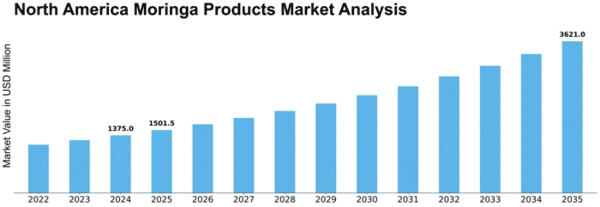

North America Moringa Products Market Size Graph
Author
Snehal Singh
Assistant Manager - Research

High acumen in analyzing complex macro & micro markets with more than 6 years of work experience in the field of market research. By implementing her analytical skills in forecasting and estimation into market research reports, she has expertise in Packaging, Construction, and Equipment domains. She handles a team size of 20-25 resources and ensures smooth running of the projects, associated marketing activities, and client servicing.

Leave a Comment

FAQs

How big will the North America Moringa Products Industry be in the 2027?

North America Moringa Products Industry Size is expected to reach 2,263.6 Million By 2027

What is the growth rate of the North America Moringa Products Market during the forecast period of 2020–2027?

North America Moringa Products Market is anticipated to grow at a 10% during the forecast period of 2020–2027

Who are the leading key players in the North America Moringa Products Market?

Moringa Pura Vida (Mexico), Kuli Kuli Inc. (US), Only Natural Inc. (US), Green Virgin Products LLC (US), Kiva (US), Sunfood (US), ADUNA Ltd. (UK), Ancient Greenfields Pvt Ltd (India), Bio Nutrition Inc. (US), Nutramarks Inc.(US)

Which Country will lead the North America Moringa Products Market?

US will dominate the North America Moringa Products Market

Market Summary

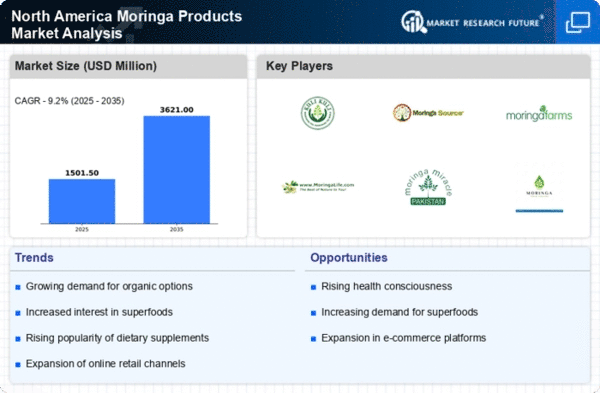
As per MRFR analysis, the North America moringa products market Size was estimated at 1375.0 USD Million in 2024. The North America moringa products market is projected to grow from 1501.5 USD Million in 2025 to 3621.0 USD Million by 2035, exhibiting a compound annual growth rate (CAGR) of 9.2% during the forecast period 2025 - 2035.

Key Market Trends & Highlights

The North America moringa products market is experiencing robust growth driven by health trends and sustainability.

  • Rising health consciousness among consumers in the US is propelling the demand for moringa products.
  • Diverse product offerings, including powders, capsules, and teas, are becoming increasingly popular in Canada.
  • Sustainability and ethical sourcing practices are gaining traction as consumers prioritize environmentally friendly products.
  • The increasing demand for natural supplements and the rising popularity of plant-based diets are key drivers of market growth.

Market Size & Forecast

2024 Market Size 1375.0 (USD Million)
2035 Market Size 3621.0 (USD Million)
CAGR (2025 - 2035) 9.2%

Major Players

<p>Kuli Foods (US), Moringa Source (US), Moringa Farms (US), Moringa Life (US), Moringa Oleifera (IN), Moringa Miracle (IN), Moringa Green (DE), Moringa Health (AU)</p>

Market Trends

The moringa products market is experiencing notable growth in North America, driven by increasing consumer awareness regarding health benefits associated with moringa. This plant, often referred to as a superfood, is rich in vitamins, minerals, and antioxidants, which appeal to health-conscious individuals. The rising trend of plant-based diets further fuels demand, as moringa is perceived as a natural supplement that enhances nutritional intake. Additionally, the expansion of e-commerce platforms facilitates easier access to moringa products, allowing consumers to explore various options conveniently. Moreover, the market is witnessing a diversification of product offerings, including powders, capsules, teas, and skincare items. This variety caters to different consumer preferences and enhances market penetration. The growing inclination towards organic and sustainably sourced products also plays a crucial role in shaping the moringa products market. As consumers increasingly prioritize ethical consumption, brands that emphasize organic certification and sustainable practices are likely to gain a competitive edge. Overall, the moringa products market in North America appears poised for continued expansion, driven by evolving consumer trends and preferences.

Rising Health Consciousness

There is a marked increase in consumer awareness regarding the health benefits of moringa. This trend is characterized by a growing interest in natural supplements and superfoods, as individuals seek to enhance their overall well-being. Moringa's rich nutritional profile aligns with this shift, making it a popular choice among health-conscious consumers.

Diverse Product Offerings

The moringa products market is witnessing a significant diversification in product types. Consumers can now choose from a variety of forms, including powders, capsules, teas, and topical applications. This variety caters to different preferences and enhances the appeal of moringa across various consumer segments.

Sustainability and Ethical Sourcing

There is an increasing demand for sustainably sourced and organic moringa products. Consumers are becoming more discerning about the origins of their food and supplements, leading to a preference for brands that prioritize ethical practices. This trend is likely to shape purchasing decisions and influence brand loyalty in the moringa products market.

North America Moringa Products Market Market Drivers

Expansion of E-commerce Platforms

The moringa products market is experiencing a transformative shift due to the expansion of e-commerce platforms. With the rise of online shopping, consumers in North America are increasingly turning to digital channels to purchase health and wellness products, including moringa. This trend is particularly relevant as it allows for greater accessibility and convenience, enabling consumers to explore a wider range of moringa products from various brands. Data indicates that e-commerce sales in the health supplement sector are expected to grow by 15% annually, which is likely to positively impact the moringa products market. As more consumers embrace online shopping, companies are investing in digital marketing strategies to reach their target audiences effectively, further propelling the growth of the moringa market.

Rising Popularity of Plant-Based Diets

The moringa products market is benefiting from the rising popularity of plant-based diets among North American consumers. As more individuals adopt vegetarian and vegan lifestyles, the demand for plant-derived nutritional sources has intensified. Moringa, often referred to as a superfood, is rich in protein, essential amino acids, and micronutrients, making it an attractive option for those seeking to enhance their diets. Recent surveys indicate that approximately 30% of North Americans are actively reducing their meat consumption, which is likely to drive the growth of the moringa products market. This shift towards plant-based eating habits not only supports health and wellness but also aligns with environmental sustainability goals, further enhancing the appeal of moringa products.

Focus on Sustainable Sourcing Practices

The moringa products market is increasingly influenced by a focus on sustainable sourcing practices. As consumers become more environmentally conscious, they are seeking products that are ethically sourced and produced. Moringa, often cultivated in sustainable agricultural systems, aligns with this consumer demand for transparency and responsibility in sourcing. Companies that prioritize sustainable practices are likely to gain a competitive edge in the moringa products market. Recent studies indicate that approximately 70% of consumers are willing to pay a premium for products that are certified organic and sustainably sourced. This trend not only supports the growth of the moringa market but also encourages responsible farming practices, contributing to the overall sustainability of the industry.

Growing Awareness of Nutritional Benefits

The moringa products market is witnessing a significant increase in consumer awareness regarding the nutritional benefits of moringa. Educational campaigns and social media influence have played a crucial role in disseminating information about the health advantages of this superfood. Moringa is recognized for its potential to support immune function, improve digestion, and provide anti-inflammatory properties. As a result, consumers are more inclined to incorporate moringa into their daily routines, whether through powders, capsules, or teas. Market Research Future suggests that the sales of moringa-based products have increased by over 25% in the past year alone, indicating a robust growth trajectory for the moringa products market. This heightened awareness is likely to continue driving demand as consumers seek natural solutions for their health concerns.

Increasing Demand for Natural Supplements

The moringa products market is experiencing a notable surge in demand for natural supplements, driven by a growing consumer preference for organic and plant-based alternatives. This trend is particularly pronounced in North America, where health-conscious individuals are increasingly seeking out products that offer nutritional benefits without synthetic additives. Moringa, known for its rich nutrient profile, including vitamins, minerals, and antioxidants, aligns well with this demand. Market data indicates that the natural supplement sector is projected to grow at a CAGR of approximately 8% over the next five years, further bolstering the moringa products market. As consumers become more aware of the health benefits associated with moringa, the industry is likely to see an influx of new product offerings, catering to diverse dietary needs and preferences.

Market Segment Insights

By Type: Leaves (Largest) vs. Oil (Fastest-Growing)

<p>The market share distribution within the different types of moringa products is varied, with leaves holding the largest share due to their widespread use in <a href="https://www.marketresearchfuture.com/reports/dietary-supplements-market-1134" target="_blank">dietary supplements</a> and health foods. This is closely followed by oil, which is gaining traction in the cosmetics and pharmaceutical sectors. Seeds and leaf powders also contribute to the market, although they represent a smaller portion compared to the other segments, with 'others' encompassing various niche products that are emerging in the market. The growth trends for this segment indicate a robust demand for moringa leaves, driven by the increasing health consciousness among consumers. On the other hand, moringa oil is noted as the fastest-growing segment, spurred by the rise in natural and organic beauty products. Innovation in extraction techniques and expanding applications in nutraceuticals are significant drivers for the growth of the oil segment, while leaves remain a staple due to their versatility.</p>

<p>Leaves: Dominant vs. Oil: Emerging</p>

<p>Moringa leaves are recognized as a dominant product in the market, largely due to their high nutritional content and versatility, making them favorable for both culinary and health supplement applications. Consumers are increasingly adopting leaves in smoothies, teas, and capsules, boosting their demand. In contrast, moringa oil is an emerging product that has started to capture attention owing to its moisturizing and nourishing properties for skin and hair care. With a rising trend towards natural ingredients in personal care products, the oil segment is anticipated to flourish. Both segments are important, but the synergistic growth of oil, backed by innovative marketing and consumer preference for natural products, highlights its potential for robust growth in the near future.</p>

By End-Use: Functional Food and Beverage (Largest) vs. Pharmaceuticals (Fastest-Growing)

<p>In the North America moringa products market, the distribution of market share among various end-use segments is diverse. The Functional Food and Beverage segment holds the largest market share, driven by increasing consumer awareness of health benefits and the rising trend of functional foods in daily diets. Pharmaceuticals follows closely, lending significant weight to health-centric trends but is marked by rapid growth as more consumers seek natural remedies and preventative health solutions. Growth trends in these segments are influenced by a combination of factors, including increasing health consciousness, a shift towards natural and organic products, and the adoption of moringa in nutraceutical formulations. The rise in chronic diseases has led to heightened demand for functional food and beverages, while the pharmaceuticals segment is capturing attention due to innovative product launches and research supporting moringa's medicinal properties. Both segments are expected to continue expanding as consumer preferences evolve toward wellness-oriented choices.</p>

<p>Functional Food and Beverage: Dominant vs. Pharmaceuticals: Emerging</p>

<p>The Functional Food and Beverage segment stands out as the dominant force in the North America moringa products market, characterized by a broad range of applications, including smoothies, snacks, and <a href="https://www.marketresearchfuture.com/reports/dietary-supplements-market-1134" target="_blank">dietary supplements</a>. This segment appeals to health-conscious consumers looking for natural and nutritious options to enhance their diets. In contrast, the Pharmaceuticals segment, while emerging, showcases remarkable potential due to increasing interest in herbal medicines and natural health solutions. This segment benefits from extensive research that is validating the health claims associated with moringa, leading to a growing presence in health formulations targeting various ailments. The distinction between these segments highlights the dynamic interplay between dietary preferences and health priorities among consumers.</p>

By Distribution Channel: Online (Largest) vs. Supermarket/Hypermarket (Fastest-Growing)

<p>Online distribution channels are currently the largest segment in the North America moringa products market, holding a significant market share. This growth is attributed to the increasing consumer preference for the convenience of online shopping, coupled with a wider variety of product offerings available through various ecommerce platforms. In contrast, Supermarket/Hypermarket channels are experiencing rapid growth as they expand their health food sections to meet the rising demand for moringa products among health-conscious consumers, enhancing accessibility. The dynamics of the distribution channel segment show promising trends. Online sales are being driven by targeted marketing strategies and the growing influence of social media in shaping consumer purchasing decisions. Supermarkets and hypermarkets, while being the fastest-growing in terms of retail presence, benefit from foot traffic and the ability to offer multiple complimentary health foods. This creates a competitive edge as consumers increasingly seek one-stop shopping solutions for their health and wellness needs.</p>

<p>Online (Dominant) vs. Supermarket/Hypermarket (Emerging)</p>

<p>The Online segment holds a dominant position within the North American moringa products market, characterized by a substantial customer base that values the convenience and variety provided by online retailers. Major online platforms capitalize on consumer trends through targeted promotions and subscription models, which encourage repeat purchases. On the other hand, Supermarket/Hypermarket distribution is an emerging segment, adapting quickly to consumer demands by expanding health product aisles and incorporating more natural and organic options. These stores benefit from their established customer relationships and physical presence, allowing them to attract shoppers seeking immediate availability of moringa products. Both segments play crucial roles in shaping the market landscape, each catering to different consumer preferences.</p>

Get more detailed insights about North America Moringa Products Market Research Report - Forecast till 2027

Regional Insights

US : Strong Demand and Growth Drivers

Key markets for moringa products in the US include California, Texas, and New York, where health trends are particularly pronounced. The competitive landscape features major players like Kuli Foods and Moringa Source, which dominate the market with innovative product offerings. Local dynamics are characterized by a strong emphasis on health and wellness, with moringa being integrated into various sectors, including food and beverage, cosmetics, and dietary supplements. The business environment is favorable, supported by a growing consumer base seeking natural health solutions.

Canada : Growing Awareness and Adoption

Key provinces for moringa products in Canada include Ontario and British Columbia, where health trends are gaining traction. The competitive landscape is evolving, with local players beginning to emerge alongside established brands. Major players like Moringa Life are making significant inroads, focusing on product innovation and consumer education. The local market dynamics are characterized by a growing demand for health supplements and natural products, with moringa being increasingly recognized for its versatility in food, beverages, and wellness applications.

Key Players and Competitive Insights

The moringa products market in North America is characterized by a dynamic competitive landscape, driven by increasing consumer awareness of health benefits and a growing demand for natural supplements. Key players such as Kuli Foods (US), Moringa Source (US), and Moringa Life (US) are strategically positioned to capitalize on these trends. Kuli Foods (US) focuses on innovation in product development, particularly in the realm of ready-to-eat snacks and beverages infused with moringa, which appeals to health-conscious consumers. Moringa Source (US) emphasizes sustainability in its sourcing practices, ensuring that its products are ethically harvested, which resonates with environmentally aware customers. Moringa Life (US) has adopted a digital transformation strategy, enhancing its online presence and e-commerce capabilities to reach a broader audience. Collectively, these strategies contribute to a competitive environment that prioritizes health, sustainability, and accessibility.

In terms of business tactics, companies are increasingly localizing manufacturing to reduce supply chain complexities and enhance product freshness. The market structure appears moderately fragmented, with several players vying for market share, yet the influence of key players is substantial. This fragmentation allows for niche opportunities, particularly in organic and specialty moringa products, which are gaining traction among discerning consumers.

In October 2025, Kuli Foods (US) launched a new line of moringa-infused protein bars, targeting the growing segment of fitness enthusiasts seeking natural energy sources. This strategic move not only diversifies their product portfolio but also positions them favorably against competitors by tapping into the health and wellness trend. The introduction of these bars is likely to enhance brand visibility and attract a new customer base.

In September 2025, Moringa Source (US) announced a partnership with a leading organic certification body to enhance its product offerings. This collaboration aims to certify their entire range of moringa products as organic, which could significantly boost consumer trust and expand their market reach. The strategic importance of this partnership lies in its potential to differentiate Moringa Source (US) in a crowded market, appealing to consumers who prioritize organic certifications.

In August 2025, Moringa Life (US) expanded its distribution network by entering into agreements with major health food retailers across North America. This expansion is indicative of a strategic focus on increasing accessibility to their products, thereby enhancing market penetration. By aligning with established retailers, Moringa Life (US) is likely to benefit from increased brand recognition and consumer trust, which are critical in a competitive landscape.

As of November 2025, current trends in the moringa products market indicate a strong emphasis on digitalization, sustainability, and the integration of AI technologies in supply chain management. Strategic alliances are increasingly shaping the competitive landscape, allowing companies to leverage shared resources and expertise. Looking ahead, it appears that competitive differentiation will evolve from traditional price-based competition to a focus on innovation, technological advancements, and supply chain reliability. This shift suggests that companies that prioritize these areas may gain a competitive edge in the increasingly health-conscious and environmentally aware consumer market.

Key Companies in the North America Moringa Products Market market include

Industry Developments

Future Outlook

North America Moringa Products Market Future Outlook

<p>The moringa products market is projected to grow at a 9.2% CAGR from 2024 to 2035, driven by increasing health awareness and demand for natural supplements.</p>

New opportunities lie in:

  • <p>Development of premium organic moringa product lines</p>
  • <p>Expansion into e-commerce platforms for direct consumer sales</p>
  • <p>Partnerships with health and wellness influencers for brand promotion</p>

<p>By 2035, the moringa products market is expected to achieve substantial growth and market penetration.</p>

Market Segmentation

North America Moringa Products Market Type Outlook

  • Oil
  • Seeds
  • Leaves
  • Leaf Powder
  • Others

North America Moringa Products Market End-Use Outlook

  • Functional Food and Beverage
  • Pharmaceuticals
  • Personal Care
  • Others

North America Moringa Products Market Distribution Channel Outlook

  • Online
  • Supermarket/Hypermarket
  • Retail Stores
  • Specialty Stores
  • Others

Report Scope

MARKET SIZE 20241375.0(USD Million)
MARKET SIZE 20251501.5(USD Million)
MARKET SIZE 20353621.0(USD Million)
COMPOUND ANNUAL GROWTH RATE (CAGR)9.2% (2024 - 2035)
REPORT COVERAGERevenue Forecast, Competitive Landscape, Growth Factors, and Trends
BASE YEAR2024
Market Forecast Period2025 - 2035
Historical Data2019 - 2024
Market Forecast UnitsUSD Million
Key Companies Profiled["Kuli Foods (US)", "Moringa Source (US)", "Moringa Farms (US)", "Moringa Life (US)", "Moringa Oleifera (IN)", "Moringa Miracle (IN)", "Moringa Green (DE)", "Moringa Health (AU)"]
Segments CoveredType, End-Use, Distribution Channel
Key Market OpportunitiesGrowing consumer demand for plant-based nutrition enhances opportunities in the moringa products market.
Key Market DynamicsRising consumer demand for health supplements drives innovation and competition in the moringa products market.
Countries CoveredUS, Canada

FAQs

How big will the North America Moringa Products Industry be in the 2027?

North America Moringa Products Industry Size is expected to reach 2,263.6 Million By 2027

What is the growth rate of the North America Moringa Products Market during the forecast period of 2020–2027?

North America Moringa Products Market is anticipated to grow at a 10% during the forecast period of 2020–2027

Who are the leading key players in the North America Moringa Products Market?

Moringa Pura Vida (Mexico), Kuli Kuli Inc. (US), Only Natural Inc. (US), Green Virgin Products LLC (US), Kiva (US), Sunfood (US), ADUNA Ltd. (UK), Ancient Greenfields Pvt Ltd (India), Bio Nutrition Inc. (US), Nutramarks Inc.(US)

Which Country will lead the North America Moringa Products Market?

US will dominate the North America Moringa Products Market

  1. SECTION I: EXECUTIVE SUMMARY AND KEY HIGHLIGHTS
    1. EXECUTIVE SUMMARY
      1. Market Overview
      2. Key Findings
      3. Market Segmentation
      4. Competitive Landscape
      5. Challenges and Opportunities
      6. Future Outlook
  2. SECTION II: SCOPING, METHODOLOGY AND MARKET STRUCTURE
    1. MARKET INTRODUCTION
      1. Definition
      2. Scope of the study
    2. RESEARCH METHODOLOGY
      1. Overview
      2. Data Mining
      3. Secondary Research
      4. Primary Research
      5. Forecasting Model
      6. Market Size Estimation
      7. Data Triangulation
      8. Validation
  3. SECTION III: QUALITATIVE ANALYSIS
    1. MARKET DYNAMICS
      1. Overview
      2. Drivers
      3. Restraints
      4. Opportunities
    2. MARKET FACTOR ANALYSIS
      1. Value chain Analysis
      2. Porter's Five Forces Analysis
      3. COVID-19 Impact Analysis
  4. SECTION IV: QUANTITATIVE ANALYSIS
    1. Chemicals and Materials, BY Type (USD Million)
      1. Oil
      2. Seeds
      3. Leaves
      4. Leaf Powder
      5. Others
    2. Chemicals and Materials, BY End-Use (USD Million)
      1. Functional Food and Beverage
      2. Pharmaceuticals
      3. Personal Care
      4. Others
    3. Chemicals and Materials, BY Distribution Channel (USD Million)
      1. Online
      2. Supermarket/Hypermarket
      3. Retail Stores
      4. Specialty Stores
      5. Others
  5. SECTION V: COMPETITIVE ANALYSIS
    1. Competitive Landscape
      1. Overview
      2. Competitive Analysis
      3. Market share Analysis
      4. Major Growth Strategy in the Chemicals and Materials
      5. Competitive Benchmarking
      6. Leading Players in Terms of Number of Developments in the Chemicals and Materials
      7. Key developments and growth strategies
      8. Major Players Financial Matrix
    2. Company Profiles
      1. Kuli Foods (US)
      2. Moringa Source (US)
      3. Moringa Farms (US)
      4. Moringa Life (US)
      5. Moringa Oleifera (IN)
      6. Moringa Miracle (IN)
      7. Moringa Green (DE)
      8. Moringa Health (AU)
    3. Appendix
      1. References
      2. Related Reports
  6. LIST OF FIGURES
    1. MARKET SYNOPSIS
    2. NORTH AMERICA MARKET ANALYSIS BY TYPE
    3. NORTH AMERICA MARKET ANALYSIS BY END-USE
    4. NORTH AMERICA MARKET ANALYSIS BY DISTRIBUTION CHANNEL
    5. KEY BUYING CRITERIA OF CHEMICALS AND MATERIALS
    6. RESEARCH PROCESS OF MRFR
    7. DRO ANALYSIS OF CHEMICALS AND MATERIALS
    8. DRIVERS IMPACT ANALYSIS: CHEMICALS AND MATERIALS
    9. RESTRAINTS IMPACT ANALYSIS: CHEMICALS AND MATERIALS
    10. SUPPLY / VALUE CHAIN: CHEMICALS AND MATERIALS
    11. CHEMICALS AND MATERIALS, BY TYPE, 2024 (% SHARE)
    12. CHEMICALS AND MATERIALS, BY TYPE, 2024 TO 2035 (USD Million)
    13. CHEMICALS AND MATERIALS, BY END-USE, 2024 (% SHARE)
    14. CHEMICALS AND MATERIALS, BY END-USE, 2024 TO 2035 (USD Million)
    15. CHEMICALS AND MATERIALS, BY DISTRIBUTION CHANNEL, 2024 (% SHARE)
    16. CHEMICALS AND MATERIALS, BY DISTRIBUTION CHANNEL, 2024 TO 2035 (USD Million)
    17. BENCHMARKING OF MAJOR COMPETITORS
  7. LIST OF TABLES
    1. LIST OF ASSUMPTIONS
    2. North America MARKET SIZE ESTIMATES; FORECAST
      1. BY TYPE, 2025-2035 (USD Million)
      2. BY END-USE, 2025-2035 (USD Million)
      3. BY DISTRIBUTION CHANNEL, 2025-2035 (USD Million)
    3. PRODUCT LAUNCH/PRODUCT DEVELOPMENT/APPROVAL
    4. ACQUISITION/PARTNERSHIP

North America Chemicals and Materials Market Segmentation

Chemicals and Materials By Type (USD Million, 2025-2035)

  • Oil
  • Seeds
  • Leaves
  • Leaf Powder
  • Others

Chemicals and Materials By End-Use (USD Million, 2025-2035)

  • Functional Food and Beverage
  • Pharmaceuticals
  • Personal Care
  • Others

Chemicals and Materials By Distribution Channel (USD Million, 2025-2035)

  • Online
  • Supermarket/Hypermarket
  • Retail Stores
  • Specialty Stores
  • Others
Infographic

Free Sample Request

Kindly complete the form below to receive a free sample of this Report

Get Free Sample

Customer Strories

Compare Licence

×
Features License Type
Single User Multiuser License Enterprise User
Price $4,950 $5,950 $7,250
Maximum User Access Limit 1 User Upto 10 Users Unrestricted Access Throughout the Organization
Free Customization
Direct Access to Analyst
Deliverable Format
Platform Access
Discount on Next Purchase 10% 15% 15%
Printable Versions