×
Request Free Sample ×

Kindly complete the form below to receive a free sample of this Report

* Please use a valid business email

Leading companies partner with us for data-driven Insights

clients tt-cursor
Hero Background

Natural Synthetic Biomedical Adhesive Market

ID: MRFR/CnM/35277-HCR
111 Pages
Chitranshi Jaiswal
February 2026

Natural and Synthetic Biomedical Adhesive Market Research Report: By Application (Surgical Adhesives, Dental Adhesives, Tissue Adhesives, Wound Care Adhesives), By Material Type (Natural Adhesives, Synthetic Adhesives, Bio-based Adhesives), By End Use (Hospitals, Ambulatory Surgical Centers, Clinics), By Formulation (Single Component Adhesives, Multi Component Adhesives, Cold Bonding Adhesives) and By Regional (North America, Europe, South America, Asia Asia-Pacific, Middle East and Africa) - Forecast to 2035.

Share:
Download PDF ×

We do not share your information with anyone. However, we may send you emails based on your report interest from time to time. You may contact us at any time to opt-out.

Natural Synthetic Biomedical Adhesive Market Infographic
Purchase Options

Natural Synthetic Biomedical Adhesive Market Summary

As per Market Research Future analysis, the Natural and Synthetic Biomedical Adhesive Market was estimated at 12.83 USD Billion in 2024. The market is projected to grow from 13.47 USD Billion in 2025 to 21.84 USD Billion by 2035, exhibiting a compound annual growth rate (CAGR) of 4.95% during the forecast period 2025 - 2035

Key Market Trends & Highlights

The Natural and Synthetic Biomedical Adhesive Market is experiencing robust growth driven by technological advancements and increasing healthcare applications.

  • The demand for biocompatible adhesives is on the rise, particularly in North America, which remains the largest market.
  • Advancements in adhesive technology are facilitating the expansion of minimally invasive procedures across various healthcare sectors.
  • Surgical adhesives dominate the market, while tissue adhesives are emerging as the fastest-growing segment, particularly in Asia-Pacific.
  • Key market drivers include the increasing applications in healthcare and rising investment in research and development, particularly for synthetic adhesives.

Market Size & Forecast

2024 Market Size 12.83 (USD Billion)
2035 Market Size 21.84 (USD Billion)
CAGR (2025 - 2035) 4.95%

Major Players

3M (US), Medtronic (US), Johnson & Johnson (US), B. Braun Melsungen AG (DE), Smith & Nephew (GB), Stryker Corporation (US), Adhesive Technologies (DE), Hernon Manufacturing (US), CryoLife, Inc. (US)

Our Impact
Enabled $4.3B Revenue Impact for Fortune 500 and Leading Multinationals
Partnering with 2000+ Global Organizations Each Year
30K+ Citations by Top-Tier Firms in the Industry

Natural Synthetic Biomedical Adhesive Market Trends

The Natural and Synthetic Biomedical Adhesive Market is currently experiencing a notable evolution, driven by advancements in material science and increasing demand for effective wound care solutions. The integration of natural polymers, such as chitosan and gelatin, alongside synthetic options like cyanoacrylate, is reshaping the landscape of adhesive applications in medical settings. This market appears to be influenced by a growing emphasis on biocompatibility and the need for adhesives that can facilitate faster healing processes. Furthermore, the rise in surgical procedures and the expansion of minimally invasive techniques are likely to propel the adoption of these adhesives, as they offer enhanced performance in various clinical scenarios. In addition, the Natural and Synthetic Biomedical Adhesive Market seems to be benefiting from ongoing research and development efforts aimed at improving adhesive properties, such as strength, flexibility, and degradation rates. Regulatory bodies are also playing a crucial role in ensuring that these products meet safety and efficacy standards, which may further encourage innovation. As healthcare providers increasingly seek reliable and efficient solutions for tissue bonding and wound closure, the market is poised for continued growth. The interplay between technological advancements and evolving healthcare needs suggests a dynamic future for this sector, with potential for new applications and improved formulations that could redefine standards in medical adhesives.

Growing Demand for Biocompatible Adhesives

There is an increasing preference for adhesives that are biocompatible, as healthcare professionals seek materials that minimize adverse reactions in patients. This trend reflects a broader movement towards safer and more effective medical solutions.

Advancements in Adhesive Technology

Innovations in adhesive formulations are emerging, focusing on enhancing properties such as bonding strength and flexibility. These advancements are likely to expand the range of applications for both natural and synthetic adhesives in clinical settings.

Expansion of Minimally Invasive Procedures

The rise of minimally invasive surgical techniques is driving the demand for effective adhesives that can facilitate quick and secure tissue bonding. This trend indicates a shift towards less invasive options in surgical practices, highlighting the importance of reliable adhesive solutions.

Natural Synthetic Biomedical Adhesive Market Drivers

Increasing Applications in Healthcare

The Natural and Synthetic Biomedical Adhesive Market is experiencing a surge in applications across various healthcare sectors. Adhesives are increasingly utilized in surgical procedures, wound care, and tissue engineering. The versatility of these adhesives allows for their use in both internal and external applications, enhancing patient outcomes. For instance, the market for surgical adhesives is projected to reach approximately USD 3 billion by 2026, driven by the rising number of surgical procedures and the need for effective wound closure solutions. This trend indicates a growing reliance on biomedical adhesives, which are essential for improving surgical efficiency and patient recovery times.

Rising Investment in Research and Development

Investment in research and development within the Natural and Synthetic Biomedical Adhesive Market is on the rise, as companies strive to innovate and improve adhesive formulations. This investment is crucial for developing new products that meet the evolving needs of healthcare professionals. Enhanced adhesive properties, such as faster curing times and improved biocompatibility, are being prioritized. According to recent data, R&D spending in the biomedical sector has increased by over 15% in the past few years, reflecting a commitment to advancing adhesive technologies. This focus on innovation is likely to yield new products that can address specific clinical challenges, thereby expanding market opportunities.

Growing Demand for Minimally Invasive Surgeries

The trend towards minimally invasive surgeries is significantly influencing the Natural and Synthetic Biomedical Adhesive Market. These procedures require adhesives that can provide effective bonding without the need for extensive incisions. As a result, the demand for advanced adhesives that facilitate quicker recovery and reduced scarring is increasing. The market for minimally invasive surgical adhesives is expected to grow at a compound annual growth rate of around 10% over the next five years. This growth is indicative of a broader shift in surgical practices, where the emphasis is placed on patient comfort and rapid recovery, further driving the need for innovative adhesive solutions.

Emerging Markets and Increased Healthcare Access

Emerging markets are witnessing a rise in healthcare access, which is positively impacting the Natural and Synthetic Biomedical Adhesive Market. As healthcare infrastructure improves, the demand for advanced medical adhesives is expected to grow. Countries with expanding healthcare systems are increasingly adopting modern surgical techniques that utilize these adhesives. The market in these regions is projected to grow at a rate of approximately 8% annually, driven by the increasing number of surgical procedures and the need for effective wound management solutions. This trend suggests a promising future for biomedical adhesives as they become integral to modern healthcare practices.

Regulatory Support for Advanced Adhesive Solutions

Regulatory bodies are increasingly supporting the development and approval of advanced adhesive solutions within the Natural and Synthetic Biomedical Adhesive Market. Streamlined approval processes for biocompatible adhesives are encouraging manufacturers to bring new products to market. This regulatory environment fosters innovation and ensures that healthcare providers have access to the latest adhesive technologies. Recent initiatives aimed at expediting the review of medical devices, including adhesives, have been implemented, which may lead to a more dynamic market landscape. As a result, manufacturers are likely to invest more in developing cutting-edge adhesive solutions that comply with regulatory standards.


Market Segment Insights

By Application: Surgical Adhesives (Largest) vs. Tissue Adhesives (Fastest-Growing)

The application segment of the Natural and Synthetic Biomedical Adhesive Market is diverse, comprising Surgical Adhesives, Dental Adhesives, Tissue Adhesives, and Wound Care Adhesives. Currently, Surgical Adhesives hold the largest share due to their extensive use in various surgical procedures. However, Tissue Adhesives are emerging as a competitive segment, rapidly gaining attention for their versatility and ease of use. The increasing preference for minimally invasive surgeries is further boosting the market share of these adhesives, allowing them to capitalize on new opportunities in healthcare settings.

Surgical Adhesives (Dominant) vs. Tissue Adhesives (Emerging)

Surgical Adhesives are widely recognized for their critical role in surgical procedures, providing effective bonding solutions that enhance surgical outcomes. Their dominance is attributed to their dependable performance, extensive applications, and regulatory approval in hospitals. Alternatively, Tissue Adhesives are becoming increasingly popular, particularly in outpatient settings for minor procedures and wound closure. These adhesives offer benefits such as reduced healing time and less scarring, making them an appealing choice. As health professionals seek innovative solutions for patient care, Tissue Adhesives are positioned to capture significant growth in the market.

By Material Type: Natural Adhesives (Largest) vs. Synthetic Adhesives (Fastest-Growing)

In the Natural and Synthetic Biomedical Adhesive Market, Natural Adhesives hold the largest market share, favored for their biocompatibility and eco-friendly properties. This segment appeals significantly to clinicians and researchers looking for safe and effective bonding agents for various applications, including surgical procedures and wound care. Meanwhile, Synthetic Adhesives, designed for enhanced performance and versatility, are catching up rapidly, driven by technological advancements and an increasing range of applications within the biomedical sector.

Natural Adhesives (Dominant) vs. Synthetic Adhesives (Emerging)

Natural Adhesives, primarily derived from biological sources such as plant materials and proteins, are dominant in the market due to their superior biocompatibility and lower risk of adverse reactions. They are predominantly used in surgeries and wound closures, providing a safe alternative to traditional adhesives. On the other hand, Synthetic Adhesives are emerging rapidly, benefitting from innovations that enhance their mechanical properties and adaptability for diverse biomedical applications. These adhesives offer specific performance advantages, such as faster setting times and improved strength, making them increasingly popular in advanced surgical techniques and products that require precise adhesion.

By End-Use: Hospitals (Largest) vs. Ambulatory Surgical Centers (Fastest-Growing)

In the Natural and Synthetic Biomedical Adhesive Market, hospitals dominate the market share, accounting for a significant portion due to their extensive usage of adhesive products in surgical procedures and wound management. Ambulatory Surgical Centers (ASCs) are increasingly gaining traction as they cater to a growing patient base that prefers minimally invasive procedures, thus severely boosting their share in the market. As these facilities adopt more advanced adhesive technologies, their contribution to overall market dynamics becomes even more pronounced.

Hospitals (Dominant) vs. Ambulatory Surgical Centers (Emerging)

Hospitals remain the dominant end-use segment in the Natural and Synthetic Biomedical Adhesive Market due to their continuous requirement for high-performance adhesives in surgeries and patient care. Their expansive facilities necessitate a wide variety of adhesive solutions, making them key users. Conversely, Ambulatory Surgical Centers are emerging rapidly, propelled by the trend towards outpatient surgeries and minimally invasive techniques. They demand innovative adhesive products that enhance procedural efficiency and patient recovery, positioning them as a crucial growth segment in the market. The competitive landscape thus features hospitals leveraging established adhesive technologies while ASCs push for advancements.

By Formulation: Single Component Adhesives (Largest) vs. Multi-Component Adhesives (Fastest-Growing)

The Natural and Synthetic Biomedical Adhesive Market exhibits a dynamic distribution among its formulation segments. Single Component Adhesives hold the largest market share, primarily due to their ease of use and efficiency in application. They are primarily utilized in surgical and medical device manufacturing settings, allowing for seamless integration and minimal complexity during procedures. On the other hand, Multi-Component Adhesives are recognized as the fastest-growing segment in this market. Their growth is driven by increasing demand for customized adhesive solutions that cater to specific biomedical applications. Factors such as advancements in adhesive formulations and improved bonding capabilities are propelling the adoption of Multi-Component Adhesives in various healthcare sectors.

Single Component Adhesives (Dominant) vs. Multi-Component Adhesives (Emerging)

Single Component Adhesives are characterized by their simplicity, requiring no mixing before application, which makes them highly favored in time-sensitive environments such as hospitals and surgical theaters. Their dominance in the market is fueled by their reliability and performance in bonding medical devices and tissues. Conversely, Multi-Component Adhesives consist of two or more parts that must be mixed before use, offering superior versatility and tailored bonding solutions. These adhesives are emerging strongly due to innovations that enhance their efficacy in diverse biomedical applications, such as orthopedic and dental procedures. The growing trend towards personalized medicine further supports the increased adoption of Multi-Component Adhesives, allowing for a broader range of functionalities.

Get more detailed insights about Natural Synthetic Biomedical Adhesive Market

Regional Insights

North America : Innovation and Market Leadership

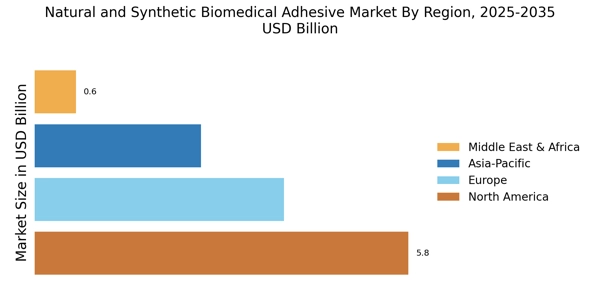
North America is the largest market for natural and synthetic biomedical adhesives, holding approximately 45% of the global market share. The region's growth is driven by advanced healthcare infrastructure, increasing surgical procedures, and a rising demand for minimally invasive surgeries. Regulatory support from agencies like the FDA further catalyzes innovation and product development in this sector. The United States is the leading country in this market, with major players such as 3M, Medtronic, and Johnson & Johnson headquartered here. The competitive landscape is characterized by continuous innovation and strategic partnerships among key players. The presence of established companies and a focus on R&D contribute to the region's dominance in the biomedical adhesive market.

Europe : Regulatory Framework and Growth

Europe is the second-largest market for biomedical adhesives, accounting for approximately 30% of the global share. The region benefits from stringent regulatory frameworks that ensure product safety and efficacy, driving demand for high-quality adhesives in medical applications. Countries like Germany and the UK are at the forefront, with increasing investments in healthcare technology and innovation. Germany leads the market in Europe, supported by key players such as B. Braun Melsungen AG and Adhesive Technologies. The competitive landscape is marked by a mix of established companies and innovative startups, focusing on developing advanced adhesive solutions. The region's commitment to healthcare improvement and regulatory compliance fosters a conducive environment for market growth.

Asia-Pacific : Rapid Growth and Innovation

Asia-Pacific is witnessing rapid growth in the biomedical adhesive market, driven by increasing healthcare expenditures and a rising population. The region holds approximately 20% of the global market share, with countries like China and India leading the charge. The demand for advanced medical technologies and surgical procedures is propelling the growth of this market, supported by favorable government initiatives and investments in healthcare infrastructure. China is the largest market in the region, with significant contributions from local manufacturers and international players. The competitive landscape is evolving, with a focus on innovation and cost-effective solutions. Key players like Stryker Corporation and CryoLife, Inc. are expanding their presence, enhancing the region's market dynamics and competitiveness.

Middle East and Africa : Untapped Potential and Growth

The Middle East and Africa region is gradually emerging in the biomedical adhesive market, holding about 5% of the global share. The growth is driven by increasing healthcare investments and a rising demand for advanced medical solutions. Countries like South Africa and the UAE are focusing on improving healthcare infrastructure, which is expected to boost the adoption of biomedical adhesives in various applications. South Africa is the leading country in this region, with a growing number of healthcare facilities and increasing surgical procedures. The competitive landscape is still developing, with opportunities for both local and international players to enter the market. The presence of key players and a focus on innovation will likely enhance the region's market potential in the coming years.

Natural Synthetic Biomedical Adhesive Market Regional Image

Key Players and Competitive Insights

The Natural and Synthetic Biomedical Adhesive Market is currently characterized by a dynamic competitive landscape, driven by innovation, strategic partnerships, and a growing demand for advanced medical solutions. Key players such as 3M (US), Medtronic (US), and Johnson & Johnson (US) are at the forefront, each adopting distinct strategies to enhance their market positioning. 3M (US) emphasizes innovation in adhesive technologies, focusing on developing biocompatible materials that cater to diverse medical applications. Meanwhile, Medtronic (US) is leveraging its extensive research capabilities to integrate digital solutions into its adhesive products, thereby enhancing patient outcomes. Johnson & Johnson (US) appears to be concentrating on strategic acquisitions to bolster its product portfolio, particularly in the realm of surgical adhesives, which reflects a broader trend of consolidation within the industry.The business tactics employed by these companies include localizing manufacturing and optimizing supply chains to enhance efficiency and responsiveness to market demands. The market structure is moderately fragmented, with a mix of established players and emerging companies vying for market share. This fragmentation allows for a variety of innovative solutions to emerge, although the collective influence of major players like B. Braun Melsungen AG (DE) and Stryker Corporation (US) remains significant in shaping market trends.

In August B. Braun Melsungen AG (DE) announced the launch of a new line of bioresorbable adhesives designed for minimally invasive surgeries. This strategic move not only enhances their product offerings but also aligns with the growing trend towards less invasive surgical techniques, potentially positioning the company as a leader in this niche market. The introduction of bioresorbable materials could significantly reduce post-operative complications, thereby improving patient recovery times and satisfaction.

In September Stryker Corporation (US) expanded its partnership with a leading technology firm to integrate artificial intelligence into its adhesive product line. This collaboration aims to enhance the precision and effectiveness of surgical adhesives, indicating a shift towards technology-driven solutions in the biomedical adhesive sector. The integration of AI could lead to more personalized treatment options, thereby improving surgical outcomes and reinforcing Stryker's competitive edge.

In July Adhesive Technologies (DE) announced a strategic acquisition of a smaller biotech firm specializing in natural adhesives derived from plant-based materials. This acquisition is likely to enhance Adhesive Technologies' capabilities in sustainable product development, reflecting a broader industry trend towards eco-friendly solutions. By incorporating natural materials into their offerings, the company may attract a growing segment of environmentally conscious consumers and healthcare providers.

As of October the competitive trends within the Natural and Synthetic Biomedical Adhesive Market are increasingly defined by digitalization, sustainability, and the integration of advanced technologies such as AI. Strategic alliances are becoming more prevalent, as companies seek to leverage complementary strengths to enhance their product offerings. Looking ahead, competitive differentiation is expected to evolve from traditional price-based competition towards a focus on innovation, technological advancements, and supply chain reliability. This shift underscores the importance of adaptability and forward-thinking strategies in maintaining a competitive advantage in this rapidly evolving market.

Key Companies in the Natural Synthetic Biomedical Adhesive Market include

Industry Developments

Recent developments in the Natural and Synthetic Biomedical Adhesive Market highlight a growing interest in enhancing product offerings and expanding market presence. Companies such as 3M and Johnson & Johnson are focusing on innovations to improve their adhesive solutions for surgical applications, addressing the increasing demand for effective and reliable adhesives in complex medical procedures. Baxter International and Medtronic are advancing in creating adhesives that promote faster healing, which is garnering attention in the healthcare sector. Additionally, Henkel AG and Co.

KGaA has have been involved in strategic partnerships aimed at improving adhesive technology, reaffirming its their commitment to industry leadership. Recently, Stryker Corporation announced its acquisition of a synthetic adhesive technology company to bolster its portfolio, while BSN medical Medical and ConvaTec Group are also exploring potential collaborations to expand their market reach. The market is witnessing a rise in valuation as these companies innovate and secure deals, creating a competitive environment and fostering advancements in adhesive applications.

Furthermore, the robust market growth is attributed to increasing surgical procedures worldwide coupled with rising consumer awareness regarding advanced medical technologies, driving significant investments within this sector.

Future Outlook

Natural Synthetic Biomedical Adhesive Market Future Outlook

The Natural and Synthetic Biomedical Adhesive Market is projected to grow at 4.95% CAGR from 2025 to 2035, driven by technological advancements and increasing healthcare demands.

New opportunities lie in:

  • Development of bioresorbable adhesives for surgical applications.
  • Expansion into emerging markets with tailored adhesive solutions.
  • Integration of smart adhesives with drug delivery systems.

By 2035, the market is expected to achieve robust growth, reflecting evolving healthcare needs and innovative product developments.

Market Segmentation

Natural Synthetic Biomedical Adhesive Market End-Use Outlook

  • Hospitals
  • Ambulatory Surgical Centers
  • Clinics

Natural Synthetic Biomedical Adhesive Market Application Outlook

  • Surgical Adhesives
  • Dental Adhesives
  • Tissue Adhesives
  • Wound Care Adhesives

Natural Synthetic Biomedical Adhesive Market Formulation Outlook

  • Single Component Adhesives
  • Multi-Component Adhesives
  • Cold Bonding Adhesives

Natural Synthetic Biomedical Adhesive Market Material Type Outlook

  • Natural Adhesives
  • Synthetic Adhesives
  • Bio-based Adhesives

Report Scope

MARKET SIZE 202412.83(USD Billion)
MARKET SIZE 202513.47(USD Billion)
MARKET SIZE 203521.84(USD Billion)
COMPOUND ANNUAL GROWTH RATE (CAGR)4.95% (2025 - 2035)
REPORT COVERAGERevenue Forecast, Competitive Landscape, Growth Factors, and Trends
BASE YEAR2024
Market Forecast Period2025 - 2035
Historical Data2019 - 2024
Market Forecast UnitsUSD Billion
Key Companies Profiled3M (US), Medtronic (US), Johnson & Johnson (US), B. Braun Melsungen AG (DE), Smith & Nephew (GB), Stryker Corporation (US), Adhesive Technologies (DE), Hernon Manufacturing (US), CryoLife, Inc. (US)
Segments CoveredApplication, Material Type, End Use, Formulation, Regional
Key Market OpportunitiesAdvancements in biocompatible materials enhance applications in wound healing and surgical procedures within the Natural and Synthetic Biomedical Adhesive Market.
Key Market DynamicsRising demand for advanced surgical procedures drives innovation in natural and synthetic biomedical adhesives.
Countries CoveredNorth America, Europe, APAC, South America, MEA
Leave a Comment

FAQs

What is the projected market valuation of the Natural and Synthetic Biomedical Adhesive Market by 2035?

The market is projected to reach 21.84 USD Billion by 2035.

What was the market valuation of the Natural and Synthetic Biomedical Adhesive Market in 2024?

The overall market valuation was 12.83 USD Billion in 2024.

What is the expected CAGR for the Natural and Synthetic Biomedical Adhesive Market during the forecast period 2025 - 2035?

The expected CAGR during this period is 4.95%.

Which segment of the Natural and Synthetic Biomedical Adhesive Market had the highest valuation in 2024?

Surgical Adhesives had the highest valuation at 3.85 USD Billion in 2024.

What are the projected valuations for Dental Adhesives by 2035?

Dental Adhesives are projected to reach 4.48 USD Billion by 2035.

Which companies are considered key players in the Natural and Synthetic Biomedical Adhesive Market?

Key players include 3M, Medtronic, Johnson & Johnson, and B. Braun Melsungen AG.

What is the projected valuation for Synthetic Adhesives by 2035?

Synthetic Adhesives are projected to reach 12.5 USD Billion by 2035.

How do the valuations of Natural Adhesives compare to Bio-based Adhesives by 2035?

Natural Adhesives are projected at 4.5 USD Billion, while Bio-based Adhesives are projected at 4.84 USD Billion by 2035.

Download Free Sample

Kindly complete the form below to receive a free sample of this Report

Compare Licence

×
Features License Type
Single User Multiuser License Enterprise User
Price $4,950 $ $7,250
Maximum User Access Limit 1 User Upto 10 Users Unrestricted Access Throughout the Organization
Free Customization
Direct Access to Analyst
Deliverable Format
Platform Access
Discount on Next Purchase 10% 15% 15%
Printable Versions