×
Request Free Sample ×

Kindly complete the form below to receive a free sample of this Report

* Please use a valid business email

Leading companies partner with us for data-driven Insights

clients tt-cursor
Hero Background

Natural Single Crystal Diamond Market

ID: MRFR/CnM/37267-HCR
111 Pages
Chitranshi Jaiswal
February 2026

Natural Single Crystal Diamond Market Research Report By Application (Jewelry, Industrial, Electronics, Optics), By End Use (Aerospace, Automotive, Consumer Electronics, Medical), By Shape (Round, Princess, Emerald, Cushion, Marquise), By Quality (Type IIa, Type IIb, Synthetic, Natural) and By Regional (North America, Europe, South America, Asia Pacific, Middle East and Africa) - Forecast to 2035

Share:
Download PDF ×

We do not share your information with anyone. However, we may send you emails based on your report interest from time to time. You may contact us at any time to opt-out.

Natural Single Crystal Diamond Market Infographic
Purchase Options

Natural Single Crystal Diamond Market Summary

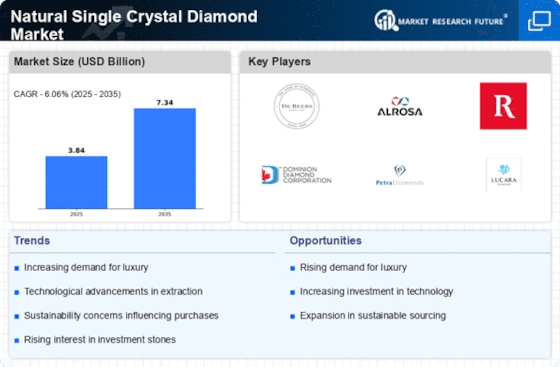
As per Market Research Future analysis, the Natural Single Crystal Diamond Market Size was estimated at 3.842 USD Billion in 2024. The Natural Single Crystal Diamond industry is projected to grow from 4.075 USD Billion in 2025 to 7.34 USD Billion by 2035, exhibiting a compound annual growth rate (CAGR) of 6.06% during the forecast period 2025 - 2035

Key Market Trends & Highlights

The Natural Single Crystal Diamond Market is experiencing a dynamic shift towards sustainability and technological innovation.

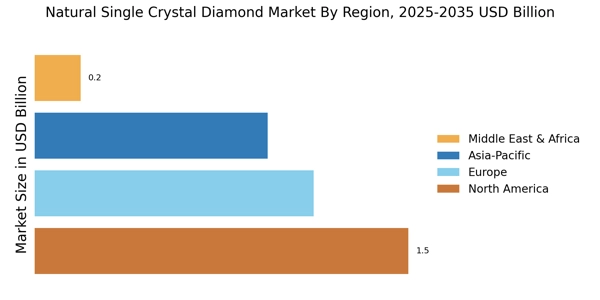
  • North America remains the largest market for natural single crystal diamonds, driven by high consumer spending on luxury goods.
  • The Asia-Pacific region is emerging as the fastest-growing market, fueled by increasing disposable incomes and changing consumer preferences.
  • The jewelry segment continues to dominate the market, while the industrial segment is witnessing rapid growth due to advancements in technology.
  • Rising demand for ethical sourcing and investment diversification are key drivers propelling market expansion.

Market Size & Forecast

2024 Market Size 3.842 (USD Billion)
2035 Market Size 7.34 (USD Billion)
CAGR (2025 - 2035) 6.06%

Major Players

De Beers (GB), Alrosa (RU), Rio Tinto (GB), Dominion Diamond Mines (CA), Petra Diamonds (GB), Lucara Diamond Corporation (CA), Gem Diamonds (GB), Mountain Province Diamonds (CA), Stornoway Diamond Corporation (CA)

Our Impact
Enabled $4.3B Revenue Impact for Fortune 500 and Leading Multinationals
Partnering with 2000+ Global Organizations Each Year
30K+ Citations by Top-Tier Firms in the Industry

Natural Single Crystal Diamond Market Trends

The Natural Single Crystal Diamond Market is currently experiencing a dynamic phase characterized by evolving consumer preferences and technological advancements. The demand for these exquisite gemstones is driven by their unique properties, including exceptional hardness and brilliance, which make them highly sought after in various applications, from jewelry to industrial uses. As consumers become increasingly aware of ethical sourcing and sustainability, the market is witnessing a shift towards responsibly sourced diamonds, which may influence purchasing decisions. Furthermore, innovations in diamond synthesis and cutting techniques are likely to enhance the appeal of natural diamonds, potentially expanding their market reach. In addition, the Natural Single Crystal Diamond Market appears to be influenced by global economic conditions and changing luxury spending patterns. As disposable incomes rise in emerging markets, there is a growing interest in luxury goods, including high-quality diamonds. This trend suggests that the market could see increased competition among suppliers, as they strive to meet the demands of a more discerning clientele. Overall, the Natural Single Crystal Diamond Market is poised for growth, driven by a combination of consumer awareness, technological progress, and economic factors that shape the luxury landscape.

Sustainability and Ethical Sourcing

There is a noticeable trend towards sustainability and ethical sourcing within the Natural Single Crystal Diamond Market. Consumers are increasingly prioritizing diamonds that are sourced responsibly, leading to a rise in demand for certifications that guarantee ethical practices. This shift may compel suppliers to adopt more transparent sourcing methods, thereby enhancing consumer trust.

Technological Advancements in Diamond Processing

Technological innovations in diamond processing are transforming the Natural Single Crystal Diamond Market. Enhanced cutting and polishing techniques are improving the quality and appeal of diamonds, while advancements in synthetic diamond production may also influence market dynamics. These developments could lead to a broader range of products available to consumers.

Emerging Market Growth

The Natural Single Crystal Diamond Market is witnessing growth in emerging markets, where rising disposable incomes are fostering a greater interest in luxury goods. As consumers in these regions become more affluent, the demand for high-quality diamonds is likely to increase, presenting new opportunities for suppliers to expand their reach.

Natural Single Crystal Diamond Market Drivers

Rising Demand in Luxury Goods

The Natural Single Crystal Diamond Market is experiencing a notable increase in demand, particularly within the luxury goods sector. As consumer preferences shift towards high-quality, authentic products, diamonds are increasingly viewed as symbols of status and wealth. In 2025, the luxury jewelry market is projected to reach approximately 300 billion USD, with diamonds constituting a significant portion of this growth. This trend is driven by affluent consumers seeking unique and exquisite pieces, thereby propelling the demand for natural single crystal diamonds. Furthermore, the rise of personalized and bespoke jewelry options has led to a greater emphasis on the quality and origin of diamonds, further enhancing their desirability in the market.

Cultural Significance and Symbolism

The Natural Single Crystal Diamond Market is deeply intertwined with cultural significance and symbolism, particularly in engagement and wedding traditions. Diamonds are often regarded as the ultimate symbol of love and commitment, leading to sustained demand in the bridal jewelry segment. In 2025, it is estimated that over 80% of engagement rings will feature diamonds, reinforcing their status as a preferred choice for couples. This cultural attachment to diamonds not only drives sales but also fosters a sense of emotional connection, which is crucial in the jewelry market. As societies evolve, the enduring appeal of natural single crystal diamonds remains a pivotal driver of market growth.

Technological Innovations in Mining

The Natural Single Crystal Diamond Market is benefiting from advancements in mining technologies, which enhance the efficiency and sustainability of diamond extraction. Innovations such as automated mining equipment and advanced geological mapping techniques are improving yield rates and reducing environmental impact. These developments not only lower operational costs but also align with the increasing consumer demand for ethically sourced diamonds. As mining companies adopt these technologies, the supply of natural single crystal diamonds is expected to stabilize, meeting the rising market demand while addressing sustainability concerns. This synergy between technology and ethical practices is likely to attract a broader consumer base.

Investment and Asset Diversification

The Natural Single Crystal Diamond Market is becoming an attractive avenue for investment, as diamonds are increasingly recognized as a stable asset class. Investors are diversifying their portfolios by including high-quality diamonds, which are perceived to retain value over time. In recent years, the diamond investment market has shown resilience, with certain rare diamonds appreciating significantly in value. This trend is likely to continue, as more investors seek tangible assets amidst economic uncertainties. The allure of natural single crystal diamonds as a hedge against inflation and market volatility is contributing to their growing presence in investment strategies, thereby bolstering the overall market.

Growing Awareness of Ethical Sourcing

The Natural Single Crystal Diamond Market is increasingly influenced by consumer awareness regarding ethical sourcing and sustainability. As buyers become more informed about the origins of their purchases, there is a growing preference for diamonds that are mined responsibly. This shift is prompting retailers to emphasize transparency in their supply chains, showcasing their commitment to ethical practices. In 2025, it is projected that sales of ethically sourced diamonds will account for a significant share of the market, reflecting a broader trend towards conscious consumerism. This heightened awareness is likely to reshape purchasing behaviors, further driving demand for natural single crystal diamonds.


Market Segment Insights

By Application: Jewelry (Largest) vs. Industrial (Fastest-Growing)

The Natural Single Crystal Diamond Market showcases a diverse application landscape, with jewelry as the predominant segment, commanding a significant share due to its luxury appeal and timelessness. The allure of diamonds in creating exquisite jewelry pieces drives consistent demand, embodying a symbol of love and elegance. In contrast, the industrial segment is rapidly gaining traction, particularly in cutting, grinding, and drilling applications, bolstered by technological advancements that increase operational efficiencies.

Jewelry (Dominant) vs. Industrial (Emerging)

The jewelry segment remains the dominant force in the Natural Single Crystal Diamond Market, characterized by its strong emotional and cultural significance. This segment thrives on consumer preferences for quality and craftsmanship, often featuring prominently in high-value occasions such as engagements and weddings. Meanwhile, the industrial segment is emerging as a key player, benefiting from innovations in diamond applications and an increasing emphasis on durability and longevity in tools. The rise in construction and manufacturing activities reinforces the demand for industrial diamonds, indicating a trend toward greater adoption in various sectors.

By End Use: Aerospace (Largest) vs. Medical (Fastest-Growing)

The Natural Single Crystal Diamond Market is segmented into various end-use applications, primarily including Aerospace, Automotive, Consumer Electronics, and Medical. Among these, Aerospace stands out as the largest segment, driving significant demand due to the need for high-performance materials that can withstand extreme conditions. In contrast, the Medical sector is being recognized as the fastest-growing segment, spurred by advancements in surgical tools and diagnostic equipment that leverage the unique properties of natural single crystal diamonds. The rapid growth in the Medical sector is driven by the increasing adoption of high-precision instruments, as well as research and development focusing on nanotechnology applications. Meanwhile, the Aerospace segment continues to expand due to ongoing innovations in materials science and the pursuit of lightweight, durable components. Overall, developments in technology and increasing investments in cutting-edge applications signify positive trends for both segments in the Natural Single Crystal Diamond Market.
Aerospace: Dominant vs. Medical: Emerging

The Aerospace sector holds a dominant position in the Natural Single Crystal Diamond Market, utilizing these materials for applications such as satellite technologies and jet engine components due to their exceptional hardness and thermal conductivity. Aerospace manufacturers are increasingly recognizing the importance of integrating cutting-edge materials, which helps reduce weight and enhance performance, leading to improved fuel efficiency. On the other hand, the Medical sector, characterized as emerging, is rapidly evolving with the introduction of single crystal diamonds in high-precision surgical instruments and imaging devices. This segment benefits from increasing healthcare investments and the need for advanced diagnostic solutions, making it a focus area for innovation in the coming years.

By Shape: Round (Largest) vs. Princess (Fastest-Growing)

In the Natural Single Crystal Diamond Market, the 'Shape' segment showcases a diverse distribution of market shares among various shapes, with Round diamonds holding the largest share. This shape is renowned for its brilliance and maximum light reflection, making it a preferred choice among consumers. Following closely, Princess and Emerald shapes have carved niches for themselves, with Princess diamonds experiencing rapid growth due to their modern appeal and affordability. The trends driving this segment's growth are multifaceted. Increasing consumer preference for unique engagement rings has heightened the demand for non-traditional shapes like Cushion and Marquise. Millennials, in particular, are gravitating towards shapes that reflect individual identity, further accelerating the growth of Princess as a favored choice. Enhanced marketing strategies emphasizing these shapes' unique aesthetics are also contributory factors in this dynamic market landscape.

Shape: Round (Dominant) vs. Emerald (Emerging)

Round diamonds dominate the Natural Single Crystal Diamond Market largely due to their timeless appeal and extensive marketing history. These diamonds are expertly crafted to maximize brilliance, appealing to a wide audience seeking classic yet radiant pieces. On the other hand, Emerald diamonds, characterized by their distinctive rectangular shape and step-cut facets, are an emerging choice among discerning consumers. This shape offers a vintage charm and a unique aesthetic that resonates with buyers looking for something different. As consumers increasingly prioritize individuality and personalization in their purchases, the Emerald shape is gaining traction, drawing in a niche market that appreciates its elegant and sophisticated look.

By Quality: Type IIa (Largest) vs. Type IIb (Fastest-Growing)

In the Natural Single Crystal Diamond Market, the distribution of market share among the quality segments reveals that Type IIa diamonds hold the largest portion due to their superior optical properties and high demand in luxury markets. In contrast, Type IIb diamonds, though currently a smaller segment, show significant potential for growth as they gain traction for their unique blue coloration and conductive properties, appealing to both jewelers and technology developers alike. Growth trends in this market segment are driven by rising consumer interest in ethically sourced and high-quality diamonds. A growing appreciation for Type IIb diamonds, known for their rarity and distinctive characteristics, is contributing to their status as the fastest-growing segment. Additionally, technological advancements in diamond grading and marketing strategies are enhancing consumer awareness and stimulating demand across the quality segments.

Type IIa (Dominant) vs. Synthetic (Emerging)

Type IIa diamonds are recognized as the dominant quality segment in the Natural Single Crystal Diamond Market, prized for their exceptional purity and lack of nitrogen impurities. These diamonds are often sought after for high-end jewelry and investment pieces, reflecting superior craftsmanship. Conversely, the emerging segment of synthetic diamonds is gaining popularity due to advancements in production technology and increased acceptance among consumers. Synthetic diamonds offer a cost-effective and environmentally friendly alternative, appealing particularly to millennials and ethical consumers. This growth in synthetic diamonds signifies changing consumer preferences, where the distinction between natural and synthetic is lessening as quality improves, positioning them as viable competitors to traditional types.

Get more detailed insights about Natural Single Crystal Diamond Market

Regional Insights

North America : Market Leader in Diamonds

North America is the largest market for natural single crystal diamonds, holding approximately 40% of the global market share. The region's growth is driven by increasing consumer demand for luxury goods, particularly in the United States and Canada. Regulatory support for ethical sourcing and environmental sustainability is also a significant catalyst for market expansion. The rise of online retail platforms has further fueled demand, making diamonds more accessible to consumers. The competitive landscape in North America is characterized by the presence of major players such as De Beers, Dominion Diamond Mines, and Lucara Diamond Corporation. The U.S. market is particularly strong, with a growing trend towards lab-grown alternatives influencing traditional diamond sales. Canada is also a key player, known for its ethical mining practices and high-quality diamonds, contributing to the region's overall market strength.

Europe : Emerging Market Dynamics

Europe is witnessing a significant shift in the natural single crystal diamond market, currently holding about 30% of the global share. The demand is driven by a resurgence in luxury spending and a growing preference for ethically sourced diamonds. Countries like the UK and Belgium are leading this trend, supported by stringent regulations on diamond sourcing and trade. The European Union's commitment to sustainable practices is also a key driver for market growth, fostering consumer trust and brand loyalty. Leading countries in Europe include the UK, Belgium, and Switzerland, with a competitive landscape featuring key players such as De Beers and Alrosa. The region is also home to numerous diamond trading hubs, particularly in Antwerp, which is known for its diamond exchanges. The presence of established retailers and a growing online market are further enhancing the competitive dynamics, making Europe a vital player in The Natural Single Crystal Diamond Market.

Asia-Pacific : Emerging Powerhouse in Diamonds

The Asia-Pacific region is rapidly emerging as a significant player in the natural single crystal diamond market, holding approximately 25% of the global market share. The growth is primarily driven by increasing disposable incomes, particularly in countries like China and India, where luxury goods are becoming more accessible. Additionally, the region's young population is contributing to a rising demand for diamonds in engagement and wedding markets, further propelling market growth. China and India are the leading countries in this region, with a competitive landscape that includes both local and international players. The presence of major companies like Rio Tinto and Petra Diamonds is notable, as they cater to the growing demand for high-quality diamonds. The region is also witnessing a rise in online retail platforms, making diamonds more accessible to a broader audience, thus enhancing market dynamics.

Middle East and Africa : Resource-Rich Frontier

The Middle East and Africa region is characterized by its rich natural resources, holding about 5% of The Natural Single Crystal Diamond Market. The growth in this region is driven by increasing investments in mining infrastructure and a growing interest in diamond trading, particularly in countries like South Africa and Botswana. Regulatory frameworks are evolving to support sustainable mining practices, which is crucial for attracting foreign investment and enhancing market stability. South Africa is a key player in this market, known for its historical significance in diamond mining. Botswana is also emerging as a strong competitor, with government initiatives aimed at boosting local diamond production and trade. The competitive landscape includes both established players and new entrants, fostering a dynamic market environment that is poised for growth.

Natural Single Crystal Diamond Market Regional Image

Key Players and Competitive Insights

The Natural Single Crystal Diamond Market is characterized by a competitive landscape that is both dynamic and multifaceted. Key growth drivers include increasing demand for high-quality diamonds in luxury markets, advancements in mining technologies, and a growing emphasis on ethical sourcing. Major players such as De Beers (GB), Alrosa (RU), and Rio Tinto (GB) are strategically positioned to leverage these trends. De Beers (GB) continues to focus on innovation and sustainability, emphasizing its commitment to responsible mining practices. Alrosa (RU) is enhancing its operational efficiency through digital transformation initiatives, while Rio Tinto (GB) is exploring partnerships to expand its market reach, particularly in Asia. Collectively, these strategies shape a competitive environment that is increasingly focused on sustainability and technological advancement.In terms of business tactics, companies are localizing manufacturing and optimizing supply chains to enhance efficiency and reduce costs. The market structure appears moderately fragmented, with a mix of established players and emerging companies vying for market share. The collective influence of these key players is significant, as they set industry standards and drive innovation, thereby shaping the overall market dynamics.

In August De Beers (GB) announced a partnership with a leading technology firm to develop blockchain solutions aimed at enhancing traceability in diamond sourcing. This strategic move is likely to bolster consumer confidence in the authenticity and ethical sourcing of diamonds, aligning with the growing demand for transparency in the luxury goods sector. Such initiatives may position De Beers (GB) as a leader in responsible diamond sourcing, potentially influencing industry practices.

In September Alrosa (RU) launched a new digital platform designed to streamline the diamond trading process. This platform aims to connect buyers and sellers more efficiently, thereby enhancing market liquidity. The introduction of this technology could signify a shift towards more digitalized operations within the diamond industry, reflecting broader trends in e-commerce and digital transformation.

In July Rio Tinto (GB) expanded its operations in Canada by acquiring a stake in a promising diamond exploration project. This acquisition is strategically important as it not only diversifies Rio Tinto's portfolio but also positions the company to capitalize on potential future demand for natural diamonds in North America. Such moves indicate a proactive approach to securing resources in a competitive market.

As of October current competitive trends in the Natural Single Crystal Diamond Market are increasingly defined by digitalization, sustainability, and the integration of artificial intelligence. Strategic alliances are becoming more prevalent, as companies recognize the value of collaboration in navigating complex market challenges. Looking ahead, competitive differentiation is likely to evolve from traditional price-based competition to a focus on innovation, technological advancements, and supply chain reliability. This shift may redefine how companies position themselves in the market, emphasizing the importance of ethical practices and consumer trust.

Key Companies in the Natural Single Crystal Diamond Market include

Industry Developments

Recent developments in the Natural Single Crystal Diamond Market have indicated a notable increase in demand, driven by various sectors, including technology, jewelry, and investment.

Companies like De Beers are expanding their offerings to meet this demand, while Petra Diamonds and Gem Diamonds are optimizing their production strategies to enhance efficiency and sustainability.

Additionally, Alrosa reported advancements in the exploration of new diamond deposits, which could potentially increase their market share. There are currently no publicly reported mergers or acquisitions among the companies specified, such as Rio Tinto and Lucara Diamond.

However, growth in market valuation is evident as firms like Novatek and Rockwell Diamonds see an uptick in their stock performance due to improved market conditions. The rise in consumer interest and the mantle of sustainable mining practices are further impacting the market dynamics, encouraging innovation in production technologies.

Players like Diamond Foundry and Botswana Diamonds are also focusing on ethical sourcing to attract a more conscious buyer base, reflecting a shift in consumer preferences towards responsible buying in the luxury market segment.

Future Outlook

Natural Single Crystal Diamond Market Future Outlook

The Natural Single Crystal Diamond Market is projected to grow at a 6.06% CAGR from 2025 to 2035, driven by technological advancements, increasing demand in electronics, and luxury sectors.

New opportunities lie in:

  • Expansion into emerging markets with tailored marketing strategies.
  • Development of sustainable mining practices to attract eco-conscious consumers.
  • Investment in advanced cutting technologies to enhance product quality and yield.

By 2035, the market is expected to solidify its position as a leader in high-value gemstones.

Market Segmentation

Natural Single Crystal Diamond Market Shape Outlook

  • Round
  • Princess
  • Emerald
  • Cushion
  • Marquise

Natural Single Crystal Diamond Market End Use Outlook

  • Aerospace
  • Automotive
  • Consumer Electronics
  • Medical

Natural Single Crystal Diamond Market Quality Outlook

  • Type IIa
  • Type IIb
  • Synthetic
  • Natural

Natural Single Crystal Diamond Market Application Outlook

  • Jewelry
  • Industrial
  • Electronics
  • Optics

Report Scope

MARKET SIZE 20243.842(USD Billion)
MARKET SIZE 20254.075(USD Billion)
MARKET SIZE 20357.34(USD Billion)
COMPOUND ANNUAL GROWTH RATE (CAGR)6.06% (2025 - 2035)
REPORT COVERAGERevenue Forecast, Competitive Landscape, Growth Factors, and Trends
BASE YEAR2024
Market Forecast Period2025 - 2035
Historical Data2019 - 2024
Market Forecast UnitsUSD Billion
Key Companies ProfiledDe Beers (GB), Alrosa (RU), Rio Tinto (GB), Dominion Diamond Mines (CA), Petra Diamonds (GB), Lucara Diamond Corporation (CA), Gem Diamonds (GB), Mountain Province Diamonds (CA), Stornoway Diamond Corporation (CA)
Segments CoveredApplication, End Use, Shape, Quality, Regional
Key Market OpportunitiesGrowing demand for sustainable luxury products drives innovation in the Natural Single Crystal Diamond Market.
Key Market DynamicsRising consumer preference for ethically sourced diamonds drives market dynamics and influences competitive strategies.
Countries CoveredNorth America, Europe, APAC, South America, MEA
Leave a Comment

FAQs

What is the projected market valuation for the Natural Single Crystal Diamond Market in 2035?

The projected market valuation for the Natural Single Crystal Diamond Market in 2035 is 7.34 USD Billion.

What was the market valuation for the Natural Single Crystal Diamond Market in 2024?

The overall market valuation for the Natural Single Crystal Diamond Market was 3.842 USD Billion in 2024.

What is the expected CAGR for the Natural Single Crystal Diamond Market from 2025 to 2035?

The expected CAGR for the Natural Single Crystal Diamond Market during the forecast period 2025 - 2035 is 6.06%.

Which companies are considered key players in the Natural Single Crystal Diamond Market?

Key players in the Natural Single Crystal Diamond Market include De Beers, Alrosa, Rio Tinto, and Dominion Diamond Mines.

What are the main application segments of the Natural Single Crystal Diamond Market?

The main application segments include Jewelry, Industrial, Electronics, and Optics, with Jewelry valued at 3.0 USD Billion in 2024.

How does the market for Natural Single Crystal Diamonds compare across different shapes?

In 2024, the Round shape segment was valued at 2.8 USD Billion, while the Princess shape was valued at 1.7 USD Billion.

What end-use sectors are driving demand for Natural Single Crystal Diamonds?

The end-use sectors driving demand include Aerospace, Automotive, Consumer Electronics, and Medical, each valued at 0.734 USD Billion in 2024.

What is the valuation of Natural Single Crystal Diamonds by quality type?

In 2024, the Natural quality type was valued at 1.726 USD Billion, indicating strong market performance.

What trends are expected in the Natural Single Crystal Diamond Market by 2035?

By 2035, the market is likely to experience growth across all segments, driven by increasing applications in various industries.

Download Free Sample

Kindly complete the form below to receive a free sample of this Report

Compare Licence

×
Features License Type
Single User Multiuser License Enterprise User
Price $4,950 $ $7,250
Maximum User Access Limit 1 User Upto 10 Users Unrestricted Access Throughout the Organization
Free Customization
Direct Access to Analyst
Deliverable Format
Platform Access
Discount on Next Purchase 10% 15% 15%
Printable Versions