E-commerce Growth
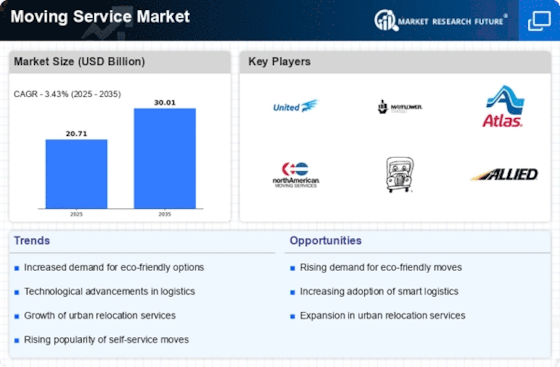
The rapid expansion of e-commerce is reshaping consumer behavior and, consequently, the moving service Market. As online shopping continues to gain traction, the need for efficient logistics and delivery services becomes paramount. This growth in e-commerce has led to an increase in the volume of goods being transported, which may require additional moving services for both residential and commercial clients. Data indicates that e-commerce sales have surged, prompting moving companies to diversify their services to include last-mile delivery and logistics solutions. The Moving Service Market must leverage this trend to capture new business opportunities and enhance customer satisfaction.
Regulatory Changes
Regulatory changes are emerging as a critical driver for the Moving Service Market. Governments are increasingly implementing regulations aimed at ensuring safety and compliance within the moving sector. These regulations may include licensing requirements, insurance mandates, and safety standards for moving companies. Compliance with these regulations can be challenging, yet it also presents opportunities for companies that prioritize safety and professionalism. Data indicates that companies adhering to regulatory standards are more likely to gain consumer trust and loyalty. Therefore, navigating the regulatory landscape effectively will be essential for success in the Moving Service Market.
Urbanization Trends
The ongoing trend of urbanization appears to be a significant driver for the Moving Service Market. As more individuals and families relocate to urban areas in search of better employment opportunities and lifestyle amenities, the demand for moving services is likely to increase. According to recent data, urban populations are projected to grow, leading to a higher frequency of residential moves. This trend not only boosts the demand for local moving services but also for long-distance relocations as people transition between cities. The Moving Service Market must adapt to this growing demand by enhancing service offerings and ensuring efficient logistics to cater to urban dwellers.
Technological Advancements
Technological advancements are revolutionizing the Moving Service Market, offering new tools and solutions that enhance operational efficiency. Innovations such as GPS tracking, automated scheduling, and online booking platforms are becoming increasingly prevalent. These technologies not only streamline the moving process but also improve customer experience by providing real-time updates and transparency. Furthermore, data suggests that companies adopting these technologies can reduce operational costs and improve service delivery times. As the industry continues to evolve, embracing technology will be crucial for companies aiming to remain competitive in the Moving Service Market.
Changing Consumer Preferences
Shifts in consumer preferences are influencing the Moving Service Market in notable ways. Today's consumers are increasingly seeking convenience and personalized services, which has led to a rise in demand for full-service moving options. Many individuals prefer to outsource the entire moving process, from packing to transportation, to professional movers. This trend is supported by data indicating that a significant percentage of consumers are willing to pay a premium for hassle-free moving experiences. As a result, moving companies must adapt their service offerings to meet these evolving expectations, ensuring they remain relevant in the competitive landscape of the Moving Service Market.