Request Free Sample ×

Kindly complete the form below to receive a free sample of this Report

* Please use a valid business email

Leading companies partner with us for data-driven Insights

clients tt-cursor
Hero Background
English
Chinese
French
Japanese
Korean
German
Spanish

Mild Cognitive Impairment Market Analysis

ID: MRFR/HC/9432-CR
151 Pages
Rahul Gotadki
Last Updated: March 31, 2026

Mild Cognitive Impairment Market Research Report By Disease Type (Amnestic MCI and Non-Amnestic MCI), By Age (Child, Adult, Geriatric), By Indication (Lewy Body Dementia, Parkinson’s Disease Dementia, Alzheimer’s Disease, Vascular Dementia, and Others) By Treatment (Medication (Cholinesterase Inhibitors, Benzodiazepines, Glutamate Inhibitors, Antihistamines, Mao Inhibitors, Proton Pump Inhibitors, and Others), Therapy (Cognitive Stimulation Therapy, Cognitive Behavioural Therapy (CBT)), And By Region (North America, Europe, Asia-Pacific, And Rest Of The World - Forecast Till 2035

Share:
Download PDF ×

We do not share your information with anyone. However, we may send you emails based on your report interest from time to time. You may contact us at any time to opt-out.

Mild Cognitive Impairment Market Infographic
Purchase Options

Market Analysis

In-depth Analysis of Mild Cognitive Impairment Market Industry Landscape

The world's aging population has a big effect on the growth of MCI's business. Minor cognitive disability is going up because more people are living longer. So, we need tools for diagnosis, treatments, and support services.

Changes in the market and early detection of mild cognitive impairment are connected. Diagnostic tools and methods allow for early identification. If mild cognitive impairment (MCI) is found early, steps can be taken right away to slow down cognitive decline and improve health.

Biomarkers are very important for diagnosing MCI. Finding and confirming biomarkers like amyloid-beta and tau proteins could change the market by making it easier to diagnose and keep an eye on people with mild cognitive impairment, especially in clinical studies and study. Pharmaceutical research and development has an effect on how the MCI market works. Companies make drugs that stop or slow down neurotoxicity and cognitive decline so that cognitive impairment doesn't get worse. This is to find cures. Education for patients and caregivers has an effect on the field. Educational classes can help people make better decisions, be more aware, and follow through with their treatment. This is very important because it can be hard to understand and deal with mild cognitive decline. The MCI market is changing because of cognitive testing tool technology. Virtual exams, cognitive tests, and digital platforms driven by AI all make diagnostics faster and easier to get, so problems can be found and treated earlier. The prices of healthcare and caregiving for people with moderate cognitive impairment change the way markets work. Market trends are being changed by people who are trying to find MCI treatments and strategies that are both successful and low-cost. Patients with mild cognitive impairment are being used as major subjects in more and more clinical studies. This means including patients' thoughts, opinions, and activities in the planning of clinical trials. This shows that the market is changing toward research that is more open and focused on patients. Market patterns are being changed by programs that aim to stop cognitive decline and improve brain health. These projects are getting bigger. These efforts aim to improve the protection and treatment of mild cognitive decline by focusing on changes to living, managing risk factors, and events in the community. The business of helping people with mild cognitive decline is expected to grow as new technologies come out. In the future, there may be digital health solutions for constant tracking, focused drugs based on personalized risk profiles, and better diagnosis criteria. As science and understanding grow, the market for mild cognitive impairment treatment and control will change.

Author
Author Profile
Rahul Gotadki
Research Manager

He holds an experience of about 9+ years in Market Research and Business Consulting, working under the spectrum of Life Sciences and Healthcare domains. Rahul conceptualizes and implements a scalable business strategy and provides strategic leadership to the clients. His expertise lies in market estimation, competitive intelligence, pipeline analysis, customer assessment, etc.

Leave a Comment

FAQs

What is the current valuation of the Mild Cognitive Impairment Market as of 2024?

<p>The overall market valuation was 2.05 USD Billion in 2024.</p>

What is the projected market valuation for Mild Cognitive Impairment by 2035?

<p>The projected valuation for 2035 is 3.872 USD Billion.</p>

What is the expected CAGR for the Mild Cognitive Impairment Market during the forecast period 2025 - 2035?

<p>The expected CAGR for the market during this period is 5.95%.</p>

Which companies are considered key players in the Mild Cognitive Impairment Market?

Key players include Eli Lilly and Company, Biogen Inc., Pfizer Inc., Novartis AG, AstraZeneca PLC, Roche Holding AG, Merck &amp; Co., Inc., Johnson &amp; Johnson, and Amgen Inc.

How is the Mild Cognitive Impairment Market segmented by disease type?

<p>The market segments by disease type include Amnestic MCI valued at 1.23 to 2.25 USD Billion and Non-Amnestic MCI valued at 0.82 to 1.62 USD Billion.</p>

What are the age demographics for the Mild Cognitive Impairment Market?

The market segments by age include Child (0.15 to 0.25 USD Billion), Adult (0.85 to 1.5 USD Billion), and Geriatric (1.05 to 2.12 USD Billion).

What indications are covered in the Mild Cognitive Impairment Market?

Indications include Alzheimer’s Disease valued at 1.0 to 1.8 USD Billion, Lewy Body Dementia (0.4 to 0.75 USD Billion), and others.

What treatment options are available in the Mild Cognitive Impairment Market?

The market segments treatment options into Medication valued at 1.23 to 2.25 USD Billion and Therapy valued at 0.82 to 1.62 USD Billion.

How does the market for Mild Cognitive Impairment compare across different age groups?

The Geriatric segment shows the highest valuation, ranging from 1.05 to 2.12 USD Billion, compared to Child and Adult segments.

What trends are anticipated in the Mild Cognitive Impairment Market over the next decade?

The market is likely to experience growth driven by an increasing prevalence of cognitive disorders and advancements in treatment options.

Market Summary

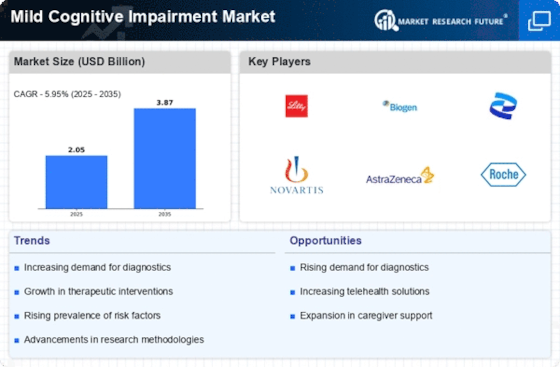
As per Market Research Future analysis, the Mild Cognitive Impairment Market Size was estimated at 2.05 USD Billion in 2024. The Mild Cognitive Impairment industry is projected to grow from 2.172 USD Billion in 2025 to 3.872 USD Billion by 2035, exhibiting a compound annual growth rate (CAGR) of 5.95% during the forecast period 2025 - 2035

Key Market Trends & Highlights

The Mild Cognitive Impairment Market is experiencing transformative growth driven by technological advancements and increasing awareness.

  • Technological advancements in diagnostics are enhancing early detection and intervention strategies in the Mild Cognitive Impairment Market. Personalized treatment approaches are gaining traction, particularly in the Amnestic MCI segment, which remains the largest market segment. Increased awareness and education about cognitive health are contributing to a growing demand for services in North America, the largest market. The aging population and rising incidence of cognitive disorders, coupled with advancements in neuroimaging techniques, are key drivers propelling market growth.

Market Size & Forecast

2024 Market Size 2.05 (USD Billion)
2035 Market Size 3.872 (USD Billion)
CAGR (2025 - 2035) 5.95%
Largest Regional Market Share in 2024 North America

Major Players

Eli Lilly and Company (US), Biogen Inc. (US), Pfizer Inc. (US), Novartis AG (CH), AstraZeneca PLC (GB), <a title="Roche Holding" href="https://diagnostics.roche.com/in/en/news-listing/2022/automated-cerebrospinal-fluid-based-test-for-alzheimers-disease.html" target="_blank" rel="noopener">Roche Holding</a> AG (CH), Merck &amp; Co., Inc. (US), <a title="Johnson &amp; Johnson" href="https://www.jnj.com/innovation/advancing-alzheimers-treatments" target="_blank" rel="noopener">Johnson &amp; Johnson</a> (US), Amgen Inc. (US)

Market Trends

The mild cognitive impairment market is currently experiencing a notable evolution, driven by an increasing awareness of cognitive health and the need for early diagnosis. As the global population ages, the prevalence of mild cognitive impairment is becoming more pronounced, prompting healthcare systems to prioritize cognitive assessments. This shift is likely to enhance the demand for diagnostic tools and therapeutic interventions tailored to this condition. Furthermore, advancements in technology, particularly in neuroimaging and digital health solutions, appear to be facilitating more accurate and timely diagnoses, which could lead to improved patient outcomes.

In addition, the mild cognitive impairment market analysis highlights a growing emphasis on personalized treatment approaches. Healthcare providers are increasingly recognizing that cognitive impairment is not a one-size-fits-all condition. As a result, there is a trend towards developing individualized care plans that consider the unique needs of each patient. This personalized approach may enhance the effectiveness of interventions and foster better engagement from patients and caregivers alike. Overall, the mild cognitive impairment market trends indicate strong future potential, driven by technological advancements and a deeper understanding of cognitive health.

Technological Advancements in Diagnostics

The mild cognitive impairment market is seeing a surge in the adoption of advanced diagnostic technologies. Innovations in neuroimaging and artificial intelligence are enhancing the accuracy of assessments, allowing for earlier detection of cognitive decline. These developments may lead to more effective treatment strategies and improved patient management.

Personalized Treatment Approaches

There is a growing trend towards personalized treatment plans within the mild cognitive impairment market. Healthcare professionals are increasingly tailoring interventions to meet the specific needs of individuals, which could result in better outcomes and higher patient satisfaction. This shift emphasizes the importance of understanding the unique characteristics of each case.

Increased Awareness and Education

The mild cognitive impairment market growth is benefiting from heightened awareness and educational initiatives aimed at both healthcare providers and the general public. As knowledge about cognitive health expands, more individuals are seeking early assessments and interventions, potentially leading to a larger market for related services and products.

Mild Cognitive Impairment Market Market Drivers

Increased Focus on Mental Health

The heightened focus on mental health and cognitive wellness is driving the Mild Cognitive Impairment Market. Societal attitudes towards mental health have evolved, leading to greater acceptance and understanding of cognitive disorders. This shift has resulted in increased funding for mental health initiatives and awareness campaigns aimed at educating the public about mild cognitive impairment. As awareness grows, more individuals are seeking evaluation and treatment for cognitive issues, which is likely to boost demand for services and products within the Mild Cognitive Impairment Market. Additionally, healthcare providers are prioritizing mental health as a critical component of overall health, further propelling the market forward.

Aging Population and Rising Incidence

The aging population is a primary driver of the Mild Cognitive Impairment Market. As individuals age, the prevalence of cognitive decline increases, with studies indicating that approximately 15 to 20% of older adults experience mild cognitive impairment. This demographic shift is expected to continue, leading to a higher demand for diagnostic and therapeutic solutions within the Mild Cognitive Impairment Market. Furthermore, the World Health Organization projects that the number of people aged 60 years and older will double from 12% to 22% by 2050, further emphasizing the need for effective management strategies for cognitive health. Consequently, healthcare systems are increasingly focusing on early detection and intervention, which could potentially enhance the quality of life for affected individuals.

Advancements in Neuroimaging Techniques

Recent advancements in neuroimaging techniques are significantly influencing the Mild Cognitive Impairment Market. Technologies such as MRI and PET scans have improved the ability to detect early signs of cognitive decline, allowing for timely diagnosis and intervention. These innovations not only enhance the accuracy of assessments but also facilitate the differentiation between mild cognitive impairment and other neurodegenerative disorders. As a result, healthcare providers are more equipped to tailor treatment plans to individual needs, which is crucial in managing mild cognitive impairment effectively. The increasing adoption of these advanced imaging modalities is likely to drive market growth, as they become integral to clinical practice and research in the Mild Cognitive Impairment Market.

Integration of Digital Health Solutions

The integration of digital health solutions is emerging as a transformative driver in the Mild Cognitive Impairment Market. Telehealth platforms and mobile applications are increasingly being utilized to monitor cognitive health and provide support for individuals with mild cognitive impairment. These digital tools offer convenient access to healthcare professionals and resources, enabling timely interventions and ongoing management of cognitive health. Moreover, the use of artificial intelligence and machine learning in these solutions is enhancing the ability to analyze cognitive data, leading to more personalized care. As the adoption of digital health solutions continues to rise, it is expected to significantly impact the Mild Cognitive Impairment Market, improving accessibility and patient engagement.

Growing Investment in Research and Development

Investment in research and development is a critical driver of the Mild Cognitive Impairment Market. Pharmaceutical companies and research institutions are increasingly allocating resources to explore novel therapeutic options and interventions for mild cognitive impairment. This trend is evidenced by the rising number of clinical trials aimed at evaluating new drugs and treatment modalities. According to recent data, the number of clinical trials focused on cognitive impairment has seen a substantial increase, reflecting a growing recognition of the condition's impact on public health. As these investments yield promising results, they are likely to lead to the introduction of innovative therapies, thereby expanding the Mild Cognitive Impairment Market and improving patient outcomes.

Market Segment Insights

By Disease Type: Amnestic MCI (Largest) vs. Non-Amnestic MCI (Fastest-Growing)

In the Mild Cognitive Impairment (MCI) market, Amnestic MCI represents the largest share among the disease types, indicating its prevalence and recognition among both healthcare providers and patients. This segment is characterized by memory-related issues, which poses a significant challenge to affected individuals and places it at the forefront of cognitive impairment discussions. Non-Amnestic MCI, while smaller in market share, is gaining traction due to increased diagnosis and awareness of its symptoms, which include cognitive difficulties not primarily related to memory, such as language, attention, or visuospatial abilities.

Mild Cognitive Impairment: Amnestic MCI (Dominant) vs. Non-Amnestic MCI (Emerging)

Amnestic MCI, recognized as the dominant form of mild cognitive impairment, is primarily characterized by memory loss that impacts daily functioning. It is often the precursor to Alzheimer's disease, drawing significant attention for early intervention strategies. The widespread understanding of its symptoms and risks has led to heightened awareness and diagnostic rates. Conversely, Non-Amnestic MCI, although emerging in comparison, is experiencing rapid growth due to a better understanding of cognitive impairments that do not focus on memory alone. It emphasizes the importance of a diverse approach to MCI treatment and research, advocating for a multidimensional view of cognitive health and the development of tailored interventions.

By Age: Geriatric (Largest) vs. Adult (Fastest-Growing)

In the Mild Cognitive Impairment Market, the age segment is primarily dominated by the geriatric population, which represents the largest market share. This segment, comprising individuals aged 65 and older, is particularly vulnerable to cognitive decline, contributing significantly to the prevalence of mild cognitive impairment (MCI). Adults, classified as those aged between 18 and 64, account for a smaller portion of the market share but exhibit notable growth, driven by increasing awareness and early diagnosis efforts. Factors such as the rising elderly population and the heightened focus on cognitive health in geriatric care settings underpin the market dynamics. Furthermore, the adult segment is experiencing rapid growth due to lifestyle-related cognitive risks and ongoing research highlighting preventive strategies. This demographic shift is expected to influence product development and marketing strategies in the coming years.

Geriatric (Dominant) vs. Adult (Emerging)

The geriatric segment is characterized by a higher prevalence of mild cognitive impairment due to age-related degeneration, making it a dominant force in the market. This group is often more willing to seek treatment, facilitated by healthcare providers focusing on cognitive health. On the other hand, the adult segment is emerging as a critical market driven by modern lifestyle factors, including increased stress and lifestyle-related health issues. Awareness of MCI among younger populations is growing, prompting research and product innovations aimed at this demographic. While the geriatric population continues to constitute a larger market share, the adult segment is poised for significant growth, as early intervention becomes a priority for cognitive health.

By Indication: Alzheimer’s Disease (Largest) vs. Vascular Dementia (Fastest-Growing)

The Mild Cognitive Impairment (MCI) market is characterized by a diverse array of indications, with Alzheimer's Disease holding the largest market share. This segment is often viewed as a precursor to dementia, significantly influencing treatment pathways. In contrast, Vascular Dementia is emerging as a growing segment, driven by increased recognition and diagnosis of vascular contributions to cognitive decline. Factors such as an aging population and lifestyle-related risk factors are propelling the demand for interventions targeting these conditions.

Alzheimer's Disease (Dominant) vs. Vascular Dementia (Emerging)

Alzheimer's Disease remains the dominant segment within the MCI market due to its prevalence and well-established treatment options. Patients diagnosed with this condition typically experience a gradual decline in cognitive functions, which sparks ongoing research into new therapeutic avenues. On the other hand, Vascular Dementia is gaining traction as an emerging segment, fueled by increased awareness of its association with cardiovascular health. This condition is characterized by cognitive impairment resulting from impaired blood flow to the brain, and recognizing its impact on cognitive decline has become integral to treatment strategies in the MCI market.

By Treatment: Medication (Largest) vs. Therapy (Fastest-Growing)

In the Mild Cognitive Impairment Market, the treatment segment is primarily divided into two distinct categories: medication and therapy. Medication holds the dominant position due to its established effectiveness and widespread acceptance among healthcare providers. Patients often prefer pharmacological approaches to alleviate symptoms and enhance cognitive function, which drives a significant share in market distribution. Meanwhile, therapy, though currently smaller in share, represents an emerging trend as more caregivers and patients seek non-pharmacological strategies for managing cognitive impairment, leading to increased utilization and market interest. The growth trends within the treatment segment are significantly influenced by rising awareness of mild cognitive impairment and its effects on elderly populations. While medication continues to be favored for its immediate effects, therapy is gaining traction as healthcare systems increasingly recognize its benefits in holistic care. Factors like growing advocacy for dementia awareness, integration of cognitive-behavioral therapies, and evolving patient preferences towards personalized care programs are driving the expansion of therapy options, which are projected to see rapid growth in the coming years.

Medication: Dominant vs. Therapy: Emerging

Medication remains the dominant treatment option in the Mild Cognitive Impairment Market, primarily due to a long-standing history of research backing its efficacy in improving cognitive function. Popular pharmacological treatments include cholinesterase inhibitors and memantine, which are frequently prescribed to mitigate symptoms associated with mild cognitive impairment. On the other hand, therapy is quickly emerging as a viable alternative that focuses on cognitive rehabilitation and supportive care. Therapeutic approaches, including cognitive stimulation therapy and reminiscence therapy, emphasize patient engagement and quality of life enhancement. As healthcare systems increasingly adopt a multifaceted treatment approach, the landscape for mild cognitive impairment is shifting, suggesting a more balanced integration of both medication and therapy in patient care.

Get more detailed insights about Mild Cognitive Impairment Market Research Report - Global Forecast till 2035

Regional Insights

North America : Leading Market for Innovation

North America is the largest market for Mild Cognitive Impairment Market (MCI) therapies, accounting for approximately 45% of the global market share. The region benefits from advanced healthcare infrastructure, significant R&D investments, and a growing elderly population. Regulatory support from agencies like the FDA has catalyzed the development of innovative treatments, driving demand for effective solutions in managing MCI. The United States is the primary contributor, with key players such as Eli Lilly, Biogen, and Pfizer leading the charge in research and product development. Canada also plays a significant role, focusing on early diagnosis and intervention strategies. The competitive landscape is characterized by collaborations between pharmaceutical companies and research institutions, enhancing the pipeline of MCI therapies.

Europe : Emerging Regulatory Frameworks

Europe is witnessing a significant rise in the Mild Cognitive Impairment Market, holding approximately 30% of the global share. The region's growth is driven by increasing awareness of cognitive health, supportive regulatory frameworks, and a focus on preventive healthcare. Countries like Germany and France are at the forefront, implementing policies that encourage research and development in cognitive disorders, thus enhancing market dynamics. Germany leads the European market, supported by a robust healthcare system and a strong presence of pharmaceutical giants like Novartis and Roche. The competitive landscape is evolving, with a mix of established players and emerging biotech firms focusing on innovative therapies. Collaborative efforts between governments and private sectors are fostering advancements in MCI treatment options, ensuring a comprehensive approach to cognitive health.

Asia-Pacific : Rapidly Expanding Market Potential

The Asia-Pacific region is rapidly emerging as a significant player in the Mild Cognitive Impairment Market, accounting for about 20% of the global share. Factors such as an aging population, increasing healthcare expenditure, and rising awareness of cognitive health are driving this growth. Countries like Japan and China are leading the charge, with government initiatives aimed at improving mental health services and access to treatments for MCI. Japan is particularly notable for its advanced healthcare system and strong pharmaceutical industry, with companies like Takeda and Astellas actively involved in MCI research. The competitive landscape is characterized by a mix of local and international players, fostering innovation and collaboration. As the region continues to develop its healthcare infrastructure, the demand for effective MCI therapies is expected to rise significantly.

Middle East and Africa : Emerging Market with Challenges

The Middle East and Africa region is gradually developing its Mild Cognitive Impairment Market, currently holding about 5% of the global share. The growth is driven by increasing awareness of cognitive health issues and a rising elderly population. However, challenges such as limited healthcare infrastructure and access to treatments hinder rapid market expansion. Countries like South Africa and the UAE are making strides in improving mental health services and awareness campaigns. South Africa is leading the market in the region, with initiatives aimed at enhancing cognitive health services. The competitive landscape is still in its nascent stages, with a few local players and international companies exploring opportunities. Collaborative efforts between governments and NGOs are essential to address the challenges and improve access to MCI therapies, paving the way for future growth.

Key Players and Competitive Insights

The Mild Cognitive Impairment Market is distinguished by the presence of numerous regional and local players catering to mild cognitive impairment market products that are evolving at a rapid pace. Furthermore, the increasing burden of mild cognitive impairment across the globe and rising awareness associated with mild cognitive impairment in the healthcare industry is further driving the growth of Mild Cognitive Impairment Market during the forecast period. The major players have adopted a strategy of obtaining regulatory approval from government agencies for their products and signing contracts and agreements to broaden their reach. Eisai Co., Ltd. manufactures prescription drugs and medical equipment and primarily sells to sales agents and subsidiaries. They aim to provide services for a risk prediction algorithm for early detection of mild cognitive impairment (MCI) and dementia. In January 2023, Eisai Co., Ltd. (Japan) announced that the FDA granted accelerated approval to LEQEMBI (lecanemab-irmb), a treatment for early AD.

Key Companies in the Mild Cognitive Impairment Market include

Industry Developments

  • January 2023, Biogen (US) announced that the FDA granted accelerated approval to LEQEMBI (lecanemab-irmb), a treatment for early AD developed in collaboration with Eisai Co., Ltd (Japan).

Future Outlook

Mild Cognitive Impairment Market Future Outlook

The Mild Cognitive Impairment Market is projected to grow at a 5.95% CAGR from 2025 to 2035, driven by increasing awareness, technological advancements, and rising geriatric populations.

New opportunities lie in:

  • <p>Development of digital cognitive training platforms for remote patient engagement. Expansion of biomarker-based diagnostic tools for early detection. Investment in telehealth services tailored for cognitive assessments.</p>

By 2035, the Mild Cognitive Impairment Market is expected to be robust, reflecting substantial growth and innovation.

Market Segmentation

Mild Cognitive Impairment Market Age Outlook

  • Child
  • Adult
  • Geriatric

Mild Cognitive Impairment Market Treatment Outlook

  • Medication
  • Therapy

Mild Cognitive Impairment Market Indication Outlook

  • Lewy Body Dementia
  • Parkinson's Disease Dementia
  • Alzheimer’s Disease
  • Vascular Dementia
  • Others

Mild Cognitive Impairment Market Disease Type Outlook

  • Amnestic MCI
  • Non-Amnestic MCI

Report Scope

MARKET SIZE 2024 2.05(USD Billion)
MARKET SIZE 2025 2.172(USD Billion)
MARKET SIZE 2035 3.872(USD Billion)
COMPOUND ANNUAL GROWTH RATE (CAGR) 5.95% (2025 - 2035)
REPORT COVERAGE Revenue Forecast, Competitive Landscape, Growth Factors, and Trends
BASE YEAR 2024
Market Forecast Period 2025 - 2035
Historical Data 2019 - 2024
Market Forecast Units USD Billion
Key Companies Profiled Eli Lilly and Company (US), Biogen Inc. (US), Pfizer Inc. (US), Novartis AG (CH), AstraZeneca PLC (GB), Roche Holding AG (CH), Merck & Co., Inc. (US), Johnson & Johnson (US), Amgen Inc. (US)
Segments Covered Disease Type, Age, Indication, Treatment, Region
Key Market Opportunities Advancements in digital therapeutics enhance patient engagement in the Mild Cognitive Impairment Market.
Key Market Dynamics Rising demand for innovative therapies drives competitive forces in the Mild Cognitive Impairment market.
Countries Covered North America, Europe, APAC, South America, MEA

FAQs

What is the current valuation of the Mild Cognitive Impairment Market as of 2024?

<p>The overall market valuation was 2.05 USD Billion in 2024.</p>

What is the projected market valuation for Mild Cognitive Impairment by 2035?

<p>The projected valuation for 2035 is 3.872 USD Billion.</p>

What is the expected CAGR for the Mild Cognitive Impairment Market during the forecast period 2025 - 2035?

<p>The expected CAGR for the market during this period is 5.95%.</p>

Which companies are considered key players in the Mild Cognitive Impairment Market?

Key players include Eli Lilly and Company, Biogen Inc., Pfizer Inc., Novartis AG, AstraZeneca PLC, Roche Holding AG, Merck &amp; Co., Inc., Johnson &amp; Johnson, and Amgen Inc.

How is the Mild Cognitive Impairment Market segmented by disease type?

<p>The market segments by disease type include Amnestic MCI valued at 1.23 to 2.25 USD Billion and Non-Amnestic MCI valued at 0.82 to 1.62 USD Billion.</p>

What are the age demographics for the Mild Cognitive Impairment Market?

The market segments by age include Child (0.15 to 0.25 USD Billion), Adult (0.85 to 1.5 USD Billion), and Geriatric (1.05 to 2.12 USD Billion).

What indications are covered in the Mild Cognitive Impairment Market?

Indications include Alzheimer’s Disease valued at 1.0 to 1.8 USD Billion, Lewy Body Dementia (0.4 to 0.75 USD Billion), and others.

What treatment options are available in the Mild Cognitive Impairment Market?

The market segments treatment options into Medication valued at 1.23 to 2.25 USD Billion and Therapy valued at 0.82 to 1.62 USD Billion.

How does the market for Mild Cognitive Impairment compare across different age groups?

The Geriatric segment shows the highest valuation, ranging from 1.05 to 2.12 USD Billion, compared to Child and Adult segments.

What trends are anticipated in the Mild Cognitive Impairment Market over the next decade?

The market is likely to experience growth driven by an increasing prevalence of cognitive disorders and advancements in treatment options.

  1. SECTION I: EXECUTIVE SUMMARY AND KEY HIGHLIGHTS |
    1. EXECUTIVE SUMMARY | |
      1. Market Overview | |
      2. Key Findings | |
      3. Market Segmentation | |
      4. Competitive Landscape | |
      5. Challenges and Opportunities | |
      6. Future Outlook 2
  2. SECTION II: SCOPING, METHODOLOGY AND MARKET STRUCTURE |
    1. MARKET INTRODUCTION | |
      1. Definition | |
      2. Scope of the study | | |
    2. RESEARCH METHODOLOGY | |
      1. Overview | |
      2. Data Mining | |
      3. Secondary Research | |
      4. Primary Research | | |
      5. Forecasting Model | |
      6. Market Size Estimation | | |
      7. Data Triangulation | |
      8. Validation 3
  3. SECTION III: QUALITATIVE ANALYSIS |
    1. MARKET DYNAMICS | |
      1. Overview | |
      2. Drivers | |
      3. Restraints | |
      4. Opportunities |
    2. MARKET FACTOR ANALYSIS | |
      1. Value chain Analysis | |
      2. Porter's Five Forces Analysis | | |
      3. COVID-19 Impact Analysis | | |
  4. SECTION IV: QUANTITATIVE ANALYSIS |
    1. Healthcare, BY Disease Type (USD Billion) | |
      1. Amnestic MCI | |
      2. Non-Amnestic MCI |
    2. Healthcare, BY Age (USD Billion) | |
      1. Child | |
      2. Adult | |
      3. Geriatric |
    3. Healthcare, BY Indication (USD Billion) | |
      1. Lewy Body Dementia | |
      2. Parkinson's Disease Dementia | |
      3. Alzheimer’s Disease | |
      4. Vascular Dementia | |
      5. Others |
    4. Healthcare, BY Treatment (USD Billion) | |
      1. Medication | |
      2. Therapy |
    5. Healthcare, BY Region (USD Billion) | |
      1. North America | | |
      2. Europe | | |
      3. APAC | | |
      4. South America | | |
      5. MEA | | |
  5. SECTION V: COMPETITIVE ANALYSIS |
    1. Competitive Landscape | |
      1. Overview | |
      2. Competitive Analysis | |
      3. Market share Analysis | |
      4. Major Growth Strategy in the Healthcare | |
      5. Competitive Benchmarking | |
      6. Leading Players in Terms of Number of Developments in the Healthcare | |
      7. Key developments and growth strategies | | |
      8. Major Players Financial Matrix | | |
    2. Company Profiles | |
      1. Eli Lilly and Company (US) | | |
      2. Biogen Inc. (US) | | |
      3. Pfizer Inc. (US) | | |
      4. Novartis AG (CH) | | |
      5. AstraZeneca PLC (GB) | | |
      6. Roche Holding AG (CH) | | |
      7. Merck & Co., Inc. (US) | | |
      8. Johnson & Johnson (US) | | |
      9. Amgen Inc. (US) | | |
    3. Appendix | |
      1. References | |
      2. Related Reports 6 LIST OF FIGURES |
    4. MARKET SYNOPSIS |
    5. NORTH AMERICA MARKET ANALYSIS |
    6. US MARKET ANALYSIS BY DISEASE TYPE |
    7. US MARKET ANALYSIS BY AGE |
    8. US MARKET ANALYSIS BY INDICATION |
    9. US MARKET ANALYSIS BY TREATMENT |
    10. CANADA MARKET ANALYSIS BY DISEASE TYPE |
    11. CANADA MARKET ANALYSIS BY AGE |
    12. CANADA MARKET ANALYSIS BY INDICATION |
    13. CANADA MARKET ANALYSIS BY TREATMENT |
    14. EUROPE MARKET ANALYSIS |
    15. GERMANY MARKET ANALYSIS BY DISEASE TYPE |
    16. GERMANY MARKET ANALYSIS BY AGE |
    17. GERMANY MARKET ANALYSIS BY INDICATION |
    18. GERMANY MARKET ANALYSIS BY TREATMENT |
    19. UK MARKET ANALYSIS BY DISEASE TYPE |
    20. UK MARKET ANALYSIS BY AGE |
    21. UK MARKET ANALYSIS BY INDICATION |
    22. UK MARKET ANALYSIS BY TREATMENT |
    23. FRANCE MARKET ANALYSIS BY DISEASE TYPE |
    24. FRANCE MARKET ANALYSIS BY AGE |
    25. FRANCE MARKET ANALYSIS BY INDICATION |
    26. FRANCE MARKET ANALYSIS BY TREATMENT |
    27. RUSSIA MARKET ANALYSIS BY DISEASE TYPE |
    28. RUSSIA MARKET ANALYSIS BY AGE |
    29. RUSSIA MARKET ANALYSIS BY INDICATION |
    30. RUSSIA MARKET ANALYSIS BY TREATMENT |
    31. ITALY MARKET ANALYSIS BY DISEASE TYPE |
    32. ITALY MARKET ANALYSIS BY AGE |
    33. ITALY MARKET ANALYSIS BY INDICATION |
    34. ITALY MARKET ANALYSIS BY TREATMENT |
    35. SPAIN MARKET ANALYSIS BY DISEASE TYPE |
    36. SPAIN MARKET ANALYSIS BY AGE |
    37. SPAIN MARKET ANALYSIS BY INDICATION |
    38. SPAIN MARKET ANALYSIS BY TREATMENT |
    39. REST OF EUROPE MARKET ANALYSIS BY DISEASE TYPE |
    40. REST OF EUROPE MARKET ANALYSIS BY AGE |
    41. REST OF EUROPE MARKET ANALYSIS BY INDICATION |
    42. REST OF EUROPE MARKET ANALYSIS BY TREATMENT |
    43. APAC MARKET ANALYSIS |
    44. CHINA MARKET ANALYSIS BY DISEASE TYPE |
    45. CHINA MARKET ANALYSIS BY AGE |
    46. CHINA MARKET ANALYSIS BY INDICATION |
    47. CHINA MARKET ANALYSIS BY TREATMENT |
    48. INDIA MARKET ANALYSIS BY DISEASE TYPE |
    49. INDIA MARKET ANALYSIS BY AGE |
    50. INDIA MARKET ANALYSIS BY INDICATION |
    51. INDIA MARKET ANALYSIS BY TREATMENT |
    52. JAPAN MARKET ANALYSIS BY DISEASE TYPE |
    53. JAPAN MARKET ANALYSIS BY AGE |
    54. JAPAN MARKET ANALYSIS BY INDICATION |
    55. JAPAN MARKET ANALYSIS BY TREATMENT |
    56. SOUTH KOREA MARKET ANALYSIS BY DISEASE TYPE |
    57. SOUTH KOREA MARKET ANALYSIS BY AGE |
    58. SOUTH KOREA MARKET ANALYSIS BY INDICATION |
    59. SOUTH KOREA MARKET ANALYSIS BY TREATMENT |
    60. MALAYSIA MARKET ANALYSIS BY DISEASE TYPE |
    61. MALAYSIA MARKET ANALYSIS BY AGE |
    62. MALAYSIA MARKET ANALYSIS BY INDICATION |
    63. MALAYSIA MARKET ANALYSIS BY TREATMENT |
    64. THAILAND MARKET ANALYSIS BY DISEASE TYPE |
    65. THAILAND MARKET ANALYSIS BY AGE |
    66. THAILAND MARKET ANALYSIS BY INDICATION |
    67. THAILAND MARKET ANALYSIS BY TREATMENT |
    68. INDONESIA MARKET ANALYSIS BY DISEASE TYPE |
    69. INDONESIA MARKET ANALYSIS BY AGE |
    70. INDONESIA MARKET ANALYSIS BY INDICATION |
    71. INDONESIA MARKET ANALYSIS BY TREATMENT |
    72. REST OF APAC MARKET ANALYSIS BY DISEASE TYPE |
    73. REST OF APAC MARKET ANALYSIS BY AGE |
    74. REST OF APAC MARKET ANALYSIS BY INDICATION |
    75. REST OF APAC MARKET ANALYSIS BY TREATMENT |
    76. SOUTH AMERICA MARKET ANALYSIS |
    77. BRAZIL MARKET ANALYSIS BY DISEASE TYPE |
    78. BRAZIL MARKET ANALYSIS BY AGE |
    79. BRAZIL MARKET ANALYSIS BY INDICATION |
    80. BRAZIL MARKET ANALYSIS BY TREATMENT |
    81. MEXICO MARKET ANALYSIS BY DISEASE TYPE |
    82. MEXICO MARKET ANALYSIS BY AGE |
    83. MEXICO MARKET ANALYSIS BY INDICATION |
    84. MEXICO MARKET ANALYSIS BY TREATMENT |
    85. ARGENTINA MARKET ANALYSIS BY DISEASE TYPE |
    86. ARGENTINA MARKET ANALYSIS BY AGE |
    87. ARGENTINA MARKET ANALYSIS BY INDICATION |
    88. ARGENTINA MARKET ANALYSIS BY TREATMENT |
    89. REST OF SOUTH AMERICA MARKET ANALYSIS BY DISEASE TYPE |
    90. REST OF SOUTH AMERICA MARKET ANALYSIS BY AGE |
    91. REST OF SOUTH AMERICA MARKET ANALYSIS BY INDICATION |
    92. REST OF SOUTH AMERICA MARKET ANALYSIS BY TREATMENT |
    93. MEA MARKET ANALYSIS |
    94. GCC COUNTRIES MARKET ANALYSIS BY DISEASE TYPE |
    95. GCC COUNTRIES MARKET ANALYSIS BY AGE |
    96. GCC COUNTRIES MARKET ANALYSIS BY INDICATION |
    97. GCC COUNTRIES MARKET ANALYSIS BY TREATMENT |
    98. SOUTH AFRICA MARKET ANALYSIS BY DISEASE TYPE |
    99. SOUTH AFRICA MARKET ANALYSIS BY AGE |
    100. SOUTH AFRICA MARKET ANALYSIS BY INDICATION |
    101. SOUTH AFRICA MARKET ANALYSIS BY TREATMENT |
    102. REST OF MEA MARKET ANALYSIS BY DISEASE TYPE |
    103. REST OF MEA MARKET ANALYSIS BY AGE |
    104. REST OF MEA MARKET ANALYSIS BY INDICATION |
    105. REST OF MEA MARKET ANALYSIS BY TREATMENT |
    106. KEY BUYING CRITERIA OF HEALTHCARE |
    107. RESEARCH PROCESS OF MRFR |
    108. DRO ANALYSIS OF HEALTHCARE |
    109. DRIVERS IMPACT ANALYSIS: HEALTHCARE |
    110. RESTRAINTS IMPACT ANALYSIS: HEALTHCARE |
    111. SUPPLY / VALUE CHAIN: HEALTHCARE |
    112. HEALTHCARE, BY DISEASE TYPE, 2024 (% SHARE) |
    113. HEALTHCARE, BY DISEASE TYPE, 2024 TO 2035 (USD Billion) |
    114. HEALTHCARE, BY AGE, 2024 (% SHARE) |
    115. HEALTHCARE, BY AGE, 2024 TO 2035 (USD Billion) |
    116. HEALTHCARE, BY INDICATION, 2024 (% SHARE) |
    117. HEALTHCARE, BY INDICATION, 2024 TO 2035 (USD Billion) |
    118. HEALTHCARE, BY TREATMENT, 2024 (% SHARE) |
    119. HEALTHCARE, BY TREATMENT, 2024 TO 2035 (USD Billion) |
    120. BENCHMARKING OF MAJOR COMPETITORS 7 LIST OF TABLES |
    121. LIST OF ASSUMPTIONS | |
      1. |
    122. North America MARKET SIZE ESTIMATES; FORECAST | |
      1. BY DISEASE TYPE, 2025-2035 (USD Billion) | |
      2. BY AGE, 2025-2035 (USD Billion) | |
      3. BY INDICATION, 2025-2035 (USD Billion) | |
      4. BY TREATMENT, 2025-2035 (USD Billion) |
    123. US MARKET SIZE ESTIMATES; FORECAST | |
      1. BY DISEASE TYPE, 2025-2035 (USD Billion) | |
      2. BY AGE, 2025-2035 (USD Billion) | |
      3. BY INDICATION, 2025-2035 (USD Billion) | |
      4. BY TREATMENT, 2025-2035 (USD Billion) |
    124. Canada MARKET SIZE ESTIMATES; FORECAST | |
      1. BY DISEASE TYPE, 2025-2035 (USD Billion) | |
      2. BY AGE, 2025-2035 (USD Billion) | |
      3. BY INDICATION, 2025-2035 (USD Billion) | |
      4. BY TREATMENT, 2025-2035 (USD Billion) |
    125. Europe MARKET SIZE ESTIMATES; FORECAST | |
      1. BY DISEASE TYPE, 2025-2035 (USD Billion) | |
      2. BY AGE, 2025-2035 (USD Billion) | |
      3. BY INDICATION, 2025-2035 (USD Billion) | |
      4. BY TREATMENT, 2025-2035 (USD Billion) |
    126. Germany MARKET SIZE ESTIMATES; FORECAST | |
      1. BY DISEASE TYPE, 2025-2035 (USD Billion) | |
      2. BY AGE, 2025-2035 (USD Billion) | |
      3. BY INDICATION, 2025-2035 (USD Billion) | |
      4. BY TREATMENT, 2025-2035 (USD Billion) |
    127. UK MARKET SIZE ESTIMATES; FORECAST | |
      1. BY DISEASE TYPE, 2025-2035 (USD Billion) | |
      2. BY AGE, 2025-2035 (USD Billion) | |
      3. BY INDICATION, 2025-2035 (USD Billion) | |
      4. BY TREATMENT, 2025-2035 (USD Billion) |
    128. France MARKET SIZE ESTIMATES; FORECAST | |
      1. BY DISEASE TYPE, 2025-2035 (USD Billion) | |
      2. BY AGE, 2025-2035 (USD Billion) | |
      3. BY INDICATION, 2025-2035 (USD Billion) | |
      4. BY TREATMENT, 2025-2035 (USD Billion) |
    129. Russia MARKET SIZE ESTIMATES; FORECAST | |
      1. BY DISEASE TYPE, 2025-2035 (USD Billion) | |
      2. BY AGE, 2025-2035 (USD Billion) | |
      3. BY INDICATION, 2025-2035 (USD Billion) | |
      4. BY TREATMENT, 2025-2035 (USD Billion) |
    130. Italy MARKET SIZE ESTIMATES; FORECAST | |
      1. BY DISEASE TYPE, 2025-2035 (USD Billion) | |
      2. BY AGE, 2025-2035 (USD Billion) | |
      3. BY INDICATION, 2025-2035 (USD Billion) | |
      4. BY TREATMENT, 2025-2035 (USD Billion) |
    131. Spain MARKET SIZE ESTIMATES; FORECAST | |
      1. BY DISEASE TYPE, 2025-2035 (USD Billion) | |
      2. BY AGE, 2025-2035 (USD Billion) | |
      3. BY INDICATION, 2025-2035 (USD Billion) | |
      4. BY TREATMENT, 2025-2035 (USD Billion) |
    132. Rest of Europe MARKET SIZE ESTIMATES; FORECAST | |
      1. BY DISEASE TYPE, 2025-2035 (USD Billion) | |
      2. BY AGE, 2025-2035 (USD Billion) | |
      3. BY INDICATION, 2025-2035 (USD Billion) | |
      4. BY TREATMENT, 2025-2035 (USD Billion) |
    133. APAC MARKET SIZE ESTIMATES; FORECAST | |
      1. BY DISEASE TYPE, 2025-2035 (USD Billion) | |
      2. BY AGE, 2025-2035 (USD Billion) | |
      3. BY INDICATION, 2025-2035 (USD Billion) | |
      4. BY TREATMENT, 2025-2035 (USD Billion) |
    134. China MARKET SIZE ESTIMATES; FORECAST | |
      1. BY DISEASE TYPE, 2025-2035 (USD Billion) | |
      2. BY AGE, 2025-2035 (USD Billion) | |
      3. BY INDICATION, 2025-2035 (USD Billion) | |
      4. BY TREATMENT, 2025-2035 (USD Billion) |
    135. India MARKET SIZE ESTIMATES; FORECAST | |
      1. BY DISEASE TYPE, 2025-2035 (USD Billion) | |
      2. BY AGE, 2025-2035 (USD Billion) | |
      3. BY INDICATION, 2025-2035 (USD Billion) | |
      4. BY TREATMENT, 2025-2035 (USD Billion) |
    136. Japan MARKET SIZE ESTIMATES; FORECAST | |
      1. BY DISEASE TYPE, 2025-2035 (USD Billion) | |
      2. BY AGE, 2025-2035 (USD Billion) | |
      3. BY INDICATION, 2025-2035 (USD Billion) | |
      4. BY TREATMENT, 2025-2035 (USD Billion) |
    137. South Korea MARKET SIZE ESTIMATES; FORECAST | |
      1. BY DISEASE TYPE, 2025-2035 (USD Billion) | |
      2. BY AGE, 2025-2035 (USD Billion) | |
      3. BY INDICATION, 2025-2035 (USD Billion) | |
      4. BY TREATMENT, 2025-2035 (USD Billion) |
    138. Malaysia MARKET SIZE ESTIMATES; FORECAST | |
      1. BY DISEASE TYPE, 2025-2035 (USD Billion) | |
      2. BY AGE, 2025-2035 (USD Billion) | |
      3. BY INDICATION, 2025-2035 (USD Billion) | |
      4. BY TREATMENT, 2025-2035 (USD Billion) |
    139. Thailand MARKET SIZE ESTIMATES; FORECAST | |
      1. BY DISEASE TYPE, 2025-2035 (USD Billion) | |
      2. BY AGE, 2025-2035 (USD Billion) | |
      3. BY INDICATION, 2025-2035 (USD Billion) | |
      4. BY TREATMENT, 2025-2035 (USD Billion) |
    140. Indonesia MARKET SIZE ESTIMATES; FORECAST | |
      1. BY DISEASE TYPE, 2025-2035 (USD Billion) | |
      2. BY AGE, 2025-2035 (USD Billion) | |
      3. BY INDICATION, 2025-2035 (USD Billion) | |
      4. BY TREATMENT, 2025-2035 (USD Billion) |
    141. Rest of APAC MARKET SIZE ESTIMATES; FORECAST | |
      1. BY DISEASE TYPE, 2025-2035 (USD Billion) | |
      2. BY AGE, 2025-2035 (USD Billion) | |
      3. BY INDICATION, 2025-2035 (USD Billion) | |
      4. BY TREATMENT, 2025-2035 (USD Billion) |
    142. South America MARKET SIZE ESTIMATES; FORECAST | |
      1. BY DISEASE TYPE, 2025-2035 (USD Billion) | |
      2. BY AGE, 2025-2035 (USD Billion) | |
      3. BY INDICATION, 2025-2035 (USD Billion) | |
      4. BY TREATMENT, 2025-2035 (USD Billion) |
    143. Brazil MARKET SIZE ESTIMATES; FORECAST | |
      1. BY DISEASE TYPE, 2025-2035 (USD Billion) | |
      2. BY AGE, 2025-2035 (USD Billion) | |
      3. BY INDICATION, 2025-2035 (USD Billion) | |
      4. BY TREATMENT, 2025-2035 (USD Billion) |
    144. Mexico MARKET SIZE ESTIMATES; FORECAST | |
      1. BY DISEASE TYPE, 2025-2035 (USD Billion) | |
      2. BY AGE, 2025-2035 (USD Billion) | |
      3. BY INDICATION, 2025-2035 (USD Billion) | |
      4. BY TREATMENT, 2025-2035 (USD Billion) |
    145. Argentina MARKET SIZE ESTIMATES; FORECAST | |
      1. BY DISEASE TYPE, 2025-2035 (USD Billion) | |
      2. BY AGE, 2025-2035 (USD Billion) | |
      3. BY INDICATION, 2025-2035 (USD Billion) | |
      4. BY TREATMENT, 2025-2035 (USD Billion) |
    146. Rest of South America MARKET SIZE ESTIMATES; FORECAST | |
      1. BY DISEASE TYPE, 2025-2035 (USD Billion) | |
      2. BY AGE, 2025-2035 (USD Billion) | |
      3. BY INDICATION, 2025-2035 (USD Billion) | |
      4. BY TREATMENT, 2025-2035 (USD Billion) |
    147. MEA MARKET SIZE ESTIMATES; FORECAST | |
      1. BY DISEASE TYPE, 2025-2035 (USD Billion) | |
      2. BY AGE, 2025-2035 (USD Billion) | |
      3. BY INDICATION, 2025-2035 (USD Billion) | |
      4. BY TREATMENT, 2025-2035 (USD Billion) |
    148. GCC Countries MARKET SIZE ESTIMATES; FORECAST | |
      1. BY DISEASE TYPE, 2025-2035 (USD Billion) | |
      2. BY AGE, 2025-2035 (USD Billion) | |
      3. BY INDICATION, 2025-2035 (USD Billion) | |
      4. BY TREATMENT, 2025-2035 (USD Billion) |
    149. South Africa MARKET SIZE ESTIMATES; FORECAST | |
      1. BY DISEASE TYPE, 2025-2035 (USD Billion) | |
      2. BY AGE, 2025-2035 (USD Billion) | |
      3. BY INDICATION, 2025-2035 (USD Billion) | |
      4. BY TREATMENT, 2025-2035 (USD Billion) |
    150. Rest of MEA MARKET SIZE ESTIMATES; FORECAST | |
      1. BY DISEASE TYPE, 2025-2035 (USD Billion) | |
      2. BY AGE, 2025-2035 (USD Billion) | |
      3. BY INDICATION, 2025-2035 (USD Billion) | |
      4. BY TREATMENT, 2025-2035 (USD Billion) |
    151. PRODUCT LAUNCH/PRODUCT DEVELOPMENT/APPROVAL | |
      1. |
    152. ACQUISITION/PARTNERSHIP | |

Healthcare Market Segmentation

Healthcare By Disease Type (USD Billion, 2025-2035)

  • Amnestic MCI
  • Non-Amnestic MCI

Healthcare By Age (USD Billion, 2025-2035)

  • Child
  • Adult
  • Geriatric

Healthcare By Indication (USD Billion, 2025-2035)

  • Lewy Body Dementia
  • Parkinson's Disease Dementia
  • Alzheimer’s Disease
  • Vascular Dementia
  • Others

Healthcare By Treatment (USD Billion, 2025-2035)

  • Medication
  • Therapy
Infographic

Free Sample Request

Kindly complete the form below to receive a free sample of this Report

Get Free Sample

Customer Strories

Compare Licence

×
Features License Type
Single User Multiuser License Enterprise User
Price $4,950 $5,950 $7,250
Maximum User Access Limit 1 User Upto 10 Users Unrestricted Access Throughout the Organization
Free Customization
Direct Access to Analyst
Deliverable Format
Platform Access
Discount on Next Purchase 10% 15% 15%
Printable Versions