
×
Request Free Sample ×

Kindly complete the form below to receive a free sample of this Report

* Please use a valid business email

Leading companies partner with us for data-driven Insights

clients tt-cursor
Hero Background
English
Chinese
French
Japanese
Korean
German
Spanish

Mexico Glycerine Market Trends

ID: MRFR/CnM/2459-CR
52 Pages
Chitranshi Jaiswal
June 2017

Mexico Glycerine Market Research Report Information-by Source (Natural & Synthetic), by Grade (Crude & Refined),by Application (Cosmetics and Personal Care, Food, Tobacco, Polyurethane, Pharmaceutical, Alkyd Resins and Others) and by Region (North Mexico, South Mexico, East Mexico, West Mexico) - Forecast to 2035

Share:
Download PDF ×

We do not share your information with anyone. However, we may send you emails based on your report interest from time to time. You may contact us at any time to opt-out.

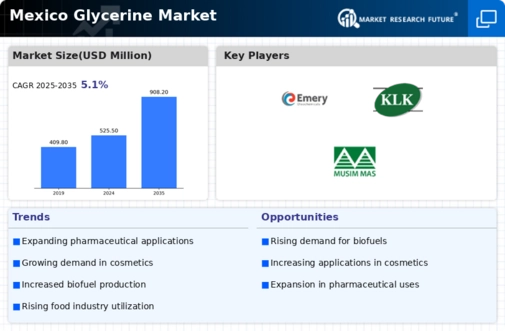
Mexico Glycerine Market Infographic
×
Mexico Glycerine Market Infographic Full View
Purchase Options

Market Trends

Key Emerging Trends in the Mexico Glycerine Market

The sector has seen several key trends over time that demonstrate how it has changed due to a shifting chemical industry landscape alongside rising sales of end-user products. Demand patterns for highly useful compound’ known as glycerin across sectors have been shifting very fast. A conspicuous trend is use of glycerol widely used as an ingredient in cosmetics mostly for personal care needs because it retains moisture among others like emulsifier properties which facilitate water-soluble mixtures being formed easily when applied as lotions or creams on human skin. These advances have been spurred by increasing awareness about the use natural ingredients especially in relation to skin care products.

Moreover, methods and sources of production have been changed in Mexico’s Glycerine market as well. There has been a shift towards producing biodiesel with glycerin as a byproduct. Furthermore, increased utilization of biodiesel as an alternative fuel source contributes towards more availability of glycerin in the market. This trend indicates how the industry is responding to sustainability concerns and opportunities available in renewable resources such as bio-fuels.

Additionally, there are issues regarding regulations since quality standards and purity levels have become key aspects concerning glycerol products. To run successful businesses within fields like pharmaceuticals or cosmetics (pharmaceutical and cosmetic applications) manufacturers need to comply with these global requirements that their operations have been standardized according to such conventions. This means that quality must be stressed so that consumers will continue trusting them while maintaining integrity levels under which this substance is widely used across various industries. Also, an increasing preference for Renounced Based Bio-Glycerin is occurring due to environmental awareness and drive towards sustainability thus pushing into greener options preferred in Mexico as well as America. Regulatory decisions over the years have been based on consumer preferences that are driven by these forces resulting in biobased substitutes replacing synthetic products thus favoring Glycerin as an input material.

Author
Chitranshi Jaiswal
Research Analyst Level I

In her 3 years of experience in the market research field, she has handled critical cross-domain projects. She has an in-depth knowledge of market estimation & analysis, problem-solving, primary as well as secondary research, and team management.She holds an engineering degree and is an MBA professional from a well-known university, capable of evaluating the market and competitive conditions. An exceptional strategist with excellent communication skills and a passion for delivering cutting-edge & practical insights for the market. Proficient in multi-tasking, and can successfully deal with competing demands, while maintaining complete confidentiality. Generated business through active client and project development, networking, and high-quality responses. Her knowledge and skills have helped in making solid business decisions, securing funding from investors, and avoiding business failures.

Leave a Comment

FAQs

What is the current valuation of the Mexico glycerine market?

<p>The Mexico glycerine market was valued at 51.25 USD Million in 2024.</p>

What is the projected market valuation for the Mexico glycerine market by 2035?

<p>The projected valuation for the Mexico glycerine market is 99.5 USD Million by 2035.</p>

What is the expected CAGR for the Mexico glycerine market during the forecast period?

<p>The expected CAGR for the Mexico glycerine market from 2025 to 2035 is 6.22%.</p>

Market Summary

As per analysis, the Mexico glycerine market is projected to grow from USD 51.25 Million in 2024 to USD 99.5 Million by 2035, exhibiting a compound annual growth rate (CAGR) of 6.22% during the forecast period (2025 - 2035).

Key Market Trends & Highlights

The Mexico glycerine market is experiencing robust growth driven by diverse applications across multiple sectors.

  • The food and beverage sector remains the largest consumer of glycerine, reflecting a steady rise in demand.
  • The pharmaceutical segment is the largest market for glycerine, indicating its critical role in drug formulation and production.
  • The cosmetics industry is the fastest-growing segment, propelled by increasing consumer interest in natural and eco-friendly products.
  • Key market drivers include the rising demand in pharmaceuticals and the emphasis on sustainable production practices.

Market Size & Forecast

2024 Market Size 51.25 (USD Million)
2035 Market Size 99.5 (USD Million)
CAGR (2025 - 2035) 6.22%

Major Players

<p>BASF SE (DE), Dow Chemical Company (US), Kraton Corporation (US), Emery Oleochemicals (MY), Wilmar International Limited (SG), Cargill, Incorporated (US), Solvay S.A. (BE), Vantage Specialty Chemicals, Inc. (US)</p>

Market Trends

The mexico glycerine market is currently experiencing a notable transformation, driven by various factors that influence both supply and demand dynamics. The increasing utilization of glycerine in the food and beverage sector, particularly as a sweetener and humectant, appears to be a significant driver of growth. Additionally, the cosmetic and personal care industries are increasingly adopting glycerine for its moisturizing properties, which may further bolster market expansion. Furthermore, the rise in awareness regarding the benefits of natural and organic products is likely to enhance the demand for glycerine derived from renewable sources, aligning with consumer preferences for sustainability. Moreover, the regulatory landscape in Mexico is evolving, with authorities emphasizing the importance of quality and safety standards in glycerine production. This regulatory focus may lead to a more structured market environment, potentially benefiting established players while posing challenges for smaller entities. The interplay between domestic production capabilities and import dependencies also shapes the market landscape, as local manufacturers strive to meet the growing demand while navigating competitive pressures. Overall, the mexico glycerine market seems poised for continued growth, influenced by both consumer trends and regulatory developments.

Rising Demand in Food and Beverage Sector

The food and beverage industry in Mexico is increasingly incorporating glycerine as a key ingredient, particularly for its role as a sweetener and humectant. This trend suggests a growing acceptance of glycerine in various food applications, which may drive market growth.

Expansion in Personal Care Applications

Glycerine's moisturizing properties are gaining traction in the personal care sector, with manufacturers utilizing it in skincare and cosmetic products. This trend indicates a shift towards natural ingredients, potentially enhancing the market's appeal.

Focus on Sustainable Production Practices

There is a noticeable emphasis on sustainability within the mexico glycerine market, with a growing preference for glycerine sourced from renewable materials. This trend reflects consumer demand for environmentally friendly products, which may influence production strategies.

Mexico Glycerine Market Market Drivers

Growing Pharmaceutical Applications

The Mexico glycerine market is experiencing a notable increase in demand from the pharmaceutical sector. Glycerine is widely utilized as a solvent, sweetener, and humectant in various medicinal formulations. The Mexican government has been promoting the development of the pharmaceutical industry, which is projected to grow at a compound annual growth rate (CAGR) of approximately 5% over the next few years. This growth is likely to drive the demand for glycerine, as it is essential in the production of syrups, cough medicines, and topical ointments. Furthermore, the increasing focus on health and wellness among consumers is expected to further bolster the pharmaceutical applications of glycerine, thereby enhancing its market presence in Mexico.

Technological Advancements in Production

The Mexico glycerine market is benefiting from technological advancements in glycerine production processes. Innovations in extraction and purification techniques are enhancing the efficiency and cost-effectiveness of glycerine manufacturing. The introduction of advanced technologies, such as enzymatic processes and membrane filtration, is likely to improve the quality of glycerine while reducing production costs. This technological evolution is expected to attract new players into the glycerine market in Mexico, fostering competition and potentially leading to lower prices for consumers. Furthermore, as production methods become more efficient, the overall supply of glycerine may increase, supporting the growth of various end-use industries, including pharmaceuticals, cosmetics, and food.

Sustainability and Eco-Friendly Practices

The Mexico glycerine market is increasingly aligning with sustainability trends, as manufacturers adopt eco-friendly practices in glycerine production. The growing awareness of environmental issues among consumers is prompting companies to seek sustainable sourcing of glycerine, particularly from vegetable sources. The Mexican government has been supportive of initiatives aimed at promoting sustainable agriculture, which could enhance the availability of bio-based glycerine. This shift towards sustainability is likely to attract investment in the glycerine market, as businesses aim to meet the demand for environmentally friendly products. Consequently, the glycerine market in Mexico may experience growth driven by the increasing emphasis on sustainability and eco-conscious consumer behavior.

Increased Use in Food and Beverage Industry

The Mexico glycerine market is significantly influenced by the food and beverage sector, where glycerine serves as a sweetener, preservative, and humectant. The Mexican food industry is projected to grow at a CAGR of around 4% through 2026, driven by changing consumer preferences towards healthier and more natural food options. Glycerine's role in enhancing the texture and shelf life of food products is becoming increasingly recognized. Moreover, the Mexican government's initiatives to promote food safety and quality standards are likely to encourage the use of glycerine in food applications. This trend suggests a promising outlook for the glycerine market in Mexico, as manufacturers seek to meet the evolving demands of consumers.

Rising Demand in Cosmetics and Personal Care

The Mexico glycerine market is witnessing a surge in demand from the cosmetics and personal care sector. Glycerine is recognized for its moisturizing properties and is commonly used in lotions, creams, and hair care products. The Mexican cosmetics market is projected to reach USD 12 billion by 2026, indicating a robust growth trajectory. This expansion is likely to be fueled by the increasing consumer preference for natural and organic products, which often incorporate glycerine as a key ingredient. Additionally, the regulatory framework in Mexico is becoming more supportive of cosmetic formulations that utilize glycerine, further driving its adoption in this sector. As a result, the glycerine market in Mexico is expected to benefit significantly from the growth of the cosmetics and personal care industry.

Market Segment Insights

By Application: Pharmaceuticals (Largest) vs. Cosmetics (Fastest-Growing)

<p>In the Mexico glycerine market, the application segment sees a notable distribution of market share among pharmaceuticals, cosmetics, food and beverage, personal care, and industrial uses. Pharmaceuticals hold the largest share, driven by their extensive reliance on glycerine as a solvent and preservative. Cosmetics and personal care applications follow closely, utilizing glycerine for its moisturizing properties, while the food and beverage segment also incorporates it as a sweetener and humectant. Industrial applications, although smaller in share, contribute to the overall demand by sourcing glycerine for manufacturing processes. The diverse uses across these industries have created a balanced yet competitive market landscape.</p>

<p>Pharmaceuticals (Dominant) vs. Cosmetics (Emerging)</p>

<p>The pharmaceutical application of glycerine remains dominant within the Mexico market, heavily utilized in the formulation of syrups, cough medicines, and topical ointments due to its safety and efficacy profile. As the population ages, and with rising health consciousness, the demand for pharmaceutical-grade glycerine is expected to remain robust. Conversely, the cosmetics sector emerges rapidly, driven by trends towards natural ingredients and eco-friendly products. Glycerine is highly favored in moisturizing lotions and skin-care lines for its humectant qualities, thus attracting a growing segment of health-conscious consumers wanting to avoid synthetic additives. The combination of pharmaceutical stability and cosmetic versatility positions glycerine as an essential ingredient across these segments.</p>

By End Use: Food Industry (Largest) vs. Cosmetic Industry (Fastest-Growing)

<p>In the Mexico glycerine market, the Food Industry holds the largest share due to the rising demand for glycerine as a sweetener and humectant in various food products. This segment benefits from the growing health consciousness among consumers, leading to an increased use of natural and organic ingredients in food processing. The Cosmetic and Pharmaceutical Industries also play significant roles, but their shares are comparatively smaller as they cater to more specialized needs. The growth trends in the Mexico glycerine market are driven largely by the Cosmetic Industry, which is currently the fastest-growing segment. Factors such as increasing consumer preference for natural products and the evolving landscape of beauty and personal care are fueling demand. Furthermore, the Pharmaceutical Industry continues to show steady growth, leveraging glycerine's properties as an effective solvent and stabilizer in various formulations.</p>

<p>Food Industry: Dominant vs. Cosmetic Industry: Emerging</p>

<p>In the Mexico glycerine market, the Food Industry stands out as the dominant segment due to its extensive applications in food preservation, formulation, and enhancement of flavor. Glycerine is favored for its ability to maintain moisture and improve the texture of food articles, making it indispensable to manufacturers. Conversely, the Cosmetic Industry is emerging rapidly, driven by a surge in demand for natural and organic products among consumers. Glycerine's role in formulations as a moisturizer and skin protectant is increasingly recognized, leading to innovation and expansion in this segment. As health and sustainability trends continue to shape consumer behavior, both segments are expected to evolve, with the Cosmetic segment gaining significant momentum in the market.</p>

By Source: Vegetable (Largest) vs. Synthetic (Fastest-Growing)

<p>In the Mexico glycerine market, the source segment is primarily comprised of vegetable, synthetic, animal, and microbial glycerine. Currently, vegetable glycerine dominates the market, holding the largest share due to its natural appeal and wide application across food, pharmaceuticals, and cosmetics. Synthetic glycerine is rapidly gaining traction, appealing particularly to industries looking for cost-effective alternatives while maintaining quality standards. Growth trends in the glycerine market reflect an increasing shift towards sustainability and health-conscious products. The demand for vegetable glycerine is driven by consumer preference for natural ingredients, especially in the food and personal care industries. Conversely, the synthetic glycerine segment is accelerating, capitalizing on advancements in production technology and cost advantages, appealing to manufacturers looking to optimize profit margins while meeting market demands.</p>

<p>Vegetable (Dominant) vs. Microbial (Emerging)</p>

<p>Vegetable glycerine is recognized as the dominant source in the Mexico glycerine market, largely due to its natural origin and versatility across multiple sectors, including food, cosmetics, and pharmaceuticals. Its safety profile, combined with growing consumer awareness of health and wellness, has bolstered its preference among manufacturers. On the other hand, microbial glycerine is emerging as an innovative alternative, harnessing biotechnology for production. Though still at a nascent stage compared to vegetable glycerine, microbial glycerine shows promise with advantages such as sustainability and potentially lower production costs. As industries aim for eco-friendly solutions, the microbial segment may witness significant growth as technological advancements facilitate scalable production.</p>

By Purity Level: Pharmaceutical Grade (Largest) vs. Food Grade (Fastest-Growing)

<p>In the Mexico glycerine market, the purity level segment is predominantly led by Pharmaceutical Grade, which holds the largest market share due to increasing demand for formulations in various health applications. Technical Grade follows, catering to industrial requirements, while Food Grade is emerging rapidly, driven by the surge in the food and beverage industry. This distribution highlights how varying applications drive the competition and positioning within this segment. Growth trends are significantly influenced by the rising awareness of health and wellness among consumers, propelling the Pharmaceutical Grade glycerine usage in various medicinal products. Furthermore, Food Grade glycerine is rapidly gaining traction, fueled by the growing trend of clean-label products and natural ingredients. The increase in product innovation and diverse applications across industries drives growth, indicating a promising outlook for the segment overall.</p>

<p>Pharmaceutical Grade (Dominant) vs. Food Grade (Emerging)</p>

<p>Pharmaceutical Grade glycerine is characterized by its high purity and stringent quality standards, making it the preferred choice for the pharmaceutical industry for formulations such as syrups, elixirs, and other medicinal products. This segment enjoys a stable demand due to the continuous need for effective healthcare solutions. In contrast, Food Grade glycerine, marked as an emerging segment, has gained popularity in recent years owing to its use as a sweetener, humectant, and preservative in food products. The rising trend of health-conscious eating and the demand for natural and safe food ingredients amplify its growth potential. Both segments exhibit unique characteristics that cater to their respective industries, with Pharmaceutical Grade focusing on quality and safety, while Food Grade emphasizes naturalness and consumer preference.</p>

By Form: Liquid (Largest) vs. Semi-Solid (Fastest-Growing)

<p>In the Mexico glycerine market, the form segment is prominently led by liquid glycerine, which captures the largest share due to its versatility and widespread applications in pharmaceuticals, food, and cosmetics. Solid and semi-solid forms trail behind, with solid glycerine favored for specific industrial applications but with a comparatively smaller market share. Semi-solid glycerine, however, is gaining traction and driving innovative formulations, indicating a shifting preference among manufacturers and consumers alike.</p>

<p>Liquid (Dominant) vs. Semi-Solid (Emerging)</p>

<p>Liquid glycerine remains the dominant form in the Mexico glycerine market, favored for its fluidity and ease of integration into various products, including medications and personal care items. Its extensive use in existing formulations cements its position, as manufacturers continue to rely on liquid glycerine's proven performance. Conversely, semi-solid glycerine is emerging as a notable player, witnessing accelerated growth due to its adaptability in creating unique textures in cosmetic products and topical applications. This evolution reflects a broader trend toward innovation in formulation, appealing to consumers seeking diverse product experiences.</p>

Get more detailed insights about Mexico Glycerine Market Research Report- Forecast to 2035

Regional Insights

Key Players and Competitive Insights

The glycerine market in Mexico is characterized by a competitive landscape that is increasingly shaped by innovation, sustainability, and strategic partnerships. Key players such as BASF SE (DE), Dow Chemical Company (US), and Cargill, Incorporated (US) are actively pursuing strategies that emphasize product development and market expansion. BASF SE (DE) focuses on enhancing its production capabilities through technological advancements, while Dow Chemical Company (US) is leveraging its extensive supply chain to optimize distribution and reduce costs. Cargill, Incorporated (US) is also investing in sustainable practices, which aligns with the growing consumer demand for eco-friendly products. Collectively, these strategies contribute to a dynamic competitive environment where companies are not only vying for market share but also striving to meet evolving consumer preferences.

In terms of business tactics, localizing manufacturing and optimizing supply chains are pivotal for success in this market. The competitive structure appears moderately fragmented, with several players holding significant market shares. This fragmentation allows for a diverse range of products and innovations, yet it also intensifies competition among key players. The influence of major companies is substantial, as they set industry standards and drive trends that smaller firms often follow.

In December 2025, BASF SE (DE) announced the launch of a new glycerine production facility in Mexico, aimed at increasing its output capacity by 30%. This strategic move is likely to enhance BASF's market position by allowing for greater supply reliability and responsiveness to local demand. The facility is expected to utilize advanced technologies that minimize environmental impact, aligning with global sustainability goals.

In November 2025, Dow Chemical Company (US) entered into a strategic partnership with a local Mexican firm to co-develop bio-based glycerine products. This collaboration is significant as it not only expands Dow's product portfolio but also strengthens its foothold in the region. By leveraging local expertise, Dow aims to accelerate the development of innovative solutions that cater to the specific needs of the Mexican market.

In October 2025, Cargill, Incorporated (US) launched a new line of glycerine derivatives designed for the cosmetics industry, emphasizing natural ingredients. This initiative reflects Cargill's commitment to sustainability and positions the company as a leader in the growing market for eco-friendly personal care products. The introduction of these derivatives is expected to attract a new customer base that prioritizes sustainability in their purchasing decisions.

As of January 2026, current competitive trends in the glycerine market are heavily influenced by digitalization, sustainability, and the integration of AI technologies. Strategic alliances are becoming increasingly important, as companies seek to enhance their capabilities and market reach. The shift from price-based competition to a focus on innovation and technology is evident, with firms investing in R&D to differentiate their offerings. Moving forward, competitive differentiation will likely hinge on the ability to deliver reliable supply chains and innovative products that meet the demands of a more environmentally conscious consumer base.

Key Companies in the Mexico Glycerine Market include

Industry Developments

    • In 2018, Unilever Indonesia invested USD 500 in its two main branches- Home and Personal care and Food & Refreshment Glycerin and glycerin-based products hold a significant share in these products.
    • In recent years this market has seen a boom due to the increasing demand of this product in the food industry and related applications. 

Future Outlook

Mexico Glycerine Market Future Outlook

The Mexico glycerine market is projected to grow at a 6.22% CAGR from 2025 to 2035, driven by increasing demand in pharmaceuticals, cosmetics, and food industries.

New opportunities lie in:

  • Expansion of glycerine-based biofuels production facilities.
  • Development of innovative glycerine derivatives for personal care products.
  • Investment in sustainable glycerine sourcing from waste materials.

By 2035, the market is expected to be robust, driven by diverse applications and sustainable practices.

Market Segmentation

Mexico Glycerine Market Form Outlook

  • Liquid
  • Solid
  • Semi-Solid

Mexico Glycerine Market Source Outlook

  • Vegetable
  • Synthetic
  • Animal
  • Microbial

Mexico Glycerine Market End Use Outlook

  • Food Industry
  • Cosmetic Industry
  • Pharmaceutical Industry
  • Chemical Industry
  • Agricultural Industry

Mexico Glycerine Market Application Outlook

  • Pharmaceuticals
  • Cosmetics
  • Food and Beverage
  • Personal Care
  • Industrial

Mexico Glycerine Market Purity Level Outlook

  • Technical Grade
  • Pharmaceutical Grade
  • Food Grade

Report Scope

MARKET SIZE 202451.25(USD Million)
MARKET SIZE 202554.77(USD Million)
MARKET SIZE 203599.5(USD Million)
COMPOUND ANNUAL GROWTH RATE (CAGR)6.22% (2024 - 2035)
REPORT COVERAGERevenue Forecast, Competitive Landscape, Growth Factors, and Trends
BASE YEAR2024
Market Forecast Period2025 - 2035
Historical Data2019 - 2024
Market Forecast UnitsUSD Million
Key Companies ProfiledBASF SE (DE), Dow Chemical Company (US), Kraton Corporation (US), Emery Oleochemicals (MY), Wilmar International Limited (SG), Cargill, Incorporated (US), Solvay S.A. (BE), Vantage Specialty Chemicals, Inc. (US)
Segments CoveredApplication, End Use, Source, Purity Level, Form
Key Market OpportunitiesGrowing demand for sustainable glycerine in cosmetics and personal care products in the mexico glycerine market.
Key Market DynamicsRising demand for glycerine in personal care products drives competition among local manufacturers in Mexico.
Countries CoveredMexico

FAQs

What is the current valuation of the Mexico glycerine market?

<p>The Mexico glycerine market was valued at 51.25 USD Million in 2024.</p>

What is the projected market valuation for the Mexico glycerine market by 2035?

<p>The projected valuation for the Mexico glycerine market is 99.5 USD Million by 2035.</p>

What is the expected CAGR for the Mexico glycerine market during the forecast period?

<p>The expected CAGR for the Mexico glycerine market from 2025 to 2035 is 6.22%.</p>

  1. Report Prologue
  2. Market Introduction
    1. Definition 9
    2. Research Objectives 9
    3. Limitations 10
    4. Research Methodology
    5. Primary Research 12
    6. Market Size Estimation 13
    7. Market Dynamics
    8. Drivers 16
    9. demand 16
    10. Production and Consumption Gap 16
    11. of biodiesel 16
    12. Capacity expansion by major players 16
    13. focusing on refining of glycerine 17
    14. and defence, resins, energy and oilfield creating new opportunities for the manufacturers
    15. Raw Material Suppliers 18
    16. Mexico Glycerine Market End Users 18
  3. Scope of the Study 9
  4. Assumptions 10
    1. Markets Structure 10
    2. Research Process 11
    3. Secondary Research 12
    4. Forecast Model 14
    5. Introduction 15
    6. Growth
      1. Increasing industrial application accelerate
      2. Increasing population accelerate demand
    7. Restraints 16
      1. Price fluctuation
    8. Trends 16
      1. New Entrants
    9. Oppurtunitities
      1. Emerging applications of glycerine in medical
    10. Supply Chain Analysis 17
      1. Mexico Glycerine Producers
      2. Mexico Glycerine Market Traders 18
    11. Porter’s
  5. Force Analysis 19
    1. Threat of Rivalry 20
    2. Bargaining Power of Supplier 20
  6. Threat of New Entrants 19
  7. Threat of Substitute 20
  8. Mexico Glycerine Market, By Source
    1. Introduction 21
  9. Mexico Glycerine Market, By Grade
    1. Introduction
  10. Mexico Glycerine Market, By Application
    1. Introduction
  11. Mexico Glycerine Market, By Region
    1. Introduction 36
    2. Competitive Landscape
    3. Introduction: Key Players 38
    4. Mexico Glycerine Production Market 38
    5. Market Share
      1. Mexico Glycerine Traders 39
    6. Analysis 38
    7. Conclusion
  12. Company Profiles
    1. Cargill
      1. Company Overview 45
      2. Financial
      3. Key Development 46
      4. Company Overview 47
      5. Financial
    2. Incorporated 45
    3. Product/Business Segment Overview 45
    4. Overview 46
    5. Kao corporation 47
    6. Product/Business Segment Overview 47
    7. Updates 48
    8. QUIMIC SA de CV 49
      1. Product/Business Segment Overview
      2. Financial Updates 49
      3. Company Overview 50
      4. Financial
    9. Company Overview 49
    10. Quimica Delta 50
    11. Product/Business Segment Overview 50
    12. Updates 50
    13. Oxiteno Mexico, S.A de C.V 51
      1. Product/Business Segment Overview
      2. Financial Updates 51
      3. Company Overview 52
      4. Financial
    14. Company Overview 51
    15. PEMEX 52
    16. Product/Business Segment Overview 52
    17. Updates 52
  13. List of Tables
  14. MEXICO GLYCERINE MARKET
    1. BY SOURCE, 2020-2027 (USD MILLION) 21
  15. NORTH MEXICO GLYCERINE MARKET,
    1. BY SOURCE, 2020-2027, (USD MILLION) 22
  16. SOUTH MEXICO GLYCERINE
  17. MARKET, BY SOURCE, 2020-2027, (USD MILLION) 22
  18. EAST MEXICO GLYCERINE
  19. MARKET, BY SOURCE, 2020-2027, (USD MILLION) 23
  20. WEST MEXICO GLYCERINE
  21. MARKET, BY SOURCE, 2020-2027, (USD MILLION) 23
  22. MEXICO GLYCERINE
    1. MARKET BY SOURCE, 2020-2027 (THOUSAND MT) 24
  23. MEXICO GLYCERINE
  24. MARKET, BY GRADE, 2020-2027, (USD MILLION) 26
  25. NORTH MEXICO GLYCERINE
  26. MARKET, BY GRADE, 2020-2027, (USD MILLION) 26
  27. SOUTH MEXICO GLYCERINE
  28. MARKET, BY GRADE, 2020-2027, (USD MILLION) 26
  29. EAST MEXICO GLYCERINE
    1. MARKET, 2020-2027, (USD MILLION) 27
  30. WEST MEXICO GLYCERINE MARKET,
  31. MEXICO GLYCERINE MARKET, 2020-2027,
    1. (THOUSAND MT) 28
  32. MEXICO GLYCERINE CONSUMPTION MARKET BY APPLICATION
  33. MEXICO GLYCERINE CONSUMPTION MARKET
    1. BY APPLICATION 2020-2027 (TMT) 31
  34. MEXICO GLYCERINE MARKET (OTHER
    1. APPLICATIONS) 32
  35. MEXICO GLYCERINE MARKET (COSMETICS AND PERSONALCARE)
  36. MEXICO GLYCERINE MARKET (FOOD) 33
  37. MEXICO
    1. GLYCERINE MARKET (TOBACO) 33
  38. MEXICO GLYCERINE MARKET (POLYURETHIN)
  39. MEXICO GLYCERINE MARKET (PHARMACEUTICAL) 34
    1. TABLE
  40. MEXICO GLYCERINE MARKET (ALKYD RESINS) 35
  41. MEXICO GLYCERINE
    1. MARKET BY REGION 2020-2027 (USD MILLION) 36
  42. MEXICO GLYCERINE
    1. MARKET BY REGION 2020-2027 (THOUSAND MT) 37
  43. MEXICO GLYCERINE
    1. PRODUCTION MARKET 39
  44. MEXICO GLYCERINE TRADER 41
    1. TABLE
  45. KEY DEVELOPMENT AND STRATEGIES 42
  46. CARGILL INCORPORATED: KEY
    1. DEVELOPMENT 46
  47. List of Figures
    1. FIGURE
  48. MRFR RESEARCH PROCESS 11
  49. TOP DOWN & BOTTOM DOWN APPROACH
  50. SUPPLY CHAIN ANALYSIS OF MEXICO GLYCERINE MARKET 17
    1. FIGURE
  51. PORTER’S 5 FORCE ANALYSIS OF MEXICO GLYCERINE MARKET 19
    1. FIGURE
  52. MEXICO GLYCERINE MARKET BY SOURCE, 2020-2027 (USD MILLION) 21
    1. FIGURE
  53. MEXICO GLYCERINE MARKET BY SOURCE, 2020-2027 (THOUSAND MT) 24
    1. FIGURE
  54. MEXICO GLYCERINE MARKET BY GRADE, 2020-2027 (USD MILLION) 25
    1. FIGURE
  55. MEXICO GLYCERINE MARKET BY GRADE, 2020-2027 (THOUSAND MT) 28
    1. FIGURE
  56. MEXICO GLYCERINE MARKET BY APPLICATION 2020-2027 (USD MILLION) 29
    1. FIGURE
  57. MEXICO GLYCERINE MARKET BY APPLICATION 2020-2027 (THOUSAND MT) 30
    1. FIGURE
  58. MEXICO GLYCERINE MARKET SHARE, BY APPLICATION (%) 31
  59. MEXICO
    1. GLYCERINE MARKET BY REGION 2020-2027 (USD MILLION) 36
  60. MEXICO
    1. GLYCERINE MARKET BY REGION 2020-2027 (THOUSAND MT) 37
  61. MEXICO
    1. GLYCERINE PRODUCTION MARKET SHARE (%) 38
  62. MEXICO GLYCERINE TRADER
    1. SHARE (%) 40

Mexico Glycerine Market Segmentation

Market Segmentation Overview

  • Detailed segmentation data will be available in the full report
  • Comprehensive analysis by multiple parameters
  • Regional and country-level breakdowns
  • Market size forecasts by segment
Infographic

Free Sample Request

Kindly complete the form below to receive a free sample of this Report

Get Free Sample

Customer Strories

Compare Licence

×
Features License Type
Single User Multiuser License Enterprise User
Price $4,950 $5,950 $7,250
Maximum User Access Limit 1 User Upto 10 Users Unrestricted Access Throughout the Organization
Free Customization
Direct Access to Analyst
Deliverable Format
Platform Access
Discount on Next Purchase 10% 15% 15%
Printable Versions