×
Request Free Sample ×

Kindly complete the form below to receive a free sample of this Report

* Please use a valid business email

Leading companies partner with us for data-driven Insights

clients tt-cursor
Hero Background

Medical Coating Market

ID: MRFR/CnM/26806-HCR
111 Pages
Sejal Akre
February 2026

Medical Coating Market Research Report By Type (Polymers, Metals & Ceramics, Carbon-based Coatings), By Application (Catheters & Guidewires, Stents & Implants, Medical Devices & Equipment), By Function (Anti-thrombotic, Antimicrobial, Hydrophobic, Tissue compatibility, Corrosion resistance), By End User (Hospitals & Clinics, Medical Device Manufacturers, Research & Development Centers, Pharmaceutical Companies), By Material (Biodegradable Polymers, Non-biodegradable Polymers, Ceramic-based Coatings, Metal-based Coatings, Carbon-based Coatings) and By Regional (North America, Europe, South America, Asia-Pacific, Middle East and Africa) - Forecast to 2035

Share:
Download PDF ×

We do not share your information with anyone. However, we may send you emails based on your report interest from time to time. You may contact us at any time to opt-out.

Medical Coating Market Infographic
Purchase Options

Medical Coating Market Summary

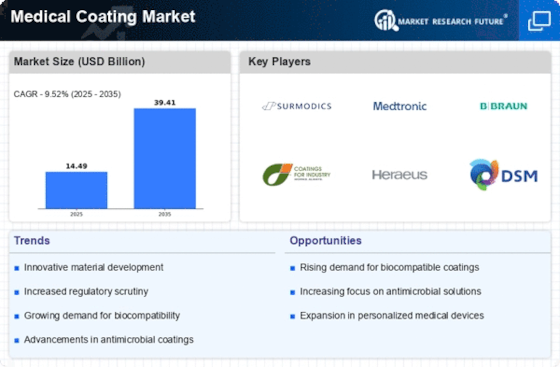
As per Market Research Future analysis, the Medical Coating Market Size was estimated at 14.49 USD Billion in 2024. The Medical Coating industry is projected to grow from 15.87 USD Billion in 2025 to 39.41 USD Billion by 2035, exhibiting a compound annual growth rate (CAGR) of 9.52% during the forecast period 2025 - 2035

Key Market Trends & Highlights

The Medical Coating Market is experiencing dynamic growth driven by technological advancements and increasing healthcare demands.

  • The rise of antimicrobial coatings is reshaping the landscape of infection control in medical applications.
  • Advancements in biocompatible materials are enhancing patient safety and comfort across various medical devices.
  • Integration of smart technologies is likely to revolutionize the functionality of medical coatings, particularly in monitoring and diagnostics.
  • The increasing demand for medical devices and regulatory support for coating innovations are key drivers propelling market expansion.

Market Size & Forecast

2024 Market Size 14.49 (USD Billion)
2035 Market Size 39.41 (USD Billion)
CAGR (2025 - 2035) 9.52%

Major Players

Surmodics Inc (US), Medtronic plc (IE), B. Braun Melsungen AG (DE), Coatings for Industry Inc (US), Heraeus Holding GmbH (DE), DSM Biomedical (NL), Covalon Technologies Ltd (CA), Acelity L.P. Inc (US), 3M Company (US)

Our Impact
Enabled $4.3B Revenue Impact for Fortune 500 and Leading Multinationals
Partnering with 2000+ Global Organizations Each Year
30K+ Citations by Top-Tier Firms in the Industry

Medical Coating Market Trends

The Medical Coating Market is currently experiencing a transformative phase, driven by advancements in technology and increasing demand for enhanced medical devices. Innovations in coating materials, such as hydrophilic and antimicrobial coatings, are becoming more prevalent, as they offer improved performance and safety for patients. Furthermore, the growing emphasis on infection control in healthcare settings is propelling the adoption of specialized coatings that can reduce the risk of hospital-acquired infections. This trend indicates a shift towards more sophisticated solutions that prioritize patient well-being and device longevity. In addition, regulatory bodies are increasingly focusing on the safety and efficacy of medical coatings, which is likely to influence market dynamics. Manufacturers are adapting to these stringent regulations by investing in research and development to create compliant products. The integration of smart technologies into medical coatings, such as drug delivery systems and biosensors, appears to be on the rise, suggesting a future where coatings not only protect devices but also enhance their functionality. Overall, the Medical Coating Market is poised for growth, driven by innovation, regulatory changes, and a heightened focus on patient safety.

Rise of Antimicrobial Coatings

The demand for antimicrobial coatings is increasing as healthcare facilities seek to minimize infection risks. These coatings are designed to inhibit the growth of bacteria and other pathogens on medical devices, thereby enhancing patient safety and reducing healthcare costs.

Advancements in Biocompatible Materials

There is a noticeable trend towards the development of biocompatible coatings that are compatible with human tissue. These materials are essential for applications in implants and prosthetics, as they promote better integration with the body and reduce adverse reactions.

Integration of Smart Technologies

The incorporation of smart technologies into medical coatings is gaining traction. Coatings that can deliver drugs or monitor patient conditions in real-time represent a significant advancement, potentially transforming the functionality of medical devices.

Medical Coating Market Drivers

Rising Focus on Infection Control

Infection control remains a critical concern in healthcare settings, driving the demand for antimicrobial coatings within the Medical Coating Market. As hospitals and clinics strive to minimize the risk of healthcare-associated infections, the adoption of coatings that inhibit microbial growth is becoming more prevalent. The market for antimicrobial coatings is projected to grow at a rate of approximately 8% annually, reflecting the urgent need for effective infection prevention strategies. This trend is prompting manufacturers to invest in research and development to create coatings that not only protect medical devices but also enhance patient safety. Thus, the Medical Coating Market is likely to evolve in response to these pressing healthcare challenges.

Increasing Demand for Medical Devices

The Medical Coating Market is experiencing a surge in demand for medical devices, driven by an aging population and rising chronic diseases. As healthcare providers seek to enhance patient outcomes, the need for advanced medical coatings that improve device performance becomes paramount. In 2025, the medical device market is projected to reach approximately 600 billion USD, indicating a robust growth trajectory. This growth is likely to propel the demand for specialized coatings that offer properties such as biocompatibility and antimicrobial effects. Consequently, manufacturers are investing in innovative coating technologies to meet these evolving needs, thereby expanding their market presence in the Medical Coating Market.

Regulatory Support for Coating Innovations

Regulatory bodies are increasingly recognizing the importance of advanced coatings in the Medical Coating Market. Initiatives aimed at streamlining the approval process for innovative medical coatings are emerging, which could facilitate faster market entry for new products. For instance, the FDA has introduced programs that encourage the development of novel coatings that enhance device safety and efficacy. This regulatory support may lead to a more dynamic market environment, fostering innovation and competition among manufacturers. As a result, the Medical Coating Market is likely to witness a proliferation of new products that meet stringent safety standards while addressing specific clinical needs.

Growing Investment in Healthcare Infrastructure

Investment in healthcare infrastructure is on the rise, which is expected to positively impact the Medical Coating Market. Governments and private entities are allocating substantial resources to enhance healthcare facilities, particularly in emerging economies. This investment is likely to lead to an increased demand for medical devices, subsequently driving the need for advanced coatings that improve device performance and longevity. As healthcare systems expand, the requirement for innovative medical coatings that meet diverse clinical needs will become more pronounced. Consequently, the Medical Coating Market is poised for growth as it aligns with the broader trends in healthcare infrastructure development.

Technological Advancements in Coating Processes

Technological advancements in coating processes are transforming the Medical Coating Market. Innovations such as plasma spraying, electrospinning, and advanced deposition techniques are enabling the development of coatings with superior properties. These technologies allow for the creation of coatings that are not only biocompatible but also possess enhanced durability and functionality. The market for advanced coating technologies is expected to grow significantly, with estimates suggesting a compound annual growth rate of over 10% in the coming years. This growth is indicative of the increasing reliance on sophisticated coating solutions to meet the demands of modern medical applications, thereby shaping the future of the Medical Coating Market.


Market Segment Insights

By Type: Polymers (Largest) vs. Metal Ceramics (Fastest-Growing)

The Medical Coating Market showcases a diverse array of materials, with Polymers dominating the landscape. Polymers are widely utilized in various applications due to their versatility, biocompatibility, and cost-effectiveness, taking a significant share of the market. On the other hand, Metal Ceramics are gaining traction, attributed to their superior mechanical properties and resistance to wear and corrosion, making them increasingly popular in advanced medical applications.

Coatings: Polymers (Dominant) vs. Metal Ceramics (Emerging)

Polymers serve as the dominant players in the Medical Coating Market, thanks to their adaptability and ability to be engineered for specific medical applications, such as drug delivery and implants. They offer advantages in terms of safety and efficiency, as they can be tailored to enhance biocompatibility. Conversely, Metal Ceramics are emerging due to their exceptional durability and performance in demanding environments, making them appealing for use in prosthetics and surgical instruments. As innovation continues, both polymer and metal ceramic coatings are set to play crucial roles in the evolution of medical technologies.

By Application: Catheters (Largest) vs. Stents (Fastest-Growing)

The application segment in the Medical Coating Market showcases a diverse array of products, including catheters, guidewires, stents, implants, and medical device equipment. Among these, catheters hold the largest market share, indicating their established role in medical procedures. Following catheters are stents, which have been gaining traction rapidly due to their critical application in cardiovascular treatments. Other segments like guidewires and implants are also significant but lag behind in terms of overall market presence.

Catheters (Dominant) vs. Stents (Emerging)

Catheters are the dominant application in the Medical Coating Market, primarily due to their widespread use in various medical procedures such as diagnostics and surgeries. These devices require optimal coatings for reducing friction, enhancing biocompatibility, and ensuring patient safety. On the other hand, stents are emerging as a fast-growing segment, driven by advancements in interventional cardiology and an increasing prevalence of cardiovascular diseases. The evolution of coating technologies for stents focuses on enhancing drug delivery and prolonged patency, making them a critical area of innovation. As healthcare providers prioritize minimally invasive procedures, both catheters and stents are integral to evolving treatment protocols.

By Function: Anti-thrombotic (Largest) vs. Antimicrobial (Fastest-Growing)

In the Medical Coating Market, the segment values of anti-thrombotic, antimicrobial, hydrophobic, tissue compatibility, and corrosion resistance demonstrate a diverse distribution of market share. Among these, anti-thrombotic coatings hold the largest share due to their critical role in preventing blood clots in medical devices, particularly in cardiovascular applications. Antimicrobial coatings are gaining ground rapidly, attributed to the increasing focus on infection control in healthcare settings, thus reflecting robust growth potential.

Anti-thrombotic (Dominant) vs. Antimicrobial (Emerging)

Anti-thrombotic coatings are predominantly used in devices like stents and catheters to mitigate the risk of thrombosis. Their established presence in the market makes them a cornerstone in device manufacturing, facilitating enhanced patient outcomes through reduced clot formation. On the other hand, antimicrobial coatings, which provide additional protection against a range of pathogens, are recognized as an emerging segment. With rising infection rates in hospitals, these coatings are being increasingly integrated into various medical devices to enhance safety and efficacy. The growth of antimicrobial coatings is driven by innovations in material science, addressing the urgent need for infection prevention.

By End User: Hospitals Clinics (Largest) vs. Medical Device Manufacturers (Fastest-Growing)

In the Medical Coating Market, 'Hospitals Clinics' holds the largest share among the end-user segments. This segment benefits from the increased utilization of medical coatings in various applications, including surgical instruments and hospital supplies. On the other hand, 'Medical Device Manufacturers' represent the fastest-growing segment, driven by advancements in technology and a surge in the demand for coated medical devices. The combination of enhanced performance and safety features significantly boosts their market presence.

Hospitals Clinics (Dominant) vs. Medical Device Manufacturers (Emerging)

The 'Hospitals Clinics' segment stands as a dominant force in the Medical Coating Market, leveraging strong demand for sterilized and coated medical tools and surfaces, essential for infection control and patient safety. This segment thrives on the integration of advanced materials and innovative coating technologies, ensuring higher durability and performance. Conversely, 'Medical Device Manufacturers' are an emerging segment, experiencing rapid growth due to rising investments in R&D for medical technologies. These manufacturers seek high-performance coatings that offer biocompatibility and enhanced functionality, responding to stringent regulatory requirements and evolving consumer expectations.

By Material: Biodegradable Polymers (Largest) vs. Non-biodegradable Polymers (Fastest-Growing)

The medical coating market is predominantly constituted of biodegradable polymers, which are the largest segment due to their eco-friendliness and safe degradation properties. These materials are being increasingly accepted in various medical applications including drug delivery systems and implantable devices. In contrast, non-biodegradable polymers are witnessing rapid growth, driven by their durability and excellent performance profiles in demanding environments.

Biodegradable Polymers (Dominant) vs. Non-biodegradable Polymers (Emerging)

Biodegradable polymers hold a dominant position in the medical coating market as they align with the rising demand for sustainable medical solutions. They offer safety advantages for temporary implants, minimizing long-term risks associated with foreign materials in the body. Conversely, non-biodegradable polymers are emerging strongly due to their unmatched mechanical strength and stability, making them suitable for permanent implants. The compatibility of these materials with advanced therapeutic approaches further enhances their attractiveness, leading to increased investments and innovations in this segment.

Get more detailed insights about Medical Coating Market

Regional Insights

North America : Innovation and Market Leadership

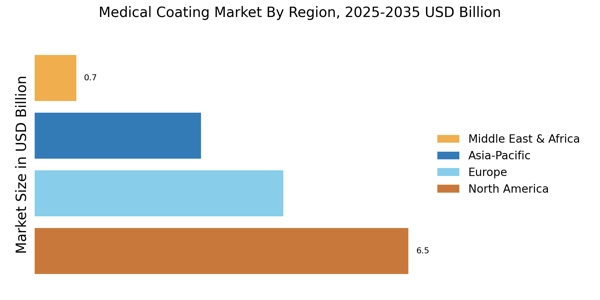
North America is the largest market for medical coatings, holding approximately 45% of the global share. The region benefits from advanced healthcare infrastructure, high R&D investments, and a growing aging population, driving demand for innovative medical devices. Regulatory support from agencies like the FDA further catalyzes market growth, ensuring safety and efficacy in medical coatings. The United States leads the market, followed by Canada, with key players such as Medtronic, Surmodics, and 3M Company dominating the landscape. The competitive environment is characterized by continuous innovation and strategic partnerships, enhancing product offerings and market reach. The presence of established companies fosters a robust ecosystem for medical coating advancements.

Europe : Regulatory Framework and Growth

Europe is the second-largest market for medical coatings, accounting for around 30% of the global market share. The region's growth is driven by stringent regulatory frameworks and increasing demand for advanced medical technologies. Countries like Germany and the UK are at the forefront, supported by favorable government initiatives aimed at enhancing healthcare quality and accessibility. Germany leads the European market, followed by France and the UK, with significant contributions from companies like B. Braun Melsungen and Heraeus Holding. The competitive landscape is marked by innovation and collaboration among key players, focusing on developing biocompatible and antimicrobial coatings. This focus aligns with the EU's commitment to improving patient safety and treatment outcomes.

Asia-Pacific : Rapid Growth and Investment

Asia-Pacific is witnessing rapid growth in the medical coating market, holding approximately 20% of the global share. The region's expansion is fueled by increasing healthcare expenditures, a rising population, and growing awareness of advanced medical technologies. Countries like China and India are significant contributors, supported by government initiatives to improve healthcare infrastructure and access. China is the largest market in the region, followed by Japan and India, with key players such as Covalon Technologies and DSM Biomedical leading the charge. The competitive landscape is evolving, with local manufacturers emerging alongside established global companies, driving innovation and affordability in medical coatings. This dynamic environment is expected to attract further investments and partnerships.

Middle East and Africa : Emerging Market Potential

The Middle East and Africa (MEA) region is gradually emerging in the medical coating market, holding about 5% of the global share. Growth is driven by increasing healthcare investments, rising awareness of advanced medical technologies, and government initiatives aimed at improving healthcare systems. Countries like South Africa and the UAE are leading the charge, focusing on enhancing healthcare quality and accessibility. South Africa is the largest market in the region, followed by the UAE, with a growing presence of international players and local manufacturers. The competitive landscape is characterized by partnerships and collaborations aimed at introducing innovative medical coatings. As healthcare demands rise, the MEA region presents significant growth opportunities for stakeholders in the medical coating market.

Medical Coating Market Regional Image

Key Players and Competitive Insights

The Medical Coating Market is currently characterized by a dynamic competitive landscape, driven by innovation, regulatory advancements, and increasing demand for biocompatible materials. Key players such as Surmodics Inc (US), Medtronic plc (IE), and B. Braun Melsungen AG (DE) are strategically positioned to leverage their technological expertise and extensive product portfolios. Surmodics Inc (US) focuses on developing advanced coatings for medical devices, emphasizing innovation in drug delivery systems and surface modification technologies. Meanwhile, Medtronic plc (IE) is enhancing its market presence through strategic acquisitions and partnerships, aiming to expand its offerings in minimally invasive procedures. B. Braun Melsungen AG (DE) is also investing in research and development to create sustainable and effective coatings, thereby reinforcing its competitive edge in the market.The business tactics employed by these companies reflect a concerted effort to optimize supply chains and localize manufacturing processes. The Medical Coating Market appears moderately fragmented, with a mix of established players and emerging companies vying for market share. The collective influence of these key players shapes the competitive structure, as they engage in strategic collaborations and technological advancements to enhance their operational efficiencies and product offerings.

In August Surmodics Inc (US) announced the launch of a new hydrophilic coating technology designed to improve the performance of cardiovascular devices. This innovation is expected to enhance patient outcomes by reducing friction and improving device maneuverability. The strategic importance of this development lies in its potential to set a new standard in the industry, positioning Surmodics as a leader in advanced medical coatings.

In September Medtronic plc (IE) completed the acquisition of a leading coating technology firm, which specializes in antimicrobial coatings for surgical instruments. This acquisition is likely to bolster Medtronic's product portfolio and enhance its competitive positioning in the surgical market. By integrating these advanced technologies, Medtronic aims to address the growing concerns regarding surgical site infections, thereby improving patient safety and outcomes.

In July B. Braun Melsungen AG (DE) launched a new line of biodegradable coatings for implantable devices, reflecting its commitment to sustainability and environmental responsibility. This strategic move not only aligns with global trends towards eco-friendly solutions but also positions B. Braun as a forward-thinking player in the medical coatings sector. The introduction of biodegradable options may attract environmentally conscious healthcare providers and patients, further enhancing the company's market appeal.

As of October the Medical Coating Market is witnessing trends such as digitalization, sustainability, and the integration of artificial intelligence in product development. Strategic alliances among key players are increasingly shaping the competitive landscape, fostering innovation and enhancing supply chain reliability. The shift from price-based competition to a focus on technological advancements and sustainable practices is likely to define future competitive differentiation, as companies strive to meet evolving market demands and regulatory standards.

Key Companies in the Medical Coating Market include

Industry Developments

The Medical Coating Market is poised to grow significantly over the forecast period, driven by increasing demand for advanced medical devices and the growing prevalence of chronic diseases. Key factors contributing to this growth include technological advancements, rising healthcare expenditure, and government initiatives to promote healthcare infrastructure.Recent developments in the market include the introduction of antimicrobial coatings to combat hospital-acquired infections and the development of biodegradable coatings for tissue engineering applications. Major players in the market are focusing on research and development to enhance the functionality and performance of medical coatings.

Strategic collaborations and partnerships are also prevalent, aimed at expanding product portfolios and gaining a competitive edge.

Future Outlook

Medical Coating Market Future Outlook

The Medical Coating Market is projected to grow at a 9.52% CAGR from 2025 to 2035, driven by technological advancements, increasing healthcare expenditures, and rising demand for biocompatible materials.

New opportunities lie in:

  • Development of antimicrobial coatings for surgical instruments
  • Expansion into emerging markets with tailored coating solutions
  • Investment in R&D for innovative drug-eluting coatings

By 2035, the Medical Coating Market is expected to achieve substantial growth and innovation.

Market Segmentation

Medical Coating Market Type Outlook

  • Polymers
  • Metal Ceramics
  • Carbon-based Coatings

Medical Coating Market End User Outlook

  • Hospitals Clinics
  • Medical Device Manufacturers
  • Research Development Centers
  • Pharmaceutical Companies

Medical Coating Market Function Outlook

  • Anti-thrombotic
  • Antimicrobial
  • Hydrophobic
  • Tissue compatibility
  • Corrosion resistance

Medical Coating Market Material Outlook

  • Biodegradable Polymers
  • Non-biodegradable Polymers
  • Ceramic-based Coatings
  • Metal-based Coatings
  • Carbon-based Coatings

Medical Coating Market Application Outlook

  • Catheters
  • Guidewires
  • Stents
  • Implants
  • Medical Devices Equipment

Report Scope

MARKET SIZE 202414.49(USD Billion)
MARKET SIZE 202515.87(USD Billion)
MARKET SIZE 203539.41(USD Billion)
COMPOUND ANNUAL GROWTH RATE (CAGR)9.52% (2025 - 2035)
REPORT COVERAGERevenue Forecast, Competitive Landscape, Growth Factors, and Trends
BASE YEAR2024
Market Forecast Period2025 - 2035
Historical Data2019 - 2024
Market Forecast UnitsUSD Billion
Key Companies ProfiledSurmodics Inc (US), Medtronic plc (IE), B. Braun Melsungen AG (DE), Coatings for Industry Inc (US), Heraeus Holding GmbH (DE), DSM Biomedical (NL), Covalon Technologies Ltd (CA), Acelity L.P. Inc (US), 3M Company (US)
Segments CoveredType, Application, Function, End User, Material, Regional
Key Market OpportunitiesAdvancements in biocompatible materials enhance performance in the Medical Coating Market.
Key Market DynamicsRising demand for biocompatible coatings drives innovation and competition in the medical coating sector.
Countries CoveredNorth America, Europe, APAC, South America, MEA
Leave a Comment

FAQs

What is the current valuation of the Medical Coating Market as of 2024?

The Medical Coating Market was valued at 14.49 USD Billion in 2024.

What is the projected market size for the Medical Coating Market by 2035?

The market is projected to reach 39.41 USD Billion by 2035.

What is the expected CAGR for the Medical Coating Market during the forecast period 2025 - 2035?

The expected CAGR for the Medical Coating Market during 2025 - 2035 is 9.52%.

Which segment is projected to have the highest valuation in the Medical Coating Market by 2035?

The Polymers segment is projected to reach 15.56 USD Billion by 2035.

What are the key applications driving the Medical Coating Market?

Key applications include Catheters, Stents, and Implants, with projected valuations of 8.0, 8.0, and 10.0 USD Billion respectively by 2035.

Which end user segment is expected to dominate the Medical Coating Market by 2035?

Pharmaceutical Companies are expected to dominate, with a projected valuation of 16.41 USD Billion by 2035.

What types of coatings are included in the Medical Coating Market?

The market includes Polymers, Metal Ceramics, and Carbon-based Coatings, with Polymers projected to reach 15.56 USD Billion by 2035.

Who are the leading companies in the Medical Coating Market?

Key players include Surmodics Inc, Medtronic plc, and B. Braun Melsungen AG.

What functions do medical coatings serve in the industry?

Functions include Anti-thrombotic, Antimicrobial, and Tissue compatibility, with Antimicrobial coatings projected to reach 9.0 USD Billion by 2035.

What materials are utilized in the Medical Coating Market?

Materials include Biodegradable Polymers and Metal-based Coatings, with Non-biodegradable Polymers projected to reach 11.5 USD Billion by 2035.

Download Free Sample

Kindly complete the form below to receive a free sample of this Report

Compare Licence

×
Features License Type
Single User Multiuser License Enterprise User
Price $4,950 $5,950 $7,250
Maximum User Access Limit 1 User Upto 10 Users Unrestricted Access Throughout the Organization
Free Customization
Direct Access to Analyst
Deliverable Format
Platform Access
Discount on Next Purchase 10% 15% 15%
Printable Versions