×
Request Free Sample ×

Kindly complete the form below to receive a free sample of this Report

* Please use a valid business email

Leading companies partner with us for data-driven Insights

clients tt-cursor
Hero Background

Malaysia Fungicides Market

ID: MRFR/Agri/46748-HCR
200 Pages
Snehal Singh
February 2026

Malaysia Fungicides Market Size, Share, Industry Trend & Analysis Research Report By Type (Chemical Fungicides, Bio Fungicides), By Crop Type (Cereals & Grains, Oilseeds & Pulses, Fruits & Vegetables, Others) and By Mode of Application (Seeds Treatment, Soil Treatment, Foliar, Others) - Forecast to 2035

Share:
Download PDF ×

We do not share your information with anyone. However, we may send you emails based on your report interest from time to time. You may contact us at any time to opt-out.

Malaysia Fungicides Market Infographic
Purchase Options

Malaysia Fungicides Market Summary

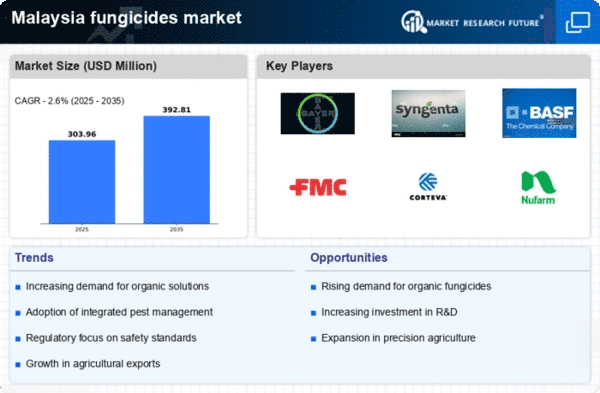
As per Market Research Future analysis, the Malaysia fungicides market Size was estimated at 296.25 USD Million in 2024. The Malaysia fungicides market is projected to grow from 303.96 USD Million in 2025 to 392.81 USD Million by 2035, exhibiting a compound annual growth rate (CAGR) of 2% during the forecast period 2025 - 2035

Key Market Trends & Highlights

The Malaysia fungicides market is experiencing a notable shift towards sustainable practices and innovative solutions.

  • The market is witnessing a significant shift towards biopesticides as growers seek environmentally friendly alternatives.
  • Technological advancements in crop protection are driving efficiency and effectiveness in fungicide applications.
  • The largest segment in the market is the conventional fungicides, while the biopesticides segment is the fastest-growing.
  • Rising demand for sustainable agriculture and government initiatives are key drivers propelling market growth.

Market Size & Forecast

2024 Market Size 296.25 (USD Million)
2035 Market Size 392.81 (USD Million)
CAGR (2025 - 2035) 2.6%

Major Players

Bayer AG (DE), Syngenta AG (CH), BASF SE (DE), FMC Corporation (US), Corteva Agriscience (US), Nufarm Limited (AU), UPL Limited (IN), ADAMA Agricultural Solutions Ltd. (IL)

Our Impact
Enabled $4.3B Revenue Impact for Fortune 500 and Leading Multinationals
Partnering with 2000+ Global Organizations Each Year
30K+ Citations by Top-Tier Firms in the Industry

Malaysia Fungicides Market Trends

The fungicides market in Malaysia is currently experiencing notable developments driven by various factors. The agricultural sector, which is a significant contributor to the nation's economy, relies heavily on effective fungicides to protect crops from diseases. This reliance is further emphasized by the increasing demand for high-quality produce, which necessitates the use of advanced agricultural practices. As farmers seek to enhance yield and ensure food security, the adoption of innovative fungicides is becoming more prevalent. Additionally, the regulatory environment is evolving, with authorities focusing on sustainable practices and the reduction of chemical residues in food products. This shift is likely to influence the types of fungicides that are favored in the market. Moreover, the growing awareness of environmental sustainability among consumers and producers alike is shaping the fungicides market. There is a discernible trend towards biopesticides and organic fungicides, which are perceived as safer alternatives to traditional chemical options. This transition reflects a broader movement towards sustainable agriculture, where the emphasis is placed on minimizing ecological impact while maintaining agricultural productivity. As a result, manufacturers are increasingly investing in research and development to create effective, environmentally friendly solutions. The interplay of these factors suggests a dynamic and evolving landscape for the fungicides market in Malaysia, with potential for growth and innovation in the coming years.

Shift Towards Biopesticides

There is a growing trend in the fungicides market towards the adoption of biopesticides. These products, derived from natural materials, are gaining traction due to their perceived safety and lower environmental impact. Farmers are increasingly interested in sustainable practices, which is driving demand for these alternatives.

Regulatory Changes

Recent regulatory changes in Malaysia are influencing the fungicides market. Authorities are implementing stricter guidelines regarding chemical residues in food products. This shift is prompting manufacturers to adapt their offerings, focusing on safer and more sustainable fungicide options.

Technological Advancements

Technological advancements are playing a crucial role in shaping the fungicides market. Innovations in formulation and application methods are enhancing the effectiveness of fungicides. This progress is likely to improve crop protection and yield, aligning with the needs of modern agriculture.

Malaysia Fungicides Market Drivers

Government Initiatives and Support

The Malaysian government is actively promoting agricultural productivity through various initiatives, which positively influences the fungicides market. Programs aimed at enhancing crop protection and increasing food security are encouraging farmers to invest in fungicides. Financial incentives and subsidies for purchasing agricultural inputs, including fungicides, are likely to boost market growth. Recent reports indicate that government spending on agricultural support has increased by 15% in the last fiscal year, which may further stimulate demand for fungicides. This supportive environment presents a favorable landscape for stakeholders in the fungicides market.

Climate Change Impact on Crop Diseases

Climate change is altering weather patterns in Malaysia, leading to an increase in the prevalence of crop diseases. Warmer temperatures and unpredictable rainfall create favorable conditions for fungal pathogens, which poses a challenge for farmers. As a result, there is a heightened need for effective fungicides to manage these emerging threats. The fungicides market is expected to see a surge in demand as farmers seek solutions to protect their crops from these climate-induced diseases. This trend suggests that companies focusing on research and development of new fungicides may find lucrative opportunities in the Malaysian market.

Rising Demand for Sustainable Agriculture

The increasing emphasis on sustainable agricultural practices in Malaysia is driving the growth of the fungicides market. Farmers are increasingly adopting eco-friendly methods to enhance crop yield while minimizing environmental impact. This shift is reflected in the rising demand for fungicides that are less harmful to beneficial organisms. According to recent data, the market for organic fungicides is projected to grow at a CAGR of 8% over the next five years. This trend indicates a significant opportunity for manufacturers to innovate and develop products that align with sustainable practices, thereby expanding their market share in the fungicides market.

Technological Innovations in Crop Protection

Technological advancements in crop protection are reshaping the fungicides market in Malaysia. Innovations such as precision agriculture and integrated pest management are enabling farmers to apply fungicides more effectively and efficiently. The adoption of smart farming technologies is expected to enhance the efficacy of fungicides, leading to better crop health and yield. As farmers increasingly embrace these technologies, the demand for advanced fungicides that complement these practices is likely to rise. This trend indicates a potential for growth in the fungicides market as technology continues to evolve.

Increasing Awareness of Crop Health Management

There is a growing awareness among Malaysian farmers regarding the importance of crop health management, which is driving the fungicides market. Education and training programs focused on integrated pest management and disease prevention are encouraging farmers to adopt fungicides as a critical component of their crop management strategies. This heightened awareness is reflected in the increasing sales of fungicides, which have shown a growth rate of approximately 10% annually. As farmers recognize the value of maintaining healthy crops, the demand for effective fungicides is expected to continue its upward trajectory in the Malaysian market.


Market Segment Insights

By Type: Chemical Fungicides (Largest) vs. Bio Fungicides (Fastest-Growing)

In the Malaysia fungicides market, Chemical Fungicides hold the largest market share, owing to their effectiveness in controlling a wide range of fungal diseases that affect crops. These synthetic products are well-established in the agricultural practices of Malaysia, making them a preferred choice among farmers seeking reliable solutions for pest management. Meanwhile, Bio Fungicides, while currently smaller in market share, are gaining traction as sustainable alternatives, contributing to the growing interest in organic farming practices. The growth trends indicate a shift towards Bio Fungicides as the market becomes more environmentally conscious. Factors such as increased awareness of the harmful effects of chemical residues, government initiatives promoting organic farming, and the rising demand for sustainable agricultural practices are driving this trend. As a result, Bio Fungicides are projected to accelerate in adoption as farmers look for less harmful options to protect their crops, positioning them as the emerging force in the market.

Chemical Fungicides (Dominant) vs. Bio Fungicides (Emerging)

Chemical Fungicides are characterized by their synthetic composition and broad-spectrum efficacy, which makes them highly favored in the Malaysia fungicides market. These fungicides provide quick solutions to fungal issues, thereby enhancing crop yields and protecting investments. In contrast, Bio Fungicides are derived from natural materials and are gaining popularity for their environmental benefits. Although currently considered the emerging segment, their appeal lies in promoting soil health and reducing chemical input, which is increasingly important for modern agricultural practices. The contrast between these segments highlights a crucial transition in farming choices, prioritizing sustainability while still addressing pressing crop protection needs.

By Crop Type: Fruits & Vegetables (Largest) vs. Oilseeds & Pulses (Fastest-Growing)

The market share distribution within the Crop Type segment of the Malaysia fungicides market reveals a significant dominance of the Fruits & Vegetables category. This segment is followed closely by Cereals & Grains, which also holds a substantial share. Oilseeds & Pulses, while smaller in size, are showing robust growth, indicating a shifting focus among farmers towards these crops due to changing dietary preferences and increased health awareness. Growth trends in this segment are largely driven by rising demand for organic produce and the increasing adoption of modern agricultural practices. The emergence of biopesticides and their growing acceptance among farmers is also contributing to the expansion of the Oilseeds & Pulses segment. Overall, innovation in fungicide formulations and heightened awareness of pest management are expected to further boost these segments over the forecast period.

Fruits & Vegetables (Dominant) vs. Oilseeds & Pulses (Emerging)

Fruits & Vegetables dominate the Crop Type segment, characterized by their high market demand and the necessity for effective pest control solutions in the cultivation process. This segment benefits from the growing consumer trend towards health-conscious food choices and the increasing popularity of fresh produce. The presence of several established players in this category ensures a competitive market landscape, driving technological advances in fungicide formulations. In contrast, the Oilseeds & Pulses segment is emerging rapidly as farmers recognize the profitability associated with these crops amidst rising global demand. This segment's growth is propelled by supportive government policies and initiatives aimed at boosting oilseed production, further strengthening its position within the Malaysia fungicides market.

By Mode of Application: Foliar (Largest) vs. Seeds Treatment (Fastest-Growing)

In the Malaysia fungicides market, the distribution of market share among the various modes of application indicates that the foliar segment remains the largest, driven by the increasing demand for crop protection solutions. This segment's popularity can be attributed to its effectiveness in addressing fungal diseases, making it a preferred choice among farmers. On the other hand, seeds treatment is emerging rapidly due to its preventive nature, ensuring crop health from the very start. This shift showcases the evolving practices in agriculture as growers seek more sustainable options. The growth trends within this segment are influenced by several factors, including advancements in technology and agricultural practices. Farmers are increasingly adopting foliar applications due to their quick action and ability to cover large areas efficiently. Conversely, the seeds treatment segment is witnessing rapid growth as awareness of integrated pest management rises, encouraging pre-emptive measures against soil-borne pathogens. Both segments are expected to thrive as the agriculture industry in the region embraces innovative solutions for better crop yields and reduced environmental impact.

Foliar (Dominant) vs. Seeds Treatment (Emerging)

The foliar application segment is recognized as the dominant force in the Malaysia fungicides market due to its widespread utility in effectively managing fungal threats across diverse crops. Foliar fungicides are favored for their rapid absorption and action, allowing farmers to respond quickly to outbreaks. Meanwhile, the seeds treatment segment is rapidly emerging, characterized by its preventive approach that emphasizes treating seeds before planting. This method minimizes the risk of diseases right from the germination stage, thereby enhancing overall crop resilience. As consumer preferences shift towards sustainable agricultural methods, both segments are gaining importance, but foliar remains critical for immediate disease management while seeds treatment is laying the groundwork for future crop health.

Get more detailed insights about Malaysia Fungicides Market

Key Players and Competitive Insights

The fungicides market exhibits a dynamic competitive landscape characterized by rapid innovation and strategic maneuvering among key players. Major companies such as Bayer AG (DE), Syngenta AG (CH), and BASF SE (DE) are at the forefront, leveraging their extensive research and development capabilities to introduce advanced fungicide formulations. Bayer AG (DE) focuses on integrating digital solutions into its product offerings, enhancing precision agriculture practices. Syngenta AG (CH) emphasizes sustainability, aligning its product development with environmentally friendly practices, while BASF SE (DE) pursues strategic partnerships to bolster its market presence. Collectively, these strategies foster a competitive environment that prioritizes innovation and sustainability, shaping the future of the market.Key business tactics employed by these companies include localizing manufacturing and optimizing supply chains to enhance operational efficiency. The market structure appears moderately fragmented, with several players vying for market share. However, the influence of major companies is substantial, as they set industry standards and drive technological advancements. Their collective actions not only enhance their competitive positioning but also influence smaller players to adapt and innovate.

In October Bayer AG (DE) announced a partnership with a leading agricultural technology firm to develop AI-driven solutions for crop protection. This strategic move is likely to enhance Bayer's product offerings by integrating data analytics into fungicide application, thereby improving efficacy and reducing environmental impact. Such initiatives reflect a growing trend towards digitalization in the agricultural sector, positioning Bayer as a leader in innovative crop protection solutions.

In September Syngenta AG (CH) launched a new line of bio-based fungicides aimed at reducing chemical residues in food production. This initiative not only aligns with global sustainability goals but also caters to the increasing consumer demand for organic produce. By prioritizing environmentally friendly products, Syngenta is likely to strengthen its market position and appeal to a broader customer base.

In August BASF SE (DE) expanded its production capacity in Malaysia, focusing on the development of fungicides tailored for local crops. This expansion is indicative of BASF's commitment to regional market needs and its strategy to enhance supply chain reliability. By localizing production, BASF can respond more swiftly to market demands and reduce logistical costs, thereby improving its competitive edge.

As of November the competitive trends in the fungicides market are increasingly defined by digitalization, sustainability, and the integration of AI technologies. Strategic alliances among key players are shaping the landscape, fostering innovation and collaboration. The shift from price-based competition to a focus on technological advancement and supply chain reliability is evident. Companies that prioritize innovation and sustainability are likely to differentiate themselves in this evolving market, setting new benchmarks for success.

Key Companies in the Malaysia Fungicides Market include

Industry Developments

Recent developments in the Malaysia Fungicides Market have been significantly influenced by the efforts of key players such as Nufarm, FMC Corporation, and Bayer, with innovations focusing on environmentally sustainable practices. In September 2023, BASF announced the launch of a new fungicide product designed specifically for the Malaysian palm oil market, aimed at combating prevalent fungal diseases. Concurrently, UPL Limited reported growth in its Malaysian operations, driven by increased demand from local agriculture sectors, reflecting a broader trend of expanding market valuation.

Additionally, in July 2023, Marrone Bio Innovations expanded its distribution network in Malaysia, enabling better access to its biopesticide solutions. In terms of mergers and acquisitions, Hindustan Aeronautics Limited announced plans to acquire a Malaysian pest control firm, diversifying its portfolio in the region, which was officially noted in August 2023. The ongoing emphasis on the integration of advanced technologies and biopesticide formulations in the Fungicides Market speaks to the agricultural sector's shift towards more sustainable practices and enhanced crop protection in Malaysia, demonstrating a consistent growth trajectory in recent years, particularly since 2021.

Future Outlook

Malaysia Fungicides Market Future Outlook

The Fungicides Market in Malaysia is projected to grow at a 2.6% CAGR from 2025 to 2035, driven by increasing agricultural productivity and sustainable farming practices.

New opportunities lie in:

  • Development of bio-based fungicides for organic farming
  • Investment in precision agriculture technologies for targeted fungicide application
  • Expansion of e-commerce platforms for direct-to-farmer sales

By 2035, the market is expected to achieve robust growth, reflecting evolving agricultural practices.

Market Segmentation

Malaysia Fungicides Market Type Outlook

  • Chemical Fungicides
  • Bio Fungicides

Malaysia Fungicides Market Crop Type Outlook

  • Cereals & Grains
  • Oilseeds & Pulses
  • Fruits & Vegetables
  • Others

Malaysia Fungicides Market Mode of Application Outlook

  • Seeds Treatment
  • Soil Treatment
  • Foliar
  • Others

Report Scope

MARKET SIZE 2024 296.25(USD Million)
MARKET SIZE 2025 303.96(USD Million)
MARKET SIZE 2035 392.81(USD Million)
COMPOUND ANNUAL GROWTH RATE (CAGR) 2.6% (2025 - 2035)
REPORT COVERAGE Revenue Forecast, Competitive Landscape, Growth Factors, and Trends
BASE YEAR 2024
Market Forecast Period 2025 - 2035
Historical Data 2019 - 2024
Market Forecast Units USD Million
Key Companies Profiled Bayer AG (DE), Syngenta AG (CH), BASF SE (DE), FMC Corporation (US), Corteva Agriscience (US), Nufarm Limited (AU), UPL Limited (IN), ADAMA Agricultural Solutions Ltd. (IL)
Segments Covered Type, Crop Type, Mode of Application
Key Market Opportunities Adoption of biopesticides and integrated pest management strategies in the fungicides market.
Key Market Dynamics Rising demand for sustainable fungicides drives innovation and regulatory adaptations in Malaysia's agricultural sector.
Countries Covered Malaysia
Leave a Comment

FAQs

What is the expected market size of the Malaysia Fungicides Market by 2024?

The Malaysia Fungicides Market is expected to be valued at 364.0 USD Million by the year 2024.

What is the projected market size for the Malaysia Fungicides Market by 2035?

The market is projected to reach 678.0 USD Million by the year 2035.

What is the expected compound annual growth rate (CAGR) for the Malaysia Fungicides Market from 2025 to 2035?

The expected CAGR for the Malaysia Fungicides Market during this period is 5.817%.

What portion of the market is attributed to Chemical Fungicides in 2024?

In 2024, Chemical Fungicides are expected to be valued at 218.0 USD Million.

What is the market value of Bio Fungicides in Malaysia for the year 2024?

Bio Fungicides are valued at 146.0 USD Million in the year 2024.

Which company holds a significant share in the Malaysia Fungicides Market?

Major players in the market include Nufarm, FMC Corporation, and BASF.

What is the projected market value for Chemical Fungicides by 2035?

By 2035, the market value for Chemical Fungicides is expected to reach 412.0 USD Million.

What will be the projected market size for Bio Fungicides by 2035?

The projected market size for Bio Fungicides by 2035 is 266.0 USD Million.

What are the growth drivers for the Malaysia Fungicides Market?

Key growth drivers include the increasing demand for agricultural yield and sustainable farming practices.

Are there any emerging trends impacting the Malaysia Fungicides Market?

Yes, there is a growing trend towards biological fungicides as part of sustainable agricultural practices.

Download Free Sample

Kindly complete the form below to receive a free sample of this Report

Compare Licence

×
Features License Type
Single User Multiuser License Enterprise User
Price $4,950 $5,950 $7,250
Maximum User Access Limit 1 User Upto 10 Users Unrestricted Access Throughout the Organization
Free Customization
Direct Access to Analyst
Deliverable Format
Platform Access
Discount on Next Purchase 10% 15% 15%
Printable Versions