Rising Demand in Textile Industry
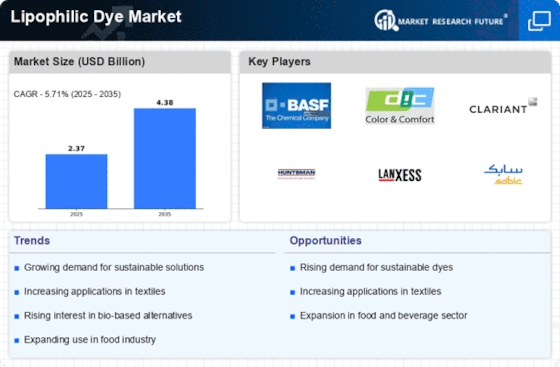
The textile industry is experiencing a notable increase in demand for lipophilic dyes, primarily due to their superior colorfastness and vibrant hues. As manufacturers seek to enhance the quality of their products, the adoption of lipophilic dyes is becoming more prevalent. In 2025, the textile sector is projected to account for approximately 30% of the total lipophilic dye market. This trend is driven by consumer preferences for high-quality fabrics that maintain their color over time, thereby reducing the frequency of dyeing processes. Furthermore, the shift towards sustainable practices in textiles is likely to bolster the use of lipophilic dyes, as they often require less water and energy during application compared to traditional dyes.
Growth in Food and Beverage Sector
The food and beverage sector is witnessing a significant surge in the utilization of lipophilic dyes, which are favored for their ability to impart vivid colors to products without compromising safety. In 2025, it is estimated that this sector will represent around 25% of the lipophilic dye market. The increasing consumer demand for visually appealing food products is driving manufacturers to incorporate these dyes into their offerings. Additionally, regulatory bodies are becoming more lenient towards the use of certain synthetic dyes, which may further enhance the market potential for lipophilic dyes in food applications. This growth is indicative of a broader trend towards innovation in food presentation and marketing.
Advancements in Chemical Engineering
Recent advancements in chemical engineering are playing a pivotal role in the evolution of the lipophilic dye market. Innovations in synthesis techniques and formulations are leading to the development of more efficient and environmentally friendly dyes. In 2025, the market is expected to benefit from these technological improvements, which may enhance the performance characteristics of lipophilic dyes, such as solubility and stability. This could potentially lead to a broader range of applications across various industries, including cosmetics and pharmaceuticals. As companies invest in research and development, the competitive landscape of the lipophilic dye market is likely to become more dynamic, fostering further growth.
Regulatory Support for Synthetic Dyes
Regulatory frameworks are increasingly supportive of the use of synthetic dyes, which is positively impacting the lipophilic dye market. As governments and regulatory bodies establish clearer guidelines for the safe use of synthetic dyes, manufacturers are more inclined to incorporate lipophilic dyes into their products. This trend is expected to facilitate market growth, as it alleviates concerns regarding safety and environmental impact. In 2025, the regulatory environment is projected to become more favorable, potentially increasing the market share of lipophilic dyes in various applications, including textiles and food. This regulatory support may also encourage innovation, as companies seek to develop new formulations that comply with evolving standards.
Increasing Awareness of Aesthetic Appeal
There is a growing awareness among consumers regarding the aesthetic appeal of products, which is significantly influencing the lipophilic dye market. As consumers become more discerning about the visual aspects of items, manufacturers are compelled to utilize lipophilic dyes to enhance product attractiveness. This trend is particularly evident in the cosmetics and personal care sectors, where color plays a crucial role in consumer choice. In 2025, it is anticipated that the cosmetics industry will contribute approximately 20% to the overall lipophilic dye market. The emphasis on aesthetics is likely to drive innovation and diversification in dye formulations, catering to the evolving preferences of consumers.