Rising Geopolitical Tensions
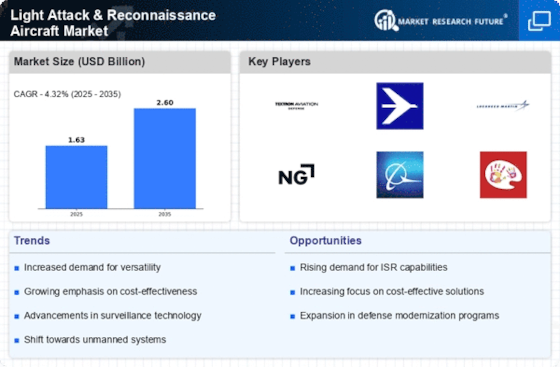
The Light Attack & Reconnaissance Aircraft Market appears to be influenced by escalating geopolitical tensions across various regions. Nations are increasingly investing in military capabilities to ensure national security and respond to potential threats. This trend is evidenced by defense budgets that have seen a marked increase, with many countries allocating substantial funds for the procurement of advanced military aircraft. The need for versatile platforms that can perform both light attack and reconnaissance missions is becoming paramount. As a result, manufacturers are likely to experience heightened demand for their products, which could lead to innovations in design and functionality. The strategic importance of these aircraft in modern warfare scenarios suggests that the market will continue to expand as nations seek to bolster their aerial capabilities.
Emerging Markets and Defense Spending
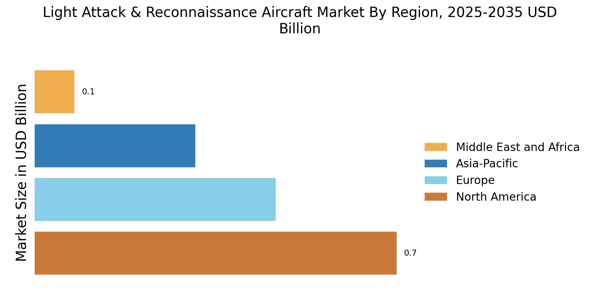
Emerging markets are significantly impacting the Light Attack & Reconnaissance Aircraft Market as defense spending continues to rise in various regions. Countries that are modernizing their military capabilities are increasingly looking to acquire advanced aircraft that can fulfill both light attack and reconnaissance roles. This trend is particularly evident in regions where geopolitical dynamics are shifting, prompting nations to enhance their defense postures. The increase in defense budgets in these emerging markets is likely to create new opportunities for manufacturers, as they seek to establish a foothold in these growing markets. Furthermore, partnerships and collaborations with local defense industries may facilitate the introduction of tailored solutions that meet specific regional needs, thereby fostering growth in the Light Attack & Reconnaissance Aircraft Market.
Increased Focus on Asymmetric Warfare
The Light Attack & Reconnaissance Aircraft Market is experiencing growth due to an increased focus on asymmetric warfare strategies. As military operations evolve, there is a growing recognition of the need for agile and cost-effective solutions that can operate in diverse environments. Light attack aircraft are particularly well-suited for counterinsurgency and anti-terrorism operations, where traditional heavy aircraft may not be as effective. This shift in military strategy is prompting defense forces to seek platforms that can provide close air support and intelligence, surveillance, and reconnaissance (ISR) capabilities. The market is likely to benefit from this trend, as nations prioritize the acquisition of aircraft that can fulfill these roles efficiently. Consequently, manufacturers are expected to adapt their offerings to meet the specific requirements of modern warfare.
Technological Innovations in Avionics
Technological advancements in avionics are playing a crucial role in shaping the Light Attack & Reconnaissance Aircraft Market. Enhanced navigation systems, improved sensor technologies, and advanced communication systems are becoming increasingly integrated into modern aircraft designs. These innovations not only improve operational efficiency but also enhance the effectiveness of reconnaissance missions. For instance, the incorporation of real-time data processing capabilities allows for better situational awareness and decision-making during missions. As defense contractors invest in research and development, the market is likely to witness the introduction of next-generation aircraft equipped with cutting-edge avionics. This trend indicates a shift towards more sophisticated platforms that can adapt to evolving combat environments, thereby driving growth in the industry.
Growing Demand for Cost-Effective Solutions
The Light Attack & Reconnaissance Aircraft Market is witnessing a growing demand for cost-effective military solutions. As defense budgets face constraints, military organizations are increasingly seeking platforms that offer operational flexibility without incurring exorbitant costs. Light attack aircraft, which typically require lower maintenance and operational expenses compared to their heavier counterparts, are becoming more attractive to defense planners. This trend is reflected in procurement strategies that prioritize affordability and efficiency. Additionally, the ability of these aircraft to perform multiple roles, including reconnaissance and light attack missions, further enhances their appeal. As a result, manufacturers are likely to focus on developing aircraft that balance performance with cost-effectiveness, thereby driving growth in the market.