E-commerce Growth
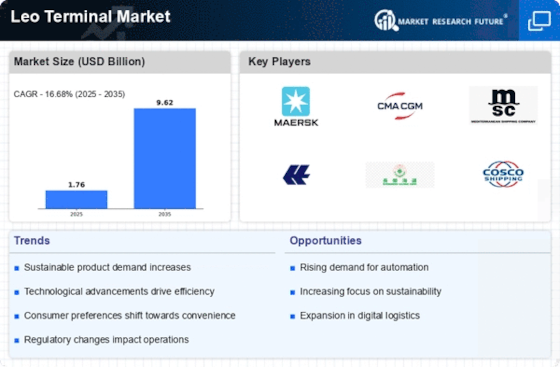
The rapid growth of e-commerce is reshaping the logistics landscape, significantly impacting the Leo Terminal Market. As online shopping continues to rise, the demand for efficient terminal operations to handle increased cargo volumes is paramount. This trend has led to a surge in investments in terminal infrastructure to accommodate larger shipments and faster processing times. Recent statistics indicate that e-commerce-related cargo volumes have increased by 30% over the past year, compelling terminals to adapt swiftly. Consequently, terminals that effectively leverage this growth are likely to enhance their market share and profitability.
Strategic Alliances
Strategic alliances are emerging as a key driver in the Leo Terminal Market, as companies seek to enhance their service offerings and expand their reach. Collaborations between terminal operators, shipping lines, and logistics providers can lead to improved efficiency and cost savings. These partnerships often facilitate shared resources and technology, enabling terminals to respond more effectively to market demands. Recent trends suggest that terminals engaged in strategic alliances experience a 10% increase in operational efficiency. As the market evolves, the ability to forge and maintain these alliances will likely be crucial for success.
Regulatory Compliance
Regulatory compliance is a critical driver in the Leo Terminal Market, as governments worldwide implement stricter environmental and safety regulations. Compliance with these regulations often necessitates significant investment in infrastructure and technology. For instance, terminals are increasingly required to adopt eco-friendly practices, which may involve upgrading equipment to reduce emissions. This shift not only aligns with The Leo Terminal Market. Data suggests that terminals adhering to these regulations may see a 15% increase in customer trust and loyalty, thereby enhancing their competitive edge.
Sustainability Initiatives
Sustainability initiatives are becoming increasingly vital in the Leo Terminal Market, as stakeholders prioritize environmentally responsible practices. Terminals are adopting green technologies, such as electric vehicles and renewable energy sources, to minimize their carbon footprint. This shift not only meets regulatory requirements but also appeals to environmentally conscious consumers and businesses. Data indicates that terminals implementing sustainability measures can reduce operational costs by up to 25% over time. As the industry moves towards greener practices, those terminals that lead in sustainability are likely to gain a competitive advantage in the market.
Technological Advancements
The Leo Terminal Market is currently experiencing a surge in technological advancements that enhance operational efficiency and service delivery. Innovations such as automated cargo handling systems and advanced tracking technologies are being integrated into terminal operations. These advancements not only streamline processes but also reduce turnaround times, which is crucial in a competitive market. According to recent data, terminals that have adopted these technologies report a 20% increase in throughput. This trend indicates a shift towards more tech-savvy operations, which could redefine service standards in the Leo Terminal Market.