×
Request Free Sample ×

Kindly complete the form below to receive a free sample of this Report

* Please use a valid business email

Leading companies partner with us for data-driven Insights

clients tt-cursor
Hero Background

Japan Polysomnography Devices Market

ID: MRFR/HC/50274-HCR
200 Pages
Rahul Gotadki
February 2026

Japan Polysomnography Devices Market Research Report: Size, Share, Trend Analysis By Types (Fixed Polysomnography Devices, Portable Polysomnography Devices) and By Applications (Hospitals, Diagnostic Laboratories, Homecare Settings, Others) - Growth Outlook & Industry Forecast 2025 To 2035

Share:
Download PDF ×

We do not share your information with anyone. However, we may send you emails based on your report interest from time to time. You may contact us at any time to opt-out.

Japan Polysomnography Devices Market Infographic
Purchase Options

Japan Polysomnography Devices Market Summary

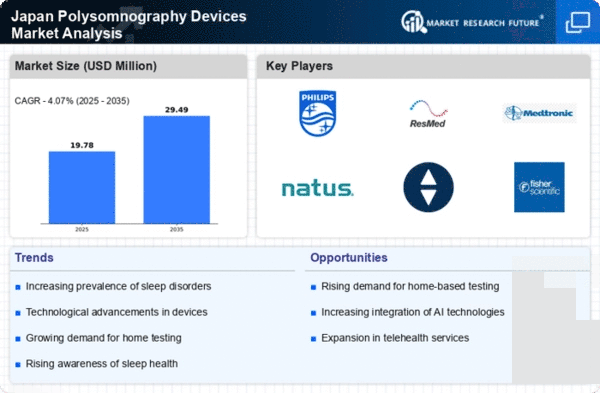
As per Market Research Future analysis, the Japan Polysomnography Devices Market Size was estimated at 19.01 USD Million in 2024. The Japan polysomnography devices market is projected to grow from 19.78 USD Million in 2025 to 29.49 USD Million by 2035, exhibiting a compound annual growth rate (CAGR) of 4.0% during the forecast period 2025 - 2035

Key Market Trends & Highlights

The Japan polysomnography devices market is poised for growth driven by technological advancements and increasing awareness of sleep disorders.

  • Technological advancements in polysomnography devices are enhancing diagnostic accuracy and patient comfort.
  • The largest segment in the market is the home sleep testing devices, reflecting a shift towards more accessible sleep monitoring solutions.
  • The fastest-growing segment is wearable sleep monitoring devices, indicating a trend towards consumer-friendly health technology.
  • Rising prevalence of sleep disorders and increased investment in sleep research are key drivers propelling market expansion.

Market Size & Forecast

2024 Market Size 19.01 (USD Million)
2035 Market Size 29.49 (USD Million)
CAGR (2025 - 2035) 4.07%

Major Players

Philips (NL), ResMed (AU), Medtronic (US), Natus Medical (US), Sleep Number (US), Fisher & Paykel Healthcare (NZ), Compumedics (AU), Somnomed (AU)

Our Impact
Enabled $4.3B Revenue Impact for Fortune 500 and Leading Multinationals
Partnering with 2000+ Global Organizations Each Year
30K+ Citations by Top-Tier Firms in the Industry

Japan Polysomnography Devices Market Trends

The polysomnography devices market in Japan is currently experiencing notable advancements, driven by increasing awareness of sleep disorders and the growing prevalence of conditions such as sleep apnea. The demand for effective diagnostic tools is rising, as healthcare providers seek to enhance patient outcomes through accurate sleep assessments. Technological innovations, including portable and home-based polysomnography devices, are gaining traction, allowing for more convenient and accessible testing options. This shift towards at-home testing is likely to reshape the landscape of sleep medicine, making it easier for patients to receive timely diagnoses and treatment. Moreover, the regulatory environment in Japan appears to be supportive of advancements in medical technology, fostering an ecosystem conducive to research and development. Collaborations between healthcare institutions and technology firms may further accelerate the introduction of cutting-edge polysomnography devices. As the population ages, the focus on sleep health is expected to intensify, potentially leading to increased investments in this sector. Overall, the polysomnography devices market is poised for growth, reflecting a broader trend towards prioritizing sleep health in Japan's healthcare system.

Technological Advancements

Recent innovations in polysomnography devices are enhancing diagnostic capabilities. The introduction of portable and wireless devices allows for more flexible testing environments, catering to patient needs. These advancements may lead to improved accuracy in sleep disorder diagnoses.

Increased Awareness of Sleep Disorders

There is a growing recognition of the importance of sleep health among the Japanese population. This heightened awareness is likely to drive demand for polysomnography devices, as individuals seek effective solutions for sleep-related issues.

Regulatory Support for Medical Technology

The regulatory framework in Japan is becoming increasingly favorable for the development and approval of new medical technologies. This supportive environment may encourage innovation in the polysomnography devices market, facilitating the introduction of advanced diagnostic tools.

Japan Polysomnography Devices Market Drivers

Growing Public Health Campaigns

Public health campaigns in Japan aimed at raising awareness about sleep health are contributing to the expansion of the polysomnography devices market. These campaigns, often spearheaded by health organizations and government bodies, educate the population about the importance of sleep and the potential consequences of untreated sleep disorders. As awareness increases, more individuals are likely to seek diagnostic evaluations, leading to a higher demand for polysomnography devices. Recent surveys indicate that 65% of respondents are now more informed about sleep disorders than they were five years ago, highlighting the effectiveness of these initiatives. Consequently, the polysomnography devices market is expected to benefit from this heightened awareness, as more people pursue testing and treatment options.

Government Initiatives and Funding

Government initiatives aimed at improving healthcare infrastructure in Japan are significantly impacting the polysomnography devices market. The Japanese government has been actively investing in healthcare technology, with a focus on enhancing diagnostic capabilities for sleep disorders. Recent funding programs have allocated over ¥10 billion to support research and development in sleep medicine, which includes the advancement of polysomnography devices. This financial backing not only encourages innovation but also facilitates the adoption of these devices in clinical settings. As a result, healthcare facilities are more likely to integrate advanced polysomnography systems into their practices, thereby driving market growth. The ongoing support from the government is expected to bolster the polysomnography devices market in the coming years.

Rising Prevalence of Sleep Disorders

The increasing incidence of sleep disorders in Japan is a primary driver for the polysomnography devices market. Recent studies indicate that approximately 20% of the Japanese population experiences some form of sleep disorder, including sleep apnea and insomnia. This growing prevalence necessitates advanced diagnostic tools, such as polysomnography devices, to facilitate accurate assessments and treatment plans. As healthcare providers seek to address this rising concern, the demand for sophisticated polysomnography devices is expected to surge. Furthermore, the aging population in Japan, which is projected to reach 36% by 2040, exacerbates the situation, as older adults are more susceptible to sleep-related issues. Consequently, the polysomnography devices market is likely to expand significantly in response to these demographic trends.

Increased Investment in Sleep Research

The surge in investment in sleep research within Japan is a notable driver for the polysomnography devices market. Academic institutions and private organizations are increasingly funding studies focused on sleep disorders, which has led to a greater understanding of the complexities of sleep health. This research not only enhances the knowledge base but also drives the development of more sophisticated polysomnography devices tailored to specific sleep disorders. In recent years, funding for sleep research has increased by approximately 15%, reflecting a growing recognition of the importance of sleep health. As research continues to advance, the polysomnography devices market is likely to see an influx of innovative products designed to meet the evolving needs of healthcare providers and patients alike.

Technological Innovations in Sleep Monitoring

Technological advancements in sleep monitoring systems are propelling the polysomnography devices market forward. Innovations such as portable and wearable devices, which offer convenience and enhanced data collection capabilities, are gaining traction among both healthcare professionals and patients. The integration of artificial intelligence and machine learning algorithms into polysomnography devices allows for more accurate interpretations of sleep data, leading to improved patient outcomes. In Japan, the market for these advanced devices is projected to grow at a CAGR of 8% over the next five years, driven by the demand for more efficient and user-friendly solutions. As healthcare providers increasingly adopt these technologies, the polysomnography devices market is poised for substantial growth, reflecting the ongoing evolution of sleep medicine.


Market Segment Insights

By Type: Fixed Polysomnography Devices (Largest) vs. Portable Polysomnography Devices (Fastest-Growing)

The market for polysomnography devices is primarily dominated by Fixed Polysomnography Devices, which hold the largest share due to their extensive usage in clinical settings for sleep studies. The reliability and accuracy of these devices make them a preferred choice among healthcare providers. In contrast, Portable Polysomnography Devices have been gaining traction, thanks to their convenience and patient-friendly designs, enabling sleep studies to be conducted in home environments. Growth trends in the Japan polysomnography devices market indicate a significant shift towards Portable Polysomnography Devices as they become more technologically advanced and increasingly affordable. Factors contributing to this trend include the rising awareness of sleep disorders, the preference for home-based testing, and innovations in device technology that enhance ease of use and data accuracy. As patients demand more flexibility, Portable devices are positioned to capture a growing segment of the market.

Polysomnography: Fixed (Dominant) vs. Portable (Emerging)

Fixed Polysomnography Devices are characterized by their robustness and high accuracy, typically used in hospitals and specialized sleep labs. They offer comprehensive diagnostic capabilities essential for a detailed assessment of sleep disorders. However, they require patients to be present in a clinical setting, which can be a deterrent. On the other hand, Portable Polysomnography Devices are emerging as a vital alternative, designed for ease of use and convenience, allowing patients to undergo sleep testing in their own homes. These devices are often more affordable, making sleep health assessments accessible to a wider population. The growing demand for remote health solutions and increased focus on patient comfort and convenience positions Portable devices as a promising segment in the market.

By Application: Hospitals (Largest) vs. Homecare Settings (Fastest-Growing)

In the Japan polysomnography devices market, hospitals account for the largest share, primarily due to the advanced diagnostic capabilities and comprehensive care they offer. Diagnostic laboratories also hold a significant portion, contributing to the overall market with their specialized testing environments. Homecare settings have been gaining traction, driven by the increasing trend of remote monitoring and patient comfort, leading to a notable share in the market. The growth trends in this segment are influenced by a combination of factors, including technological advancements in polysomnography equipment and the rising prevalence of sleep disorders. Homecare settings are emerging rapidly, supported by a growing demand for portable and user-friendly devices, which allow for more convenience and accessibility for patients seeking sleep studies in their own environments.

Diagnostic Laboratories (Dominant) vs. Others (Emerging)

Diagnostic laboratories are a dominant force in the Japan polysomnography devices market, characterized by their expertise in conducting precise and comprehensive sleep studies. These facilities leverage advanced technology and skilled personnel to deliver reliable test results, thereby solidifying their market position. Meanwhile, the 'Others' category, which includes clinics and smaller healthcare setups, is emerging due to the increasing awareness of sleep disorders and the need for accessible diagnostic services. This segment is expected to grow as more healthcare providers invest in polysomnography technology, catering to a broader patient base seeking efficient diagnostic solutions.

Get more detailed insights about Japan Polysomnography Devices Market

Key Players and Competitive Insights

The polysomnography devices market in Japan is characterized by a competitive landscape that is increasingly shaped by technological advancements and strategic collaborations. Key growth drivers include the rising prevalence of sleep disorders, heightened awareness of sleep health, and the integration of digital health solutions. Major players such as Philips (NL), ResMed (AU), and Medtronic (US) are strategically positioned to leverage innovation and partnerships to enhance their market presence. Philips (NL) focuses on developing advanced sleep solutions that incorporate AI and data analytics, while ResMed (AU) emphasizes telehealth integration to improve patient outcomes. Medtronic (US) is actively pursuing mergers and acquisitions to expand its product portfolio and market reach, collectively shaping a dynamic competitive environment.In terms of business tactics, companies are increasingly localizing manufacturing to reduce costs and enhance supply chain efficiency. The market structure appears moderately fragmented, with several key players exerting significant influence. This fragmentation allows for a diverse range of products and services, catering to various consumer needs. The collective strategies of these companies indicate a trend towards optimizing operations and enhancing customer engagement through localized solutions.

In October Philips (NL) announced the launch of a new polysomnography device that integrates cloud-based analytics, enabling healthcare providers to monitor patients remotely. This strategic move is likely to enhance patient care by providing real-time data and insights, thereby improving treatment outcomes. The introduction of such innovative solutions positions Philips (NL) as a leader in the digital transformation of sleep health management.

In September ResMed (AU) expanded its partnership with a leading telehealth provider to enhance its remote monitoring capabilities. This collaboration aims to streamline patient management and improve access to care for individuals with sleep apnea. By integrating telehealth solutions, ResMed (AU) is likely to strengthen its market position and respond effectively to the growing demand for remote healthcare services.

In August Medtronic (US) completed the acquisition of a sleep diagnostics company, which is expected to bolster its product offerings in the polysomnography segment. This acquisition reflects Medtronic's commitment to expanding its capabilities and enhancing its competitive edge in the market. The integration of new technologies and expertise from the acquired company may lead to innovative solutions that address unmet needs in sleep disorder management.

As of November current competitive trends in the polysomnography devices market include a strong emphasis on digitalization, sustainability, and AI integration. Strategic alliances are increasingly shaping the landscape, enabling companies to pool resources and expertise to drive innovation. Looking ahead, competitive differentiation is likely to evolve from traditional price-based competition to a focus on technological advancements, innovative solutions, and reliable supply chains. This shift underscores the importance of adaptability and forward-thinking strategies in navigating the complexities of the market.

Key Companies in the Japan Polysomnography Devices Market include

Industry Developments

The Japan Polysomnography Devices Market has witnessed significant developments recently, particularly with advancements in technology and increasing awareness of sleep disorders. Companies like Philips Respironics and ResMed have introduced innovative devices that enhance the accuracy of sleep studies, responding to Japan's rising incidence of sleep apnea and related disorders. The market has seen growth, largely driven by an aging population and increased healthcare spending, with estimates suggesting the sector will continue to expand through 2025. There have been noteworthy mergers and acquisitions, with Mindray acquiring SleepMed in September 2023 to enhance its sleep disorder solutions portfolio.

Furthermore, Nihon Kohden announced a strategic partnership with GE Healthcare in June 2023, focusing on better diagnostic technologies for sleep-related ailments. Over the past two to three years, key events such as increased regulatory support for polysomnography devices have facilitated market entry for new players, while established companies have ramped up their Research and Development efforts to introduce sleep monitoring software integrated with artificial intelligence capabilities. The competitive landscape remains robust, with companies like SomnoMed, Cadwell, and Compumedics contributing significantly to market dynamics in Japan.

Future Outlook

Japan Polysomnography Devices Market Future Outlook

The Polysomnography Devices Market is projected to grow at a 4.07% CAGR from 2025 to 2035, driven by technological advancements and increasing sleep disorder prevalence.

New opportunities lie in:

  • Development of portable polysomnography devices for home use
  • Integration of AI for enhanced sleep analysis and reporting
  • Partnerships with healthcare providers for comprehensive sleep health programs

By 2035, the market is expected to achieve substantial growth, reflecting evolving healthcare needs.

Market Segmentation

Japan Polysomnography Devices Market Type Outlook

  • Fixed Polysomnography Devices
  • Portable Polysomnography Devices

Japan Polysomnography Devices Market Application Outlook

  • Hospitals
  • Diagnostic Laboratories
  • Homecare Settings
  • Others

Report Scope

MARKET SIZE 2024 19.01(USD Million)
MARKET SIZE 2025 19.78(USD Million)
MARKET SIZE 2035 29.49(USD Million)
COMPOUND ANNUAL GROWTH RATE (CAGR) 4.07% (2025 - 2035)
REPORT COVERAGE Revenue Forecast, Competitive Landscape, Growth Factors, and Trends
BASE YEAR 2024
Market Forecast Period 2025 - 2035
Historical Data 2019 - 2024
Market Forecast Units USD Million
Key Companies Profiled Philips (NL), ResMed (AU), Medtronic (US), Natus Medical (US), Sleep Number (US), Fisher & Paykel Healthcare (NZ), Compumedics (AU), Somnomed (AU)
Segments Covered Type, Application
Key Market Opportunities Integration of advanced artificial intelligence in polysomnography devices enhances diagnostic accuracy and patient outcomes.
Key Market Dynamics Technological advancements and regulatory changes drive growth in the polysomnography devices market in Japan.
Countries Covered Japan
Leave a Comment

FAQs

What is the expected market size of the Japan Polysomnography Devices Market in 2024?

The Japan Polysomnography Devices Market is expected to be valued at 15.8 million USD in 2024.

What is the projected market size of the Japan Polysomnography Devices Market by 2035?

By 2035, the Japan Polysomnography Devices Market is projected to be valued at 22.1 million USD.

What is the expected CAGR for the Japan Polysomnography Devices Market from 2025 to 2035?

The expected CAGR for the Japan Polysomnography Devices Market from 2025 to 2035 is 3.098%.

Which type of polysomnography devices is anticipated to dominate the market in 2024?

Fixed Polysomnography Devices are anticipated to dominate the market, valued at 9.5 million USD in 2024.

How much is the market for Portable Polysomnography Devices valued at in 2024?

The market for Portable Polysomnography Devices is valued at 6.3 million USD in 2024.

Who are the major players in the Japan Polysomnography Devices Market?

Major players in the Japan Polysomnography Devices Market include Philips, Medtronic, GE Healthcare, and ResMed among others.

What major trends are shaping the Japan Polysomnography Devices Market?

Emerging trends in the market include advancements in technology and an increasing focus on sleep disorders diagnostics.

How is the demand for polysomnography devices expected to grow by 2035?

The demand for polysomnography devices is expected to see steady growth, contributing to the overall market increase from 2024 to 2035.

What challenges might the Japan Polysomnography Devices Market face in the coming years?

Challenges may include regulatory hurdles and increasing competition among key players in the market.

How does the market for fixed vs. portable polysomnography devices compare in 2035?

In 2035, the market for Fixed Polysomnography Devices is expected to reach 13.5 million USD, while Portable Polysomnography Devices will reach 8.6 million USD.

Download Free Sample

Kindly complete the form below to receive a free sample of this Report

Compare Licence

×
Features License Type
Single User Multiuser License Enterprise User
Price $4,950 $5,950 $7,250
Maximum User Access Limit 1 User Upto 10 Users Unrestricted Access Throughout the Organization
Free Customization
Direct Access to Analyst
Deliverable Format
Platform Access
Discount on Next Purchase 10% 15% 15%
Printable Versions