×
Request Free Sample ×

Kindly complete the form below to receive a free sample of this Report

* Please use a valid business email

Leading companies partner with us for data-driven Insights

clients tt-cursor
Hero Background

Japan Pedicle Screw Systems Market

ID: MRFR/HC/51952-HCR
200 Pages
Garvit Vyas
February 2026

Japan Pedicle Screw Systems Market Research Report: Size, Share, Trend Analysis By Surgery Type (Open Surgery, Minimally Invasive Surgery), By Product Type (Polyaxial Pedicle Screw Systems, Monoaxial Pedicle Screw Systems), By Indication (Spinal Degeneration, Spinal Trauma, Spinal Deformities, Others), By Applications (Thoracolumbar Fusion, Spinal Cervical Fusion) andBy End Users (Hospitals, Clinics, Research Organization, Academic Institutes) - Growth Outlook & Industry Forecast 2025 To 2035

Share:
Download PDF ×

We do not share your information with anyone. However, we may send you emails based on your report interest from time to time. You may contact us at any time to opt-out.

Japan Pedicle Screw Systems Market Infographic
Purchase Options

Japan Pedicle Screw Systems Market Summary

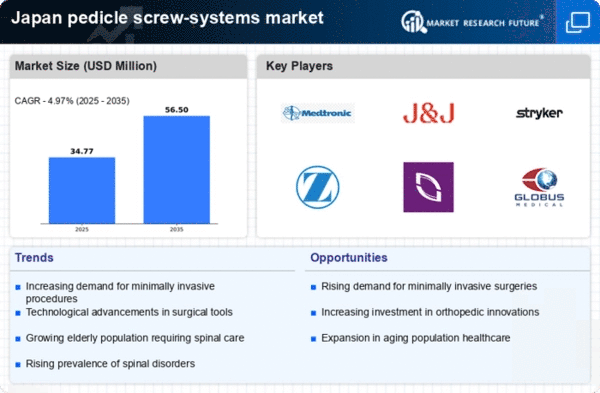
As per Market Research Future analysis, the Japan pedicle screw-systems market size was estimated at 33.12 USD Million in 2024. The Japan pedicle screw-systems market is projected to grow from 34.77 USD Million in 2025 to 56.5 USD Million by 2035, exhibiting a compound annual growth rate (CAGR) of 4.9% during the forecast period 2025 - 2035

Key Market Trends & Highlights

The Japan pedicle screw-systems market is poised for growth driven by technological advancements and demographic shifts.

  • Technological advancements in surgical tools are enhancing the efficacy of pedicle screw systems.
  • The aging population in Japan is contributing to an increased demand for spinal surgeries.
  • The largest segment in this market is the traditional pedicle screw systems, while the fastest-growing segment is the minimally invasive pedicle screw systems.
  • Rising demand for minimally invasive procedures and increasing incidence of spinal disorders are key drivers of market growth.

Market Size & Forecast

2024 Market Size 33.12 (USD Million)
2035 Market Size 56.5 (USD Million)
CAGR (2025 - 2035) 4.97%

Major Players

Medtronic (US), DePuy Synthes (US), Stryker (US), Zimmer Biomet (US), NuVasive (US), Globus Medical (US), B. Braun (DE), Orthofix (US), K2M (US)

Our Impact
Enabled $4.3B Revenue Impact for Fortune 500 and Leading Multinationals
Partnering with 2000+ Global Organizations Each Year
30K+ Citations by Top-Tier Firms in the Industry

Japan Pedicle Screw Systems Market Trends

The pedicle screw-systems market is currently experiencing notable growth, driven by advancements in surgical techniques and an increasing prevalence of spinal disorders. In Japan, the aging population is a significant factor contributing to the demand for these systems, as older individuals are more susceptible to conditions requiring spinal surgery. Furthermore, the integration of innovative technologies, such as robotic-assisted surgery and minimally invasive procedures, is enhancing the effectiveness and safety of spinal surgeries. This trend appears to be fostering a more favorable environment for the adoption of advanced pedicle screw systems, which are designed to provide better stability and support during surgical interventions. Moreover, the regulatory landscape in Japan is evolving to accommodate the rapid advancements in medical technology. The Ministry of Health, Labour and Welfare is actively working to streamline the approval processes for new medical devices, including pedicle screw systems. This initiative may lead to a quicker introduction of innovative products into the market, thereby enhancing competition and potentially lowering costs for healthcare providers. As a result, the pedicle screw-systems market is poised for continued expansion, with a focus on improving patient outcomes and surgical efficiency. Overall, the combination of demographic trends, technological advancements, and supportive regulatory frameworks suggests a promising future for the market in Japan.

Technological Advancements

The pedicle screw-systems market is witnessing a surge in technological innovations, particularly in the realm of robotic-assisted surgeries. These advancements are enhancing precision and reducing recovery times for patients. Surgeons are increasingly adopting these systems, which may lead to improved surgical outcomes and higher patient satisfaction.

Aging Population

Japan's demographic shift towards an older population is significantly impacting the demand for pedicle screw systems. As the incidence of spinal disorders rises among the elderly, healthcare providers are likely to invest more in advanced surgical solutions to address these challenges effectively.

Regulatory Support

The evolving regulatory environment in Japan is facilitating the introduction of new pedicle screw systems. The Ministry of Health, Labour and Welfare is streamlining approval processes, which could accelerate the availability of innovative products in the market, thereby fostering competition and enhancing patient care.

Japan Pedicle Screw Systems Market Drivers

Increasing Incidence of Spinal Disorders

The rising incidence of spinal disorders in Japan is a critical driver for the pedicle screw-systems market. Conditions such as degenerative disc disease and spinal stenosis are becoming more prevalent, necessitating surgical interventions. Recent statistics indicate that spinal surgeries have increased by approximately 10% annually, reflecting a growing need for effective treatment options. As the population ages and lifestyle factors contribute to spinal health issues, the demand for reliable pedicle screw systems is expected to rise. This trend underscores the importance of developing innovative solutions to address the needs of patients suffering from spinal disorders.

Technological Innovations in Surgical Tools

Technological advancements in surgical tools are transforming the landscape of the pedicle screw-systems market. Innovations such as 3D printing and robotic-assisted surgery are enhancing the precision and effectiveness of spinal surgeries. In Japan, the integration of these technologies has led to improved patient outcomes and increased operational efficiency. The market is projected to grow as hospitals invest in state-of-the-art equipment, with estimates suggesting a potential increase in market value by 20% over the next five years. These innovations not only improve surgical accuracy but also expand the capabilities of surgeons, thereby driving the demand for advanced pedicle screw systems.

Enhanced Training and Education for Surgeons

The emphasis on enhanced training and education for surgeons is significantly impacting the pedicle screw-systems market. In Japan, medical institutions are increasingly focusing on specialized training programs that equip surgeons with the skills necessary to utilize advanced pedicle screw systems effectively. This initiative is likely to improve surgical outcomes and increase the adoption of these systems in clinical practice. As more surgeons become proficient in the latest techniques, the market is expected to experience growth, with projections indicating a potential increase in system utilization by 15% over the next few years. This focus on education is crucial for fostering innovation and improving patient care.

Rising Demand for Minimally Invasive Procedures

The increasing preference for minimally invasive surgical techniques is a notable driver in the pedicle screw-systems market. Surgeons and patients alike favor these methods due to their potential for reduced recovery times and lower complication rates. In Japan, the market for minimally invasive spine surgeries has been expanding, with a reported growth rate of approximately 15% annually. This trend is likely to bolster the demand for advanced pedicle screw systems that facilitate such procedures. As hospitals and surgical centers adopt these technologies, the overall market for pedicle screw-systems is expected to benefit significantly, reflecting a shift towards more efficient surgical practices.

Government Initiatives to Support Healthcare Infrastructure

Government initiatives aimed at enhancing healthcare infrastructure in Japan are playing a pivotal role in the growth of the pedicle screw-systems market. Investments in healthcare facilities and technology are expected to improve access to advanced surgical options. Recent government reports indicate a commitment to increasing healthcare spending by 5% annually, which may lead to the procurement of modern surgical equipment, including pedicle screw systems. This support is likely to create a favorable environment for market expansion, as hospitals upgrade their facilities to meet the growing demand for spinal surgeries and related technologies.


Market Segment Insights

By Surgery Type: Open Surgery (Largest) vs. Minimally Invasive Surgery (Fastest-Growing)

The Japan pedicle screw-systems market is experiencing a notable distribution in its surgery type segment, with Open Surgery holding a significant share. This segment is widely regarded for its established presence in traditional surgical practices, appealing to a broad demographic of patients requiring spinal solutions. Minimally Invasive Surgery, on the other hand, is capturing increasing attention among healthcare providers due to its technological advances and reduced recovery times. Growth trends indicate a shift towards Minimally Invasive Surgery, which is fueled by the increasing preference for less invasive procedures among patients. Factors driving this growth include advancements in surgical technologies, enhanced training for surgeons, and a growing body of clinical evidence supporting the effectiveness of these techniques. As surgeries become more refined, the market adapts to embrace these emerging alternatives, while Open Surgery remains a steadfast choice for specific cases.

Surgery Type: Open Surgery (Dominant) vs. Minimally Invasive Surgery (Emerging)

Open Surgery is characterized by its traditional approach, involving larger incisions and prolonged recovery periods. It is traditionally the dominant method in the Japan pedicle screw-systems market, as it allows for a direct view and access to spinal structures. Surgeons trained in this method often prefer it for more complex cases or when a comprehensive examination of the spinal anatomy is necessary. Conversely, Minimally Invasive Surgery is rapidly emerging due to its numerous advantages, such as reduced postoperative pain and shorter hospital stays. Its development is encouraged by technological advancements such as robotics and imaging systems, which enhance precision and safety. As a result, the popularity of Minimally Invasive Surgery continues to soar, creating a dynamic contrast within the market.

By Product Type: Polyaxial Pedicle Screw Systems (Largest) vs. Monoaxial Pedicle Screw Systems (Fastest-Growing)

In the Japan pedicle screw-systems market, Polyaxial Pedicle Screw Systems hold the largest market share due to their versatility and adaptability in surgical procedures. These systems are favored by surgeons because they allow for enhanced freedom of movement and optimal alignment during spinal surgeries. In contrast, Monoaxial Pedicle Screw Systems, while smaller in market share, are gaining traction due to their simplicity, ease of use, and lower cost, appealing to a distinct segment of healthcare providers. The growth trends in this market indicate a shift in preference towards Monoaxial Pedicle Screw Systems as they are increasingly recognized for their effectiveness in specific surgical scenarios. Factors driving this shift include advancements in surgical techniques, better training programs, and increasing demand for cost-effective solutions. This transition is likely to open new opportunities for manufacturers and healthcare providers in optimizing surgical outcomes and patient recovery times.

Polyaxial Pedicle Screw Systems (Dominant) vs. Monoaxial Pedicle Screw Systems (Emerging)

Polyaxial Pedicle Screw Systems are dominant in the Japan pedicle screw-systems market, attributed to their advanced design that facilitates multi-directional flexibility and stability during spinal fixation procedures. These systems cater to complex spinal deformities and are preferred in high-stakes surgeries where precision is crucial. Monoaxial Pedicle Screw Systems, while considered emerging, are becoming increasingly popular due to their straightforward design, which reduces the surgical complexity and time. They attract healthcare providers who prioritize efficiency and cost-effectiveness, thus capturing a growing segment in the market. Both systems play pivotal roles in enhancing surgical outcomes and improving patient care in the evolving landscape of spinal surgery.

By Indication: Spinal Degeneration (Largest) vs. Spinal Trauma (Fastest-Growing)

The Japan pedicle screw-systems market exhibits a diverse distribution among its indication segments. Spinal Degeneration has emerged as the largest segment, dominating the market due to the increasing elderly population and the prevalence of degenerative spinal disorders. Following closely is Spinal Trauma, which, while smaller in market share, showcases considerable potential for growth as traffic accidents and sports-related injuries contribute to rising demand for surgical interventions. In recent years, the growth trends in these segments have been influenced by advancements in surgical techniques and technologies, particularly in spinal fusion procedures. Increased awareness regarding spinal health and the effectiveness of pedicle screw systems in addressing complex spinal conditions have driven market expansion. Additionally, innovations such as minimally invasive surgery are propelling the Spinal Trauma segment as patients seek quicker recovery times and reduced hospital stays.

Indication: Spinal Degeneration (Dominant) vs. Spinal Trauma (Emerging)

Spinal Degeneration remains the dominant indication in the Japan pedicle screw-systems market, reflecting the high incidence of age-related spinal issues. This segment benefits from ongoing improvements in treatment methodologies and a robust healthcare infrastructure focused on spinal health. In contrast, the Spinal Trauma segment is emerging rapidly, attracting attention due to a surge in traumatic injuries necessitating surgical procedures. The expanding awareness surrounding sports injuries and accidents is driving demand in this segment. Both segments, while distinct, illustrate the market's adaptability to patient needs, with innovations aimed at enhancing surgical outcomes and promoting faster recuperation.

By Application: Thoracolumbar Fusion (Largest) vs. Spinal Cervical Fusion (Fastest-Growing)

In the Japan pedicle screw-systems market, the Thoracolumbar Fusion segment holds the largest share, reflecting its widespread adoption in surgical procedures for lower back issues. Conversely, the Spinal Cervical Fusion segment is emerging rapidly, capturing growing interest due to increasing incidences of cervical spine disorders, leading to shifts in market dynamics over the forecast period. Growth trends indicate that while Thoracolumbar Fusion remains dominant, the Spinal Cervical Fusion segment is expected to surpass traditional growth rates. Factors driving this trend include an aging population prone to spinal injuries, advancements in surgical technologies, and a rise in healthcare expenditure focusing on spinal health. These drivers suggest a robust future for both segments, with specific emphasis on the innovative developments within Spinal Cervical Fusion.

Thoracolumbar Fusion (Dominant) vs. Spinal Cervical Fusion (Emerging)

Thoracolumbar Fusion is characterized by its extensive use in lower back surgeries, addressing various pathologies with a proven efficacy. Its established protocols and techniques contribute to its dominance in the Japan pedicle screw-systems market. On the other hand, Spinal Cervical Fusion is delineated as an emerging segment, gaining traction due to the rise in cervical spine health awareness and innovative devices. This segment typically caters to a rising demographic with specific cervical conditions, thus stimulating demand. The differences in application and targeted patient profiles highlight the unique strengths and roles of each segment within the evolving landscape of spinal surgical solutions.

By End-User: Hospitals (Largest) vs. Clinics (Fastest-Growing)

In the Japan pedicle screw-systems market, the distribution of the end-user segment shows that hospitals hold a significant market share, reflecting their extensive patient base and advanced surgical capabilities. Clinics, while smaller in market share, are gaining momentum due to the increasing demand for minimally invasive procedures and outpatient surgeries. Growth trends indicate that hospitals are expanding their surgical offerings, which drives the demand for pedicle screw-systems. In contrast, clinics are emerging quickly, bolstered by technological advancements and an increasing preference for outpatient treatments. As both segments evolve, they present unique opportunities for manufacturers and suppliers to capture market share by aligning their offerings with the specific needs and trends of each end-user group.

Hospitals: Dominant vs. Clinics: Emerging

Hospitals play a dominant role in the Japan pedicle screw-systems market, driven by their capacity to perform complex spine surgeries and facilitate extensive research into new surgical techniques. These institutions often invest heavily in advanced medical technologies, resulting in favorable outcomes for patients. On the other hand, clinics are emerging as key players in this market, emphasizing efficient and cost-effective treatments. They cater to a growing preference for outpatient services, leveraging shorter recovery times and reduced healthcare costs. This duality between hospitals as established leaders and clinics as agile newcomers creates a competitive landscape marked by innovation and adaptability across the Japan pedicle screw-systems market.

Get more detailed insights about Japan Pedicle Screw Systems Market

Key Players and Competitive Insights

The pedicle screw-systems market in Japan is characterized by a competitive landscape that is increasingly shaped by innovation, strategic partnerships, and regional expansion. Key players such as Medtronic (US), DePuy Synthes (US), and Stryker (US) are at the forefront, leveraging their technological expertise to enhance product offerings. Medtronic (US) focuses on integrating advanced robotics into surgical procedures, which appears to enhance precision and patient outcomes. Meanwhile, DePuy Synthes (US) emphasizes a strategy of mergers and acquisitions to bolster its market presence, while Stryker (US) is investing heavily in digital transformation initiatives to streamline operations and improve customer engagement. Collectively, these strategies indicate a shift towards a more integrated and technologically advanced competitive environment.In terms of business tactics, companies are increasingly localizing manufacturing to reduce lead times and optimize supply chains. This approach not only enhances operational efficiency but also allows for better responsiveness to local market demands. The competitive structure of the market appears moderately fragmented, with several players vying for market share. However, the influence of major companies is significant, as they set industry standards and drive innovation, thereby shaping the overall market dynamics.

In October Medtronic (US) announced the launch of its latest robotic-assisted surgical system, which is designed to improve the accuracy of pedicle screw placement. This strategic move is likely to position Medtronic (US) as a leader in the integration of robotics in spinal surgery, potentially increasing its market share and enhancing patient outcomes. The introduction of this technology may also compel competitors to accelerate their own innovation efforts in robotic systems.

In September DePuy Synthes (US) completed the acquisition of a smaller firm specializing in advanced imaging technologies for spinal surgery. This acquisition is strategically significant as it allows DePuy Synthes (US) to enhance its product portfolio and offer more comprehensive solutions to healthcare providers. The integration of imaging technology with pedicle screw systems could lead to improved surgical planning and outcomes, thereby strengthening the company's competitive position.

In August Stryker (US) launched a new line of pedicle screws that incorporate bioactive materials aimed at promoting faster healing. This development reflects Stryker's commitment to innovation and patient-centric solutions. By focusing on the healing properties of materials used in their products, Stryker (US) may differentiate itself in a crowded market, appealing to both surgeons and patients seeking improved recovery times.

As of November the competitive trends in the pedicle screw-systems market are increasingly defined by digitalization, sustainability, and the integration of artificial intelligence (AI). Strategic alliances among companies are becoming more prevalent, as they seek to combine resources and expertise to drive innovation. The competitive landscape is shifting from traditional price-based competition to a focus on technological advancements and supply chain reliability. This evolution suggests that companies that prioritize innovation and adaptability will likely emerge as leaders in the market.

Key Companies in the Japan Pedicle Screw Systems Market include

Industry Developments

The Japan Pedicle Screw Systems Market has witnessed significant activity recently, marked by advancements and product innovations from key players such as K2M, NuVasive, and Stryker. In terms of market valuation, there has been a noticeable growth trajectory attributed to increasing spinal surgeries and technological enhancements in surgical devices. In July 2023, Aesculap announced the launch of a next-generation line of pedicle screw systems, enhancing minimally invasive surgical techniques in Japan.

Furthermore, in August 2023, Zimmer Biomet and Globus Medical collaborated on a Research and Development initiative aimed at streamlining surgical procedures in spinal operations, reflecting ongoing partnerships in the industry. Notably, in June 2023, DePuy Synthes completed the acquisition of certain assets from a local firm, signaling a strategic expansion within the Japanese market. The demand for sophisticated solutions in spinal stabilization continues to drive competitive dynamics, supported by the increasing prevalence of spinal disorders and the aging population in Japan, as reported by the Ministry of Health, Labour and Welfare.

Overall, these developments illustrate a vibrant market landscape with a focus on enhancing patient care and operational efficacy.

Future Outlook

Japan Pedicle Screw Systems Market Future Outlook

The Pedicle Screw Systems Market is projected to grow at a 4.97% CAGR from 2025 to 2035, driven by technological advancements and increasing surgical procedures.

New opportunities lie in:

  • Development of AI-driven surgical planning software
  • Expansion of minimally invasive surgical techniques
  • Partnerships with hospitals for exclusive supply agreements

By 2035, the market is expected to achieve robust growth and enhanced competitive positioning.

Market Segmentation

Japan Pedicle Screw Systems Market End-User Outlook

  • Hospitals
  • Clinics
  • Research Organizations
  • Academic Institutes

Japan Pedicle Screw Systems Market Indication Outlook

  • Spinal Degeneration
  • Spinal Trauma
  • Spinal Deformities
  • Others

Japan Pedicle Screw Systems Market Application Outlook

  • Thoracolumbar Fusion
  • Spinal Cervical Fusion

Japan Pedicle Screw Systems Market Product Type Outlook

  • Polyaxial Pedicle Screw Systems
  • Monoaxial Pedicle Screw Systems

Japan Pedicle Screw Systems Market Surgery Type Outlook

  • Open Surgery
  • Minimally Invasive Surgery

Report Scope

MARKET SIZE 2024 33.12(USD Million)
MARKET SIZE 2025 34.77(USD Million)
MARKET SIZE 2035 56.5(USD Million)
COMPOUND ANNUAL GROWTH RATE (CAGR) 4.97% (2025 - 2035)
REPORT COVERAGE Revenue Forecast, Competitive Landscape, Growth Factors, and Trends
BASE YEAR 2024
Market Forecast Period 2025 - 2035
Historical Data 2019 - 2024
Market Forecast Units USD Million
Key Companies Profiled Medtronic (US), DePuy Synthes (US), Stryker (US), Zimmer Biomet (US), NuVasive (US), Globus Medical (US), B. Braun (DE), Orthofix (US), K2M (US)
Segments Covered Surgery Type, Product Type, Indication, Application, End-User
Key Market Opportunities Advancements in minimally invasive surgical techniques enhance growth potential in the pedicle screw-systems market.
Key Market Dynamics Technological advancements and regulatory changes drive innovation in the pedicle screw-systems market in Japan.
Countries Covered Japan
Leave a Comment

FAQs

What is the projected market value of the Japan Pedicle Screw Systems Market by 2035?

The Japan Pedicle Screw Systems Market is expected to be valued at 46.0 million USD by the year 2035.

What was the market size of the Japan Pedicle Screw Systems Market in 2024?

In 2024, the Japan Pedicle Screw Systems Market is expected to be valued at 26.5 million USD.

What is the expected CAGR for the Japan Pedicle Screw Systems Market from 2025 to 2035?

The expected CAGR for the Japan Pedicle Screw Systems Market from 2025 to 2035 is 5.141%.

Which segment of the Japan Pedicle Screw Systems Market is expected to have a higher market value in 2035?

The Open Surgery segment is expected to have a higher market value of 25.0 million USD in 2035 compared to the Minimally Invasive Surgery segment.

What is the market value for the Minimally Invasive Surgery segment in 2024?

The Minimally Invasive Surgery segment of the Japan Pedicle Screw Systems Market is valued at 11.5 million USD in 2024.

Who are the key players in the Japan Pedicle Screw Systems Market?

Key players in the Japan Pedicle Screw Systems Market include Stryker, Medtronic, and Zimmer Biomet among others.

What is the projected market value of the Open Surgery segment by 2035?

The Open Surgery segment of the Japan Pedicle Screw Systems Market is projected to be valued at 25.0 million USD by 2035.

What are the growth drivers for the Japan Pedicle Screw Systems Market?

Growth drivers for the Japan Pedicle Screw Systems Market include advancements in surgical technologies and rising prevalence of spinal disorders.

What is the market size of the Japan Pedicle Screw Systems Market in 2025?

The market size for the Japan Pedicle Screw Systems Market in 2025 is not explicitly stated, but it is expected to continue increasing from the projected 26.5 million USD in 2024.

What challenges might the Japan Pedicle Screw Systems Market face in the coming years?

The Japan Pedicle Screw Systems Market may face challenges related to regulatory hurdles and competition among key players.

Download Free Sample

Kindly complete the form below to receive a free sample of this Report

Compare Licence

×
Features License Type
Single User Multiuser License Enterprise User
Price $4,950 $5,950 $7,250
Maximum User Access Limit 1 User Upto 10 Users Unrestricted Access Throughout the Organization
Free Customization
Direct Access to Analyst
Deliverable Format
Platform Access
Discount on Next Purchase 10% 15% 15%
Printable Versions