×
Request Free Sample ×

Kindly complete the form below to receive a free sample of this Report

* Please use a valid business email

Leading companies partner with us for data-driven Insights

clients tt-cursor
Hero Background

Japan Glass Packaging Market

ID: MRFR/PCM/44157-HCR
111 Pages
Snehal Singh
February 2026

Japan Glass Packaging Market Research Report By Product Quality (Standard Glass Quality, Premium Glass Quality, Super Premium Glass Quality) and By Application (Beverage Packaging, Food Packaging, Personal Care Packaging, Pharmaceuticals Packaging, Others)- Forecast to 2035.

Share:
Download PDF ×

We do not share your information with anyone. However, we may send you emails based on your report interest from time to time. You may contact us at any time to opt-out.

Japan Glass Packaging Market Infographic
Purchase Options

Japan Glass Packaging Market Summary

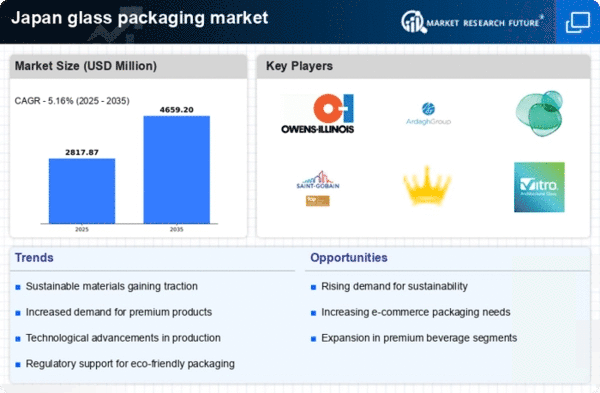
As per Market Research Future analysis, the Japan glass packaging market size was estimated at 2679.6 USD Million in 2024. The Japan glass packaging market is projected to grow from 2817.87 USD Million in 2025 to 4659.2 USD Million by 2035, exhibiting a compound annual growth rate (CAGR) of 5.1% during the forecast period 2025 - 2035

Key Market Trends & Highlights

The Japan glass packaging market is experiencing a robust shift towards sustainability and innovation.

  • The market is increasingly driven by a sustainability focus, with consumers favoring eco-friendly packaging solutions.
  • Innovative designs in glass packaging are gaining traction, particularly in the food and beverage segments.
  • The food and beverage sector remains the largest segment, while the premium product segment is the fastest-growing.
  • Rising environmental awareness and regulatory support for eco-friendly packaging are key drivers propelling market growth.

Market Size & Forecast

2024 Market Size 2679.6 (USD Million)
2035 Market Size 4659.2 (USD Million)
CAGR (2025 - 2035) 5.16%

Major Players

Owens-Illinois (US), Ardagh Group (IE), Verallia (FR), Saint-Gobain (FR), Nippon Glass (JP), Vitro (MX), Schott AG (DE), Crown Holdings (US), Amcor (AU)

Our Impact
Enabled $4.3B Revenue Impact for Fortune 500 and Leading Multinationals
Partnering with 2000+ Global Organizations Each Year
30K+ Citations by Top-Tier Firms in the Industry

Japan Glass Packaging Market Trends

The glass packaging market in Japan is currently experiencing a notable transformation, driven by a combination of consumer preferences and regulatory changes. There is a growing inclination towards sustainable packaging solutions, as consumers increasingly prioritize environmentally friendly options. This shift is reflected in the rising demand for glass containers, which are perceived as a more eco-conscious alternative to plastic. Furthermore, the Japanese government has implemented various initiatives aimed at reducing plastic waste, thereby encouraging the use of recyclable materials such as glass. As a result, manufacturers are adapting their production processes to meet these evolving consumer expectations and regulatory requirements. In addition to sustainability, the glass packaging market is witnessing innovations in design and functionality. Companies are investing in advanced technologies to enhance the aesthetic appeal and usability of glass products. This includes the development of lightweight glass containers that maintain durability while reducing transportation costs. Moreover, the food and beverage sector is increasingly adopting glass packaging due to its ability to preserve product quality and extend shelf life. Overall, the current landscape of the glass packaging market in Japan suggests a promising future, characterized by a commitment to sustainability and innovation, which may further solidify its position in the packaging industry.

Sustainability Focus

The emphasis on sustainable practices is reshaping the glass packaging market. Consumers are gravitating towards eco-friendly options, prompting manufacturers to prioritize recyclable materials. This trend aligns with governmental policies aimed at reducing plastic waste, fostering a favorable environment for glass packaging.

Innovative Designs

Innovation in design is becoming increasingly prevalent within the glass packaging market. Companies are exploring new aesthetics and functionalities, such as lightweight glass containers that offer durability. This evolution caters to consumer preferences for both style and practicality.

Food and Beverage Adoption

The food and beverage sector is significantly contributing to the growth of the glass packaging market. Glass containers are favored for their ability to preserve product integrity and enhance shelf life. This trend indicates a strong preference for quality packaging solutions among consumers.

Japan Glass Packaging Market Drivers

Rising Environmental Awareness

The increasing environmental consciousness among consumers in Japan is driving the glass packaging market. As individuals become more aware of the ecological impact of their choices, they tend to favor sustainable packaging solutions. Glass, being recyclable and reusable, aligns with these values. In 2025, approximately 70% of Japanese consumers express a preference for products packaged in environmentally friendly materials. This shift in consumer behavior is prompting manufacturers to invest in glass packaging solutions, thereby enhancing the market's growth. The glass packaging market is likely to benefit from this trend as companies adapt their strategies to meet the demand for sustainable options.

Growth in Premium Product Segments

The rise of premium products in Japan is contributing to the expansion of the glass packaging market. Consumers are increasingly willing to pay a premium for high-quality, aesthetically pleasing packaging that enhances the perceived value of products. This trend is particularly evident in sectors such as cosmetics and gourmet food, where glass packaging is favored for its upscale appearance and ability to preserve product integrity. The glass packaging market is likely to see a surge in demand as brands leverage glass to differentiate themselves in a competitive landscape, potentially increasing market share by 20% in the coming years.

Technological Advancements in Manufacturing

Technological innovations in glass manufacturing processes are enhancing the efficiency and sustainability of the glass packaging market. Advances such as lightweight glass production and energy-efficient manufacturing techniques are reducing costs and environmental impact. In 2025, it is estimated that these innovations could lower production costs by up to 10%, making glass packaging more competitive against alternatives. The glass packaging market stands to gain from these advancements, as manufacturers can offer more cost-effective solutions while maintaining the environmental benefits associated with glass.

Regulatory Support for Eco-Friendly Packaging

Japanese government policies increasingly support eco-friendly packaging initiatives, which significantly impacts the glass packaging market. Regulations aimed at reducing plastic waste and promoting recycling are becoming more stringent. For instance, the government has set ambitious targets to increase recycling rates to 50% by 2025. This regulatory environment encourages businesses to transition towards glass packaging, which is perceived as a more sustainable alternative. The glass packaging market is thus poised for growth as companies align their practices with these regulations, potentially leading to a market expansion of 15% over the next five years.

Consumer Preference for Health-Conscious Packaging

The growing trend towards health-conscious living in Japan is influencing the glass packaging market. Consumers are increasingly concerned about the safety and purity of the products they consume, leading to a preference for packaging that does not leach harmful chemicals. Glass is perceived as a safe and inert material, making it an attractive option for food and beverage products. This shift in consumer preference is likely to drive the glass packaging market, as manufacturers respond by offering more products in glass containers, potentially increasing market demand by 12% in the next few years.


Market Segment Insights

By Product: Premium Glass Quality (Largest) vs. Standard Glass Quality (Fastest-Growing)

The market share distribution within the product segment shows that Premium Glass Quality holds the largest share, reflecting consumer preference for higher-quality, more aesthetically pleasing packaging solutions. Standard Glass Quality, on the other hand, is experiencing a notable increase in market participation, indicating a shift towards more basic yet sustainable options. As both segments cater to different consumer needs, they contribute significantly to the overall dynamics of the industry. In terms of growth trends, the Premium Glass Quality segment is supported by an increase in premium beverage consumption and a growing trend toward eco-friendly packaging. Meanwhile, Standard Glass Quality is gaining traction due to its affordability and adequate functionality, appealing to cost-conscious consumers. This dynamic shows that while premium products dominate the share, there is a robust emergence of basic alternatives that respond to evolving market demands.

Premium Glass Quality (Dominant) vs. Standard Glass Quality (Emerging)

Premium Glass Quality stands out as the dominant segment in the Japan glass packaging market, characterized by its superior aesthetics, enhanced durability, and growing application in upscale product categories like fine wines and gourmet foods. This segment benefits from an affluent consumer base that values quality and sustainability, assuring its strong market presence. In contrast, Standard Glass Quality represents an emerging segment, appreciated for its cost-effectiveness and practicality, making it highly accessible to a broader audience. As the market evolves, Standard Glass Quality is anticipated to capture a growing share, driven by demand for environmentally friendly options that do not compromise on functionality.

By Application: Beverage Packaging (Largest) vs. Pharmaceutical Packaging (Fastest-Growing)

In the Japan glass packaging market, Beverage Packaging holds the largest market share, significantly leading over other segments. It is followed by Food Packaging, which includes products like sauces and condiments. Personal Care and Pharmaceutical Packaging have shown a notable presence but remain smaller in comparison to these dominant segments. The Others category includes niche items that contribute to the diverse landscape of market applications. The growth trends in this segment highlight a strong demand for sustainable and recyclable packaging solutions, aligning with global consumer preferences. The Beverage Packaging segment is driven by an increasing consumption of premium beverages, while Pharmaceutical Packaging sees rapid expansion due to the heightened focus on health and wellness. Innovations in glass manufacturing and design further propel these segments, creating opportunities for brands to differentiate their products in a competitive market.

Beverage Packaging (Dominant) vs. Pharmaceutical Packaging (Emerging)

Beverage Packaging is currently the dominant segment in the Japan glass packaging market, characterized by its extensive use in soft drinks, alcoholic beverages, and juices. This segment benefits from a consumer shift towards premium packaging, which enhances product appeal and increases perceived value. On the other hand, Pharmaceutical Packaging is an emerging segment, gaining traction due to the growing emphasis on health products and medications that require secure and safe packaging. The increasing demand for safe and tamper-evident packaging in the pharmaceutical industry is driving innovations and adaptations within this segment, showcasing its potential for growth. Both segments are evolving as brands prioritize sustainability, with glass being favored for its recyclability and eco-friendliness.

Get more detailed insights about Japan Glass Packaging Market

Key Players and Competitive Insights

The glass packaging market in Japan is characterized by a competitive landscape that is increasingly shaped by innovation, sustainability, and strategic partnerships. Key players such as Nippon Glass (Japan), Owens-Illinois (US), and Ardagh Group (IE) are actively pursuing strategies that enhance their market positioning. Nippon Glass (Japan) focuses on technological advancements in production processes, aiming to reduce energy consumption and improve product quality. Meanwhile, Owens-Illinois (US) emphasizes sustainability through its commitment to using recycled materials, which aligns with the growing consumer demand for eco-friendly packaging solutions. Ardagh Group (IE) is also investing in digital transformation initiatives to streamline operations and enhance customer engagement, thereby contributing to a more dynamic competitive environment.The business tactics employed by these companies reflect a concerted effort to localize manufacturing and optimize supply chains. The market structure appears moderately fragmented, with several players vying for market share while also collaborating on sustainability initiatives. This collective influence of key players fosters a competitive atmosphere where innovation and operational efficiency are paramount, allowing companies to differentiate themselves in a crowded marketplace.

In September Nippon Glass (Japan) announced a strategic partnership with a local recycling firm to enhance its glass recycling capabilities. This move is significant as it not only bolsters Nippon Glass's sustainability credentials but also positions the company to meet the increasing regulatory pressures for eco-friendly practices in packaging. By integrating more recycled content into its products, Nippon Glass is likely to attract environmentally conscious consumers and strengthen its market presence.

In October Owens-Illinois (US) unveiled a new line of lightweight glass bottles designed for the beverage industry. This innovation is crucial as it addresses the dual challenges of reducing material costs and minimizing carbon footprints. The introduction of these bottles may enhance Owens-Illinois's competitive edge by appealing to manufacturers seeking sustainable packaging solutions without compromising on quality.

In August Ardagh Group (IE) expanded its production facility in Japan, focusing on advanced manufacturing technologies. This expansion is indicative of Ardagh's commitment to meeting the rising demand for glass packaging in the region. By enhancing its production capabilities, Ardagh is likely to improve its responsiveness to market trends and customer needs, thereby solidifying its position in the competitive landscape.

As of November the glass packaging market is witnessing trends that emphasize digitalization, sustainability, and the integration of artificial intelligence in production processes. Strategic alliances among key players are increasingly shaping the competitive landscape, fostering innovation and operational synergies. The shift from price-based competition to a focus on technological advancements and supply chain reliability is evident, suggesting that companies will need to continuously innovate to maintain their competitive differentiation in the evolving market.

Key Companies in the Japan Glass Packaging Market include

Industry Developments

The Japan Glass Packaging Market has seen several recent developments, particularly with regard to growth and innovation in sustainability. Companies like Toyo Glass and AGC Inc. are actively enhancing their production capabilities to cater to the surging demand for eco-friendly packaging solutions, with a notable increase in green glass products.In July 2023, Fujitsu Glass announced advancements in its manufacturing technologies aimed at reducing energy consumption during production.

Meanwhile, Hoya Corporation's focus on expanding its product line for pharmaceutical glass containers reflects a shift towards niche markets with high-value packaging needs.Despite uncertainties in the supply chain, OI Glass reported a year-on-year increase in revenue in Q2 of 2023, driven by robust demand from the beverage industry. In terms of mergers and acquisitions, there were no specific announcements from the listed companies in recent months.However, ongoing collaborations between Chuo Sangyo and Shinagawa Glass show a trend toward strategic partnerships aimed at enhancing product offerings.

Asahi Glass is also involved in RD activities that prioritize sustainability and efficiency in glass production, reflecting the broader market trends in Japan.

Future Outlook

Japan Glass Packaging Market Future Outlook

The glass packaging market in Japan is projected to grow at a 5.16% CAGR from 2025 to 2035, driven by sustainability trends, consumer preferences, and technological advancements.

New opportunities lie in:

  • Invest in advanced recycling technologies to enhance sustainability and reduce costs.
  • Develop customized glass packaging solutions for niche markets, such as cosmetics and gourmet foods.
  • Leverage e-commerce growth by creating lightweight, shatter-resistant glass packaging options.

By 2035, the glass packaging market is expected to achieve robust growth, driven by innovation and sustainability.

Market Segmentation

Japan Glass Packaging Market Product Outlook

  • Standard Glass Quality
  • Premium Glass Quality
  • Super Premium Glass Quality

Japan Glass Packaging Market Application Outlook

  • Beverage Packaging
  • Food Packaging
  • Personal Care Packaging
  • Pharmaceutical Packaging
  • Others

Report Scope

MARKET SIZE 2024 2679.6(USD Million)
MARKET SIZE 2025 2817.87(USD Million)
MARKET SIZE 2035 4659.2(USD Million)
COMPOUND ANNUAL GROWTH RATE (CAGR) 5.16% (2025 - 2035)
REPORT COVERAGE Revenue Forecast, Competitive Landscape, Growth Factors, and Trends
BASE YEAR 2024
Market Forecast Period 2025 - 2035
Historical Data 2019 - 2024
Market Forecast Units USD Million
Key Companies Profiled Owens-Illinois (US), Ardagh Group (IE), Verallia (FR), Saint-Gobain (FR), Nippon Glass (JP), Vitro (MX), Schott AG (DE), Crown Holdings (US), Amcor (AU)
Segments Covered Product, Application
Key Market Opportunities Growing demand for sustainable packaging solutions drives innovation in the glass packaging market.
Key Market Dynamics Rising consumer preference for sustainable packaging drives innovation and competition in the glass packaging market.
Countries Covered Japan
Leave a Comment

FAQs

What is the expected market size of the Japan Glass Packaging Market in 2024?

The Japan Glass Packaging Market is expected to be valued at 2.68 USD Billion in 2024.

What is the projected market size for the Japan Glass Packaging Market in 2035?

In 2035, the Japan Glass Packaging Market is projected to reach a value of 4.5 USD Billion.

What is the expected compound annual growth rate (CAGR) for the Japan Glass Packaging Market from 2025 to 2035?

The expected CAGR for the Japan Glass Packaging Market from 2025 to 2035 is 4.826%.

Which product quality segment has the largest market value in 2024?

The Standard Glass Quality segment has the largest market value, estimated at 1.2 USD Billion in 2024.

How much is the Premium Glass Quality segment projected to be worth in 2035?

The Premium Glass Quality segment is projected to be valued at 1.7 USD Billion in 2035.

Who are the key players in the Japan Glass Packaging Market?

Key players include Toyo Glass, Fujitsu Glass, Hoya Corporation, and OI Glass.

What is the expected value of the Super Premium Glass Quality segment in 2024?

The Super Premium Glass Quality segment is expected to be valued at 0.48 USD Billion in 2024.

What growth drivers are influencing the Japan Glass Packaging Market?

The growth of the Japan Glass Packaging Market is driven by the increasing demand for sustainable and recyclable packaging solutions.

What are the challenges faced by the Japan Glass Packaging Market?

Challenges include high production costs and competition from alternative packaging materials.

How does the global scenario affect the Japan Glass Packaging Market?

Global economic conditions and supply chain disruptions can influence market operations and growth trajectories.

Download Free Sample

Kindly complete the form below to receive a free sample of this Report

Compare Licence

×
Features License Type
Single User Multiuser License Enterprise User
Price $4,950 $5,950 $7,250
Maximum User Access Limit 1 User Upto 10 Users Unrestricted Access Throughout the Organization
Free Customization
Direct Access to Analyst
Deliverable Format
Platform Access
Discount on Next Purchase 10% 15% 15%
Printable Versions