×
Request Free Sample ×

Kindly complete the form below to receive a free sample of this Report

* Please use a valid business email

Leading companies partner with us for data-driven Insights

clients tt-cursor
Hero Background

Japan Erosion and Sediment Control Market

ID: MRFR/Agri/45815-HCR
111 Pages
Chitranshi Jaiswal
February 2026

Japan Erosion and Sediment Control Market Size, Share, Industry Trend & Analysis Research Report: By Product Type (Mats, Turfs, Blankets, Filter Socks, Logs, Wattles, Woven Sediment Fences and Silt Fences, Filtration Systems, Sediment Basin, Others) and By End Use (Highway and Road Construction, Energy and Mining, Government and Municipality, Landfill Construction and Maintenance, Infrastructure Development, Industrial Manufacturing, Others) - Forecast to 2035.

Share:
Download PDF ×

We do not share your information with anyone. However, we may send you emails based on your report interest from time to time. You may contact us at any time to opt-out.

Japan Erosion and Sediment Control Market Infographic
Purchase Options

Japan Erosion and Sediment Control Market Summary

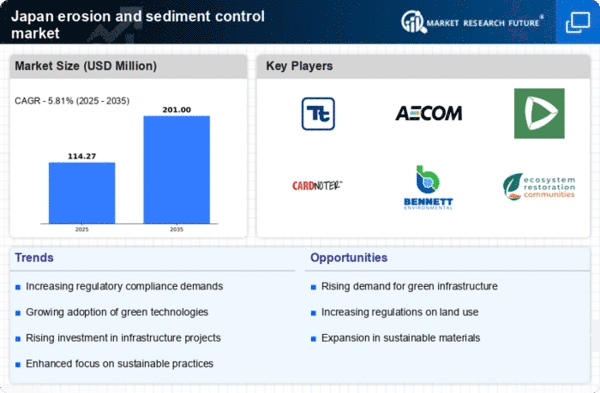
As per Market Research Future analysis, the Japan Erosion and Sediment Control Market size was estimated at 108.0 USD Million in 2024. The Erosion And-sediment-control market is projected to grow from 114.27 USD Million in 2025 to 201.0 USD Million by 2035, exhibiting a compound annual growth rate (CAGR) of 5.8% during the forecast period 2025 - 2035

Key Market Trends & Highlights

The Japan erosion and sediment control market is experiencing a shift towards sustainable practices and technological advancements.

  • Technological advancements are driving innovation in erosion and sediment control solutions, enhancing efficiency and effectiveness.
  • Regulatory frameworks are becoming increasingly stringent, necessitating compliance and adaptation by industry players.
  • The largest segment in the market is the construction sector, while the fastest-growing segment is likely the agricultural sector due to rising awareness of sustainable practices.
  • Key market drivers include increased urbanization and government initiatives aimed at funding erosion control projects.

Market Size & Forecast

2024 Market Size 108.0 (USD Million)
2035 Market Size 201.0 (USD Million)
CAGR (2025 - 2035) 5.81%

Major Players

Tetra Tech (US), AECOM (US), Geosyntec Consultants (US), Cardno (AU), Bennett Environmental (CA), Ecosystem Restoration Associates (US), Stantec (CA), Golder Associates (CA), WSP Global (CA)

Our Impact
Enabled $4.3B Revenue Impact for Fortune 500 and Leading Multinationals
Partnering with 2000+ Global Organizations Each Year
30K+ Citations by Top-Tier Firms in the Industry

Japan Erosion and Sediment Control Market Trends

The Japan Erosion and Sediment Control Market is currently experiencing notable developments, driven by increasing awareness of environmental sustainability and regulatory pressures. In Japan, the government has implemented various policies aimed at mitigating soil erosion and managing sediment runoff, particularly in urban areas and agricultural regions. This focus on sustainable practices is likely to enhance the demand for innovative erosion control solutions, such as biodegradable mats and advanced sediment filtration systems. Furthermore, the integration of technology in monitoring and managing erosion processes appears to be gaining traction, suggesting a shift towards more data-driven approaches in this sector. In addition, the growing emphasis on infrastructure development in Japan is expected to further influence the erosion and-sediment-control market. As construction projects expand, the need for effective sediment control measures becomes increasingly critical to prevent environmental degradation. The collaboration between government bodies and private enterprises may lead to the development of more comprehensive strategies that address both erosion control and sediment management. Overall, the market seems poised for growth, with a clear trajectory towards sustainable and technologically advanced solutions that align with Japan's environmental goals.

Technological Advancements

The erosion and-sediment-control market is witnessing a surge in technological innovations. These advancements include the use of drones for monitoring erosion patterns and the implementation of smart sensors that provide real-time data on sediment levels. Such technologies enhance the efficiency of erosion control measures and enable proactive management strategies.

Regulatory Frameworks

Japan's regulatory environment is evolving to address the challenges posed by erosion and sedimentation. New policies are being introduced to enforce stricter guidelines for construction and land use, which in turn drives the demand for effective erosion control solutions. Compliance with these regulations is becoming essential for businesses operating in this sector.

Sustainable Practices

There is a growing trend towards sustainable practices within the erosion and-sediment-control market. Companies are increasingly adopting eco-friendly materials and methods, such as using natural fibers for erosion control blankets. This shift not only meets regulatory requirements but also appeals to environmentally conscious consumers.

Japan Erosion and Sediment Control Market Drivers

Climate Change Impacts

Climate change poses significant challenges to soil stability and erosion rates in Japan. Increased rainfall intensity and frequency can lead to severe erosion, particularly in vulnerable areas. The erosion and-sediment-control market is likely to expand as stakeholders recognize the need for adaptive strategies to combat these effects. Recent studies indicate that regions experiencing higher rainfall could see erosion rates increase by up to 30%. Consequently, investments in erosion control technologies and practices are becoming essential for maintaining soil health and preventing sediment runoff into water bodies.

Increased Urbanization

The rapid urbanization in Japan has led to a heightened demand for effective erosion and-sediment-control measures. As cities expand, the risk of soil erosion increases due to construction activities and land development. The erosion and-sediment-control market is projected to grow as urban planners and developers seek solutions to mitigate these risks. In 2023, the market was valued at approximately $500 million, with expectations of a CAGR of 5% over the next five years. This growth is driven by the need for sustainable land management practices that protect water quality and prevent sedimentation in urban waterways.

Technological Innovations

Technological advancements in erosion and-sediment-control solutions are transforming the market landscape in Japan. Innovations such as biodegradable erosion control blankets and advanced sediment filtration systems are gaining traction. These technologies not only enhance effectiveness but also align with sustainable practices. The erosion and-sediment-control market is expected to benefit from these developments, with a projected increase in market share for innovative products. In 2025, it is estimated that the market for advanced erosion control technologies could reach $300 million, reflecting a growing preference for environmentally friendly solutions.

Public Awareness and Education

There is a growing public awareness regarding the importance of soil conservation and the impacts of erosion in Japan. Educational campaigns and community initiatives are fostering a better understanding of erosion and-sediment-control practices. This heightened awareness is likely to drive demand for erosion control products and services. As communities become more engaged in environmental stewardship, the erosion and-sediment-control market may see increased participation from local organizations and stakeholders. This trend could lead to a more collaborative approach to soil management, ultimately benefiting the market's growth and sustainability.

Government Initiatives and Funding

The Japanese government has implemented various initiatives aimed at enhancing environmental protection, which directly influences the erosion and-sediment-control market. Funding programs for infrastructure projects that incorporate erosion control measures are becoming more prevalent. In 2024, the government allocated approximately $200 million for projects focused on soil conservation and sediment management. This financial support encourages the adoption of innovative erosion control solutions, thereby stimulating market growth. As public awareness of environmental issues rises, government backing is likely to play a crucial role in shaping the future of the erosion and-sediment-control market.


Market Segment Insights

By Product Type: Mats (Largest) vs. Turfs (Fastest-Growing)

The product type segment in the Japan erosion and-sediment-control market showcases a diverse distribution of market share among various solutions. Mats hold the largest share, widely utilized for soil stabilization and erosion control across multiple settings. In contrast, Turfs are rapidly gaining traction, driven by their ease of installation and effectiveness in promoting vegetation growth, making them increasingly popular in various projects. Growth trends in this segment are influenced by a heightened awareness of environmental preservation and land management practices. Mats are preferred for their reliability, while Turfs are emerging as a favored choice due to their sustainable attributes and flexibility. The rising demand for efficient erosion control solutions is further propelled by stricter regulations and an expanding construction sector, creating ample opportunities for innovation and development.

Mats (Dominant) vs. Turfs (Emerging)

Mats dominate the product type segment, recognized for their durability and versatility in preventing soil erosion in various applications. Their widespread use in agriculture and construction projects ensures a consistent demand. On the other hand, Turfs are gaining recognition as an emerging alternative, particularly valued for their aesthetic appeal and ecological benefits. Unlike traditional mats, Turfs incorporate vegetation, which not only enhances soil stability but also contributes to sustainable land management. This shift towards greener solutions is indicative of the evolving consumer preferences within the Japan erosion and-sediment-control market. The integration of innovative materials and technologies within these products further enhances their effectiveness, making both Mats and Turfs pivotal in addressing erosion challenges.
By End Use: Highway and Road Construction (Largest) vs. Energy and Mining (Fastest-Growing)

In the Japan erosion and-sediment-control market, the distribution of market shares among the various end use segments reveals a significant dominance of the highway and road construction sector. This segment holds the largest share of the market as it is closely tied to urban development and infrastructure expansion. Following closely are the energy and mining sectors, which, while smaller in share, are witnessing rapid growth due to increased energy demands and resource extraction activities. Growth trends in these segments are driven by several factors, including government initiatives towards infrastructure improvement and the rising emphasis on sustainable construction practices. The push for environmentally friendly solutions is propelling the adoption of erosion and sediment control measures, particularly in the energy and mining sectors, making them the fastest-growing segment. As regulations around environmental protection tighten, the demand for effective sediment control solutions is expected to rise significantly.

Highway and Road Construction (Dominant) vs. Energy and Mining (Emerging)

The highway and road construction segment stands out as the dominant force within the Japan erosion and-sediment-control market, owing to the continuous need for extensive infrastructure projects. This sector benefits from strong governmental support and funding, making it a reliable avenue for market players. On the other hand, the energy and mining sector represents an emerging opportunity within the market. Driven by increasing energy needs and resource development, this segment is witnessing substantial growth. Companies that cater to this sector are focusing on developing advanced erosion control solutions, as environmental accountability becomes integral in project planning. Given the accelerating pace of energy development, the energy and mining segment is poised to grow, potentially outpacing other segments in the near future.

Get more detailed insights about Japan Erosion and Sediment Control Market

Key Players and Competitive Insights

The erosion and sediment control market in Japan is characterized by a competitive landscape that is increasingly shaped by innovation, sustainability, and strategic partnerships. Key players such as Tetra Tech (US), AECOM (US), and Stantec (CA) are actively pursuing strategies that emphasize technological advancements and environmental stewardship. Tetra Tech (US), for instance, has focused on integrating advanced data analytics into its project management processes, thereby enhancing operational efficiency and client satisfaction. AECOM (US) has been expanding its service offerings through strategic acquisitions, which allows it to provide comprehensive solutions that address both erosion control and broader environmental challenges. Stantec (CA) has adopted a strong emphasis on sustainability, aligning its projects with global environmental standards, which positions it favorably in a market increasingly driven by eco-conscious initiatives.The business tactics employed by these companies reflect a nuanced understanding of the market's structure, which is moderately fragmented yet competitive. Localizing manufacturing and optimizing supply chains have emerged as critical strategies to enhance responsiveness to regional demands. The collective influence of these key players fosters a dynamic environment where innovation and operational excellence are paramount, thereby driving overall market growth.

In October Tetra Tech (US) announced a partnership with a leading Japanese environmental firm to develop cutting-edge erosion control technologies tailored for local conditions. This collaboration is expected to leverage Tetra Tech's expertise in data-driven solutions while enhancing the partner's local market knowledge, potentially leading to more effective and sustainable erosion management practices. Such strategic alliances are indicative of a broader trend towards localized solutions that resonate with regional stakeholders.

In September AECOM (US) completed the acquisition of a prominent Japanese engineering firm specializing in sediment control. This move not only expands AECOM's footprint in Japan but also enhances its capabilities in delivering integrated environmental solutions. The acquisition is likely to facilitate the introduction of innovative sediment management techniques, thereby strengthening AECOM's competitive position in the market.

In August Stantec (CA) launched a new initiative aimed at promoting green infrastructure solutions for erosion control in urban areas. This initiative underscores Stantec's commitment to sustainability and positions the company as a leader in environmentally friendly practices. By focusing on green infrastructure, Stantec is likely to attract clients who prioritize ecological considerations in their projects, further differentiating itself in a competitive landscape.

As of November the erosion and sediment control market is witnessing a shift towards digitalization and AI integration, with companies increasingly leveraging technology to enhance project outcomes. Strategic alliances are becoming more prevalent, as firms recognize the value of collaboration in addressing complex environmental challenges. Looking ahead, competitive differentiation is expected to evolve, with a pronounced shift from price-based competition to a focus on innovation, technology, and supply chain reliability. This transition may redefine market dynamics, compelling companies to invest in cutting-edge solutions that not only meet regulatory requirements but also exceed client expectations.

Key Companies in the Japan Erosion and Sediment Control Market include

Industry Developments

The Japan Erosion and Sediment Control Market has seen significant activity recently, particularly with advancements in technology and sustainable practices. Companies like Kalyx and Tensar International have been actively promoting innovative erosion control solutions, emphasizing eco-friendliness and efficiency. In terms of market valuation, firms such as Maccaferri and Erosion Control Products have reported growth, attributed to increasing government infrastructure projects and heightened awareness of environmental conservation. In July 2023, a partnership was formed between Burlington BioMass and GeoSolutions to enhance the biodegradability of erosion control products.

Additionally, the demand for solutions by Layfield Group and North American Green has surged due to recent heavy rainfall and landslides in regions like Kumamoto, heightening the need for effective sediment management. Notably, in March 2022, ErosionControlBlankets announced an expansion of its product line, aiming to meet the rising regulatory requirements for soil and sediment management outlined by Japanese environmental agencies. This ongoing evolution within the market reflects both the commitment to sustainable practices and the necessity for reliable erosion control solutions in response to environmental challenges facing Japan.

Future Outlook

Japan Erosion and Sediment Control Market Future Outlook

The erosion and sediment control market in Japan is projected to grow at 5.81% CAGR from 2025 to 2035, driven by regulatory frameworks, environmental awareness, and technological advancements.

New opportunities lie in:

  • Development of biodegradable erosion control products
  • Integration of IoT for real-time monitoring solutions
  • Expansion of training programs for effective sediment management

By 2035, the market is expected to achieve robust growth, reflecting increased investment and innovation.

Market Segmentation

Japan Erosion and Sediment Control Market End Use Outlook

  • Highway and Road Construction
  • Energy and Mining
  • Government and Municipality
  • Landfill Construction and Maintenance
  • Infrastructure Development
  • Industrial Manufacturing
  • Others

Japan Erosion and Sediment Control Market Product Type Outlook

  • Mats
  • Turfs
  • Blankets
  • Filter Socks, Logs, and Wattles
  • Woven Sediment Fences and Silt Fences
  • Filtration Systems
  • Sediment Basin
  • Others

Report Scope

MARKET SIZE 2024 108.0(USD Million)
MARKET SIZE 2025 114.27(USD Million)
MARKET SIZE 2035 201.0(USD Million)
COMPOUND ANNUAL GROWTH RATE (CAGR) 5.81% (2025 - 2035)
REPORT COVERAGE Revenue Forecast, Competitive Landscape, Growth Factors, and Trends
BASE YEAR 2024
Market Forecast Period 2025 - 2035
Historical Data 2019 - 2024
Market Forecast Units USD Million
Key Companies Profiled Tetra Tech (US), AECOM (US), Geosyntec Consultants (US), Cardno (AU), Bennett Environmental (CA), Ecosystem Restoration Associates (US), Stantec (CA), Golder Associates (CA), WSP Global (CA)
Segments Covered Product Type, End Use
Key Market Opportunities Adoption of innovative biodegradable materials enhances sustainability in the erosion and-sediment-control market.
Key Market Dynamics Rising regulatory pressures drive innovation and adoption of advanced erosion and sediment control technologies in Japan.
Countries Covered Japan
Leave a Comment

FAQs

What is the projected market size of the Japan Erosion and Sediment Control Market in 2024?

The Japan Erosion and Sediment Control Market is projected to be valued at 108.0 USD Million in 2024.

What is the expected market size for the Japan Erosion and Sediment Control Market by 2035?

The market is expected to grow to 195.0 USD Million by 2035.

What is the expected compound annual growth rate (CAGR) for the Japan Erosion and Sediment Control Market from 2025 to 2035?

The expected CAGR for the market from 2025 to 2035 is 5.518 %.

Which product type is projected to generate the highest revenue in the Japan Erosion and Sediment Control Market by 2035?

By 2035, the product type 'Blankets' is projected to generate significant revenue, valued at 54.0 USD Million.

What is the projected market value for 'Mats' in the Japan Erosion and Sediment Control Market in 2024?

The projected market value for 'Mats' in 2024 is 20.0 USD Million.

Who are the major players in the Japan Erosion and Sediment Control Market?

Major players in the market include Silt Sentinel, Terra Nova Solutions, and Erosion Control Products.

What is the anticipated revenue for 'Turfs' by 2035 in the Japan Erosion and Sediment Control Market?

The revenue for 'Turfs' is anticipated to reach 46.0 USD Million by 2035.

Which product segment has the lowest projected revenue in 2024 for the Japan Erosion and Sediment Control Market?

The 'Logs' segment has the lowest projected revenue in 2024 at 15.0 USD Million.

How does the market for 'Filter Socks' evolve from 2024 to 2035?

The market for 'Filter Socks' grows from 18.0 USD Million in 2024 to 33.0 USD Million by 2035.

What is a key growth driver for the Japan Erosion and Sediment Control Market?

An increasing focus on environmental protection and sustainability is a significant growth driver for the market.

Download Free Sample

Kindly complete the form below to receive a free sample of this Report

Compare Licence

×
Features License Type
Single User Multiuser License Enterprise User
Price $4,950 $5,950 $7,250
Maximum User Access Limit 1 User Upto 10 Users Unrestricted Access Throughout the Organization
Free Customization
Direct Access to Analyst
Deliverable Format
Platform Access
Discount on Next Purchase 10% 15% 15%
Printable Versions