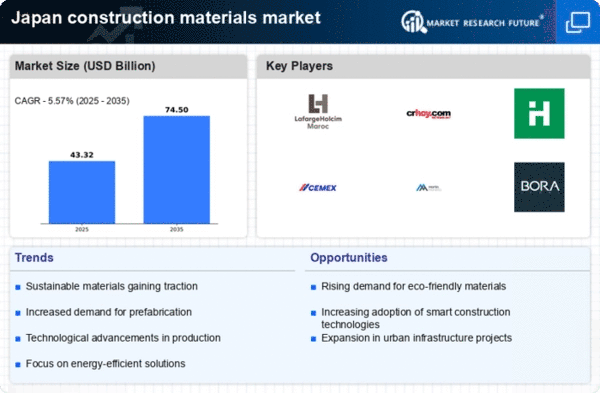
The construction materials market in Japan is characterized by a competitive landscape that is increasingly shaped by innovation, sustainability, and strategic partnerships. Key players such as LafargeHolcim (CH), CRH (IE), and HeidelbergCement (DE) are actively pursuing strategies that emphasize technological advancements and eco-friendly practices. LafargeHolcim (CH), for instance, has been focusing on enhancing its product portfolio with low-carbon solutions, which aligns with the growing demand for sustainable construction materials. Meanwhile, CRH (IE) is expanding its footprint in the region through strategic acquisitions, thereby strengthening its market position and operational capabilities. These collective strategies not only enhance the competitive environment but also drive the market towards a more sustainable future.In terms of business tactics, companies are increasingly localizing manufacturing to reduce transportation costs and improve supply chain efficiency. This approach appears to be particularly effective in a moderately fragmented market where regional players also hold significant influence. The competitive structure is thus shaped by both large multinational corporations and local firms, creating a dynamic interplay that fosters innovation and responsiveness to market demands.
In October LafargeHolcim (CH) announced a partnership with a leading Japanese technology firm to develop smart concrete solutions that integrate IoT technology. This strategic move is likely to enhance the company's product offerings and position it as a leader in the digital transformation of construction materials. The integration of smart technology into construction processes could significantly improve project efficiency and sustainability, aligning with global trends towards digitalization.
In September CRH (IE) completed the acquisition of a regional concrete manufacturer in Japan, which is expected to bolster its production capacity and market reach. This acquisition not only reflects CRH's commitment to expanding its operational footprint but also indicates a strategic shift towards consolidating resources to better serve local markets. Such moves are indicative of a broader trend where companies seek to enhance their competitive edge through strategic mergers and acquisitions.
In August HeidelbergCement (DE) launched a new line of eco-friendly cement products specifically designed for the Japanese market. This initiative underscores the company's focus on sustainability and its responsiveness to the increasing regulatory pressures for greener construction practices. By introducing innovative products that meet local environmental standards, HeidelbergCement (DE) is likely to strengthen its market position and appeal to environmentally conscious consumers.
As of November the competitive trends in the construction materials market are increasingly defined by digitalization, sustainability, and the integration of advanced technologies such as AI. Strategic alliances are becoming more prevalent, as companies recognize the need to collaborate in order to innovate and meet evolving market demands. The shift from price-based competition to a focus on innovation, technology, and supply chain reliability is evident, suggesting that future competitive differentiation will hinge on the ability to adapt and respond to these emerging trends.