×
Request Free Sample ×

Kindly complete the form below to receive a free sample of this Report

* Please use a valid business email

Leading companies partner with us for data-driven Insights

clients tt-cursor
Hero Background

Japan Cerebrospinal Fluid Management Devices Market

ID: MRFR/MED/51201-HCR
200 Pages
Rahul Gotadki
February 2026

Japan Cerebrospinal Fluid Management Devices Market Research Report: Size, Share, Trend Analysis By Device Type (Rubber Band Ligators, Infrared Coagulators, Proctoscopes, Anoscopes, Doppler probes, Cryotherapy Devices, Bipolar Probes, Others), By Procedure (Rubber Band Ligation, Sclerotherapy, Infrared Coagulation, Others) and By End Users (Hospitals and amp; Clinics, Ambulatory Surgery Centers, Others) - Growth Outlook & Industry Forecast 2025 To 2035

Share:
Download PDF ×

We do not share your information with anyone. However, we may send you emails based on your report interest from time to time. You may contact us at any time to opt-out.

Japan Cerebrospinal Fluid Management Devices Market Infographic
Purchase Options

Japan Cerebrospinal Fluid Management Devices Market Summary

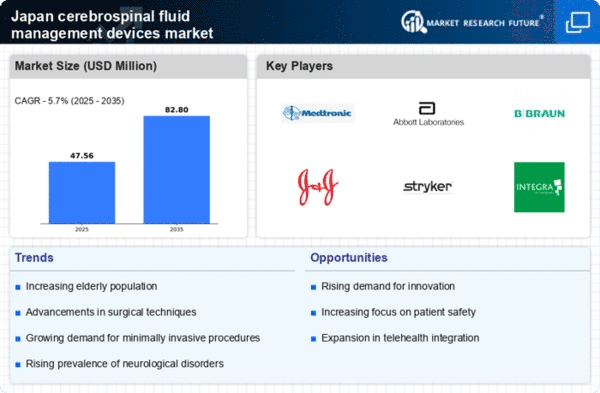
As per Market Research Future analysis, the Japan Cerebrospinal Fluid Management Devices Market size was estimated at 45.0 USD Million in 2024. The Cerebrospinal Fluid-management-devices market is projected to grow from 47.56 USD Million in 2025 to 82.8 USD Million by 2035, exhibiting a compound annual growth rate (CAGR) of 5% during the forecast period 2025 - 2035

Key Market Trends & Highlights

The Japan cerebrospinal fluid-management-devices market is poised for growth driven by technological advancements and demographic shifts.

  • Technological advancements in cerebrospinal fluid-management devices are enhancing treatment efficacy and patient outcomes.
  • The aging population in Japan is contributing to an increased demand for cerebrospinal fluid-management solutions.
  • The largest segment in this market is the ventricular drainage devices, while the fastest-growing segment is the lumbar drainage devices.
  • Rising incidence of neurological disorders and government initiatives are key drivers propelling market expansion.

Market Size & Forecast

2024 Market Size 45.0 (USD Million)
2035 Market Size 82.8 (USD Million)
CAGR (2025 - 2035) 5.7%

Major Players

Medtronic (US), Abbott (US), B. Braun Melsungen AG (DE), Johnson & Johnson (US), Stryker Corporation (US), Integra LifeSciences (US), Codman Neuro (US), Natus Medical Incorporated (US)

Our Impact
Enabled $4.3B Revenue Impact for Fortune 500 and Leading Multinationals
Partnering with 2000+ Global Organizations Each Year
30K+ Citations by Top-Tier Firms in the Industry

Japan Cerebrospinal Fluid Management Devices Market Trends

The Japan Cerebrospinal Fluid Management Devices Market in Japan is currently experiencing notable advancements driven by technological innovations and an increasing prevalence of neurological disorders. The demand for effective management solutions for cerebrospinal fluid (CSF) is rising, as healthcare providers seek to enhance patient outcomes and streamline treatment processes. This market is characterized by a growing emphasis on minimally invasive techniques, which are believed to reduce recovery times and improve overall patient satisfaction. Furthermore, the aging population in Japan is contributing to a higher incidence of conditions requiring CSF management, thereby propelling market growth. In addition to demographic factors, regulatory support and investment in healthcare infrastructure are likely to play a crucial role in shaping the cerebrospinal fluid-management-devices market. The Japanese government has been actively promoting research and development initiatives aimed at improving medical technologies. This supportive environment may foster innovation and encourage the introduction of advanced devices tailored to meet the specific needs of patients. As the market evolves, collaboration between manufacturers, healthcare providers, and regulatory bodies appears essential for ensuring the successful integration of new technologies into clinical practice.

Technological Advancements

The cerebrospinal fluid-management-devices market is witnessing rapid technological advancements, particularly in the development of smart devices. These innovations are designed to enhance monitoring capabilities and improve the precision of fluid management. Manufacturers are increasingly focusing on integrating digital solutions that allow for real-time data collection and analysis, which may lead to better clinical decision-making.

Aging Population

Japan's demographic shift towards an aging population is significantly impacting the cerebrospinal fluid-management-devices market. As the elderly population grows, the prevalence of neurological disorders is expected to rise, creating a higher demand for effective CSF management solutions. This trend suggests a need for healthcare systems to adapt and expand their offerings to cater to this demographic.

Regulatory Support

The regulatory landscape in Japan is evolving to support the development and approval of innovative cerebrospinal fluid-management devices. Government initiatives aimed at streamlining the approval process for medical technologies may encourage manufacturers to invest in research and development. This supportive regulatory environment could facilitate the introduction of advanced devices that address the specific needs of patients.

Japan Cerebrospinal Fluid Management Devices Market Drivers

Increase in Surgical Procedures

The rise in surgical procedures related to neurological conditions is a crucial driver for the cerebrospinal fluid-management-devices market. As more patients undergo surgeries such as decompressive craniectomy and ventricular shunt placements, the need for effective cerebrospinal fluid management becomes paramount. Recent data indicates that the number of neurosurgical procedures in Japan has increased by around 8% annually, reflecting a growing recognition of the importance of timely and effective interventions. This trend is likely to boost the demand for cerebrospinal fluid-management devices, as surgeons seek reliable solutions to manage cerebrospinal fluid during and after surgical procedures. Consequently, the market is poised for growth as healthcare providers adapt to the increasing surgical volume.

Government Initiatives and Funding

Government initiatives aimed at improving healthcare infrastructure in Japan are significantly influencing the cerebrospinal fluid-management-devices market. Increased funding for research and development in medical technologies is fostering innovation and encouraging manufacturers to develop advanced cerebrospinal fluid-management devices. The Japanese government has allocated substantial budgets to enhance healthcare services, which includes the procurement of state-of-the-art medical equipment. This financial support is likely to stimulate market growth, as hospitals and clinics are more inclined to invest in new technologies that improve patient care. Furthermore, regulatory bodies are streamlining approval processes for innovative devices, which may lead to quicker market entry and increased competition among manufacturers.

Growing Awareness of Patient Safety

There is a heightened awareness of patient safety and quality of care in Japan, which is driving the cerebrospinal fluid-management-devices market. Healthcare providers are increasingly prioritizing the implementation of devices that minimize risks associated with cerebrospinal fluid management. This focus on safety is leading to the adoption of advanced monitoring systems and shunt technologies that ensure optimal fluid regulation. As hospitals strive to meet stringent safety standards, the demand for reliable cerebrospinal fluid-management devices is expected to rise. This trend is likely to contribute to a market growth rate of approximately 12% over the next few years, as healthcare facilities invest in technologies that enhance patient safety and treatment efficacy.

Rising Incidence of Neurological Disorders

The increasing prevalence of neurological disorders in Japan is a significant driver for the cerebrospinal fluid-management-devices market. Conditions such as Alzheimer's disease, multiple sclerosis, and traumatic brain injuries are becoming more common, necessitating effective management solutions. According to recent health statistics, neurological disorders account for approximately 10% of the total disease burden in Japan. This rising incidence creates a growing demand for cerebrospinal fluid-management devices, as healthcare providers seek advanced technologies to improve patient outcomes. The market is expected to expand as hospitals and clinics invest in innovative devices that facilitate better diagnosis and treatment of these conditions, thereby enhancing the overall quality of care.

Technological Innovations in Medical Devices

Technological advancements in medical devices are propelling the cerebrospinal fluid-management-devices market forward. Innovations such as smart shunts and automated monitoring systems are enhancing the efficiency and effectiveness of cerebrospinal fluid management. These devices not only improve patient safety but also reduce the risk of complications associated with traditional methods. The integration of artificial intelligence and machine learning into these devices is expected to further optimize their performance. As a result, healthcare facilities in Japan are increasingly adopting these advanced technologies, leading to a projected market growth of around 15% annually over the next five years. This trend indicates a shift towards more sophisticated and reliable cerebrospinal fluid-management solutions.


Market Segment Insights

By Type: Rubber Band Ligators (Largest) vs. Infrared Coagulators (Fastest-Growing)

In the Japan cerebrospinal fluid-management-devices market, Rubber Band Ligators hold the largest market share due to their widespread use in various procedures. Infrared Coagulators, while not as dominant, show significant potential for growth, driven by their innovative applications in minimally invasive surgeries. Other segment values like Proctoscopes and Anoscopes contribute to the overall distribution, but their market shares remain comparatively smaller. The growth trends within this segment are influenced by advancements in medical technology and an increasing preference for outpatient settings. As healthcare providers adopt efficient and cost-effective treatment options, devices such as Infrared Coagulators are gaining traction as they offer enhanced precision and reduced recovery time. This shifting landscape suggests a future where emerging technologies will challenge established products in their effectiveness and market presence.

Rubber Band Ligators (Dominant) vs. Infrared Coagulators (Emerging)

Rubber Band Ligators dominate the Japan cerebrospinal fluid-management-devices market due to their effectiveness in treating various medical conditions, particularly in gastrointestinal applications. Their widespread adoption is facilitated by proven clinical efficacy and cost-efficiency, making them a preferred choice among healthcare professionals. In contrast, Infrared Coagulators are emerging as a competitive force, driven by their ability to perform minimally invasive procedures with precision. This innovative technology is rapidly gaining popularity for its advantages in patient recovery times and procedural safety, positioning it as a viable alternative for various treatments. As healthcare professionals continue to seek advancements that enhance patient outcomes, the market for both these devices is likely to evolve, highlighting the need for continual innovation.

By Procedure: Rubber Band Ligation (Largest) vs. Sclerotherapy (Fastest-Growing)

In the Japan cerebrospinal fluid-management-devices market, Rubber Band Ligation holds the largest market share, favored for its efficacy and minimal invasiveness. Sclerotherapy follows, emerging as a strong contender and gaining traction due to its effectiveness in treating various vascular conditions. Infrared Coagulation and Others segments account for the remaining market share but do not exhibit the same level of dominance. Overall, the market showcases a diverse range of procedures addressing specific clinical needs. Growth trends in the procedure segment reveal a shift towards minimally invasive techniques, spurred by advancements in medical technology and increasing patient preferences for outpatient treatments. The growing awareness of preventive care and rising incidences of related ailments also contribute to the adoption of these procedures. As a result, Sclerotherapy's status as the fastest-growing segment reflects the changing landscape of treatment options available within the market.

Procedure: Rubber Band Ligation (Dominant) vs. Sclerotherapy (Emerging)

Rubber Band Ligation is a well-established procedure in the Japan cerebrospinal fluid-management-devices market, known for its high success rates and low complication risks. This dominance is attributed to its effectiveness in managing conditions requiring fluid management with minimal patient discomfort. In contrast, Sclerotherapy is gaining ground as an emerging option, appealing to patients due to its non-surgical nature and efficacy in eliminating varicose veins and other vascular abnormalities. As healthcare professionals increasingly adopt Sclerotherapy for various indications, its rise reflects a broader trend towards non-invasive treatments that cater to patient convenience and preferences.

By End-User: Hospitals & Clinics (Largest) vs. Ambulatory Surgery Centers (Fastest-Growing)

In the Japan cerebrospinal fluid-management-devices market, Hospitals & Clinics dominate the end-user segment, capturing a significant proportion of the market share due to their extensive network and critical role in patient care. This segment benefits from high patient volumes and the need for various cerebrospinal fluid management solutions, ensuring a steady demand. Ambulatory Surgery Centers, though smaller in share, are rapidly gaining traction as they offer enhanced convenience and efficiency in surgical procedures, attracting more patients and healthcare providers alike. The growth of the end-user segment is being driven by innovative product developments and the increasing adoption of minimally invasive surgical techniques. Hospitals & Clinics are evolving with advancements in technology, leading to more efficient patient outcomes, while Ambulatory Surgery Centers are leveraging their operational flexibility to expand service offerings. The combined trend towards outpatient care is propelling the market forward, indicating a shift in how cerebrospinal fluid management is approached in healthcare settings.

Hospitals & Clinics (Dominant) vs. Ambulatory Surgery Centers (Emerging)

Hospitals & Clinics represent the dominant force in the end-user segment for cerebrospinal fluid-management-devices. These facilities are critical in delivering comprehensive care and have established preferences for advanced management systems that ensure patient safety and operational efficiency. Their large-scale operations enable them to implement cutting-edge technologies, making them the go-to choice for complex care scenarios. In contrast, Ambulatory Surgery Centers are emerging as key players, favored for their cost-effectiveness and streamlined patient experiences. These centers are increasingly embracing innovative devices, catering to a growing demand for outpatient procedures, thus positioning themselves as a valuable alternative to traditional hospital care.

Get more detailed insights about Japan Cerebrospinal Fluid Management Devices Market

Key Players and Competitive Insights

The cerebrospinal fluid-management-devices market in Japan is characterized by a competitive landscape that is increasingly shaped by innovation and strategic partnerships. Key players such as Medtronic (US), Abbott (US), and B. Braun Melsungen AG (DE) are actively pursuing strategies that emphasize technological advancements and regional expansion. Medtronic (US), for instance, has focused on enhancing its product portfolio through continuous innovation, which appears to be a critical driver of its market presence. Meanwhile, Abbott (US) has been investing in partnerships with local healthcare providers to improve distribution channels, thereby enhancing its operational efficiency and market reach. Collectively, these strategies contribute to a dynamic competitive environment where companies are not only vying for market share but also striving to meet the evolving needs of healthcare providers and patients.In terms of business tactics, companies are increasingly localizing manufacturing to reduce costs and improve supply chain resilience. This approach is particularly relevant in a market that is moderately fragmented, with several players competing for dominance. The collective influence of major companies like Stryker Corporation (US) and Integra LifeSciences (US) further complicates the competitive structure, as they leverage their extensive networks and resources to optimize operations and enhance product offerings.

In October Stryker Corporation (US) announced a strategic partnership with a leading Japanese medical technology firm to co-develop advanced cerebrospinal fluid-management devices. This collaboration is expected to leverage local expertise and accelerate the introduction of innovative solutions tailored to the Japanese market. The strategic importance of this partnership lies in its potential to enhance Stryker's competitive edge by integrating localized insights into product development, thereby addressing specific market needs more effectively.

In September B. Braun Melsungen AG (DE) launched a new line of cerebrospinal fluid-management devices designed with advanced safety features. This product introduction is significant as it reflects the company's commitment to innovation and patient safety, which are increasingly becoming focal points in the healthcare sector. By prioritizing these aspects, B. Braun aims to differentiate itself in a crowded market, potentially capturing a larger share of the growing demand for reliable medical devices.

In August Integra LifeSciences (US) expanded its distribution network in Japan by partnering with local healthcare distributors. This strategic move is likely to enhance the company's market penetration and improve access to its products across various healthcare settings. The expansion underscores the importance of strategic alliances in navigating the complexities of the Japanese market, where local knowledge and relationships can significantly influence success.

As of November the competitive trends in the cerebrospinal fluid-management-devices market are increasingly defined by digitalization, sustainability, and the integration of artificial intelligence (AI) into product offerings. Companies are recognizing the need for strategic alliances to foster innovation and enhance operational capabilities. The shift from price-based competition to a focus on technological advancement and supply chain reliability is becoming evident. Moving forward, competitive differentiation will likely hinge on the ability to innovate and adapt to the changing landscape, with companies that prioritize these elements poised to lead the market.

Key Companies in the Japan Cerebrospinal Fluid Management Devices Market include

Industry Developments

Recent developments in the Japan Cerebrospinal Fluid Management Devices Market highlight significant advancements and trends. Olympus Corporation is focusing on enhancing its medical device portfolio with innovative cerebrospinal fluid management solutions, while Stryker Corporation continues to strengthen its market share through strategic partnerships. Zeus Surgical and Codman and Shurtleff have been active in improving product offerings with the introduction of advanced cerebrospinal fluid shunts tailored for Japanese healthcare needs. Current affairs reveal a growing demand for these medical devices, attributed to the increasing prevalence of neurological disorders in Japan.

A notable merger took place in January 2023 when Integra LifeSciences announced the acquisition of a Japan-based biomedical company, enhancing its product offerings in cerebrospinal fluid management. 

The market valuation for leading companies such as Medtronic and Natus Medical is on the rise, supported by government initiatives aiming for improved healthcare infrastructure, which positively influences the market landscape. Over the last few years, the ongoing Research and Development efforts by B. Braun and Smiths Medical have set a strong foundation for specialized cerebrospinal fluid management devices, marking a trend towards more effective and efficient healthcare solutions in Japan.

Future Outlook

Japan Cerebrospinal Fluid Management Devices Market Future Outlook

The Cerebrospinal Fluid Management Devices Market is projected to grow at a 5.7% CAGR from 2025 to 2035, driven by technological advancements and increasing patient needs.

New opportunities lie in:

  • Development of AI-driven monitoring systems for real-time data analysis.
  • Expansion of telehealth services for remote patient management.
  • Introduction of biodegradable materials in device manufacturing.

By 2035, the market is expected to achieve substantial growth, reflecting evolving healthcare demands.

Market Segmentation

Japan Cerebrospinal Fluid Management Devices Market Type Outlook

  • Rubber Band Ligators
  • Infrared Coagulators
  • Proctoscopes
  • Anoscopes
  • Doppler Probes
  • Cryotherapy Devices
  • Bipolar Probes
  • Others

Japan Cerebrospinal Fluid Management Devices Market End-User Outlook

  • Hospitals & Clinics
  • Ambulatory Surgery Centers
  • Others

Japan Cerebrospinal Fluid Management Devices Market Procedure Outlook

  • Rubber Band Ligation
  • Sclerotherapy
  • Infrared Coagulation
  • Others

Report Scope

MARKET SIZE 2024 45.0(USD Million)
MARKET SIZE 2025 47.56(USD Million)
MARKET SIZE 2035 82.8(USD Million)
COMPOUND ANNUAL GROWTH RATE (CAGR) 5.7% (2025 - 2035)
REPORT COVERAGE Revenue Forecast, Competitive Landscape, Growth Factors, and Trends
BASE YEAR 2024
Market Forecast Period 2025 - 2035
Historical Data 2019 - 2024
Market Forecast Units USD Million
Key Companies Profiled Medtronic (US), Abbott (US), B. Braun Melsungen AG (DE), Johnson & Johnson (US), Stryker Corporation (US), Integra LifeSciences (US), Codman Neuro (US), Natus Medical Incorporated (US)
Segments Covered Type, Procedure, End-User
Key Market Opportunities Advancements in minimally invasive techniques enhance growth potential in the cerebrospinal fluid-management-devices market.
Key Market Dynamics Technological advancements and regulatory changes drive innovation in cerebrospinal fluid-management-devices within Japan's healthcare sector.
Countries Covered Japan
Leave a Comment

FAQs

What is the expected market size of the Japan Cerebrospinal Fluid Management Devices Market in 2024?

In 2024, the Japan Cerebrospinal Fluid Management Devices Market is expected to be valued at 36.0 USD Million.

What is the projected market size for the Japan Cerebrospinal Fluid Management Devices Market by 2035?

By 2035, the Japan Cerebrospinal Fluid Management Devices Market is anticipated to reach a valuation of 113.0 USD Million.

What is the expected compound annual growth rate (CAGR) for the Japan Cerebrospinal Fluid Management Devices Market from 2025 to 2035?

The expected CAGR for the Japan Cerebrospinal Fluid Management Devices Market from 2025 to 2035 is 10.959%.

Which device type in the Japan Cerebrospinal Fluid Management Devices Market is expected to have the highest value in 2035?

Doppler probes are expected to have the highest value in 2035, projected at 35.0 USD Million.

What are the major competitors in the Japan Cerebrospinal Fluid Management Devices Market?

Major players in the market include Olympus Corporation, Stryker Corporation, Codman & Shurtleff, and Medtronic.

What will be the market value for Infrared Coagulators in 2035 within the Japan Cerebrospinal Fluid Management Devices Market?

Infrared Coagulators are projected to reach a market value of 25.0 USD Million by 2035.

How much is the Proctoscopes segment estimated to be worth in 2024?

The Proctoscopes segment is estimated to be valued at 7.0 USD Million in 2024.

What is the expected market growth rate for the Japan Cerebrospinal Fluid Management Devices Market?

The expected market growth rate for the Japan Cerebrospinal Fluid Management Devices Market is driven by technological advancements and increasing healthcare needs.

What is the expected market size for Rubber Band Ligators in 2035?

Rubber Band Ligators are expected to be valued at 15.0 USD Million by 2035.

How does the Japan Cerebrospinal Fluid Management Devices Market compare regionally to global markets?

The Japan Cerebrospinal Fluid Management Devices Market shows robust growth and is positioned as a key player in the Asia-Pacific region.

Download Free Sample

Kindly complete the form below to receive a free sample of this Report

Compare Licence

×
Features License Type
Single User Multiuser License Enterprise User
Price $4,950 $5,950 $7,250
Maximum User Access Limit 1 User Upto 10 Users Unrestricted Access Throughout the Organization
Free Customization
Direct Access to Analyst
Deliverable Format
Platform Access
Discount on Next Purchase 10% 15% 15%
Printable Versions