×
Request Free Sample ×

Kindly complete the form below to receive a free sample of this Report

* Please use a valid business email

Leading companies partner with us for data-driven Insights

clients tt-cursor
Hero Background

Japan Capsule Coffee Machine Market

ID: MRFR/CG/47109-HCR
200 Pages
Snehal Singh
February 2026

Japan Capsule Coffee Machine Market Size, Share, Industry Trend & Analysis Research Report By Type (Closed-Source System, Open-Source System) and By Application (Household, Commercial)-Forecast to 2035

Share:
Download PDF ×

We do not share your information with anyone. However, we may send you emails based on your report interest from time to time. You may contact us at any time to opt-out.

Japan Capsule Coffee Machine Market Infographic
Purchase Options

Japan Capsule Coffee Machine Market Summary

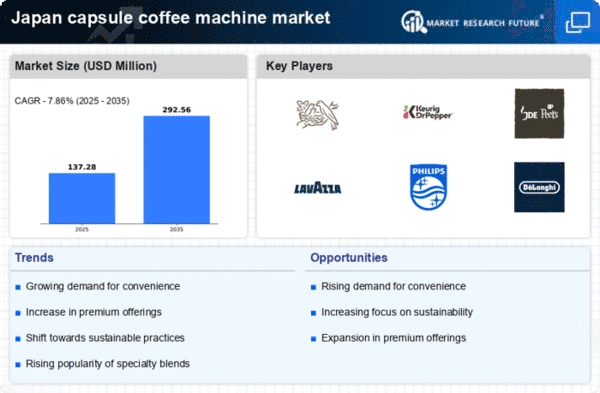
As per Market Research Future analysis, the Japan capsule coffee machine market size was estimated at $127.27 million in 2024. The Japan capsule coffee-machine market is projected to grow from 137.28 $ Million in 2025 to 292.56 $ Million by 2035, exhibiting a compound annual growth rate (CAGR) of 7.8% during the forecast period 2025 - 2035

Key Market Trends & Highlights

The Japan capsule coffee-machine market is experiencing a robust growth trajectory driven by evolving consumer preferences and technological advancements.

  • The market is increasingly leaning towards convenience and quality, appealing to busy urban consumers.
  • Integration of smart technology in coffee machines is becoming a prominent trend, enhancing user experience and functionality.
  • Sustainability initiatives are gaining traction, with brands focusing on eco-friendly materials and practices.
  • The rising coffee culture and urbanization are key drivers, as consumers seek efficient solutions for their coffee needs.

Market Size & Forecast

2024 Market Size 127.27 (USD Million)
2035 Market Size 292.56 (USD Million)
CAGR (2025 - 2035) 7.86%

Major Players

Nestle (CH), Keurig Dr Pepper (US), JDE Peet's (NL), Lavazza (IT), Philips (NL), De'Longhi (IT), Bosch (DE), Caffitaly (IT)

Our Impact
Enabled $4.3B Revenue Impact for Fortune 500 and Leading Multinationals
Partnering with 2000+ Global Organizations Each Year
30K+ Citations by Top-Tier Firms in the Industry

Japan Capsule Coffee Machine Market Trends

The capsule coffee-machine market is experiencing notable growth, driven by evolving consumer preferences and advancements in technology. In recent years, there has been a marked shift towards convenience and quality in coffee preparation. Consumers increasingly favor machines that offer a quick and efficient brewing process, allowing them to enjoy café-style beverages at home. This trend is further supported by the rising popularity of specialty coffee, which has led to a demand for machines that can deliver a variety of flavors and styles. Additionally, the integration of smart technology into these machines appears to enhance user experience, making them more appealing to tech-savvy consumers. Moreover, sustainability concerns are influencing purchasing decisions within the capsule coffee-machine market. As awareness of environmental issues grows, consumers are seeking products that align with their values. This has prompted manufacturers to explore eco-friendly materials and recycling programs for coffee capsules. The emphasis on sustainability not only addresses consumer concerns but also positions brands favorably in a competitive landscape. Overall, the market is poised for continued expansion, with innovation and consumer preferences shaping its trajectory.

Convenience and Quality

The demand for convenience in coffee preparation is driving the capsule coffee-machine market. Consumers are increasingly looking for machines that provide quick and high-quality brewing options. This trend reflects a broader shift towards home brewing, where individuals seek café-style experiences without the need to visit coffee shops.

Integration of Smart Technology

The incorporation of smart technology into capsule coffee machines is becoming more prevalent. Features such as app connectivity and customizable brewing settings appeal to tech-savvy consumers. This trend suggests a growing expectation for machines to offer enhanced user experiences through innovative functionalities.

Sustainability Initiatives

Sustainability is emerging as a key consideration for consumers in the capsule coffee-machine market. As environmental awareness rises, manufacturers are focusing on eco-friendly materials and recycling options for coffee capsules. This trend indicates a shift towards responsible consumption, influencing brand loyalty and purchasing decisions.

Japan Capsule Coffee Machine Market Drivers

E-commerce Growth

The rapid growth of e-commerce in Japan is emerging as a crucial driver for the capsule coffee-machine market. With the increasing popularity of online shopping, consumers are more inclined to purchase coffee machines and related products through digital platforms. Recent data indicates that online sales of home appliances, including coffee machines, have surged by approximately 30% in the past year. This trend is likely to continue, as consumers appreciate the convenience of home delivery and the ability to compare products easily. E-commerce platforms also provide access to a wider range of capsule options, enhancing consumer choice. As the capsule coffee-machine market capitalizes on this e-commerce growth, it is expected to see a significant boost in sales, driven by the changing shopping habits of Japanese consumers.

Health Consciousness

The growing health consciousness among Japanese consumers is influencing the capsule coffee-machine market. As individuals become more aware of their dietary choices, there is a noticeable shift towards healthier beverage options. Capsule coffee machines, which often allow for the use of organic or specialty coffee pods, cater to this trend by providing consumers with the ability to select high-quality, health-oriented coffee options. Furthermore, the market is witnessing an increase in demand for coffee products that are low in sugar and free from artificial additives. This shift in consumer preferences is likely to drive the sales of capsule coffee machines, as they offer a convenient way to enjoy healthier coffee alternatives at home. The capsule coffee-machine market is expected to benefit from this health trend, as more consumers seek to align their coffee consumption with their wellness goals.

Rising Coffee Culture

The growing coffee culture in Japan appears to be a significant driver for the capsule coffee-machine market. With an increasing number of coffee enthusiasts, the demand for high-quality coffee experiences at home is on the rise. According to recent data, approximately 60% of Japanese consumers express a preference for coffee over other beverages, indicating a shift towards premium coffee consumption. This trend is likely to propel the sales of capsule coffee machines, as they offer convenience and quality, aligning with consumer preferences. Furthermore, the proliferation of specialty coffee shops has heightened awareness and appreciation for diverse coffee flavors, further stimulating interest in home brewing solutions. As consumers seek to replicate café-quality coffee at home, the capsule coffee-machine market is poised for growth, driven by this evolving coffee culture.

Technological Advancements

Technological advancements in the capsule coffee-machine market are likely to enhance user experience and drive market growth in Japan. Innovations such as app connectivity, customizable brewing settings, and energy-efficient designs are becoming increasingly prevalent. For instance, machines that allow users to control brewing parameters via smartphone apps are gaining traction, appealing to tech-savvy consumers. Additionally, the integration of features like automatic cleaning and maintenance alerts may further attract buyers seeking convenience. The market for capsule coffee machines in Japan is projected to grow at a CAGR of around 8% over the next five years, driven by these technological enhancements. As manufacturers continue to innovate, the appeal of capsule coffee machines is expected to broaden, attracting a wider audience and potentially increasing market share.

Urbanization and Space Constraints

Urbanization in Japan is contributing to the growth of the capsule coffee-machine market, as more individuals reside in smaller living spaces. With the increasing population density in urban areas, consumers are often limited in kitchen space, making compact and efficient appliances more desirable. Capsule coffee machines, known for their space-saving designs, are particularly appealing to city dwellers who seek convenience without sacrificing quality. Recent statistics indicate that over 80% of households in major Japanese cities are likely to consider compact coffee solutions. This trend suggests that as urban living continues to rise, the demand for capsule coffee machines will likely increase, positioning them as a practical choice for coffee lovers in Japan.


Market Segment Insights

By Type: Closed-Source System (Largest) vs. Open-Source System (Fastest-Growing)

The Japan capsule coffee-machine market exhibits a distinct split in market share between Closed-Source and Open-Source systems. The Closed-Source System dominates the arena, appealing to consumers who value reliability and ease of use, and is favored for its proprietary technology and seamless integration. Meanwhile, the Open-Source System is making significant strides, capturing an increasing share as enthusiasts and eco-conscious consumers seek customizable options and sustainable practices. Growth trends indicate a robust demand for both systems, driven by evolving consumer preferences and a rise in specialty coffee culture. The Closed-Source System benefits from established brand loyalty and targeted marketing campaigns, while the Open-Source System is propelled by innovations in sustainability and user-focused designs. The growth trajectory suggests that innovation and adaptability will be key factors for both segments moving forward.

Type: Closed-Source System (Dominant) vs. Open-Source System (Emerging)

The Closed-Source System is characterized by its proprietary capsules that ensure a consistent brewing experience, appealing to mainstream consumers seeking convenience and quality. This system typically features an array of branded capsules, reinforcing customer loyalty. On the other hand, the Open-Source System represents an emerging trend, catering to a niche market that values versatility and eco-friendliness. It allows users to utilize various third-party capsules, fostering creativity and personalization. As consumers become more environmentally conscious, the Open-Source System is gaining traction, suggesting a potential shift in market dynamics as it offers more sustainable practices alongside a unique coffee experience.

By Application: Household (Largest) vs. Commercial (Fastest-Growing)

In the Japan capsule coffee-machine market, the household segment commands a significant share, reflecting the popularity of home brewing among consumers seeking convenience and quality. This segment's preference for high-quality coffee experiences has led to a stable demand, as individuals embrace capsule machines for their ease of use and variety. Meanwhile, the commercial segment is witnessing rapid growth as businesses recognize the value of providing premium coffee options to customers, thereby fueling investment in sophisticated coffee machines. The growth trends in the Japan capsule coffee-machine market are driven by evolving consumer preferences towards convenience and quality. The household segment remains robust due to the increasing demand for personalized coffee experiences at home, while the commercial segment benefits from an expanding café culture and the rising trend of premium coffee offerings in workplaces and hospitality sectors. This dual growth reflects broader shifts in lifestyle where quality coffee is increasingly seen as essential.

Household (Dominant) vs. Commercial (Emerging)

The household segment in the Japan capsule coffee-machine market is characterized by strong brand loyalty and consumer focus on convenience. Households prioritize the ability to enjoy a variety of coffee styles without the need for extensive equipment, making capsule machines highly desirable. On the other hand, the commercial segment is emerging as a key player, with businesses adopting these machines to enhance customer experience and differentiate themselves in competitive markets. This shift is underpinned by a growing café culture, where establishments invest in high-quality capsule machines to offer premium coffee options, attracting a diverse clientele. Both segments play critical roles, with households driving market stability and commercial entities catalyzing innovation.

Get more detailed insights about Japan Capsule Coffee Machine Market

Key Players and Competitive Insights

The capsule coffee-machine market in Japan exhibits a dynamic competitive landscape, characterized by a blend of innovation and strategic partnerships among key players. Major companies such as Nestle (CH), Keurig Dr Pepper (US), and De'Longhi (IT) are actively shaping the market through their distinct operational focuses. Nestle (CH) emphasizes sustainability and product diversification, aiming to cater to the growing consumer demand for eco-friendly options. Keurig Dr Pepper (US) leverages its strong brand recognition and extensive distribution network to enhance market penetration, while De'Longhi (IT) focuses on premium product offerings, appealing to the high-end segment of the market. Collectively, these strategies contribute to a competitive environment that is increasingly driven by consumer preferences for quality and sustainability.In terms of business tactics, companies are localizing manufacturing and optimizing supply chains to enhance efficiency and reduce costs. The market structure appears moderately fragmented, with several players vying for market share. However, the influence of key players is substantial, as they set trends and standards that smaller competitors often follow. This competitive structure fosters an environment where innovation and responsiveness to consumer needs are paramount.

In October Nestle (CH) announced a partnership with a local Japanese startup to develop biodegradable coffee capsules, reflecting a strategic move towards sustainability. This initiative not only aligns with global trends towards eco-consciousness but also positions Nestle (CH) as a leader in sustainable practices within the market. The collaboration is expected to enhance brand loyalty among environmentally aware consumers, potentially increasing market share.

In September Keurig Dr Pepper (US) launched a new line of smart coffee machines that integrate AI technology for personalized brewing experiences. This strategic action underscores the company's commitment to innovation and technology, catering to tech-savvy consumers who seek convenience and customization. The introduction of AI-driven features may significantly enhance user engagement and satisfaction, thereby strengthening Keurig's competitive position.

In August De'Longhi (IT) expanded its product line by introducing a series of compact capsule machines designed for small living spaces, targeting urban consumers. This strategic move reflects an understanding of changing consumer lifestyles and preferences, particularly in densely populated areas. By addressing the needs of this demographic, De'Longhi (IT) is likely to capture a new segment of the market, further solidifying its presence.

As of November current trends in the capsule coffee-machine market are increasingly defined by digitalization, sustainability, and the integration of advanced technologies such as AI. Strategic alliances are becoming more prevalent, as companies recognize the value of collaboration in enhancing innovation and market reach. Looking ahead, competitive differentiation is expected to evolve, with a notable shift from price-based competition to a focus on innovation, technology, and supply chain reliability. This transition suggests that companies that prioritize these aspects will likely emerge as leaders in the market.

Key Companies in the Japan Capsule Coffee Machine Market include

Industry Developments

Recent developments in the Japan Capsule Coffee Machine Market show a marked increase in consumer demand, driven by the growing popularity of home brewing options. Companies like Nespresso, De'Longhi, and Keurig Dr Pepper have reported significant growth in market valuations, correlating with a shift towards convenient coffee solutions among Japanese consumers. In particular, Nespresso introduced new machines that cater to the local palate, featuring unique coffee blends designed specifically for the Japanese market. Additionally, in June 2023, De'Longhi announced a strategic partnership with a local distributor to enhance its presence in Japan, further solidifying its market position.

There have been no recent mergers or acquisitions reported among the specified companies within Japan during this period. The government of Japan has also recognized the increasing coffee culture, promoting initiatives that support local cafes and artisanal coffee brands. The market has experienced consistent growth over the last few years, with notable events such as the introduction of eco-friendly capsule options gaining traction since 2021, reflecting a societal move towards sustainability, a key concern among Japanese consumers. Overall, these shifts illustrate a dynamic market landscape responding adeptly to consumer preferences and environmental awareness.

Future Outlook

Japan Capsule Coffee Machine Market Future Outlook

The Capsule Coffee Machine Market in Japan is projected to grow at a 7.86% CAGR from 2025 to 2035, driven by convenience, innovation, and sustainability.

New opportunities lie in:

  • Expansion of subscription-based coffee capsule services
  • Development of eco-friendly, biodegradable capsules
  • Integration of smart technology for personalized brewing experiences

By 2035, the market is expected to achieve robust growth, driven by innovation and evolving consumer preferences.

Market Segmentation

Japan Capsule Coffee Machine Market Type Outlook

  • Closed-Source System
  • Open-Source System

Japan Capsule Coffee Machine Market Application Outlook

  • Household
  • Commercial

Report Scope

MARKET SIZE 2024 127.27(USD Million)
MARKET SIZE 2025 137.28(USD Million)
MARKET SIZE 2035 292.56(USD Million)
COMPOUND ANNUAL GROWTH RATE (CAGR) 7.86% (2025 - 2035)
REPORT COVERAGE Revenue Forecast, Competitive Landscape, Growth Factors, and Trends
BASE YEAR 2024
Market Forecast Period 2025 - 2035
Historical Data 2019 - 2024
Market Forecast Units USD Million
Key Companies Profiled Nestle (CH), Keurig Dr Pepper (US), JDE Peet's (NL), Lavazza (IT), Philips (NL), De'Longhi (IT), Bosch (DE), Caffitaly (IT)
Segments Covered Type, Application
Key Market Opportunities Growing demand for sustainable and eco-friendly capsule solutions in the capsule coffee-machine market.
Key Market Dynamics Rising consumer preference for convenience drives innovation and competition in the capsule coffee-machine market.
Countries Covered Japan
Leave a Comment

FAQs

What was the market size of the Japan Capsule Coffee Machine Market in 2024?

The Japan Capsule Coffee Machine Market was valued at 239.89 USD Million in 2024.

What is the expected market size of the Japan Capsule Coffee Machine Market by 2035?

By 2035, the market is projected to reach a value of 880.0 USD Million.

What is the expected CAGR for the Japan Capsule Coffee Machine Market between 2025 and 2035?

The expected Compound Annual Growth Rate is 12.542% during the forecast period from 2025 to 2035.

Which type of capsule coffee system is expected to dominate the market by 2035?

The Closed-Source System is anticipated to dominate with a projected value of 525.0 USD Million by 2035.

What is the projected value of the Open-Source System in the Japan Capsule Coffee Machine Market by 2035?

The Open-Source System is expected to reach a value of 355.0 USD Million by 2035.

Who are the major players in the Japan Capsule Coffee Machine Market?

Key players include Nespresso, Philips, Hamilton Beach, Keurig Dr Pepper, and Tassimo, among others.

What market value was for the Closed-Source System in 2024?

In 2024, the Closed-Source System was valued at 139.89 USD Million.

What are the key growth drivers for the Japan Capsule Coffee Machine Market?

Growth in drivers include increasing demand for convenience and high-quality coffee experiences among consumers.

What challenges does the Japan Capsule Coffee Machine Market face?

Challenges include competition from traditional coffee brewing methods and varying consumer preferences.

What will be the impact of emerging trends on the Japan Capsule Coffee Machine Market?

Emerging trends like sustainability and innovation in coffee capsule designs are expected to influence market dynamics positively.

Download Free Sample

Kindly complete the form below to receive a free sample of this Report

Compare Licence

×
Features License Type
Single User Multiuser License Enterprise User
Price $4,950 $5,950 $7,250
Maximum User Access Limit 1 User Upto 10 Users Unrestricted Access Throughout the Organization
Free Customization
Direct Access to Analyst
Deliverable Format
Platform Access
Discount on Next Purchase 10% 15% 15%
Printable Versions