×
Request Free Sample ×

Kindly complete the form below to receive a free sample of this Report

* Please use a valid business email

Leading companies partner with us for data-driven Insights

clients tt-cursor
Hero Background

Japan Anesthesia Breathing Circuits Market

ID: MRFR/HC/50099-HCR
200 Pages
Rahul Gotadki
February 2026

Japan Anesthesia Breathing Circuits Market Research Report: By Type (Open Breathing Circuits, Semi Open Breathing Circuits, Closed Breathing Circuits), By Application (Anesthesia, Respiratory Dysfunction, Others) andBy End User (Hospitals, Ambulatory Surgical Centers, Clinics, Others) - Growth & Industry Forecast 2025 To 2035

Share:
Download PDF ×

We do not share your information with anyone. However, we may send you emails based on your report interest from time to time. You may contact us at any time to opt-out.

Japan Anesthesia Breathing Circuits Market Infographic
Purchase Options

Japan Anesthesia Breathing Circuits Market Summary

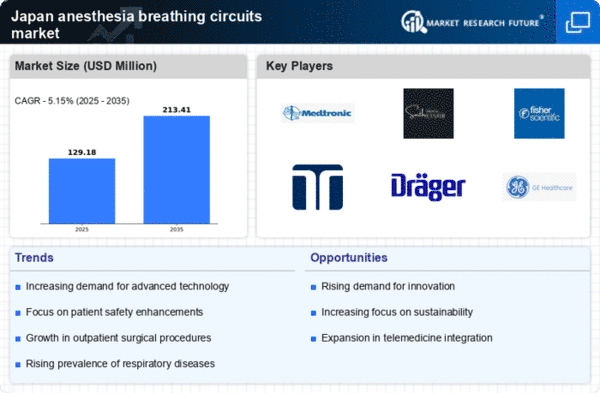
As per Market Research Future analysis, the Japan anesthesia breathing circuits market Size was estimated at 122.85 USD Million in 2024. The Japan anesthesia breathing-circuits market is projected to grow from 129.18 USD Million in 2025 to 213.41 USD Million by 2035, exhibiting a compound annual growth rate (CAGR) of 5.1% during the forecast period 2025 - 2035

Key Market Trends & Highlights

The Japan anesthesia breathing-circuits market is poised for growth driven by technological advancements and increasing healthcare demands.

  • Technological advancements in anesthesia breathing circuits are enhancing patient safety and operational efficiency.
  • The market is witnessing a shift towards sustainability initiatives, with manufacturers focusing on eco-friendly materials.
  • The largest segment in this market is the disposable breathing circuits, while the fastest-growing segment is the reusable circuits.
  • Key market drivers include the rising number of surgical procedures and increased healthcare expenditure.

Market Size & Forecast

2024 Market Size 122.85 (USD Million)
2035 Market Size 213.41 (USD Million)
CAGR (2025 - 2035) 5.15%

Major Players

Medtronic (US), Smiths Medical (US), Fisher & Paykel Healthcare (NZ), Teleflex (US), Dräger (DE), GE Healthcare (US), Becton Dickinson (US), Halyard Health (US)

Our Impact
Enabled $4.3B Revenue Impact for Fortune 500 and Leading Multinationals
Partnering with 2000+ Global Organizations Each Year
30K+ Citations by Top-Tier Firms in the Industry

Japan Anesthesia Breathing Circuits Market Trends

The anesthesia breathing-circuits market in Japan is currently experiencing notable developments driven by advancements in medical technology and increasing demand for efficient surgical procedures. The integration of innovative materials and designs is enhancing the functionality and safety of these circuits, which are essential for delivering anesthetic gases to patients during surgeries. Furthermore, the growing emphasis on patient safety and comfort is prompting manufacturers to invest in research and development, leading to the introduction of more sophisticated products. This trend is likely to continue as healthcare providers seek to improve outcomes and reduce complications associated with anesthesia delivery. In addition, regulatory frameworks in Japan are evolving to ensure that products meet stringent safety standards. This regulatory environment encourages manufacturers to adopt best practices in production and quality assurance. As a result, the anesthesia breathing-circuits market is poised for growth, with an increasing number of healthcare facilities recognizing the importance of high-quality equipment. The focus on sustainability and eco-friendly materials is also gaining traction, reflecting a broader trend within the healthcare sector towards environmentally responsible practices. Overall, the market appears to be on a positive trajectory, driven by innovation, regulatory support, and a commitment to improving patient care.

Technological Advancements

The anesthesia breathing-circuits market is witnessing rapid technological advancements that enhance the efficiency and safety of anesthesia delivery. Innovations in materials and design are leading to the development of circuits that minimize leakage and improve gas flow. These advancements not only optimize performance but also contribute to better patient outcomes during surgical procedures.

Regulatory Compliance

Regulatory compliance is becoming increasingly critical in the anesthesia breathing-circuits market. Japan's stringent safety standards necessitate that manufacturers adhere to rigorous testing and quality assurance protocols. This focus on compliance ensures that products are safe for use, thereby fostering trust among healthcare providers and patients alike.

Sustainability Initiatives

Sustainability initiatives are emerging as a significant trend within the anesthesia breathing-circuits market. Manufacturers are exploring eco-friendly materials and production processes to reduce environmental impact. This shift towards sustainability aligns with broader healthcare trends, as facilities seek to implement greener practices while maintaining high standards of patient care.

Japan Anesthesia Breathing Circuits Market Drivers

Technological Innovations

Technological advancements in the anesthesia breathing-circuits market are significantly influencing its growth in Japan. Innovations such as the development of disposable circuits and advanced monitoring systems are enhancing patient safety and comfort. The introduction of smart breathing circuits, which integrate sensors for real-time monitoring, is expected to capture a substantial market share. In 2025, the market for these innovative products is projected to grow by 7%, reflecting the increasing preference for high-tech solutions in healthcare. These innovations not only improve clinical outcomes but also streamline workflows in operating rooms, making them a crucial driver for the anesthesia breathing-circuits market.

Rising Surgical Procedures

The increase in surgical procedures in Japan is a primary driver for the anesthesia breathing-circuits market. As the population ages, the demand for surgeries, including elective and emergency procedures, continues to rise. In 2025, it is estimated that the number of surgical operations will increase by approximately 5% annually. This surge necessitates a corresponding rise in the use of anesthesia equipment, including breathing circuits. Hospitals and surgical centers are investing in advanced anesthesia systems to enhance patient safety and operational efficiency. Consequently, the growing volume of surgeries directly correlates with the demand for high-quality anesthesia breathing circuits, thereby propelling market growth.

Increased Healthcare Expenditure

Japan's rising healthcare expenditure is a vital driver for the anesthesia breathing-circuits market. The government has been increasing its healthcare budget to improve medical services and infrastructure. In 2025, healthcare spending is projected to reach approximately ¥50 trillion, which translates to a significant investment in medical technologies, including anesthesia equipment. This financial commitment is likely to enhance the procurement of advanced anesthesia breathing circuits, as healthcare facilities seek to upgrade their equipment to meet modern standards. The increased funding for healthcare services is expected to stimulate demand for high-quality anesthesia products, thereby benefiting the market.

Growing Awareness of Patient Safety

The heightened awareness of patient safety in Japan is driving the demand for reliable anesthesia breathing circuits. Healthcare professionals and institutions are increasingly prioritizing patient safety protocols, leading to a greater emphasis on the quality and reliability of anesthesia equipment. This trend is reflected in the growing adoption of high-standard breathing circuits that minimize the risk of complications during surgeries. In 2025, it is anticipated that the market will see a 6% increase in demand for products that meet stringent safety regulations. This focus on patient safety is likely to propel the anesthesia breathing-circuits market as healthcare providers strive to enhance their operational standards.

Expansion of Ambulatory Surgery Centers

The expansion of ambulatory surgery centers (ASCs) in Japan is emerging as a significant driver for the anesthesia breathing-circuits market. ASCs are increasingly preferred for their efficiency and cost-effectiveness, allowing patients to undergo procedures without the need for hospital admission. This trend is expected to grow, with a projected increase of 8% in the number of ASCs by 2025. As these centers proliferate, the demand for anesthesia equipment, including breathing circuits, is likely to rise correspondingly. The shift towards outpatient surgical procedures is reshaping the landscape of the anesthesia breathing-circuits market, creating new opportunities for manufacturers and suppliers.


Market Segment Insights

By Type: Open Breathing Circuits (Largest) vs. Closed Breathing Circuits (Fastest-Growing)

In the Japan anesthesia breathing-circuits market, market share is prominently held by Open Breathing Circuits, which cater to a broad range of applications and are widely preferred due to their simplicity and effectiveness. Semi Open Breathing Circuits also maintain a substantial share, primarily among practitioners seeking a balance between efficiency and safety. Closed Breathing Circuits are emerging as a notable segment, driven by their ability to conserve anesthetic gases and reduce environmental impact, though they currently hold a smaller market share. The growth trends indicate a dynamic shift within this segment, with Closed Breathing Circuits rapidly gaining popularity as hospitals and clinics focus on sustainability and cost-efficiency. Technological advancements are significantly enhancing the performance and appeal of Closed Breathing Circuits, contributing to their status as the fastest-growing segment. Meanwhile, the established Open Breathing Circuits continue to thrive due to their cost-effectiveness and user-friendliness, indicating a vibrant competitive landscape and evolving preferences among healthcare providers.

Open Breathing Circuits (Dominant) vs. Closed Breathing Circuits (Emerging)

Open Breathing Circuits are the dominant segment in the Japan anesthesia breathing-circuits market, characterized by their cost-effectiveness and ease of use which make them the go-to choice for many anesthesiologists. They facilitate high airflow and are generally viewed as reliable and straightforward. In contrast, Closed Breathing Circuits are an emerging segment that leverages advanced technology to minimize waste and enhance patient outcomes. Their design allows for rebreathing of exhaled gases, making them environmentally friendly and economically viable in the long run. While Open Breathing Circuits hold a significant portion of the market, the growing emphasis on environmental sustainability and operational efficiency is paving the way for Closed Breathing Circuits to carve out a more substantial niche.

By Application: Anesthesia (Largest) vs. Respiratory Dysfunction (Fastest-Growing)

In the Japan anesthesia breathing-circuits market, the Anesthesia segment commands a significant portion of the market share, reflecting its established presence and reliance in surgical procedures. Respiratory Dysfunction, while smaller currently, shows promising growth potential as it addresses increasing demands in critical care and emergency medical services, leading to a shift in application focus toward advanced respiratory support systems. The growth in the Respiratory Dysfunction segment is driven by an increasing prevalence of respiratory diseases and the aging population, necessitating more sophisticated respiratory support solutions. Additionally, advancements in technology and rising healthcare expenditure are propelling innovations that enhance the efficiency and effectiveness of anesthesia and respiratory devices, paving the way for expanded applications in both hospital and at-home settings.

Anesthesia (Dominant) vs. Respiratory Dysfunction (Emerging)

The Anesthesia segment remains dominant in the Japan anesthesia breathing-circuits market, characterized by its robust assortment of devices tailored for surgical procedures, including various types of flexible and durable circuits designed to optimize patient safety and comfort. Its established processes and technology ensure a high level of reliability and trust among healthcare providers. Conversely, the Respiratory Dysfunction segment is emerging, driven by a growing demand for innovative solutions that cater to chronic respiratory conditions and the recent shifts towards home healthcare. Products in this segment are designed for easy operation, high efficiency, and patient-centered care, making them increasingly important in the overall market landscape.

By End-user: Hospitals (Largest) vs. Ambulatory Surgical Centers (Fastest-Growing)

In the Japan anesthesia breathing-circuits market, hospitals dominate the end-user segment, capturing a significant share due to their extensive infrastructure and constant demand for anesthesia services. Ambulatory surgical centers are also notable, experiencing substantial growth as they provide economical and timely surgical options. Their ability to cater to outpatient procedures has placed them in a favorable position in the market. The growth trends are driven by an increasing number of surgical procedures and a shift towards minimally invasive surgeries. Factors such as advancements in anesthesia technology, rising healthcare expenditure, and growing patient preference for outpatient services contribute to the expanding market in ambulatory surgical centers. This trend suggests a dynamic shift in the operational focus of end-users in the healthcare landscape.

Hospitals (Dominant) vs. Ambulatory Surgical Centers (Emerging)

Hospitals are the dominant end-user in the Japan anesthesia breathing-circuits market, primarily due to their comprehensive services, advanced medical equipment, and experienced healthcare professionals. They facilitate a broad range of surgical and diagnostic procedures, necessitating a constant supply of sophisticated anesthesia breathing circuits. In contrast, ambulatory surgical centers are emerging as a preferred choice for many, leveraging cost efficiencies and convenience. These centers often focus on outpatient surgeries with shorter recovery times, making them attractive to patients. As such, their growth is supported by evolving healthcare policies that endorse outpatient surgical solutions as a means to reduce hospital stay durations and overall healthcare costs.

Get more detailed insights about Japan Anesthesia Breathing Circuits Market

Key Players and Competitive Insights

The anesthesia breathing-circuits market in Japan is characterized by a competitive landscape that is both dynamic and multifaceted. Key growth drivers include the increasing demand for advanced surgical procedures, a rising geriatric population, and a heightened focus on patient safety and comfort. Major players such as Medtronic (US), Teleflex (US), and Dräger (DE) are strategically positioned to leverage these trends. Medtronic (US) emphasizes innovation through its continuous investment in research and development, aiming to enhance product efficacy and safety. Teleflex (US) focuses on expanding its product portfolio through strategic acquisitions, while Dräger (DE) is committed to sustainability and digital transformation, integrating smart technologies into its offerings. Collectively, these strategies contribute to a competitive environment that is increasingly centered on technological advancement and patient-centric solutions.In terms of business tactics, companies are localizing manufacturing to reduce costs and improve supply chain efficiency. This approach is particularly relevant in Japan, where logistical challenges can impact product availability. The market structure appears moderately fragmented, with several key players holding substantial market shares. However, the influence of these major companies is significant, as they set industry standards and drive innovation, thereby shaping the overall competitive dynamics.

In October Medtronic (US) announced the launch of a new line of anesthesia breathing circuits designed to enhance patient safety and reduce environmental impact. This strategic move underscores Medtronic's commitment to innovation and sustainability, aligning with global trends towards eco-friendly medical solutions. The introduction of these products is likely to strengthen Medtronic's market position and appeal to environmentally conscious healthcare providers.

In September Teleflex (US) completed the acquisition of a leading manufacturer of respiratory devices, which is expected to bolster its capabilities in the anesthesia breathing-circuits segment. This acquisition not only expands Teleflex's product offerings but also enhances its market reach in Japan, allowing for a more comprehensive service to healthcare facilities. The strategic importance of this move lies in Teleflex's ability to integrate advanced technologies and improve patient outcomes through a broader range of solutions.

In August Dräger (DE) launched a new digital platform aimed at optimizing the management of anesthesia equipment in operating rooms. This platform leverages AI to provide real-time data analytics, which can significantly enhance operational efficiency and patient safety. The strategic importance of this initiative reflects Dräger's focus on digital transformation, positioning the company as a leader in integrating technology into healthcare solutions.

As of November current competitive trends in the anesthesia breathing-circuits market include a strong emphasis on digitalization, sustainability, and the integration of AI technologies. Strategic alliances among key players are increasingly shaping the landscape, fostering innovation and enhancing product offerings. Looking ahead, competitive differentiation is likely to evolve from traditional price-based competition towards a focus on technological innovation, supply chain reliability, and sustainable practices. This shift indicates a growing recognition of the importance of quality and efficiency in meeting the demands of modern healthcare.

Key Companies in the Japan Anesthesia Breathing Circuits Market include

Industry Developments

Recent developments in the Japan Anesthesia Breathing Circuits Market indicate a significant upswing in demand driven by the increasing number of surgical procedures and advancements in anesthesia technology. Noteworthy market players such as Halyard Health, Intersurgical, Vyaire Medical, and Teleflex are actively expanding their product lines to enhance patient safety and comfort. In September 2023, there was an acquisition of a minor stake in Vyaire Medical by a strategic investor, adding to its already robust position in the Japanese market as they look to leverage innovative designs in breathing circuits.

In the past couple of years, GE Healthcare launched a new line of anesthesia delivery systems in July 2022, setting a benchmark for efficiency in surgical settings. Moreover, the market has seen an overall growth in valuation, with major companies like Smiths Medical and Drägerwerk reporting increased revenues due to expanded distribution channels and strategic partnerships within Japan. The landscape is further influenced by advancements in materials and technologies that enhance the efficacy and safety profile of anesthesia circuits, ensuring that companies stay competitive in meeting Japan’s evolving healthcare needs.

Future Outlook

Japan Anesthesia Breathing Circuits Market Future Outlook

The Anesthesia Breathing Circuits Market is projected to grow at a 5.15% CAGR from 2025 to 2035, driven by technological advancements and increasing surgical procedures.

New opportunities lie in:

  • Development of eco-friendly disposable circuits to meet sustainability demands.
  • Integration of smart technology for real-time monitoring of anesthesia delivery.
  • Expansion into telemedicine solutions for remote anesthesia management.

By 2035, the market is expected to achieve robust growth, driven by innovation and strategic investments.

Market Segmentation

Japan Anesthesia Breathing Circuits Market Type Outlook

  • Open Breathing Circuits
  • Semi open Breathing Circuits
  • Closed Breathing Circuits

Japan Anesthesia Breathing Circuits Market End-user Outlook

  • Hospitals
  • Ambulatory Surgical Centers
  • Clinics
  • Others

Japan Anesthesia Breathing Circuits Market Application Outlook

  • Anesthesia
  • Respiratory Dysfunction
  • Others

Report Scope

MARKET SIZE 2024 122.85(USD Million)
MARKET SIZE 2025 129.18(USD Million)
MARKET SIZE 2035 213.41(USD Million)
COMPOUND ANNUAL GROWTH RATE (CAGR) 5.15% (2025 - 2035)
REPORT COVERAGE Revenue Forecast, Competitive Landscape, Growth Factors, and Trends
BASE YEAR 2024
Market Forecast Period 2025 - 2035
Historical Data 2019 - 2024
Market Forecast Units USD Million
Key Companies Profiled Medtronic (US), Smiths Medical (US), Fisher & Paykel Healthcare (NZ), Teleflex (US), Dräger (DE), GE Healthcare (US), Becton Dickinson (US), Halyard Health (US)
Segments Covered Type, Application, End-user
Key Market Opportunities Integration of advanced materials and smart technologies in the anesthesia breathing-circuits market.
Key Market Dynamics Rising demand for advanced anesthesia breathing circuits driven by regulatory changes and technological innovations in Japan.
Countries Covered Japan
Leave a Comment

FAQs

What is the expected market size of the Japan Anesthesia Breathing Circuits Market in 2024?

The Japan Anesthesia Breathing Circuits Market is expected to be valued at 102.38 USD Million in 2024.

What is the projected market value for the Japan Anesthesia Breathing Circuits Market by 2035?

By 2035, the market is projected to reach a value of 254.66 USD Million.

What is the expected compound annual growth rate (CAGR) for the Japan Anesthesia Breathing Circuits Market from 2025 to 2035?

The expected CAGR for the Japan Anesthesia Breathing Circuits Market during this period is 8.637%.

What is the market value of Open Breathing Circuits in 2024?

The market value of Open Breathing Circuits is expected to be 30.0 USD Million in 2024.

How much is the Semi Open Breathing Circuits market valued at in 2035?

The Semi Open Breathing Circuits market is projected to be valued at 92.0 USD Million by 2035.

Which companies are considered major players in the Japan Anesthesia Breathing Circuits Market?

Major players in the market include Halyard Health, Intersurgical, Vyaire Medical, and Philips among others.

What is the projected market value of Closed Breathing Circuits in 2035?

The projected market value of Closed Breathing Circuits is expected to be 92.66 USD Million by 2035.

What growth opportunities exist in the Japan Anesthesia Breathing Circuits Market?

Opportunities exist in technological advancements and increasing demand for efficient anesthesia delivery systems.

Are there any challenges facing the Japan Anesthesia Breathing Circuits Market?

Challenges include regulatory hurdles and the need for cost-effective solutions in healthcare settings.

What impact does regional demand have on the Japan Anesthesia Breathing Circuits Market?

Regional demand strongly influences market dynamics, particularly in urban healthcare facilities where surgeries are more frequent.

Download Free Sample

Kindly complete the form below to receive a free sample of this Report

Compare Licence

×
Features License Type
Single User Multiuser License Enterprise User
Price $4,950 $5,950 $7,250
Maximum User Access Limit 1 User Upto 10 Users Unrestricted Access Throughout the Organization
Free Customization
Direct Access to Analyst
Deliverable Format
Platform Access
Discount on Next Purchase 10% 15% 15%
Printable Versions