Aging Population
The demographic shift towards an aging population in Italy is a significant driver for the ophthalmic viscoelastic devices market. As the population ages, the prevalence of age-related eye conditions, such as cataracts and glaucoma, is on the rise. This trend necessitates an increase in surgical interventions, thereby boosting the demand for viscoelastic devices used in these procedures. According to recent statistics, approximately 25% of the Italian population is projected to be over the age of 65 by 2030, which will likely lead to a surge in ophthalmic surgeries. Consequently, the market is expected to expand as healthcare providers seek to equip themselves with advanced viscoelastic solutions to address the growing needs of this demographic. This demographic trend underscores the importance of investing in innovative ophthalmic technologies to cater to the evolving healthcare landscape.
Regulatory Support
The regulatory landscape in Italy plays a crucial role in shaping the ophthalmic viscoelastic devices market. The Italian Medicines Agency (AIFA) and the European Medicines Agency (EMA) have established stringent guidelines that ensure the safety and efficacy of medical devices. This regulatory support fosters a favorable environment for manufacturers, encouraging them to invest in the development of high-quality viscoelastic products. Additionally, the Italian government has been actively promoting compliance with international standards, which enhances the credibility of local products in the global market. As a result, the industry is witnessing an influx of new entrants, contributing to increased competition and innovation. The regulatory framework not only safeguards patient health but also stimulates market growth, as companies are more likely to introduce advanced viscoelastic devices that meet these rigorous standards.
Technological Advancements
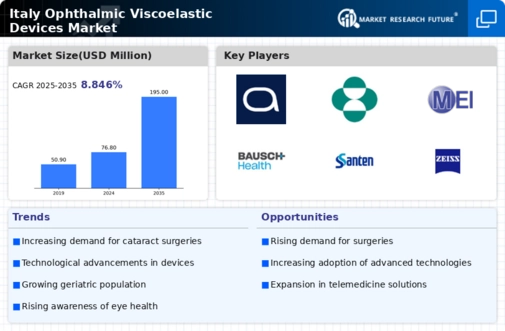
The Italy ophthalmic viscoelastic devices market is experiencing a notable transformation due to rapid technological advancements. Innovations in viscoelastic materials, such as the development of cohesive and dispersive viscoelastics, enhance surgical outcomes and patient safety. These advancements allow for better control during cataract surgeries and other ophthalmic procedures, leading to reduced complications. Furthermore, the integration of smart technologies, such as real-time monitoring systems, is becoming increasingly prevalent. This trend is supported by the Italian government's initiatives to promote research and development in the medical device sector, which aims to bolster the competitiveness of local manufacturers. As a result, the market is projected to grow at a compound annual growth rate (CAGR) of approximately 5% over the next five years, reflecting the positive impact of these technological innovations.
Rising Awareness Among Surgeons
There is a growing awareness among surgeons regarding the benefits of using advanced viscoelastic devices in ophthalmic procedures within the Italy ophthalmic viscoelastic devices market. Educational initiatives and training programs organized by professional associations have significantly contributed to this trend. Surgeons are increasingly recognizing the advantages of using high-quality viscoelastics, such as improved visibility during surgery and reduced postoperative complications. This heightened awareness is reflected in the increasing adoption rates of these devices in surgical practices across Italy. Furthermore, the collaboration between manufacturers and healthcare professionals to disseminate knowledge about the latest advancements in viscoelastic technology is likely to enhance the overall quality of care provided to patients. Consequently, this trend is expected to drive market growth as more surgeons opt for innovative solutions that improve surgical outcomes.
Increased Investment in Healthcare Infrastructure
The Italian government's commitment to enhancing healthcare infrastructure is a pivotal driver for the ophthalmic viscoelastic devices market. Recent investments aimed at modernizing hospitals and surgical centers have created a conducive environment for the adoption of advanced medical technologies. This focus on infrastructure improvement is particularly relevant for ophthalmic surgery, where the integration of state-of-the-art equipment and devices is essential for optimal patient outcomes. Additionally, public and private partnerships are emerging to facilitate the development and distribution of innovative viscoelastic products. As a result, the market is likely to witness increased accessibility to high-quality ophthalmic devices, ultimately benefiting both healthcare providers and patients. The ongoing investment in healthcare infrastructure is expected to propel the growth of the ophthalmic viscoelastic devices market in Italy, as it aligns with the broader goals of improving healthcare delivery and patient care.