×
Request Free Sample ×

Kindly complete the form below to receive a free sample of this Report

* Please use a valid business email

Leading companies partner with us for data-driven Insights

clients tt-cursor
Hero Background

Italy Medical Carts Market

ID: MRFR/MED/48718-HCR
200 Pages
Rahul Gotadki
February 2026

Italy Medical Carts Market Research Report: Size, Share, Trend Analysis By Types (Medication Carts, Emergency Carts, Anesthesia Carts, Procedure Carts), By Material (Metal, Plastic, Wood), By Configuration (Mobile Carts, Wall-Mounted Carts, Stationary Carts) and By End Use (Hospitals, Nursing Homes, Ambulatory Surgical Centers, Home Healthcare) - Growth Outlook & Industry Forecast 2025 To 2035

Share:
Download PDF ×

We do not share your information with anyone. However, we may send you emails based on your report interest from time to time. You may contact us at any time to opt-out.

Italy Medical Carts Market Infographic
Purchase Options

Italy Medical Carts Market Summary

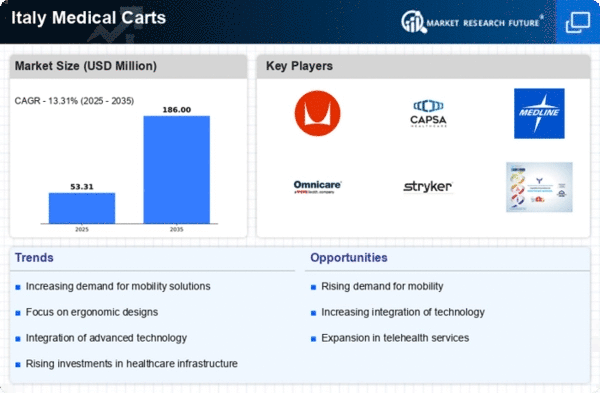
As per Market Research Future analysis, the Italy Medical Carts Market size was estimated at 47.05 USD Million in 2024. The Medical Carts market is projected to grow from 53.31 USD Million in 2025 to 186.0 USD Million by 2035, exhibiting a compound annual growth rate (CAGR) of 13.3% during the forecast period 2025 - 2035

Key Market Trends & Highlights

The Italy medical carts market is experiencing a dynamic shift towards customization and technological integration.

  • The market shows an increased demand for customization, reflecting the diverse needs of healthcare facilities.
  • There is a notable focus on ergonomics and mobility, enhancing user experience and operational efficiency.
  • Integration of smart technology is becoming prevalent, indicating a trend towards more connected healthcare solutions.
  • Key market drivers include rising healthcare expenditure and the aging population, which are fueling demand for mobile healthcare solutions.

Market Size & Forecast

2024 Market Size 47.05 (USD Million)
2035 Market Size 186.0 (USD Million)
CAGR (2025 - 2035) 13.31%

Major Players

Herman Miller (US), Capsa Healthcare (US), Medline Industries (US), Omnicare (US), Stryker Corporation (US), TBS Healthcare (GB), Advantech (TW), AFC Industries (US), Paramount Bed (JP)

Our Impact
Enabled $4.3B Revenue Impact for Fortune 500 and Leading Multinationals
Partnering with 2000+ Global Organizations Each Year
30K+ Citations by Top-Tier Firms in the Industry

Italy Medical Carts Market Trends

The Italy Medical Carts Market in Italy is currently experiencing a notable evolution, driven by advancements in healthcare technology and an increasing emphasis on efficient patient care. The integration of innovative designs and materials into medical carts enhances their functionality, making them indispensable in various healthcare settings. Hospitals and clinics are increasingly adopting these carts to streamline workflows, improve organization, and ensure that medical professionals have immediate access to essential tools and supplies. This trend reflects a broader movement towards optimizing healthcare delivery through improved equipment and infrastructure. Moreover, the growing focus on infection control and safety protocols is influencing the design and usage of medical carts. Manufacturers are prioritizing features such as easy-to-clean surfaces and antimicrobial materials to meet the demands of modern healthcare environments. As the healthcare landscape continues to evolve, the medical carts market is likely to adapt, incorporating new technologies and responding to the changing needs of healthcare providers. This adaptability may lead to further innovations, enhancing the overall efficiency and effectiveness of medical services in Italy.

Increased Demand for Customization

There is a rising trend towards customization in the medical carts market, as healthcare facilities seek solutions tailored to their specific needs. This demand for personalized carts allows for better integration into existing workflows, enhancing efficiency and user satisfaction.

Focus on Ergonomics and Mobility

The emphasis on ergonomics and mobility is becoming increasingly prominent in the medical carts market. Healthcare providers are recognizing the importance of user-friendly designs that facilitate ease of movement and reduce physical strain on staff, thereby improving overall productivity.

Integration of Smart Technology

The integration of smart technology into medical carts is gaining traction, with features such as electronic health record access and inventory management systems. This trend reflects a broader shift towards digital solutions in healthcare, aiming to enhance patient care and operational efficiency.

Italy Medical Carts Market Drivers

Focus on Infection Control

Infection control remains a critical concern in healthcare settings, particularly in Italy, where hospitals are implementing stringent protocols to minimize hospital-acquired infections. Medical carts are being designed with materials and features that facilitate easy cleaning and disinfection. This focus on infection control is likely to drive the demand for specialized medical carts that meet these requirements. As healthcare facilities prioritize patient safety and compliance with health regulations, the medical carts market is expected to grow. The introduction of antimicrobial surfaces and modular designs in medical carts may further enhance their appeal, aligning with the industry's commitment to improving hygiene standards.

Rising Healthcare Expenditure

The medical carts market in Italy is experiencing growth driven by increasing healthcare expenditure. The Italian government has been investing heavily in healthcare infrastructure, with a reported increase of approximately 5% in healthcare budgets over the past year. This investment is likely to enhance the procurement of advanced medical equipment, including medical carts, which are essential for efficient patient care. As hospitals and clinics upgrade their facilities, the demand for high-quality medical carts is expected to rise. Furthermore, the emphasis on improving patient outcomes and operational efficiency in healthcare settings suggests that the medical carts market will continue to expand as healthcare providers seek to optimize their resources.

Aging Population and Chronic Diseases

Italy's demographic trends indicate a significant increase in the aging population, which is projected to reach 35% of the total population by 2030. This demographic shift is likely to lead to a higher prevalence of chronic diseases, necessitating more efficient healthcare delivery systems. Medical carts play a crucial role in facilitating patient care in hospitals and long-term care facilities. The growing need for mobility and accessibility in healthcare settings suggests that the medical carts market will benefit from this trend. As healthcare providers adapt to the needs of an aging population, the demand for specialized medical carts designed for elderly care is expected to rise, further driving market growth.

Technological Advancements in Healthcare

The medical carts market is being propelled by rapid technological advancements in healthcare. Innovations such as integrated electronic health records (EHR) systems and telemedicine capabilities are becoming increasingly prevalent in medical carts. In Italy, hospitals are investing in smart medical carts that enhance workflow efficiency and improve patient care. The integration of technology into medical carts is expected to increase their functionality, making them indispensable in modern healthcare settings. As healthcare facilities continue to adopt these advanced solutions, the medical carts market is likely to see a surge in demand, reflecting the broader trend of digital transformation in healthcare.

Increased Demand for Mobile Healthcare Solutions

The trend towards mobile healthcare solutions is gaining traction in Italy, driven by the need for flexibility and efficiency in patient care. Medical carts are increasingly being utilized in various healthcare settings, including outpatient clinics and home healthcare services. The convenience of mobile medical carts allows healthcare professionals to provide care directly at the patient's location, improving accessibility and patient satisfaction. As the healthcare landscape evolves, the medical carts market is likely to expand in response to this demand for mobility. The integration of features such as battery-powered systems and lightweight designs may further enhance the functionality of medical carts, making them a preferred choice for healthcare providers.


Market Segment Insights

By Type: Medication Carts (Largest) vs. Emergency Carts (Fastest-Growing)

In the Italy medical carts market, Medication Carts hold the largest share, primarily due to their essential role in pharmacy management and medication delivery within healthcare facilities. Emergency Carts closely follow, exhibiting rapid growth as healthcare systems increasingly prioritize preparedness for emergency situations. This shift underscores the importance of timely access to medical supplies in critical care environments. The growth trends in this segment are driven by several factors, including advancements in cart design, the integration of technology in healthcare, and an increased focus on patient safety and efficient workflow. As hospitals invest in modern infrastructure and enhance emergency response protocols, the demand for both Medication Carts and Emergency Carts continues to rise, reflecting a dynamic and evolving healthcare landscape.

Medication Carts: Dominant vs. Emergency Carts: Emerging

Medication Carts are characterized by their comprehensive storage options and organization for medications, ensuring healthcare providers can efficiently dispense and manage medications to patients. These carts often come equipped with advanced locking mechanisms and are designed for ease of mobility, catering to the fast-paced hospital environment. In contrast, Emergency Carts serve an emerging role, specifically tailored for immediate and critical care situations, packed with essential supplies and medications needed in emergencies. Their design focuses on rapid access and organization to streamline the response time during critical patient care, marking them as a crucial element of modern healthcare facilities.

By Material: Metal (Largest) vs. Plastic (Fastest-Growing)

In the Italy medical carts market, the distribution of market share among different materials indicates that metal is the most prominent choice, favored for its durability and strength. This material captures a significant portion of the market, making it essential for stable and sturdy medical carts. In contrast, plastic is rapidly gaining traction, driven by its lightweight properties and cost-effectiveness, appealing to healthcare providers looking for mobility and ease in handling. The growth trends within this segment reveal an increasing preference for plastic due to its versatility and ease of cleaning, especially in sterile environments. As healthcare facilities aim to improve efficiency and adaptability, the demand for metal carts remains robust but faces competition from the emergent popularity of plastic variants, which cater to modern healthcare needs and budgeting constraints.

Metal: Dominant vs. Plastic: Emerging

Metal medical carts are recognized for their superior strength and longevity, making them a dominant choice in the market. Their resistance to wear and tear ensures they remain a reliable option in high-demand settings, such as hospitals and clinics. Plastic carts, on the other hand, are emerging due to their lightweight nature and cost advantages. They are increasingly preferred in settings where mobility is crucial, enabling healthcare workers to transport equipment efficiently. These carts also have the advantage of easy maintenance and cleaning, which is vital in maintaining hygiene within healthcare environments. As such, while metal carts continue to dominate, plastic options are carving out a significant niche, driven by evolving market needs.

By Configuration: Mobile Carts (Largest) vs. Wall-Mounted Carts (Fastest-Growing)

In the Italy medical carts market, the mobile carts segment holds the largest share, demonstrating strong demand across various healthcare settings. Wall-mounted carts are rapidly gaining traction, particularly in environments with limited space, showcasing a significant increase in their market presence and utilisation. The growth of mobile carts is driven by the rising need for mobility and flexibility in healthcare operations. Meanwhile, wall-mounted carts are seeing growth due to the increasing focus on optimizing facility space and enhancing accessibility. The emphasis on improving patient care efficiency has further propelled the adoption of both configurations in hospitals and clinics.

Mobile Carts (Dominant) vs. Wall-Mounted Carts (Emerging)

Mobile carts are recognized as the dominant configuration in the Italy medical carts market, offering versatility and ease of movement for healthcare professionals. These carts are commonly equipped with storage for medical supplies and integrated technology, facilitating quick access and responsiveness in patient care. Conversely, wall-mounted carts are emerging as a practical solution for space-constrained environments, providing stationary support while still being mobile enough to meet various operational needs. As healthcare facilities continue to prioritize efficiency and patient outcomes, both configurations are likely to evolve, with mobile carts maintaining their stronghold and wall-mounted varieties establishing a more prominent presence.

By End Use: Hospitals (Largest) vs. Nursing Homes (Fastest-Growing)

In the Italy medical carts market, hospitals constitute the largest segment, commanding a significant share due to their extensive healthcare infrastructure and high demand for efficient patient management solutions. Nursing homes, while smaller in market share, are rapidly gaining traction as the aging population drives the need for improved care standards and mobility solutions for elderly patients. Growth trends indicate a robust expansion in nursing homes as they adopt advanced medical carts for better operational efficiency and patient care. This sector is driven by increasing government initiatives supporting elderly care and a rising focus on personalized healthcare services. Additionally, ambulatory surgical centers are also witnessing growth as outpatient care becomes more prevalent, responding to the need for streamlined procedures and improved patient outcomes.

Hospitals (Dominant) vs. Ambulatory Surgical Centers (Emerging)

Hospitals represent a dominant force in the Italy medical carts market, characterized by their vast networks and diverse patient needs, driving sustained demand for various types of medical carts. Their infrastructure necessitates advanced mobility solutions to enhance workflow efficiency and patient care. Conversely, ambulatory surgical centers, though categorized as emerging, show significant promise due to the shift towards outpatient procedures, offering minimally invasive surgeries that require specialized medical carts. The rising preference for such centers is supported by economic factors and patient convenience, highlighting the evolution of healthcare delivery in Italy. Investments in mobile medical equipment within these centers are escalating as they seek to enhance operational effectiveness and patient satisfaction.

Get more detailed insights about Italy Medical Carts Market

Key Players and Competitive Insights

The medical carts market in Italy exhibits a dynamic competitive landscape characterized by innovation and strategic partnerships. Key players such as Herman Miller (US), Capsa Healthcare (US), and Stryker Corporation (US) are actively shaping the market through their distinct operational focuses. Herman Miller (US) emphasizes ergonomic design and user-centric solutions, while Capsa Healthcare (US) concentrates on integrating advanced technology into their products. Stryker Corporation (US) is known for its robust portfolio and commitment to enhancing patient care through innovative medical solutions. Collectively, these strategies foster a competitive environment that prioritizes quality, efficiency, and technological advancement.
In terms of business tactics, companies are increasingly localizing manufacturing to enhance supply chain efficiency and reduce lead times. The market structure appears moderately fragmented, with several players vying for market share. This fragmentation allows for diverse offerings, yet the influence of major companies remains significant, as they set benchmarks for quality and innovation that smaller firms strive to meet.
In October 2025, Stryker Corporation (US) announced a strategic partnership with a leading Italian healthcare provider to co-develop next-generation medical carts tailored for the European market. This collaboration is poised to enhance Stryker's market penetration in Italy, leveraging local insights to create products that meet specific regional needs. Such partnerships are indicative of a broader trend where companies seek to align closely with healthcare providers to ensure their offerings are relevant and effective.
In September 2025, Capsa Healthcare (US) launched a new line of smart medical carts equipped with IoT capabilities, aimed at improving workflow efficiency in hospitals. This innovation not only positions Capsa as a leader in technological integration but also reflects a growing demand for smart solutions in healthcare settings. The introduction of IoT-enabled carts may significantly enhance data management and patient care, aligning with the industry's shift towards digitalization.
In August 2025, Herman Miller (US) expanded its product line to include sustainable medical carts made from recycled materials. This move underscores the increasing importance of sustainability in the healthcare sector, as organizations seek to reduce their environmental footprint. Herman Miller's commitment to eco-friendly practices may resonate well with healthcare institutions prioritizing sustainability, thereby enhancing its competitive edge.
As of November 2025, the competitive trends in the medical carts market are increasingly defined by digitalization, sustainability, and the integration of AI technologies. Strategic alliances are becoming more prevalent, as companies recognize the value of collaboration in driving innovation. The competitive landscape is likely to evolve from traditional price-based competition towards a focus on technological advancements and supply chain reliability. This shift suggests that companies that prioritize innovation and sustainability will be better positioned to differentiate themselves in the market.

Key Companies in the Italy Medical Carts Market include

Industry Developments

The Italy Medical Carts Market has undergone several noteworthy developments recently. Nexnord and Ergotron have been popular players, focusing on innovative designs and enhanced functionalities suited for healthcare facilities. In July 2023, Global Care Solutions announced a strategic partnership with Medline Industries to enhance its distribution network in Italy. There have been visible growth trends, with a reported increase in market valuation driven by the rising demand for efficient healthcare solutions. Furthermore, in August 2022, Blickman and Harloff expanded their operations into the Italian market, thereby increasing local production capabilities.

The market has also seen an uptick in Research and Development investments, particularly among Jaco Products and Clarus Medical, enhancing the ergonomic features of medical carts. No recent mergers or acquisitions involving the specified companies have been publicly disclosed through reliable sources. However, the market overall has benefited from technological advancements and improved healthcare infrastructure investment from the Italian government, particularly post-COVID-19, which has intensified the focus on medical technology efficiency.


Future Outlook

Italy Medical Carts Market Future Outlook

The Medical Carts Market in Italy is projected to grow at a 13.31% CAGR from 2025 to 2035, driven by technological advancements and increasing healthcare demands.

New opportunities lie in:

  • Integration of telehealth capabilities in medical carts
  • Development of customizable modular cart systems
  • Expansion into home healthcare delivery solutions

By 2035, the medical carts market is expected to achieve substantial growth and innovation.

Market Segmentation

Italy Medical Carts Market Type Outlook

  • Medication Carts
  • Emergency Carts
  • Anesthesia Carts
  • Procedure Carts

Italy Medical Carts Market End Use Outlook

  • Hospitals
  • Nursing Homes
  • Ambulatory Surgical Centers
  • Home Healthcare

Italy Medical Carts Market Material Outlook

  • Metal
  • Plastic
  • Wood

Italy Medical Carts Market Configuration Outlook

  • Mobile Carts
  • Wall-Mounted Carts
  • Stationary Carts

Report Scope

MARKET SIZE 2024 47.05(USD Million)
MARKET SIZE 2025 53.31(USD Million)
MARKET SIZE 2035 186.0(USD Million)
COMPOUND ANNUAL GROWTH RATE (CAGR) 13.31% (2025 - 2035)
REPORT COVERAGE Revenue Forecast, Competitive Landscape, Growth Factors, and Trends
BASE YEAR 2024
Market Forecast Period 2025 - 2035
Historical Data 2019 - 2024
Market Forecast Units USD Million
Key Companies Profiled Herman Miller (US), Capsa Healthcare (US), Medline Industries (US), Omnicare (US), Stryker Corporation (US), TBS Healthcare (GB), Advantech (TW), AFC Industries (US), Paramount Bed (JP)
Segments Covered Type, Material, Configuration, End Use
Key Market Opportunities Integration of advanced telehealth solutions in the medical carts market enhances patient care and operational efficiency.
Key Market Dynamics Rising demand for advanced medical carts driven by technological innovations and evolving healthcare delivery models in Italy.
Countries Covered Italy
Leave a Comment

FAQs

What is the expected market size of the Italy Medical Carts Market in 2024?

The Italy Medical Carts Market is expected to be valued at 86.5 million USD in 2024.

What is the projected market size for the Italy Medical Carts Market by 2035?

By 2035, the Italy Medical Carts Market is projected to reach a value of 145.5 million USD.

What is the expected CAGR for the Italy Medical Carts Market from 2025 to 2035?

The expected CAGR for the Italy Medical Carts Market from 2025 to 2035 is 4.841%.

Which type of medical cart holds the highest value in 2024?

In 2024, Medication Carts hold the highest value at 34.6 million USD within the Italy Medical Carts Market.

What is the market size for Emergency Carts in 2024?

The market size for Emergency Carts in 2024 is valued at 22.0 million USD.

Who are the major players in the Italy Medical Carts Market?

Major players include Nexnord, Global Care Solutions, Blickman, and Medline Industries, among others.

What is the projected market value of Anesthesia Carts by 2035?

By 2035, the projected market value of Anesthesia Carts is 27.5 million USD.

What challenges does the Italy Medical Carts Market face?

The market faces challenges such as competition and the need for technological advancements.

What is the expected market size for Procedure Carts in 2035?

The expected market size for Procedure Carts in 2035 is 22.2 million USD.

What growth trends are anticipated in the Italy Medical Carts Market?

The market is anticipated to grow due to increasing demand for efficient healthcare delivery and advancements in cart technology.

Download Free Sample

Kindly complete the form below to receive a free sample of this Report

Compare Licence

×
Features License Type
Single User Multiuser License Enterprise User
Price $4,950 $5,950 $7,250
Maximum User Access Limit 1 User Upto 10 Users Unrestricted Access Throughout the Organization
Free Customization
Direct Access to Analyst
Deliverable Format
Platform Access
Discount on Next Purchase 10% 15% 15%
Printable Versions