Increasing Awareness of Fertility Issues
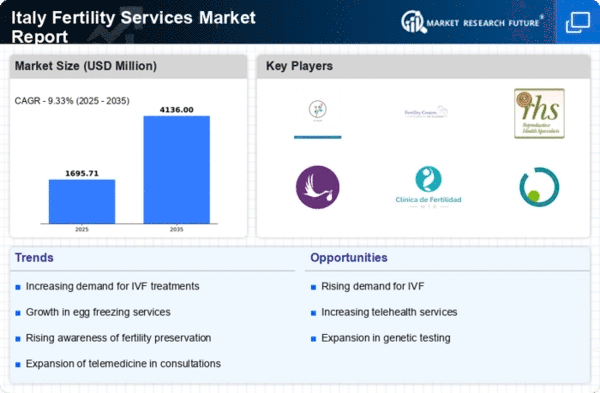
The growing awareness of fertility issues among the population in Italy appears to be a significant driver for the fertility services market. Educational campaigns and media coverage have contributed to a heightened understanding of reproductive health, leading to more individuals seeking assistance. According to recent data, approximately 15% of couples in Italy experience infertility, which has prompted a surge in demand for fertility services. This awareness is not only fostering a proactive approach to reproductive health but also encouraging discussions around fertility treatments, thereby expanding the market. As more people recognize the importance of addressing fertility challenges, the fertility services market is likely to see continued growth, with an increasing number of clinics and specialists emerging to meet this demand.
Changing Societal Norms and Family Planning
Changing societal norms regarding family planning are influencing the fertility services market in Italy. With an increasing number of individuals prioritizing career and personal development before starting families, there is a noticeable shift in the age of first-time parents. The average age of women giving birth in Italy has risen to approximately 31 years, leading to a growing demand for fertility services. As couples delay childbearing, they may encounter fertility challenges, prompting them to seek assistance. This trend suggests that the fertility services market is likely to expand as more individuals and couples recognize the need for support in achieving their family planning goals.
Increased Accessibility to Fertility Treatments
Increased accessibility to fertility treatments is a notable driver of the fertility services market in Italy. The expansion of private clinics and the availability of financing options has made fertility services more attainable for a broader demographic. Recent data suggests that the number of fertility clinics in Italy has increased by approximately 20% over the past five years, indicating a growing market. Additionally, government initiatives aimed at subsidizing fertility treatments for eligible couples are further enhancing accessibility. As more individuals and couples find it feasible to pursue fertility treatments, the fertility services market is poised for continued growth, reflecting a shift towards more inclusive reproductive health care.
Rising Incidence of Lifestyle-Related Infertility
The rising incidence of lifestyle-related infertility is a critical driver for the fertility services market in Italy. Factors such as obesity, smoking, and sedentary lifestyles are increasingly linked to fertility issues. Recent studies indicate that around 30% of infertility cases in Italy are attributed to lifestyle choices, which has led to a growing awareness of the need for lifestyle modifications. As individuals become more health-conscious, there is a corresponding increase in the demand for fertility services that address these issues. Clinics are now offering comprehensive programs that include lifestyle counseling, nutrition advice, and medical interventions, thereby expanding the scope of the fertility services market.
Technological Advancements in Reproductive Medicine
Technological advancements in reproductive medicine are transforming the landscape of the fertility services market in Italy. Innovations such as in vitro fertilization (IVF) techniques, preimplantation genetic testing, and cryopreservation have enhanced success rates and patient experiences. Data indicates that the success rate of IVF in Italy has improved to around 40% for women under 35, which is encouraging more couples to pursue these options. Furthermore, the integration of artificial intelligence in treatment planning and patient management is streamlining processes and improving outcomes. As these technologies continue to evolve, they are likely to attract more patients to fertility clinics, thereby driving growth in the fertility services market.