×
Request Free Sample ×

Kindly complete the form below to receive a free sample of this Report

* Please use a valid business email

Leading companies partner with us for data-driven Insights

clients tt-cursor
Hero Background

Italy Dyslexia Treatment Market

ID: MRFR/HC/51380-HCR
200 Pages
Rahul Gotadki
February 2026

Italy Dyslexia Treatment Market Research Report By Type (Phonological Dyslexia, Surface Dyslexia, Others), By Treatment & Diagnosis (Medications, Tools, DIAGNOSIS) and By End Users (Specialty Center, Home Care, Hospitals & Clinics, Others) - Growth & Industry Forecast 2025 To 2035

Share:
Download PDF ×

We do not share your information with anyone. However, we may send you emails based on your report interest from time to time. You may contact us at any time to opt-out.

Italy Dyslexia Treatment Market Infographic
Purchase Options

Italy Dyslexia Treatment Market Summary

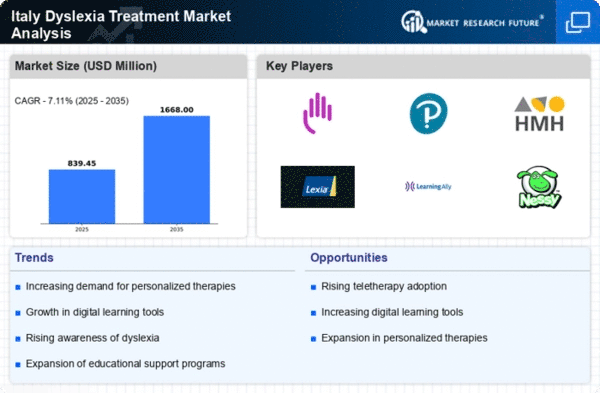
As per Market Research Future analysis, the Italy dyslexia treatment market Size was estimated at 783.73 USD Million in 2024. The Italy dyslexia treatment market is projected to grow from 839.45 USD Million in 2025 to 1668.0 USD Million by 2035, exhibiting a compound annual growth rate (CAGR) of 7.1% during the forecast period 2025 - 2035

Key Market Trends & Highlights

The Italy dyslexia treatment market is experiencing a transformative shift driven by awareness, technology, and policy support.

  • Increased awareness and advocacy for dyslexia treatment are fostering a more supportive environment for affected individuals.
  • Technological integration in treatment methods is enhancing the effectiveness and accessibility of dyslexia interventions.
  • Policy support and educational reforms are paving the way for improved resources and training for educators and healthcare providers.
  • The rising prevalence of dyslexia and government funding initiatives are key drivers propelling market growth.

Market Size & Forecast

2024 Market Size 783.73 (USD Million)
2035 Market Size 1668.0 (USD Million)
CAGR (2025 - 2035) 7.11%

Major Players

Bristol-Myers Squibb (US), Pearson (GB), Houghton Mifflin Harcourt (US), Lexia Learning (US), Learning Ally (US), Nessy (GB), Dyslexia Gold (GB), MindPlay (US)

Our Impact
Enabled $4.3B Revenue Impact for Fortune 500 and Leading Multinationals
Partnering with 2000+ Global Organizations Each Year
30K+ Citations by Top-Tier Firms in the Industry

Italy Dyslexia Treatment Market Trends

The dyslexia treatment market in Italy is currently experiencing notable developments, driven by an increasing awareness of learning disabilities and the need for effective interventions. Educational institutions and healthcare providers are increasingly recognizing the importance of early diagnosis and tailored treatment plans. This shift is likely to enhance the accessibility of specialized resources, thereby improving outcomes for individuals with dyslexia. Furthermore, advancements in technology, such as digital learning tools and applications, are becoming integral to treatment strategies, offering personalized support to learners. In addition, the Italian government has been proactive in implementing policies aimed at supporting individuals with dyslexia. Legislative measures have been introduced to ensure that educational frameworks accommodate diverse learning needs. This commitment to inclusivity may foster a more supportive environment for those affected by dyslexia, potentially leading to a rise in demand for specialized services and products within the dyslexia treatment market. As awareness continues to grow, stakeholders are likely to explore innovative solutions to address the challenges faced by individuals with dyslexia, paving the way for a more comprehensive approach to treatment and support.

Increased Awareness and Advocacy

There is a growing recognition of dyslexia as a significant learning challenge, leading to enhanced advocacy efforts. Organizations and support groups are actively promoting awareness campaigns, which may contribute to a more informed public. This heightened awareness could result in increased demand for specialized treatment options.

Technological Integration in Treatment

The incorporation of technology into treatment methodologies is becoming more prevalent. Digital tools and applications designed for dyslexia support are gaining traction, offering personalized learning experiences. This trend suggests a shift towards more interactive and engaging treatment approaches.

Policy Support and Educational Reforms

Recent legislative initiatives in Italy aim to improve educational frameworks for students with dyslexia. These reforms are likely to enhance access to resources and support services, indicating a commitment to fostering inclusive educational environments.

Italy Dyslexia Treatment Market Drivers

Rising Prevalence of Dyslexia

The increasing prevalence of dyslexia in Italy is a crucial driver for the dyslexia treatment market. Recent studies indicate that approximately 5-10% of the population may be affected by dyslexia, leading to a growing demand for effective treatment solutions. This rise in prevalence necessitates the development of specialized educational programs and therapeutic interventions tailored to individuals with dyslexia. As awareness of dyslexia expands, parents and educators are more likely to seek professional help, thereby propelling the market forward. The dyslexia treatment market is likely to experience significant growth as more individuals are diagnosed and treated, creating opportunities for innovative therapies and educational resources.

Government Funding Initiatives

Government funding initiatives aimed at supporting dyslexia treatment programs play a pivotal role in the dyslexia treatment market. In Italy, various regional and national programs have been established to allocate financial resources for the development of specialized educational materials and training for educators. These initiatives not only enhance the quality of treatment available but also increase accessibility for families seeking assistance. For instance, funding for public awareness campaigns and training workshops for teachers can lead to improved identification and support for dyslexic students. As a result, the dyslexia treatment market is likely to benefit from increased investment and resources, fostering a more supportive environment for affected individuals.

Increased Parental Involvement

Increased parental involvement in the educational journey of children with dyslexia is a significant driver for the dyslexia treatment market. Parents are becoming more proactive in seeking resources and support for their children, often advocating for tailored educational plans and interventions. This trend is evident in Italy, where parent-led organizations are emerging to provide information and support networks for families affected by dyslexia. As parents become more informed about the condition, they are more likely to invest in specialized treatments and educational resources. Consequently, the dyslexia treatment market is likely to see growth as families prioritize effective solutions for their children's learning needs.

Advancements in Educational Technology

Advancements in educational technology are transforming the landscape of the dyslexia treatment market. Innovative tools such as interactive software, mobile applications, and online learning platforms are being developed to assist individuals with dyslexia in overcoming their challenges. These technologies provide personalized learning experiences, enabling users to progress at their own pace. In Italy, the integration of such technologies into educational settings is becoming more prevalent, as schools recognize their potential to enhance learning outcomes. The dyslexia treatment market is expected to expand as educational institutions increasingly adopt these tools, leading to improved engagement and success rates among dyslexic students.

Collaboration Between Educational Institutions and Healthcare Providers

Collaboration between educational institutions and healthcare providers is fostering a more integrated approach to dyslexia treatment in Italy. This partnership allows for a comprehensive understanding of dyslexia, combining educational strategies with medical insights. Schools are increasingly working with psychologists and speech therapists to develop individualized treatment plans that address both academic and emotional needs. Such collaboration enhances the effectiveness of interventions and ensures that students receive holistic support. The dyslexia treatment market stands to benefit from this synergy, as it leads to improved outcomes for students and a greater demand for specialized services.


Market Segment Insights

By Type: Phonological Dyslexia (Largest) vs. Surface Dyslexia (Fastest-Growing)

The type segment in the Italy dyslexia treatment market is primarily dominated by phonological dyslexia, which holds the largest market share owing to its widespread prevalence among children. Surface dyslexia, while not as large in market share, is gaining traction rapidly due to increasing awareness and improved diagnostic tools. Other forms of dyslexia contribute to the market but are relatively minor in comparison, leading to an overall diverse landscape within the segment. Growth trends in this segment are significantly influenced by the rising identification rates of various types of dyslexia and advancements in treatment methodologies. Phonological dyslexia continues to receive focused attention from educators and healthcare providers, contributing to its dominance. In contrast, surface dyslexia is emerging rapidly, fueled by innovative therapeutic approaches and a broader understanding of dyslexia's complexities, further driving market growth.

Phonological Dyslexia (Dominant) vs. Surface Dyslexia (Emerging)

Phonological dyslexia is characterized by difficulties in processing the sounds of words, making it the most prevalent form treated in the Italy dyslexia treatment market. Its dominant position stems from both its high incidence rate and the established treatment protocols that cater to these individuals. On the other hand, surface dyslexia, which affects the ability to recognize familiar words quickly and accurately, is gaining momentum as a significant emerging segment. This increase is driven by more tailored intervention strategies and unique educational resources aimed specifically at this type, broadening the scope of treatment options available and enhancing the overall therapeutic landscape.

By Treatment & Diagnosis: Treatment (Largest) vs. Diagnosis (Fastest-Growing)

The market distribution within the Italy dyslexia treatment market shows that treatment options hold a predominant share, emphasizing the reliance on therapeutic approaches. Meanwhile, diagnosis tools and methodologies are rapidly gaining traction, driven by the increasing recognition of dyslexia as a critical learning disorder, which is expanding the diagnostic market’s foothold significantly. Growth trends indicate that the treatment segment remains robust, largely due to ongoing advancements in personalized therapy and educational support programs. Conversely, the diagnosis segment is witnessing accelerated growth, propelled by advancements in technology and increased funding for educational assessments, signaling a shift towards enhanced early detection and intervention strategies in the Italy dyslexia treatment market.

Treatment: Therapeutic Approaches (Dominant) vs. Diagnostic Tools (Emerging)

Therapeutic approaches dominate the market, providing an array of programs designed to address dyslexia through specialized teaching methods and engaged learning. These approaches are characterized by personalized education plans and are often tailored to suit individual learning needs. On the other hand, diagnostic tools represent an emerging market segment that is gaining prominence. These tools are becoming more sophisticated, incorporating digital assessments and integrated software that facilitate early diagnosis. As awareness about dyslexia increases among educators and parents, the demand for both therapeutic and diagnostic resources is expected to grow, leading to a more informed approach to managing dyslexia.

By End User: Specialty Center (Largest) vs. Home Care (Fastest-Growing)

In the Italy dyslexia treatment market, the segment distribution reveals a notable dominance of Specialty Centers, which cater specifically to individuals with dyslexia, ensuring specialized care and attention. Hospitals & Clinics also hold a significant share, providing essential services and treatment options. Meanwhile, Home Care is emerging rapidly, driven by the increasing preferences for personalized and at-home therapeutic solutions. The Others category, while smaller, includes alternative therapies and community programs that support dyslexia management. Growth trends within this segment are influenced by rising awareness about dyslexia, increasing diagnostic capabilities, and a growing acceptance of tailored treatment methodologies. Home Care is particularly gaining traction, propelled by technological advancements facilitating remote monitoring and support. In contrast, Satellite Centers and Hospitals continue to enhance their offerings, integrating multidisciplinary approaches to provide comprehensive treatment options. Overall, the drive for more accessible and specialized dyslexia care is reshaping the landscape of this segment.

Specialty Center (Dominant) vs. Home Care (Emerging)

The Specialty Center segment is characterized by its focus on providing expert care tailored to individuals diagnosed with dyslexia. These centers typically employ a range of specialists, including psychologists, speech therapists, and educators, ensuring holistic treatment that addresses various aspects of dyslexia. The approach in these centers is systemic, often leading to better long-term outcomes for patients. On the other hand, the Home Care segment is becoming increasingly important as families look for flexible and convenient treatment options that can be administered in the comfort of their homes. This emerging segment is supported by technological innovations such as teletherapy tools and adaptive learning applications, enabling personalized interventions while fostering independence among patients. The differing characteristics of these segments illustrate a broader trend toward diversification in dyslexia treatment options.

Get more detailed insights about Italy Dyslexia Treatment Market

Key Players and Competitive Insights

The dyslexia treatment market in Italy is characterized by a dynamic competitive landscape, driven by increasing awareness of learning disabilities and the demand for effective educational tools. Key players such as Bristol-Myers Squibb (US), Pearson (GB), and Lexia Learning (US) are strategically positioned to leverage innovation and digital transformation. Bristol-Myers Squibb (US) focuses on developing pharmacological solutions, while Pearson (GB) emphasizes educational resources and assessment tools. Lexia Learning (US) is dedicated to providing personalized learning experiences through technology. Collectively, these strategies foster a competitive environment that prioritizes tailored solutions and technological advancements.In terms of business tactics, companies are increasingly localizing their operations to better serve the Italian market. This includes optimizing supply chains and enhancing distribution networks to ensure timely access to products. The market structure appears moderately fragmented, with several players competing for market share. However, the influence of major companies is significant, as they set industry standards and drive innovation through their extensive resources and expertise.

In October Pearson (GB) announced a partnership with local educational institutions to develop customized dyslexia intervention programs. This strategic move is likely to enhance Pearson's market presence in Italy, allowing the company to tailor its offerings to meet the specific needs of Italian students. By collaborating with educators, Pearson aims to create a more effective learning environment, which could lead to improved educational outcomes and increased customer loyalty.

In September Lexia Learning (US) launched a new digital platform designed to support dyslexic learners through adaptive learning technologies. This initiative reflects a growing trend towards digitalization in education, as Lexia seeks to provide personalized learning experiences that cater to individual student needs. The platform's launch is expected to strengthen Lexia's competitive position by offering innovative solutions that enhance learning engagement and effectiveness.

In August Bristol-Myers Squibb (US) expanded its research initiatives focused on pharmacological treatments for dyslexia. This expansion indicates a commitment to exploring new therapeutic avenues, potentially leading to breakthroughs in treatment options. By investing in research and development, Bristol-Myers Squibb aims to differentiate itself in a market that increasingly values evidence-based solutions.

As of November current trends in the dyslexia treatment market include a strong emphasis on digitalization, sustainability, and the integration of artificial intelligence (AI) into educational tools. Strategic alliances are becoming more prevalent, as companies recognize the value of collaboration in enhancing product offerings and market reach. Looking ahead, competitive differentiation is likely to evolve from traditional price-based strategies to a focus on innovation, technology, and the reliability of supply chains. This shift suggests that companies that prioritize these aspects will be better positioned to thrive in an increasingly competitive landscape.

Key Companies in the Italy Dyslexia Treatment Market include

Industry Developments

The Italy Dyslexia Treatment Market has experienced notable developments in recent months, spotlighting the significance of tailored educational solutions. Lexia Learning and Houghton Mifflin Harcourt have been actively expanding their digital literacy programs in Italy, aiming to address the specific needs of students with dyslexia. In August 2023, the International Dyslexia Association expanded its outreach initiatives to foster greater support and resources for educators and parents in Italy, signaling a commitment to improved dyslexia awareness and treatment.

Furthermore, Pearson Education announced a partnership with local educational institutions in July 2023 to create specialized training modules for teachers in dyslexia intervention strategies. 

The National Center for Learning Disabilities has also published new research emphasizing the importance of early diagnosis and intervention, which aligns with recent advocacy for increased funding in dyslexia research in Italy. While there have been no recent mergers or acquisitions directly linked to the aforementioned companies within the last year, the competitiveness of the market remains vibrant as organizations strive to enhance their service offerings. Over the last few years, increasing awareness and government support have contributed to the growth of market valuation in Italy's dyslexia treatment landscape.

Future Outlook

Italy Dyslexia Treatment Market Future Outlook

The Dyslexia Treatment Market is projected to grow at 7.11% CAGR from 2025 to 2035, driven by increasing awareness, technological advancements, and educational reforms.

New opportunities lie in:

  • Development of AI-driven personalized learning platforms
  • Expansion of teletherapy services for remote access
  • Partnerships with educational institutions for integrated programs

By 2035, the market is expected to achieve substantial growth, reflecting enhanced treatment accessibility and innovation.

Market Segmentation

Italy Dyslexia Treatment Market Type Outlook

  • Phonological Dyslexia
  • Surface Dyslexia
  • Others

Italy Dyslexia Treatment Market End User Outlook

  • Specialty Center
  • Home Care
  • Hospitals & Clinics
  • Others

Italy Dyslexia Treatment Market Treatment & Diagnosis Outlook

  • Treatment
  • Diagnosis

Report Scope

MARKET SIZE 2024 783.73(USD Million)
MARKET SIZE 2025 839.45(USD Million)
MARKET SIZE 2035 1668.0(USD Million)
COMPOUND ANNUAL GROWTH RATE (CAGR) 7.11% (2025 - 2035)
REPORT COVERAGE Revenue Forecast, Competitive Landscape, Growth Factors, and Trends
BASE YEAR 2024
Market Forecast Period 2025 - 2035
Historical Data 2019 - 2024
Market Forecast Units USD Million
Key Companies Profiled Bristol-Myers Squibb (US), Pearson (GB), Houghton Mifflin Harcourt (US), Lexia Learning (US), Learning Ally (US), Nessy (GB), Dyslexia Gold (GB), MindPlay (US)
Segments Covered Type, Treatment & Diagnosis, End User
Key Market Opportunities Integration of digital tools and personalized learning approaches enhances dyslexia treatment market potential.
Key Market Dynamics Rising demand for personalized dyslexia interventions drives innovation and competition among treatment providers in Italy.
Countries Covered Italy
Leave a Comment

FAQs

What is the expected market size of the Italy Dyslexia Treatment Market in 2024?

The Italy Dyslexia Treatment Market is expected to be valued at 1.13 USD Billion in 2024.

What is the projected market size for the Italy Dyslexia Treatment Market by 2035?

By 2035, the Italy Dyslexia Treatment Market is anticipated to reach a value of 2.19 USD Billion.

What is the expected CAGR for the Italy Dyslexia Treatment Market from 2025 to 2035?

The expected CAGR for the Italy Dyslexia Treatment Market from 2025 to 2035 is 6.214 percent.

What segment of dyslexia treatment is expected to dominate the market by 2035?

Phonological Dyslexia is expected to dominate the market, valued at 1.01 USD Billion by 2035.

How much is the Surface Dyslexia segment valued at in 2024?

The Surface Dyslexia segment is valued at 0.35 USD Billion in 2024.

What is the 2035 market value projected for the Others segment in the Italy Dyslexia Treatment Market?

The Others segment is projected to reach a market value of 0.45 USD Billion by 2035.

Who are the key players in the Italy Dyslexia Treatment Market?

Some key players in the market include Lexia Learning, Orton-Gillingham Academy, and Houghton Mifflin Harcourt.

What growth opportunities exist within the Italy Dyslexia Treatment Market?

Emerging technologies and educational innovations present significant growth opportunities in the market.

Which factors are driving the growth of the Italy Dyslexia Treatment Market?

Increasing awareness of dyslexia and a growing demand for personalized education solutions drive market growth.

What market trends are currently influencing the Italy Dyslexia Treatment Market?

Integration of digital tools and personalized learning approaches are key trends influencing the market.

Download Free Sample

Kindly complete the form below to receive a free sample of this Report

Compare Licence

×
Features License Type
Single User Multiuser License Enterprise User
Price $4,950 $5,950 $7,250
Maximum User Access Limit 1 User Upto 10 Users Unrestricted Access Throughout the Organization
Free Customization
Direct Access to Analyst
Deliverable Format
Platform Access
Discount on Next Purchase 10% 15% 15%
Printable Versions