×
Request Free Sample ×

Kindly complete the form below to receive a free sample of this Report

* Please use a valid business email

Leading companies partner with us for data-driven Insights

clients tt-cursor
Hero Background

Intravenous Immunoglobulin Market

ID: MRFR/HC/2259-HCR
200 Pages
Rahul Gotadki
February 2026

Intravenous Immunoglobulin (IVIG) Market Research Report By Application (Immunodeficiency Disorders, Neurological Disorders, Autoimmune Disorders, Infectious Diseases), By End Use (Hospitals, Clinics, Homecare, Pharmaceutical Companies), By Product Type (Intravenous Immunoglobulin, Subcutaneous Immunoglobulin, Combination Therapies), By Source (Human Plasma, Recombinant Techniques) and By Region (North America, Europe, South America, Asia Pacific, Middle East and Africa) -Forecast to 2035

Share:
Download PDF ×

We do not share your information with anyone. However, we may send you emails based on your report interest from time to time. You may contact us at any time to opt-out.

Intravenous Immunoglobulin Market Infographic
Purchase Options

Intravenous Immunoglobulin Market Summary

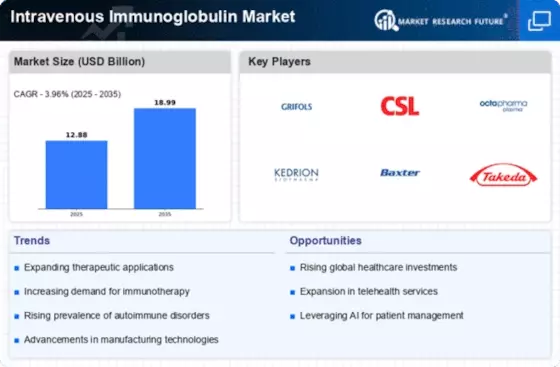
As per MRFR analysis, the Intravenous Immunoglobulin Market Size was estimated at 12.39 USD Billion in 2024. The Intravenous Immunoglobulin industry is projected to grow from 12.88 USD Billion in 2025 to 18.99 USD Billion by 2035, exhibiting a compound annual growth rate (CAGR) of 3.96 during the forecast period 2025 - 2035.

Key Market Trends & Highlights

The Intravenous Immunoglobulin Market is experiencing robust growth driven by increasing demand and technological advancements.

  • The market is witnessing a rising demand for immunotherapy, particularly in North America, which remains the largest market.
  • Technological advancements in production processes are enhancing the efficiency and quality of IVIG products.
  • There is a notable focus on patient-centric approaches, especially in the Asia-Pacific region, which is the fastest-growing market.
  • Key drivers include the increasing prevalence of autoimmune disorders and growing awareness of immunotherapy benefits, significantly impacting market dynamics.

Market Size & Forecast

2024 Market Size 12.39 (USD Billion)
2035 Market Size 18.99 (USD Billion)
CAGR (2025 - 2035) 3.96%

Major Players

Grifols (ES), CSL Behring (AU), Octapharma (CH), Kedrion (IT), Baxter International (US), Takeda Pharmaceutical (JP), LFB (FR), Biotest AG (DE), ADMA Biologics (US)

Our Impact
Enabled $4.3B Revenue Impact for Fortune 500 and Leading Multinationals
Partnering with 2000+ Global Organizations Each Year
30K+ Citations by Top-Tier Firms in the Industry

Intravenous Immunoglobulin Market Trends

The Intravenous Immunoglobulin Market is currently experiencing a notable evolution, driven by various factors that influence its growth trajectory. The increasing prevalence of autoimmune disorders and immunodeficiencies appears to be a primary catalyst, as healthcare providers seek effective treatment options. Furthermore, advancements in manufacturing processes and product formulations may enhance the efficacy and safety profiles of intravenous immunoglobulin therapies. This evolving landscape suggests a potential for expanded applications in diverse therapeutic areas, which could further stimulate market demand. In addition, the rising awareness among healthcare professionals and patients regarding the benefits of intravenous immunoglobulin therapy seems to contribute to market expansion. As more individuals are diagnosed with conditions that require immunoglobulin treatment, the need for accessible and reliable therapies becomes increasingly critical. Moreover, ongoing research and development initiatives may lead to innovative solutions that address unmet medical needs, thereby shaping the future of the Intravenous Immunoglobulin Market. Overall, the market appears poised for growth, with various dynamics at play that could influence its direction in the coming years.

Rising Demand for Immunotherapy

The Intravenous Immunoglobulin Market is witnessing a surge in demand for immunotherapy solutions. This trend is largely attributed to the growing recognition of the role of immunoglobulin therapies in treating various autoimmune diseases and immunodeficiencies. As healthcare providers increasingly adopt these therapies, the market is likely to expand, driven by the need for effective treatment options.

Technological Advancements in Production

Technological innovations in the production of intravenous immunoglobulin are shaping the market landscape. Enhanced manufacturing techniques may lead to improved product quality and safety, which could attract more healthcare providers to utilize these therapies. This trend suggests a potential for increased market penetration as new technologies emerge.

Focus on Patient-Centric Approaches

The Intravenous Immunoglobulin Market is increasingly focusing on patient-centric approaches. This shift involves tailoring therapies to meet individual patient needs, which may enhance treatment adherence and outcomes. As healthcare systems prioritize personalized medicine, the market could see a rise in demand for customized immunoglobulin therapies.

Intravenous Immunoglobulin Market Drivers

Regulatory Support for IVIG Therapies

Regulatory support for intravenous immunoglobulin therapies is emerging as a crucial driver for the Intravenous Immunoglobulin Market. Regulatory agencies are increasingly recognizing the therapeutic benefits of IVIG, leading to streamlined approval processes for new products. This supportive regulatory environment encourages innovation and investment in the development of novel IVIG formulations. Additionally, the establishment of guidelines for the safe and effective use of IVIG therapies is fostering confidence among healthcare providers. As a result, the market is likely to witness an influx of new entrants and product offerings, further stimulating growth. The ongoing collaboration between regulatory bodies and industry stakeholders is expected to enhance the overall landscape of the IVIG market.

Advancements in Manufacturing Technologies

Technological advancements in the production of intravenous immunoglobulin are driving the Intravenous Immunoglobulin Market forward. Innovations in purification and fractionation processes have enhanced the efficiency and yield of IVIG products. For instance, the introduction of new chromatographic techniques has improved the quality and safety of immunoglobulin preparations. As a result, manufacturers can produce higher volumes of IVIG while maintaining stringent quality standards. This increase in production capacity is crucial, given the rising demand for IVIG therapies across various therapeutic areas. Furthermore, these advancements may lead to cost reductions, making IVIG more accessible to healthcare providers and patients alike. The ongoing evolution of manufacturing technologies is likely to play a pivotal role in shaping the future landscape of the IVIG market.

Rising Incidence of Neurological Disorders

The growing prevalence of neurological disorders is significantly influencing the Intravenous Immunoglobulin Market. Conditions such as Guillain-Barre syndrome, chronic inflammatory demyelinating polyneuropathy, and myasthenia gravis are increasingly diagnosed, necessitating effective treatment options. Data indicates that neurological disorders affect millions worldwide, with conditions like multiple sclerosis alone impacting over 2.3 million individuals. IVIG therapy has been recognized for its efficacy in treating these disorders, leading to a surge in demand. As healthcare systems evolve to address these challenges, the reliance on IVIG as a therapeutic option is expected to increase. This trend highlights the potential for market expansion, as more patients seek innovative treatments for their neurological conditions.

Growing Awareness of Immunotherapy Benefits

The increasing awareness of the benefits of immunotherapy is a significant driver for the Intravenous Immunoglobulin Market. As healthcare professionals and patients become more informed about the role of immunoglobulins in treating various diseases, the demand for IVIG therapies is expected to rise. Educational initiatives and clinical studies highlighting the efficacy of IVIG in managing immune deficiencies and autoimmune disorders are contributing to this trend. Market data suggests that the immunotherapy segment is projected to grow at a compound annual growth rate (CAGR) of over 8% in the coming years. This growing recognition of immunotherapy's potential is likely to enhance the adoption of IVIG treatments, thereby expanding the market.

Increasing Prevalence of Autoimmune Disorders

The rising incidence of autoimmune disorders is a notable driver for the Intravenous Immunoglobulin Market. Conditions such as rheumatoid arthritis, lupus, and multiple sclerosis are becoming more prevalent, leading to a heightened demand for effective treatment options. According to recent estimates, autoimmune diseases affect approximately 5-8% of the population, which translates to millions of individuals requiring therapeutic interventions. Intravenous immunoglobulin (IVIG) therapy has emerged as a critical treatment modality for these conditions, providing essential immunological support. As awareness of autoimmune disorders increases, healthcare providers are likely to prescribe IVIG more frequently, thereby propelling market growth. This trend suggests a sustained demand for IVIG products, as patients seek effective management strategies for their chronic conditions.


Market Segment Insights

By Application: Immunodeficiency Disorders (Largest) vs. Autoimmune Diseases (Fastest-Growing)

Within the Intravenous Immunoglobulin Market, Immunodeficiency Disorders represent the largest share due to their prevalence and the critical role that immunoglobulin therapy plays in patient management. This segment encompasses various conditions that compromise the immune system, leading to a strong demand for IVIG products. Conversely, Autoimmune Diseases are emerging as the fastest-growing segment, driven by the increasing recognition of these diseases and advancements in treatment protocols that emphasize the importance of immunoglobulin therapy as a viable option. Furthermore, Neurological Disorders and Infectious Diseases follow in market traction, contributing to the overall growth of the IVIG market. Neurological Disorders, although smaller in market share, are seeing an uptick in investment and research, while Infectious Diseases maintain steady, yet modest, demand due to traditional treatment modalities.

Immunodeficiency Disorders (Dominant) vs. Autoimmune Diseases (Emerging)

Immunodeficiency Disorders hold a dominant position in the Intravenous Immunoglobulin Market, primarily due to the high incidence of primary and secondary immunodeficiency conditions requiring ongoing treatment. Products aimed at this segment typically have established usage protocols and are supported by a solid infrastructure of healthcare providers familiar with IVIG therapies. In contrast, Autoimmune Diseases represent an emerging area, with growing interest from pharmaceutical companies seeking to explore the therapeutic potential of immunoglobulin in managing conditions such as lupus and rheumatoid arthritis. The dynamic nature of this segment reflects changing treatment paradigms and a greater understanding of autoimmune disease mechanisms, paving the way for new clinical applications of IVIG and higher revenue opportunities.

By End Use: Hospitals (Largest) vs. Homecare Settings (Fastest-Growing)

In the Intravenous Immunoglobulin (IVIG) Market, hospitals hold a significant share of the overall market due to their infrastructure, availability of specialized staff, and comprehensive care facilities. With the rising prevalence of immunological disorders, hospitals remain the primary end-use segment, providing essential services and therapies to patients in critical care settings. In contrast, homecare settings are rapidly gaining traction, driven by a growing patient preference for receiving treatments in the comfort of their homes, leading to an increase in market share within this segment.

Hospitals (Dominant) vs. Homecare Settings (Emerging)

Hospitals are the dominant end-use segment in the IVIG market, equipped with advanced facilities and skilled healthcare professionals to manage complex conditions requiring immunoglobulin therapy. This segment benefits from established protocols and a broad patient base, ensuring steady utilization of IVIG therapies. On the other hand, homecare settings are emerging as a significant segment, fueled by technological advancements that facilitate safe administration of therapies at home. The convenience and personalization offered by homecare settings align with patient preferences for less intrusive treatments, driving growth in this space as more patients opt for home-based therapy.

By Distribution Channel: Direct Sales (Largest) vs. Online Sales (Fastest-Growing)

In the Intravenous Immunoglobulin Market, the distribution channels are predominantly categorized into Direct Sales, Distributors, and Online Sales. Direct Sales holds the largest share due to its established relationships with healthcare providers and hospitals, offering a streamlined approach for purchasing IVIG products. Distributors follow closely, playing a crucial role in supplying healthcare facilities with necessary products. Online Sales, however, while currently smaller in market share, are emerging as a competitive channel as the demand for convenience and accessibility grows among healthcare providers and patients.

Direct Sales (Dominant) vs. Online Sales (Emerging)

Direct Sales remains the dominant distribution channel in the Intravenous Immunoglobulin Market, characterized by long-term relationships and personalized service to healthcare professionals. This channel ensures timely delivery and reliable access to IVIG products, thus fostering trust and customer loyalty. In contrast, Online Sales, deemed emerging, are rapidly gaining traction as digital transformations in healthcare evolve. This channel provides flexibility and convenience, enabling healthcare providers to make informed purchasing decisions at any time. While Direct Sales focuses on traditional methods of engagement, Online Sales appeal to a tech-savvy customer base, signaling a shift in how products are procured within the market.

Get more detailed insights about Intravenous Immunoglobulin Market

Regional Insights

North America : Market Leader in Immunoglobulin

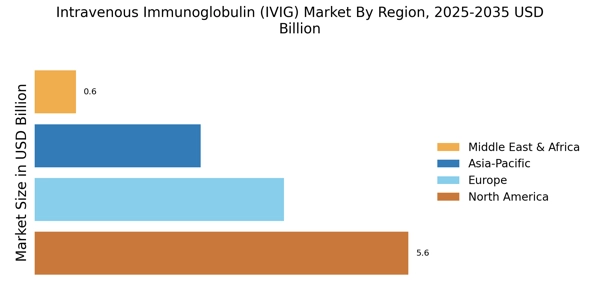
North America continues to lead the Intravenous Immunoglobulin (IVIG) market, holding a significant share of 6.5 billion in 2024. The growth is driven by increasing incidences of autoimmune diseases and advancements in healthcare infrastructure. Regulatory support from agencies like the FDA has also catalyzed market expansion, ensuring the availability of high-quality IVIG products to meet rising demand. The competitive landscape is characterized by major players such as Baxter International, Grifols, and CSL Behring, which dominate the market with innovative therapies and extensive distribution networks. The U.S. remains the largest market, supported by a robust healthcare system and high expenditure on healthcare services. This region's focus on research and development further enhances its position as a leader in the IVIG market.

Europe : Emerging Market Dynamics

Europe's Intravenous Immunoglobulin market is valued at 3.5 billion, reflecting a growing demand driven by an increase in chronic diseases and a rising elderly population. Regulatory frameworks across the EU are becoming more supportive, facilitating faster approvals for IVIG therapies. This trend is expected to enhance market accessibility and foster innovation in treatment options. Leading countries in this region include Germany, France, and the UK, where key players like Octapharma and LFB are making significant contributions. The competitive landscape is evolving, with a focus on strategic partnerships and collaborations to enhance product offerings. The presence of established companies ensures a steady supply of IVIG, catering to the increasing patient needs across Europe.

Asia-Pacific : Rapidly Growing Market

The Asia-Pacific region is witnessing a burgeoning Intravenous Immunoglobulin market, currently valued at 2.5 billion. Factors such as rising healthcare expenditure, increasing awareness of immunological disorders, and government initiatives to improve healthcare access are driving this growth. Regulatory bodies are also working towards streamlining approval processes for IVIG products, which is expected to further boost market dynamics. Countries like Japan, Australia, and China are leading the charge, with key players such as Takeda Pharmaceutical and CSL Behring establishing a strong foothold. The competitive landscape is characterized by a mix of local and international companies, all vying to capture market share. The increasing prevalence of autoimmune diseases in this region is likely to sustain demand for IVIG therapies in the coming years.

Middle East and Africa : Emerging Market Potential

The Middle East and Africa (MEA) region's Intravenous Immunoglobulin market is valued at 0.89 billion, showing potential for significant growth. Factors such as increasing healthcare investments, rising awareness of immunological conditions, and improving healthcare infrastructure are driving demand. Regulatory bodies are beginning to recognize the importance of IVIG therapies, which is expected to enhance market dynamics in the region. Countries like South Africa and the UAE are at the forefront of this market, with local and international players working to expand their presence. The competitive landscape is evolving, with a focus on increasing access to IVIG therapies. As healthcare systems improve, the demand for IVIG is anticipated to rise, presenting opportunities for growth in this emerging market.

Intravenous Immunoglobulin Market Regional Image

Key Players and Competitive Insights

The Intravenous Immunoglobulin Market is characterized by a dynamic competitive landscape, driven by increasing demand for immunoglobulin therapies and advancements in manufacturing technologies. Key players such as Grifols (ES), CSL Behring (AU), and Takeda Pharmaceutical (JP) are strategically positioned to leverage their extensive product portfolios and global reach. Grifols (ES) focuses on innovation and expanding its therapeutic offerings, while CSL Behring (AU) emphasizes regional expansion and partnerships to enhance its market presence. Takeda Pharmaceutical (JP) is actively pursuing digital transformation initiatives to optimize its operations and improve patient access to therapies. Collectively, these strategies contribute to a competitive environment that is increasingly focused on innovation and patient-centric solutions.

In terms of business tactics, companies are localizing manufacturing to reduce supply chain vulnerabilities and enhance responsiveness to regional market needs. The market structure appears moderately fragmented, with several key players holding substantial market shares. This fragmentation allows for a diverse range of products and services, fostering competition that drives innovation and quality improvements across the sector.

In January 2026, Grifols (ES) announced the launch of a new immunoglobulin product aimed at treating rare autoimmune disorders. This strategic move not only diversifies its product line but also positions the company to capture a niche market segment that is currently underserved. The introduction of this product is likely to enhance Grifols' competitive edge and reinforce its commitment to addressing unmet medical needs.

In December 2025, CSL Behring (AU) entered into a strategic partnership with a leading biotechnology firm to co-develop next-generation immunoglobulin therapies. This collaboration is expected to accelerate the development of innovative treatments, thereby strengthening CSL Behring's position in the market. The partnership reflects a broader trend of companies seeking synergies to enhance research capabilities and expedite product development timelines.

In November 2025, Takeda Pharmaceutical (JP) unveiled a comprehensive digital strategy aimed at improving supply chain efficiency and patient engagement. By integrating advanced analytics and AI technologies, Takeda seeks to streamline its operations and enhance the overall patient experience. This initiative underscores the growing importance of digitalization in the industry and highlights Takeda's commitment to leveraging technology for competitive advantage.

As of February 2026, current trends in the Intravenous Immunoglobulin Market indicate a shift towards digitalization, sustainability, and AI integration. Strategic alliances are increasingly shaping the competitive landscape, enabling companies to pool resources and expertise for enhanced innovation. Looking ahead, competitive differentiation is likely to evolve from traditional price-based competition to a focus on technological advancements, innovative therapies, and reliable supply chains. This transition may redefine market dynamics, emphasizing the importance of quality and innovation in meeting the needs of patients and healthcare providers.

Key Companies in the Intravenous Immunoglobulin Market include

Industry Developments

Recent developments in the Intravenous Immunoglobulin Market (IVIG) Market indicate a growing trend in product demand and advancements in treatment applicability. Companies like Takeda and CSL Behring have noted significant investments in Research and Development to enhance the efficacy and delivery methods of IVIG therapies. 

In September 2023, Takeda announced the expansion of their IVIG production facilities to meet rising global demand, particularly in North America and Europe. In August 2023, Grifols launched a new innovative formulation aimed at providing improved outcomes for patients with autoimmune disorders. 

Acquisitions have also shaped the landscape, with Kedrion acquiring Merck’s IG business in July 2022 to strengthen its market position. Immunoglobulin market growth is indicative of a broader increase in awareness regarding immune deficiencies, with countries globally adapting healthcare policies to facilitate better access to these treatments. Companies are observing improved immunoglobulin market valuations, which correlate with the rise in IVIG therapy utilization for various clinical indications.

The Global market has seen a surge in investments, aiming to diversify product offerings and geographical outreach, fostering a competitive environment among key players such as Octapharma and China Biologic Products.

Future Outlook

Intravenous Immunoglobulin Market Future Outlook

The Intravenous Immunoglobulin Market is projected to grow at a 3.96% CAGR from 2024 to 2035, driven by increasing autoimmune diseases, rising awareness, and advancements in manufacturing technologies.

New opportunities lie in:

  • Expansion into emerging markets with tailored product offerings.
  • Development of personalized immunoglobulin therapies for niche patient populations.
  • Investment in advanced manufacturing technologies to enhance production efficiency.

By 2035, the market is expected to solidify its position as a critical component of therapeutic strategies.

Market Segmentation

Intravenous Immunoglobulin Market End Use Outlook

  • Hospitals
  • Clinics
  • Homecare Settings
  • Ambulatory Surgical Centers

Intravenous Immunoglobulin Market Application Outlook

  • Immunodeficiency Disorders
  • Autoimmune Diseases
  • Neurological Disorders
  • Infectious Diseases

Intravenous Immunoglobulin Market Distribution Channel Outlook

  • Direct Sales
  • Distributors
  • Online Sales

Report Scope

MARKET SIZE 202412.39(USD Billion)
MARKET SIZE 202512.88(USD Billion)
MARKET SIZE 203518.99(USD Billion)
COMPOUND ANNUAL GROWTH RATE (CAGR)3.96% (2024 - 2035)
REPORT COVERAGERevenue Forecast, Competitive Landscape, Growth Factors, and Trends
BASE YEAR2024
Market Forecast Period2025 - 2035
Historical Data2019 - 2024
Market Forecast UnitsUSD Billion
Key Companies ProfiledGrifols (ES), CSL Behring (AU), Octapharma (CH), Kedrion (IT), Baxter International (US), Takeda Pharmaceutical (JP), LFB (FR), Biotest AG (DE), ADMA Biologics (US)
Segments CoveredApplication, End Use, Distribution Channel
Key Market OpportunitiesEmerging therapies and regulatory advancements drive growth in the Intravenous Immunoglobulin Market.
Key Market DynamicsRising demand for Intravenous Immunoglobulin drives competitive forces and regulatory scrutiny in the healthcare sector.
Countries CoveredNorth America, Europe, APAC, South America, MEA

Market Highlights

Author
Rahul Gotadki
Assistant Manager

He holds an experience of about 7+ years in Market Research and Business Consulting, working under the spectrum of Life Sciences and Healthcare domains. Rahul conceptualizes and implements a scalable business strategy and provides strategic leadership to the clients. His expertise lies in market estimation, competitive intelligence, pipeline analysis, customer assessment, etc. In addition to the above, his other responsibility includes strategic tracking of high growth markets & advising clients on the potential areas of focus they could direct their business initiatives

Leave a Comment

FAQs

What is the projected market valuation of the Intravenous Immunoglobulin (IVIG) Market by 2035?

The projected market valuation of the Intravenous Immunoglobulin (IVIG) Market is expected to reach 18.99 USD Billion by 2035.

What was the overall market valuation of the IVIG Market in 2024?

The overall market valuation of the IVIG Market was 12.39 USD Billion in 2024.

What is the expected CAGR for the IVIG Market during the forecast period 2025 - 2035?

The expected CAGR for the IVIG Market during the forecast period 2025 - 2035 is 3.96%.

Which application segment is projected to have the highest valuation in 2035?

The Immunodeficiency Disorders segment is projected to reach 5.55 USD Billion by 2035.

How does the market for Intravenous Immunoglobulin compare to Subcutaneous Immunoglobulin in 2035?

In 2035, the market for Intravenous Immunoglobulin is expected to be valued at 12.0 USD Billion, significantly higher than the 3.0 USD Billion projected for Subcutaneous Immunoglobulin.

What are the key end-use segments for IVIG in 2035?

The key end-use segments for IVIG in 2035 include Hospitals, Clinics, Homecare, and Pharmaceutical Companies, with Hospitals projected to reach 7.5 USD Billion.

Which IVIg manufacturers are considered key players in the IVIG Market?

Key IVIg manufacturers in the IVIG Market include Grifols, CSL Behring, Octapharma HQ, Kedrion, Takeda, Baxter, LFB, Biotest, and ADMA Biologics.

What is the projected valuation for the Autoimmune Disorders segment by 2035?

The Autoimmune Disorders segment is projected to reach 4.68 USD Billion by 2035.

What is the expected growth trend for the Human Plasma source in the IVIG Market?

The Human Plasma source is expected to grow to 12.0 USD Billion by 2035, indicating a robust demand.

How does the market for Combination Therapies compare to other product types in 2035?

By 2035, the market for Combination Therapies is projected to reach 3.99 USD Billion, which is lower than the Intravenous Immunoglobulin segment but shows potential for growth.

Download Free Sample

Kindly complete the form below to receive a free sample of this Report

Compare Licence

×
Features License Type
Single User Multiuser License Enterprise User
Price $4,950 $5,950 $7,250
Maximum User Access Limit 1 User Upto 10 Users Unrestricted Access Throughout the Organization
Free Customization
Direct Access to Analyst
Deliverable Format
Platform Access
Discount on Next Purchase 10% 15% 15%
Printable Versions