Regulatory Compliance
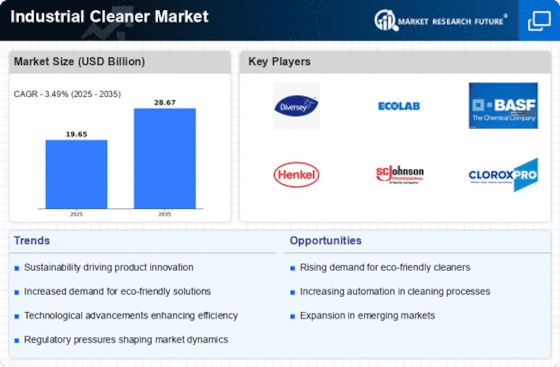
Regulatory compliance is a critical driver in the Industrial Cleaner Market, as businesses are mandated to adhere to stringent environmental and safety regulations. These regulations often dictate the types of cleaning agents that can be used, pushing companies to seek compliant products that do not compromise on performance. The increasing scrutiny from regulatory bodies is compelling manufacturers to invest in research and development to create compliant cleaning solutions. This trend is expected to bolster the market, with projections indicating that compliance-driven innovations could account for a substantial portion of market growth in the next few years. Companies that proactively align with these regulations are likely to gain a competitive edge.
Sector-Specific Demands
The Industrial Cleaner Market is witnessing a surge in sector-specific demands, as different industries require tailored cleaning solutions to address unique challenges. For example, the food and beverage sector necessitates cleaners that meet stringent hygiene standards, while the automotive industry may prioritize degreasers that effectively remove oil and grime. This diversification in cleaning needs is prompting manufacturers to develop specialized products that cater to these specific requirements. Market analysis suggests that sector-specific cleaners could represent a significant share of the overall market, with growth rates varying by industry. As industries continue to evolve, the demand for customized cleaning solutions is likely to increase.
Technological Innovations
Technological advancements are playing a pivotal role in the evolution of the Industrial Cleaner Market. Innovations such as automated cleaning systems and advanced formulations are enhancing cleaning efficiency and effectiveness. For instance, the integration of IoT technology allows for real-time monitoring of cleaning processes, optimizing resource usage and reducing waste. Furthermore, the development of high-performance cleaning agents that require less water and energy is gaining traction. Market data indicates that the adoption of such technologies could lead to a reduction in operational costs by up to 20% for industrial facilities. As these technologies continue to advance, they are likely to redefine industry standards and practices.
Sustainability Initiatives
The increasing emphasis on sustainability within the Industrial Cleaner Market is driving demand for eco-friendly cleaning solutions. Companies are increasingly adopting green practices, which include the use of biodegradable and non-toxic cleaning agents. This shift is not merely a trend but a response to regulatory pressures and consumer preferences for environmentally responsible products. As a result, the market for sustainable industrial cleaners is projected to grow significantly, with estimates suggesting a compound annual growth rate of over 5% in the coming years. This focus on sustainability is reshaping product formulations and marketing strategies, compelling manufacturers to innovate and adapt to meet the evolving expectations of both businesses and consumers.
Global Supply Chain Dynamics
The dynamics of The Industrial Cleaner Industry, particularly in terms of sourcing raw materials and distribution. Fluctuations in supply chain stability can impact the availability and pricing of cleaning products. Manufacturers are increasingly focusing on local sourcing to mitigate risks associated with global supply chain disruptions. This shift not only enhances supply chain resilience but also aligns with sustainability goals by reducing transportation emissions. Market trends indicate that companies adopting localized supply chains may experience improved operational efficiency and cost savings. As the landscape of global trade continues to evolve, the implications for the industrial cleaner market will be profound.