×
Request Free Sample ×

Kindly complete the form below to receive a free sample of this Report

* Please use a valid business email

Leading companies partner with us for data-driven Insights

clients tt-cursor
Hero Background

Indonesia Travel And Tourism Market

ID: MRFR/CG/42622-HCR
200 Pages
Garvit Vyas
February 2026

Indonesia Travel and Tourism Market Size, Share, Industry Trend & Analysis Research Report: By Type Outlook (Leisure, Educational, Business, Sports, Medical Tourism, Others (Event Travel, Volunteer Travel, etc.)), By Application Outlook (Domestic, International), By Traveler Type Outlook (Solo Traveler, Couple Traveler, Group Traveler), By Travel Days Outlook (Less than 7 Days, 8- 15 Days, 16-30 Days, More than 30 Days), By Travel Mode Outlook (Travel Packages, Self-catered) and By Booking Outlook (Online, Offline) - Forecast to 2035.

Share:
Download PDF ×

We do not share your information with anyone. However, we may send you emails based on your report interest from time to time. You may contact us at any time to opt-out.

Indonesia Travel And Tourism Market Infographic
Purchase Options

Indonesia Travel And Tourism Market Summary

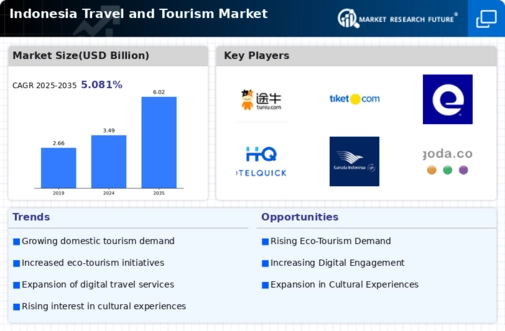
As per analysis, the Indonesia travel and tourism market is projected to grow from USD 5.44 Billion in 2025 to USD 9.04 Billion by 2035, exhibiting a compound annual growth rate (CAGR) of 5.26% during the forecast period (2025 - 2035).

Key Market Trends & Highlights

The Indonesia travel and tourism market is experiencing a dynamic shift towards sustainable practices and digital innovation.

  • Leisure tourism remains the largest segment, driven by Indonesia's rich cultural heritage and diverse natural attractions.
  • Adventure tourism is the fastest-growing segment, appealing to travelers seeking unique experiences in Indonesia's stunning landscapes.
  • Business travel continues to dominate, while education tourism is rapidly expanding, reflecting a growing interest in academic exchanges.
  • Government support and policy frameworks, alongside the rise of culinary tourism, are key drivers propelling market growth.

Market Size & Forecast

2024 Market Size 5.14 (USD Billion)
2035 Market Size 9.04 (USD Billion)
CAGR (2025 - 2035) 5.26%

Major Players

Traveloka (ID), Garuda Indonesia (ID), Tiket.com (ID), AirAsia (MY), Expedia (US), Booking.com (NL), PegiPegi (ID), Klook (HK), Tripadvisor (US)

Our Impact
Enabled $4.3B Revenue Impact for Fortune 500 and Leading Multinationals
Partnering with 2000+ Global Organizations Each Year
30K+ Citations by Top-Tier Firms in the Industry

Indonesia Travel And Tourism Market Trends

The Indonesia travel and tourism market is currently experiencing a dynamic transformation, driven by a combination of cultural richness, natural beauty, and a growing interest in sustainable travel practices. Indonesia, with its vast archipelago comprising thousands of islands, offers diverse experiences ranging from pristine beaches to vibrant urban centers. The government actively promotes tourism as a key economic driver, emphasizing the importance of preserving cultural heritage while enhancing infrastructure to accommodate increasing visitor numbers. This dual focus on development and conservation appears to resonate well with both domestic and international travelers, who seek authentic experiences that connect them to the local culture and environment. In addition, the rise of digital technology is reshaping how travelers plan and experience their journeys in the indonesia travel and tourism market. Online platforms for booking accommodations, tours, and activities are becoming increasingly popular, allowing travelers to customize their itineraries with ease. Social media also plays a crucial role in influencing travel decisions, as potential visitors are inspired by the stunning visuals shared by others. As the market continues to evolve, it seems likely that the integration of technology and a commitment to sustainability will remain central themes, shaping the future of travel in Indonesia.

Sustainable Tourism Initiatives

The indonesia travel and tourism market is witnessing a notable shift towards sustainable tourism practices. This trend is characterized by an increasing emphasis on eco-friendly accommodations, responsible travel behaviors, and community-based tourism initiatives. The government and local stakeholders are collaborating to promote environmentally conscious travel options, which not only protect natural resources but also enhance the visitor experience by fostering deeper connections with local communities.

Cultural Heritage Promotion

There is a growing focus on cultural heritage within the indonesia travel and tourism market. Tourists are increasingly drawn to experiences that highlight Indonesia's rich traditions, arts, and history. This trend is supported by various initiatives aimed at preserving cultural sites and promoting local festivals, which serve to educate visitors about the diverse cultural landscape of the nation. Such efforts not only attract tourists but also contribute to the preservation of Indonesia's unique identity.

Digital Transformation in Travel Planning

The integration of digital technology is reshaping the indonesia travel and tourism market. Travelers are increasingly utilizing online platforms for planning and booking their trips, which allows for greater flexibility and personalization. Social media influences travel choices, as potential visitors seek inspiration from shared experiences. This trend indicates a shift towards a more tech-savvy approach to travel, where convenience and accessibility are paramount.

Indonesia Travel And Tourism Market Drivers

Culinary Tourism Growth

Culinary tourism is emerging as a significant driver within the Indonesia travel and tourism market. The country's diverse culinary heritage, influenced by various ethnic groups, offers tourists a unique gastronomic experience. In 2025, culinary tourism is projected to contribute around USD 2 billion to the overall tourism revenue, highlighting its growing importance. Food festivals, cooking classes, and local food tours are increasingly popular among travelers seeking authentic experiences. This trend not only boosts local economies but also encourages the preservation of traditional cooking methods and ingredients, thereby enriching the cultural fabric of the Indonesia travel and tourism market.

Diverse Natural Attractions

Indonesia's rich biodiversity and stunning natural landscapes serve as a major driver for the travel and tourism market. With over 17,000 islands, the country offers a plethora of attractions, from pristine beaches in Bali to the lush rainforests of Sumatra. In 2025, it is estimated that eco-tourism will account for approximately 30% of total tourism revenue, reflecting a growing interest in sustainable travel experiences. The unique flora and fauna, including endangered species like the orangutan, attract nature enthusiasts and adventure seekers alike. This diversity not only enhances the appeal of the Indonesia travel and tourism market but also promotes conservation efforts and local community engagement.

Cultural Festivals and Events

Cultural festivals and events play a pivotal role in attracting tourists to the Indonesia travel and tourism market. Events such as the Bali Arts Festival and the Java Jazz Festival showcase the rich cultural heritage and artistic diversity of the country. In 2025, it is anticipated that cultural events will draw millions of visitors, contributing significantly to local economies. These festivals not only promote tourism but also foster community pride and cultural exchange. By highlighting Indonesia's unique traditions and arts, these events enhance the overall appeal of the Indonesia travel and tourism market, encouraging repeat visits and longer stays.

Government Support and Policy Framework

The Indonesia travel and tourism market benefits from robust government support and a favorable policy framework. The Indonesian government has implemented various initiatives aimed at enhancing tourism infrastructure, such as the development of airports and roads, which facilitates easier access to tourist destinations. In 2025, the government allocated approximately USD 1.5 billion for tourism development projects, indicating a strong commitment to boosting the sector. Additionally, policies promoting visa-free travel for citizens of certain countries have been introduced, which is likely to increase tourist arrivals. This supportive environment fosters growth in the Indonesia travel and tourism market, encouraging both domestic and international investments.

Technological Advancements in Travel Services

The integration of technology in the Indonesia travel and tourism market is transforming how services are delivered and experienced. The rise of mobile applications and online booking platforms has streamlined the travel planning process, making it more accessible for both domestic and international travelers. In 2025, it is estimated that over 70% of travel bookings will be made online, reflecting a shift towards digital solutions. Additionally, the use of virtual reality in promoting destinations is gaining traction, allowing potential tourists to experience locations before visiting. This technological evolution enhances customer satisfaction and engagement, thereby driving growth in the Indonesia travel and tourism market.


Market Segment Insights

By Tourism Type: Leisure (Largest) vs. Adventure (Fastest-Growing)

In the Indonesian travel and tourism market, the Leisure segment currently holds the largest market share, appealing to travelers seeking relaxation and scenic beauty. Adventure tourism, characterized by activities such as trekking and water sports, is rapidly gaining traction, attracting younger demographics and thrill-seekers who are eager for new experiences. Cultural, Ecotourism, and Wellness segments also contribute to the diversity of offerings, each catering to specific interests and preferences.

Leisure: Dominant vs. Adventure: Emerging

Leisure tourism remains the dominant force in the Indonesian market, appealing primarily to families and couples looking for relaxing getaways in Bali's pristine beaches and luxurious resorts. In contrast, Adventure tourism is identified as an emerging trend, increasingly capturing the attention of millennials and Gen Z travelers who prioritize unique experiences such as hiking in Komodo National Park or surfing in Sumatra. As consumers seek more active and engaging travel experiences, the Adventure segment is expected to innovate and expand, leveraging Indonesia's rich biodiversity and cultural heritage to attract adventurous spirits.

By Travel Purpose: Business (Largest) vs. Education (Fastest-Growing)

In the Indonesia travel and tourism market, the distribution among travel purposes reveals that the Business segment holds the largest share, indicating a strong demand for corporate travel. This segment, focusing on meetings, conferences, and enterprise-related journeys, has been greatly influenced by the growth of the corporate sector and increased international business ties. Conversely, the Education segment, while smaller in market share, shows significant growth, driven by an increasing number of both local and international students traveling for educational opportunities each year.

Business (Dominant) vs. Education (Emerging)

The Business travel segment in Indonesia is characterized by high-frequency trips, often associated with corporate events and meetings in major cities like Jakarta and Bali. Travelers here typically seek premium services and convenient locations, emphasizing quality and efficiency. Contrasting this, the Education segment is emerging rapidly as an important segment, fueled by the influx of international students and education-related travel. With growing partnerships between Indonesian educational institutions and overseas universities, this sector caters to varied needs including internships, study tours, and exchange programs, making it a dynamic area in the tourism market.

By Demographic Segmentation: Age (Largest) vs. Income (Fastest-Growing)

In the Indonesia travel and tourism market, demographic segmentation reveals that age is the largest segment, witnessing substantial interest from young travelers, particularly those aged 18-34. This age group accounts for a significant portion of travel decisions, driven by a mix of social media influence and thirst for adventure. However, the income segment is emerging as the fastest-growing demographic, with increasing disposable income leading to a rise in mid to high-income travelers seeking unique and luxurious experiences in Indonesia, boosting the segment's significance.

Age: 18-34 (Dominant) vs. Income: Mid to High (Emerging)

The age segment, particularly individuals aged 18 to 34, is dominating the Indonesia travel and tourism market. This group is often characterized by its preference for experiential travel, adventurous activities, and social media-driven choices. They are likely to opt for budget-friendly options while intensely seeking authentic and memorable experiences. Conversely, the emerging mid to high-income segment is gaining traction as more individuals experience economic growth. Travelers from this demographic are favoring premium offerings, custom-tailored itineraries, and exclusive services, enhancing their travel experiences.
By Travel Duration: Short-term (Largest) vs. Weekend Getaways (Fastest-Growing)

In the Indonesia travel and tourism market, the segment distribution by travel duration reveals that short-term trips hold the largest share, driven by the rising domestic tourism trend and affordable regional travel options. Medium-term travel also shows significant participation, appealing to travelers looking for deeper explorations beyond typical weekend trips. Long-term travel lags behind, primarily catering to dedicated tourists seeking immersive experiences, with weekend getaways emerging as a popular choice for urban dwellers looking for quick escapes.

Short-term (Dominant) vs. Weekend Getaways (Emerging)

Short-term travel in Indonesia is characterized by high frequency and accessibility, with travelers often opting for one to three-day trips that utilize budget-friendly accommodation and transportation options. In contrast, weekend getaways are rapidly becoming a favored choice among younger demographics, spurred by promotional packages and an increasing fondness for leisurely breaks. Weekend getaways offer flexibility and cater to spontaneous travel plans, appealing to both locals and expatriates. The rise of social media influences these trends, as destination visibility boosts interest in nearby attractions and experiences, driving growth in this segment.

By Booking Method: Online Travel Agencies (Largest) vs. Direct Booking (Fastest-Growing)

In the Indonesia travel and tourism market, Online Travel Agencies (OTAs) hold the largest share among booking methods, catering to the growing preference for online solutions from travelers. Direct booking channels have gained momentum, supported by various brands investing in user-friendly interfaces and loyalty programs to encourage direct consumer engagement. Travel agents, while still relevant, face stiff competition from the evolving digital landscape, pushing them to explore unique value propositions. Mobile applications and social media are becoming significant influencers in travelers' decision-making processes, indicating a shift in how bookings are processed in this market. Growth trends indicate a robust rise in direct bookings as travelers seek authenticity and personalized service, moving away from traditional travel agents. The convenience and efficiency offered by mobile applications position them as a crucial player in the market. Social media's integration with travel planning offers brands a new avenue for engagement, making it easier to showcase offerings and attract a younger audience. Continuous technological advancements will likely reshape these dynamics, as innovative booking technologies become more prevalent, empowering travelers with increased flexibility and choice.

Online Travel Agencies (Dominant) vs. Travel Agents (Emerging)

Online Travel Agencies (OTAs) have established themselves as the dominant force in the Indonesia travel and tourism market due to their extensive reach and comprehensive service offerings. They serve a wide array of customers, from leisure travelers seeking affordable vacation packages to business travelers in need of efficient travel solutions. OTAs leverage advanced technology to provide user-friendly platforms, enabling easy price comparisons and diverse booking options. In contrast, traditional travel agents are emerging by adapting to market dynamics, focusing on niche offerings, personalized customer experiences, and expert advice to differentiate themselves. While they may not have the expansive reach of OTAs, travel agents build strong relationships with clients through customized services and added conveniences that resonate well with specific consumer segments.

Get more detailed insights about Indonesia Travel And Tourism Market

Key Players and Competitive Insights

The Indonesia travel and tourism market is characterized by a dynamic competitive landscape, driven by a confluence of factors including increasing domestic travel, a burgeoning middle class, and a growing interest in sustainable tourism. Key players such as Traveloka (ID), Garuda Indonesia (ID), and Tiket.com (ID) are strategically positioned to leverage these trends. Traveloka (ID) focuses on digital transformation, enhancing its platform to offer a seamless user experience, while Garuda Indonesia (ID) emphasizes regional expansion and fleet modernization to capture a larger share of the market. Tiket.com (ID) is innovating through partnerships with local businesses, thereby enriching its service offerings and enhancing customer engagement. Collectively, these strategies contribute to a competitive environment that is increasingly oriented towards technology and customer-centric solutions.

In terms of business tactics, companies are localizing their services to better cater to the diverse preferences of Indonesian travelers. This localization, coupled with supply chain optimization, is essential in a moderately fragmented market where numerous players vie for consumer attention. The collective influence of these key players shapes a competitive structure that encourages innovation and responsiveness to market demands, fostering a vibrant ecosystem.

In December 2025, Traveloka (ID) announced a partnership with local tourism boards to promote eco-friendly travel packages, reflecting a growing trend towards sustainability in travel. This strategic move not only enhances Traveloka's brand image but also aligns with global shifts towards responsible tourism, potentially attracting environmentally conscious travelers. The partnership is likely to bolster local economies while positioning Traveloka as a leader in sustainable travel solutions.

In November 2025, Garuda Indonesia (ID) unveiled a new fleet of fuel-efficient aircraft aimed at reducing operational costs and environmental impact. This initiative underscores the airline's commitment to sustainability and operational efficiency, which may enhance its competitive edge in a market increasingly focused on eco-friendly practices. The introduction of these aircraft is expected to improve service reliability and customer satisfaction, thereby strengthening Garuda's market position.

In October 2025, Tiket.com (ID) launched an AI-driven customer service platform designed to enhance user experience through personalized recommendations and 24/7 support. This technological advancement signifies a shift towards digitalization in the travel sector, allowing Tiket.com to differentiate itself in a crowded marketplace. By leveraging AI, the company aims to streamline operations and improve customer engagement, which could lead to increased loyalty and market share.

As of January 2026, the competitive trends in the Indonesia travel and tourism market are increasingly defined by digitalization, sustainability, and the integration of advanced technologies such as AI. Strategic alliances are becoming pivotal in shaping the landscape, as companies collaborate to enhance service offerings and operational efficiencies. Looking ahead, competitive differentiation is likely to evolve from traditional price-based competition to a focus on innovation, technology, and supply chain reliability, suggesting a transformative shift in how companies engage with consumers and position themselves in the market.

Key Companies in the Indonesia Travel And Tourism Market include

Industry Developments

Recent developments in the Indonesia Travel and Tourism Market indicate a significant recovery trajectory following the impact of the COVID-19 pandemic. As of August 2023, Tuniu and Traveloka have enhanced their service offerings, focusing on domestic tourism, which has seen increased demand amidst changing travel preferences. Agoda and Tripadvisor have also introduced updated platforms to facilitate seamless user experiences for booking and planning trips within Indonesia. Furthermore, in September 2023, Garuda Indonesia announced strategic partnerships with several regional airlines to expand its network and improve connectivity, addressing the increased interest in both international and domestic travel.

Notably, there have been reports of ongoing consolidation in the market. In October 2023, Expedia Group unveiled plans to acquire a stake in Tiket.com, aiming to leverage their combined resources to strengthen market presence amid growing competition. Such moves mark a vital phase for key players like Klook and booking.com, which are continuously adapting to the evolving landscape. Consistent with government initiatives, by the end of 2023, Indonesia is poised to see a surge in tourism revenue as travel restrictions ease, with a focus on promoting sustainable tourism.

Future Outlook

Indonesia Travel And Tourism Market Future Outlook

The Indonesia travel and tourism market is projected to grow at a 5.26% CAGR from 2025 to 2035, driven by increasing domestic travel, digital transformation, and sustainable tourism initiatives.

New opportunities lie in:

  • Development of eco-friendly accommodations in rural areas.
  • Investment in digital marketing strategies targeting international tourists.
  • Expansion of local culinary tourism experiences to enhance cultural engagement.

By 2035, the market is expected to be robust, reflecting diverse growth opportunities and increased tourist engagement.

Market Segmentation

Indonesia Travel And Tourism Market Tourism Type Outlook

  • Leisure
  • Adventure
  • Cultural
  • Ecotourism
  • Wellness

Indonesia Travel And Tourism Market Booking Method Outlook

  • Online Travel Agencies
  • Direct Booking
  • Travel Agents
  • Mobile Applications
  • Social Media

Indonesia Travel And Tourism Market Travel Purpose Outlook

  • Business
  • Education
  • Family
  • Religious
  • Medical

Indonesia Travel And Tourism Market Travel Duration Outlook

  • Short-term
  • Medium-term
  • Long-term
  • Weekend Getaways
  • Extended Vacations

Indonesia Travel And Tourism Market Demographic Segmentation Outlook

  • Age
  • Income
  • Gender
  • Occupation
  • Education Level

Report Scope

MARKET SIZE 20245.14(USD Billion)
MARKET SIZE 20255.44(USD Billion)
MARKET SIZE 20359.04(USD Billion)
COMPOUND ANNUAL GROWTH RATE (CAGR)5.26% (2024 - 2035)
REPORT COVERAGERevenue Forecast, Competitive Landscape, Growth Factors, and Trends
BASE YEAR2024
Market Forecast Period2025 - 2035
Historical Data2019 - 2024
Market Forecast UnitsUSD Billion
Key Companies ProfiledTraveloka (ID), Garuda Indonesia (ID), Tiket.com (ID), AirAsia (MY), Expedia (US), Booking.com (NL), PegiPegi (ID), Klook (HK), Tripadvisor (US)
Segments CoveredTourism Type, Travel Purpose, Demographic Segmentation, Travel Duration, Booking Method
Key Market OpportunitiesIntegration of digital platforms enhances customer engagement in the indonesia travel and tourism market.
Key Market DynamicsRising domestic tourism and evolving consumer preferences drive innovation in Indonesia's travel and tourism sector.
Countries CoveredIndonesia
Leave a Comment

FAQs

What is the current valuation of the Indonesia travel and tourism market?

As of 2024, the market valuation was 5.14 USD Billion.

What is the projected market size for the Indonesia travel and tourism sector by 2035?

The market is projected to reach 9.04 USD Billion by 2035.

What is the expected CAGR for the Indonesia travel and tourism market from 2025 to 2035?

The expected CAGR during the forecast period 2025 - 2035 is 5.26%.

Which companies are the key players in the Indonesia travel and tourism market?

Key players include Traveloka, Garuda Indonesia, Tiket.com, AirAsia, Expedia, Booking.com, PegiPegi, Klook, and Tripadvisor.

How does the leisure tourism segment perform in the Indonesia market?

The leisure tourism segment was valued at 1.54 USD Billion in 2024 and is expected to grow to 2.67 USD Billion by 2035.

What is the valuation of the adventure tourism segment in Indonesia?

The adventure tourism segment was valued at 0.76 USD Billion in 2024 and is projected to reach 1.32 USD Billion by 2035.

What are the projected values for the cultural tourism segment in Indonesia?

The cultural tourism segment was valued at 1.02 USD Billion in 2024 and is expected to grow to 1.76 USD Billion by 2035.

What is the expected growth for the ecotourism segment in Indonesia?

The ecotourism segment was valued at 0.62 USD Billion in 2024 and is projected to reach 1.06 USD Billion by 2035.

How does the online travel agency segment perform in the Indonesia market?

The online travel agency segment was valued at 1.54 USD Billion in 2024 and is expected to grow to 2.67 USD Billion by 2035.

What is the projected value for the family travel segment in Indonesia?

The family travel segment was valued at 1.54 USD Billion in 2024 and is expected to reach 2.67 USD Billion by 2035.

Download Free Sample

Kindly complete the form below to receive a free sample of this Report

Compare Licence

×
Features License Type
Single User Multiuser License Enterprise User
Price $4,950 $5,950 $7,250
Maximum User Access Limit 1 User Upto 10 Users Unrestricted Access Throughout the Organization
Free Customization
Direct Access to Analyst
Deliverable Format
Platform Access
Discount on Next Purchase 10% 15% 15%
Printable Versions







