×
Request Free Sample ×

Kindly complete the form below to receive a free sample of this Report

* Please use a valid business email

Leading companies partner with us for data-driven Insights

clients tt-cursor
Hero Background

India Office Furniture Market

ID: MRFR/CG/42614-HCR
128 Pages
Garvit Vyas
February 2026

India Office Furniture Market Size, Share, Industry Trend & Analysis Research Report: By Product Type (Office Chair, Office Table, Storage Furniture, Others), By Material (Wood, Steel, Others) andBy Distribution Channel (Online, Offline)- Forecast to 2035

Share:
Download PDF ×

We do not share your information with anyone. However, we may send you emails based on your report interest from time to time. You may contact us at any time to opt-out.

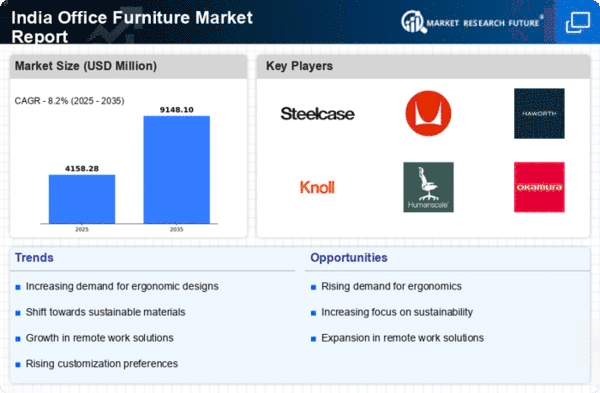
India Office Furniture Market Infographic
Purchase Options

India Office Furniture Market Summary

As per Market Research Future analysis, the India office furniture market size was estimated at 3843.14 USD Million in 2024. The India office furniture market is projected to grow from 4158.28 USD Million in 2025 to 9148.1 USD Million by 2035, exhibiting a compound annual growth rate (CAGR) of 8% during the forecast period 2025 - 2035

Key Market Trends & Highlights

The India office furniture market is experiencing a transformative shift towards ergonomic and sustainable solutions.

  • The market is increasingly prioritizing ergonomic design to enhance employee comfort and productivity.
  • Sustainability initiatives are gaining traction, with manufacturers focusing on eco-friendly materials and practices.
  • Flexible workspace solutions are becoming essential as businesses adapt to changing work environments.
  • Rising demand for modern workspaces and government initiatives for infrastructure development are key drivers of market growth.

Market Size & Forecast

2024 Market Size 3843.14 (USD Million)
2035 Market Size 9148.1 (USD Million)
CAGR (2025 - 2035) 8.2%

Major Players

Steelcase (US), Herman Miller (US), Haworth (US), Knoll (US), Humanscale (US), Okamura (JP), Kinnarps (SE), Vitra (CH), Teknion (CA)

Our Impact
Enabled $4.3B Revenue Impact for Fortune 500 and Leading Multinationals
Partnering with 2000+ Global Organizations Each Year
30K+ Citations by Top-Tier Firms in the Industry

India Office Furniture Market Trends

The market is currently experiencing a dynamic transformation, driven by evolving workplace needs and preferences. As organizations increasingly prioritize employee well-being and productivity, there is a noticeable shift towards ergonomic designs and flexible furniture solutions. This trend reflects a growing awareness of the impact that physical workspace has on employee satisfaction and performance. Moreover, the rise of remote and hybrid work models has prompted businesses to rethink their office layouts, leading to a demand for adaptable furniture that can cater to various work styles. In addition, sustainability has emerged as a key consideration within the office furniture market. Companies are increasingly seeking eco-friendly materials and production processes, aligning with broader environmental goals. This shift not only addresses consumer preferences but also reflects regulatory pressures aimed at reducing carbon footprints. As a result, manufacturers are innovating to create sustainable products that meet both aesthetic and functional requirements. Overall, The market is poised for continued growth, driven by these trends that emphasize health, adaptability, and sustainability.

Ergonomic Design Focus

There is a growing emphasis on ergonomic furniture solutions that promote health and comfort in the workplace. This trend is driven by an increasing awareness of the importance of employee well-being, leading to a demand for chairs and desks that support proper posture and reduce strain.

Sustainability Initiatives

Sustainability is becoming a central theme in the office furniture market, with manufacturers prioritizing eco-friendly materials and practices. This trend reflects a broader commitment to environmental responsibility, as businesses seek to align their operations with sustainable development goals.

Flexible Workspace Solutions

The demand for flexible furniture options is rising as organizations adapt to changing work environments. This trend includes modular furniture that can be easily reconfigured to accommodate different work styles, fostering collaboration and efficiency in diverse office settings.

India Office Furniture Market Drivers

Increase in Startups and SMEs

The rise of startups and small to medium enterprises (SMEs) in India is a significant driver of the office furniture market. As these businesses emerge, they require functional and aesthetically pleasing office environments to foster innovation and collaboration. The demand for affordable yet stylish office furniture is on the rise, as startups often operate on limited budgets. This segment is projected to contribute to a substantial portion of the market growth, with estimates suggesting an increase of around 15% in demand for office furniture tailored to the needs of startups by 2025. Consequently, manufacturers are focusing on creating cost-effective solutions that do not compromise on quality, thereby enhancing their market presence.

Rising Demand for Modern Workspaces

The office furniture market in India is experiencing a notable shift towards modern workspaces, driven by the evolving nature of work. Companies are increasingly investing in contemporary office designs that promote collaboration and creativity. This trend is reflected in the growing demand for modular furniture solutions, which allow for flexible configurations. According to recent data, the market for office furniture is projected to grow at a CAGR of approximately 8% over the next five years. This growth is indicative of a broader transformation in workplace environments, where aesthetics and functionality are paramount. As organizations seek to attract and retain talent, the emphasis on modern office furniture becomes a critical factor in creating an appealing work atmosphere.

Technological Advancements in Furniture

Technological innovations are significantly influencing the office furniture market in India. The integration of smart technology into furniture design is becoming increasingly prevalent, with features such as built-in charging ports and adjustable desks gaining popularity. This trend aligns with the growing emphasis on enhancing employee productivity and comfort. The market is witnessing a surge in demand for furniture that incorporates technology, which is expected to account for a substantial share of the overall market by 2026. As companies prioritize employee well-being, the adoption of tech-enabled office furniture is likely to reshape the landscape of the office furniture market, making it more dynamic and responsive to user needs.

Focus on Health and Wellness in Workspaces

The growing awareness of health and wellness in the workplace is emerging as a pivotal driver for the office furniture market in India. Organizations are increasingly recognizing the importance of creating environments that promote employee well-being. This trend is leading to a surge in demand for ergonomic furniture solutions designed to reduce physical strain and enhance comfort. Research indicates that companies investing in health-focused office furniture can see a return on investment through increased productivity and reduced absenteeism. As a result, the office furniture market is likely to witness a shift towards products that prioritize health and wellness, reflecting a broader societal trend towards holistic employee care.

Government Initiatives for Infrastructure Development

Government initiatives aimed at infrastructure development are playing a crucial role in shaping the office furniture market in India. Programs designed to enhance urban infrastructure and promote business growth are leading to increased investments in commercial real estate. As new office spaces are developed, the demand for office furniture is expected to rise correspondingly. Recent reports indicate that the commercial real estate sector is projected to grow by 10% annually, which will likely drive the office furniture market as businesses seek to furnish new spaces. This synergy between government policies and market demand creates a favorable environment for furniture manufacturers, encouraging innovation and expansion.


Market Segment Insights

By Type: Desks (Largest) vs. Chairs (Fastest-Growing)

In the India office furniture market, the distribution of market share among segment values reveals that desks constitute the largest segment, reflecting the fundamental need for workspace solutions. Chairs, while not the largest, are emerging as the fastest-growing segment, capturing interest due to the increasing emphasis on ergonomic designs and comfort in workspaces. Growth trends indicate that the demand for chairs is propelled by a shift towards flexible work arrangements and home offices. As companies prioritize employee well-being, the focus on ergonomic seating options continues to drive this segment's rapid growth. Meanwhile, desks remain essential, although innovation in design and function is needed to maintain competitive advantage in the evolving market landscape.

Desks (Dominant) vs. Chairs (Emerging)

Desks are characterized by their central role in office setups, providing the primary workspace for professionals across various sectors. Their dominance is anchored in the necessity for functional and adjustable work environments. As companies increasingly support hybrid work structures, these desks have evolved to include modular designs, enhancing their utility and appeal. On the other hand, chairs, as an emerging category, are witnessing a surge due to the rising awareness of health impacts associated with prolonged sitting. Manufacturers are innovating to offer ergonomic features, making them attractive for both corporate and home office use. This dynamic interplay between desks and chairs defines the current landscape of the India office furniture market.

By Material: Wood (Largest) vs. Metal (Fastest-Growing)

In the India office furniture market, the segment values of 'Wood', 'Metal', 'Plastic', and 'Glass' exhibit a dynamic distribution. Wood remains the largest segment due to its traditional appeal and durability, capturing a significant portion of market share. Metal, while smaller in comparison, is quickly gaining traction due to preferences for modern design and sustainability, providing a compelling alternative in office environments. Growth trends reveal a robust trajectory for both wood and metal segments. The shift towards sustainable materials is driving interest in metal products, which are increasingly perceived as both stylish and eco-friendly. Additionally, the rise in remote work has heightened the demand for diverse office furniture solutions, pushing both segments to innovate and cater to evolving consumer needs.

Wood (Dominant) vs. Metal (Emerging)

The wood segment holds a dominant position in the India office furniture market, characterized by a rich variety of finishes and designs that appeal to a wide demographic. It is favored for its aesthetic warmth and traditional craftsmanship, which resonate well in professional settings. On the other hand, the metal segment is emerging as a key player, particularly favored for its sleek, modern look and durability. As businesses seek contemporary office designs, metal furniture is increasingly adopted for its ability to blend with various interior styles while offering strength and longevity. This dual focus on aesthetics and practicality ensures that both wood and metal segments continue to thrive in the competitive market.

By End Use: Corporate Offices (Largest) vs. Home Offices (Fastest-Growing)

The India office furniture market shows a clear distribution in market share among various end-use segments. Corporate offices dominate this landscape, accounting for a substantial portion of the demand, driven by rising real estate developments and the establishment of new corporate setups across key cities. Meanwhile, public sector usage and educational institutions hold steady shares, though they are significantly outperformed by corporate needs. Growth trends in the India office furniture market suggest a shift towards home offices, which are becoming the fastest-growing segment due to the increasing trend of remote working and flexible work arrangements. This shift is being spurred on by the need for comfortable and functional home workspaces. As work patterns evolve, other segments are adapting, but none are growing as rapidly as home offices.

Corporate Offices (Dominant) vs. Educational Institutions (Emerging)

Corporate offices represent the dominant segment within the India office furniture market, characterized by substantial investment in ergonomic and modern furniture solutions to promote productivity and employee well-being. This segment benefits from ongoing urban development and corporate expansion. In contrast, educational institutions are emerging as a noteworthy segment, with innovations in design aimed at enhancing learning environments. While they currently hold a smaller market share, their focus on collaborative and flexible furniture solutions positions them for growth, particularly as educational practices evolve to include more interactive and tech-enabled learning spaces.

By Distribution Channel: Physical Retail (Largest) vs. Online Retail (Fastest-Growing)

The distribution of market share among the various channels reveals that physical retail remains the largest segment in the India office furniture market. This channel holds a significant portion of the market due to the consumer preference for experiencing products in-person before making purchases. In contrast, the online retail segment, while smaller, is witnessing rapid growth as more customers shift towards digital shopping experiences that offer convenience and variety. The growth trends indicate that online retail is the fastest-growing segment, driven by increasing internet penetration and the popularity of e-commerce platforms. The demand for office furniture online is driven by changing work environments and consumer preferences for tailored solutions. The rise in mobile shopping is further anticipated to enhance this growth, making it a dynamic player in the market landscape.

Physical Retail: Dominant vs. Online Retail: Emerging

Physical retail channels have consistently dominated the India office furniture market, characterized by well-established showrooms and customer trust built through personal interaction. This segment benefits from direct customer engagement, allowing for immediate product assessments and lower online return rates. In contrast, online retail is rapidly emerging, appealing to tech-savvy consumers who prefer the ease of purchasing furniture from their homes. With robust logistics and varied product offerings, online platforms are carving a niche, challenging traditional retail. As businesses adapt to digital trends, the momentum for online retail is expected to keep growing as it offers benefits like flexible financing options and extensive catalogs.

Get more detailed insights about India Office Furniture Market

Key Players and Competitive Insights

The office furniture market in India is currently characterized by a dynamic competitive landscape, driven by factors such as increasing urbanization, a growing emphasis on workplace ergonomics, and the rise of hybrid work models. Major players like Steelcase (US), Herman Miller (US), and Haworth (US) are actively shaping this environment through strategic initiatives focused on innovation and sustainability. Steelcase (US), for instance, emphasizes research-driven design to enhance workplace productivity, while Herman Miller (US) is known for its commitment to sustainable materials and practices. These strategies not only enhance their market positioning but also collectively influence the competitive dynamics by setting higher standards for product offerings and corporate responsibility.In terms of business tactics, companies are increasingly localizing manufacturing to reduce lead times and costs, which appears to be a response to the complexities of global supply chains. The market structure is moderately fragmented, with a mix of established brands and emerging players. This fragmentation allows for diverse offerings, yet the collective influence of key players like Knoll (US) and Humanscale (US) ensures that innovation and quality remain at the forefront of consumer expectations.

In October Steelcase (US) announced a partnership with a leading technology firm to integrate AI-driven solutions into their office furniture designs. This strategic move is likely to enhance user experience by providing customizable workspace solutions that adapt to individual needs, thereby reinforcing Steelcase's position as a leader in innovative office environments. The integration of technology into furniture design may also set a precedent for competitors, pushing the entire market towards more tech-centric offerings.

In September Herman Miller (US) launched a new line of eco-friendly office furniture made from recycled materials. This initiative not only aligns with global sustainability trends but also caters to the increasing consumer demand for environmentally responsible products. By prioritizing sustainability, Herman Miller (US) strengthens its brand image and appeals to a growing segment of eco-conscious businesses, potentially increasing its market share in the process.

In August Haworth (US) expanded its operations in India by opening a new manufacturing facility aimed at enhancing local production capabilities. This strategic expansion is indicative of Haworth's commitment to meeting the rising demand for office furniture in the region while also optimizing its supply chain. By localizing production, Haworth (US) can respond more swiftly to market changes and customer preferences, thereby gaining a competitive edge.

As of November current trends in the office furniture market are increasingly defined by digitalization, sustainability, and the integration of AI technologies. Strategic alliances among key players are shaping the landscape, fostering innovation and collaboration. The competitive differentiation is likely to evolve from traditional price-based competition towards a focus on technological advancements, sustainable practices, and supply chain reliability. This shift suggests that companies must continuously innovate and adapt to maintain their competitive positions in an ever-evolving market.

Key Companies in the India Office Furniture Market include

Industry Developments

The India Office Furniture Market has seen significant developments recently, especially with the growing trend of hybrid workspaces, which has fueled demand for ergonomic and modular furniture solutions. Companies such as Wipro Furniture and Godrej Interio are expanding their offerings to include sustainable and flexible furniture options. In terms of growth, the market valuation for Nilkamal and Featherlite has seen an upward trend, bolstered by governmental initiatives aimed at promoting the manufacturing sector under the "Make in India" campaign.

In August 2023, Royal Oak announced plans to increase its production capacity by opening a new manufacturing unit in Tamil Nadu, which is expected to enhance supply chain efficiency. Additionally, in September 2023, Durian entered a strategic partnership with a tech company to develop smart office furniture, catering to the increasing digitization in workplaces. However, currently, there have been no notable mergers or acquisitions among the key players like Herman Miller, Steelcase, and Spacewood reported in the past few months, and the market continues to adapt to shifting consumer preferences influenced by the post-pandemic work environment.

Future Outlook

India Office Furniture Market Future Outlook

The Office Furniture Market in India is projected to grow at 8.2% CAGR from 2025 to 2035, driven by increasing demand for ergonomic solutions and flexible workspaces.

New opportunities lie in:

  • Development of modular office furniture systems for dynamic work environments.
  • Integration of smart technology in office furniture for enhanced productivity.
  • Expansion of eco-friendly furniture lines to meet sustainability demands.

By 2035, the office furniture market is expected to be robust, reflecting significant growth and innovation.

Market Segmentation

India Office Furniture Market Type Outlook

  • Desks
  • Chairs
  • Storage Units
  • Tables
  • Partition Panels

India Office Furniture Market End Use Outlook

  • Corporate Offices
  • Public Sector
  • Educational Institutions
  • Home Offices

India Office Furniture Market Material Outlook

  • Wood
  • Metal
  • Plastic
  • Glass

India Office Furniture Market Distribution Channel Outlook

  • Online Retail
  • Physical Retail
  • Distributors
  • Direct Sales

Report Scope

MARKET SIZE 2024 3843.14(USD Million)
MARKET SIZE 2025 4158.28(USD Million)
MARKET SIZE 2035 9148.1(USD Million)
COMPOUND ANNUAL GROWTH RATE (CAGR) 8.2% (2025 - 2035)
REPORT COVERAGE Revenue Forecast, Competitive Landscape, Growth Factors, and Trends
BASE YEAR 2024
Market Forecast Period 2025 - 2035
Historical Data 2019 - 2024
Market Forecast Units USD Million
Key Companies Profiled Steelcase (US), Herman Miller (US), Haworth (US), Knoll (US), Humanscale (US), Okamura (JP), Kinnarps (SE), Vitra (CH), Teknion (CA)
Segments Covered Type, Material, End Use, Distribution Channel
Key Market Opportunities Integration of ergonomic designs and sustainable materials in the office furniture market.
Key Market Dynamics Rising demand for ergonomic office furniture driven by changing consumer preferences and workplace wellness initiatives.
Countries Covered India
Leave a Comment

FAQs

What is the projected market size of the India Office Furniture Market by 2035?

The India Office Furniture Market is expected to be valued at 6.63 USD Billion by 2035.

What was the market size of the Office Chair segment in 2024?

The Office Chair segment is valued at 1.05 USD Billion in 2024.

What is the expected CAGR for the India Office Furniture Market from 2025 to 2035?

The expected CAGR for the India Office Furniture Market is 9.093% during the forecast period from 2025 to 2035.

Which product segment is anticipated to experience the highest growth by 2035?

The Office Chair segment is projected to grow to 2.72 USD Billion by 2035, making it one of the highest growth segments.

What is the market size of the Office Table segment in 2035?

The Office Table segment is expected to reach 2.13 USD Billion by 2035.

Who are the major players in the India Office Furniture Market?

Key players in the market include Royal Oak, Evora Modular, Furnitex, Wipro Furniture, and Godrej Interio among others.

What is the expected market value of the Storage Furniture segment by 2035?

The Storage Furniture segment is projected to grow to 1.43 USD Billion by 2035.

How does the India Office Furniture Market compare in size to other regions?

The India Office Furniture Market is a rapidly growing segment compared to other regional markets, showing substantial growth in recent years.

What are the challenges faced by the India Office Furniture Market?

Challenges include adapting to evolving consumer preferences and competition from local and international brands.

What is the projected value of the Others segment in the Office Furniture Market by 2035?

The Others segment is expected to reach a market value of 0.35 USD Billion by 2035.

Download Free Sample

Kindly complete the form below to receive a free sample of this Report

Compare Licence

×
Features License Type
Single User Multiuser License Enterprise User
Price $4,950 $5,950 $7,250
Maximum User Access Limit 1 User Upto 10 Users Unrestricted Access Throughout the Organization
Free Customization
Direct Access to Analyst
Deliverable Format
Platform Access
Discount on Next Purchase 10% 15% 15%
Printable Versions