Technological Advancements
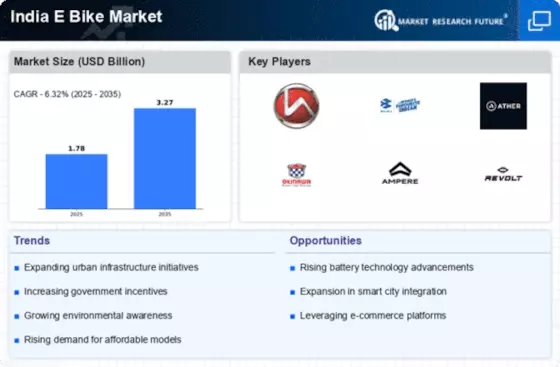
Technological advancements play a pivotal role in shaping the India E Bike Market. Innovations in battery technology, such as lithium-ion batteries, have significantly improved the range and efficiency of e-bikes. As of January 2026, the average range of e-bikes has increased to approximately 70-100 kilometers on a single charge, addressing one of the primary concerns of potential buyers. Furthermore, the integration of smart technologies, including GPS tracking and mobile app connectivity, enhances user experience and safety. Manufacturers are increasingly focusing on lightweight materials and energy-efficient designs, which contribute to better performance and longer battery life. These technological improvements not only attract consumers but also position the India E Bike Market as a competitive alternative to conventional vehicles, potentially leading to increased market penetration.
Government Initiatives and Incentives
The India E Bike Market is experiencing a surge due to various government initiatives aimed at promoting electric mobility. The Faster Adoption and Manufacturing of Electric Vehicles (FAME) scheme, for instance, provides substantial subsidies for electric two-wheelers, making them more affordable for consumers. In 2025, the Indian government allocated over INR 10 billion to support the adoption of electric vehicles, including e-bikes. This financial backing not only incentivizes manufacturers to produce more e-bikes but also encourages consumers to make the switch from traditional vehicles. Additionally, state governments are implementing their own policies, such as tax exemptions and rebates, further stimulating the market. These initiatives are likely to enhance the overall growth of the India E Bike Market, as they create a conducive environment for both manufacturers and consumers.
Rising Fuel Prices and Economic Factors
Rising fuel prices are significantly impacting consumer behavior and driving the growth of the India E Bike Market. As petrol and diesel prices continue to fluctuate, many consumers are seeking cost-effective alternatives for their daily commutes. E-bikes, which offer lower operational costs compared to conventional vehicles, are becoming increasingly appealing. In 2025, the average cost of operating an e-bike was reported to be nearly 70% lower than that of a petrol-powered two-wheeler. This economic advantage, coupled with the rising cost of living, is prompting consumers to consider e-bikes as a viable option for personal transportation. Furthermore, the increasing availability of financing options and affordable models is likely to enhance accessibility, thereby expanding the consumer base. As economic factors continue to influence purchasing decisions, the India E Bike Market is poised for substantial growth.
Environmental Concerns and Sustainability
Growing environmental concerns are propelling the India E Bike Market forward. As awareness of air pollution and climate change intensifies, consumers are increasingly seeking eco-friendly transportation options. E-bikes, which produce zero tailpipe emissions, align with the sustainability goals set by both the government and the public. In 2025, a survey indicated that over 60% of urban residents expressed a preference for electric vehicles, including e-bikes, as a means to reduce their carbon footprint. This shift in consumer mindset is prompting manufacturers to invest in sustainable practices and materials, further enhancing the appeal of e-bikes. Additionally, the government is promoting initiatives aimed at reducing vehicular emissions, which could lead to stricter regulations for traditional vehicles. Consequently, the India E Bike Market is likely to see a continued rise in demand as consumers prioritize environmentally friendly transportation solutions.
Urbanization and Changing Mobility Patterns
The rapid urbanization in India is significantly influencing the India E Bike Market. With over 600 million people expected to reside in urban areas by 2031, the demand for efficient and sustainable transportation solutions is on the rise. E-bikes offer a practical solution to the challenges of urban congestion and pollution, making them an attractive option for city dwellers. In metropolitan areas, where traffic congestion is a daily issue, e-bikes provide a nimble alternative to traditional vehicles. Moreover, the changing mobility patterns, particularly among younger generations who prioritize sustainability, are driving the adoption of e-bikes. As urban infrastructure continues to evolve, the India E Bike Market is likely to benefit from increased investments in cycling lanes and charging stations, further facilitating the growth of e-bike usage in urban settings.