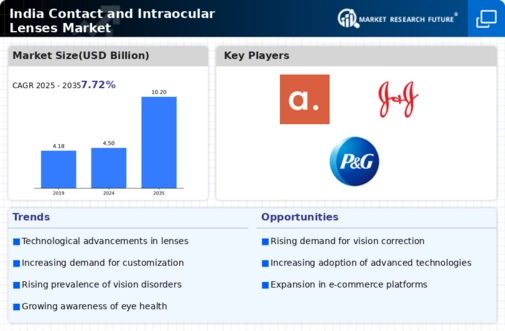
Growing Geriatric Population
The demographic shift towards an aging population in India is a significant driver of the contact intraocular lenses market. With the elderly population projected to reach 300 million by 2030, the demand for cataract surgeries and, consequently, intraocular lenses is likely to surge. Older adults are more susceptible to eye disorders, making them a key target demographic for lens manufacturers. This trend suggests that as the population ages, there will be an increased need for effective vision correction solutions, including contact intraocular lenses. The market is poised for growth as healthcare providers focus on catering to the visual needs of this expanding demographic.
Increasing Prevalence of Eye Disorders
The rising incidence of eye disorders, particularly cataracts and myopia, is a primary driver of The India contact intraocular lenses market. According to recent estimates, approximately 20 million people in India suffer from cataracts, necessitating surgical intervention and the use of intraocular lenses. This growing patient population is likely to propel demand for advanced contact intraocular lenses, as they offer improved visual outcomes and comfort. Furthermore, the increasing prevalence of myopia, especially among the youth, is expected to further stimulate market growth. As awareness of these conditions rises, patients are more inclined to seek corrective solutions, thereby enhancing the market landscape for contact intraocular lenses in India.
Technological Innovations in Lens Design
Technological advancements in lens design and materials are significantly influencing The India contact intraocular lenses market. Innovations such as the development of multifocal and toric lenses have expanded the options available to patients, catering to diverse visual needs. The introduction of biocompatible materials has also improved patient comfort and reduced the risk of complications. As manufacturers invest in research and development, the availability of cutting-edge products is likely to increase, attracting more consumers. The market is projected to grow as these innovations enhance the overall effectiveness of intraocular lenses, making them a preferred choice for eye care professionals and patients alike.
Government Support and Healthcare Policies
Government initiatives aimed at improving healthcare access and affordability are playing a crucial role in The India contact intraocular lenses market. Policies promoting eye health awareness and subsidized cataract surgeries are likely to increase the adoption of intraocular lenses. The National Programme for Control of Blindness and Visual Impairment (NPCBVI) has been instrumental in providing resources and support for eye care services across the country. Such initiatives not only enhance public awareness but also facilitate access to advanced intraocular lens options, thereby driving market growth. As the government continues to prioritize eye health, the demand for contact intraocular lenses is expected to rise.
Rising Disposable Income and Healthcare Expenditure
The increase in disposable income among the Indian population is contributing to the growth of the contact intraocular lenses market. As more individuals can afford quality healthcare services, there is a noticeable shift towards premium intraocular lens options. The rising healthcare expenditure, coupled with a growing middle class, is likely to enhance consumer spending on eye care solutions. This trend indicates that patients are more willing to invest in advanced contact intraocular lenses that offer better visual outcomes and comfort. Consequently, the market is expected to expand as consumers prioritize eye health and seek innovative solutions.