Rising Fuel Prices
The Hyper Hybrid Automobile Market is also being driven by the rising fuel prices that consumers face. As fuel costs continue to escalate, the economic advantages of owning a hyper hybrid vehicle become increasingly apparent. These vehicles typically offer superior fuel economy compared to traditional gasoline-powered cars, allowing owners to save on fuel expenses over time. Recent trends indicate that consumers are more inclined to invest in fuel-efficient vehicles, which positions the Hyper Hybrid Automobile Market favorably in a landscape of fluctuating fuel prices. This economic factor is likely to sustain interest in hyper hybrids as a viable alternative.
Consumer Demand for Efficiency
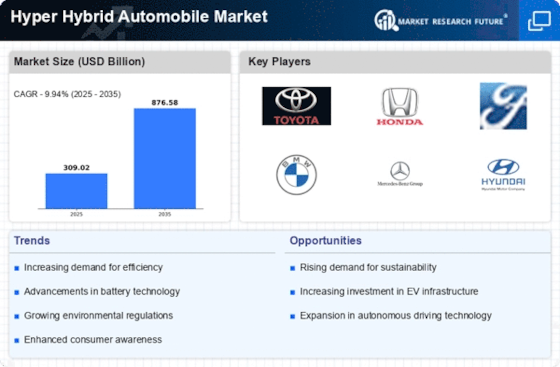
The Hyper Hybrid Automobile Market is experiencing a notable surge in consumer demand for vehicles that offer enhanced fuel efficiency and lower emissions. As consumers become increasingly environmentally conscious, the appeal of hyper hybrid vehicles, which combine traditional combustion engines with advanced electric propulsion systems, grows. Recent data indicates that the market for hybrid vehicles is projected to reach approximately 10 million units by 2026, reflecting a compound annual growth rate of around 15%. This trend suggests that consumers are actively seeking alternatives to conventional vehicles, thereby driving the growth of the Hyper Hybrid Automobile Market.
Advancements in Battery Technology
Technological advancements in battery technology are playing a pivotal role in the Hyper Hybrid Automobile Market. Innovations such as solid-state batteries and improved lithium-ion technologies are enhancing the performance and efficiency of hybrid vehicles. These advancements not only extend the driving range of hyper hybrids but also reduce charging times, making them more appealing to consumers. According to recent estimates, the battery market for electric and hybrid vehicles is expected to exceed 100 billion dollars by 2027. This growth indicates a strong correlation between battery technology improvements and the expansion of the Hyper Hybrid Automobile Market.
Government Incentives and Policies
Government incentives and supportive policies are significantly influencing the Hyper Hybrid Automobile Market. Many governments are implementing tax rebates, subsidies, and grants to encourage the adoption of hybrid vehicles. For instance, certain regions offer substantial financial incentives for consumers purchasing hyper hybrids, which can reduce the overall cost of ownership. This regulatory support is crucial, as it not only stimulates consumer interest but also fosters investment in research and development within the industry. As a result, the Hyper Hybrid Automobile Market is likely to benefit from a favorable policy environment that promotes sustainable transportation solutions.
Increased Awareness of Environmental Impact
There is a growing awareness among consumers regarding the environmental impact of their transportation choices, which is significantly benefiting the Hyper Hybrid Automobile Market. As climate change concerns rise, individuals are more inclined to consider vehicles that contribute to lower carbon footprints. Hyper hybrids, which utilize both electric and combustion technologies, present a compelling option for eco-conscious consumers. Market Research Future suggests that nearly 70% of potential car buyers are willing to pay a premium for environmentally friendly vehicles. This shift in consumer mindset is likely to propel the growth of the Hyper Hybrid Automobile Market as more individuals seek sustainable transportation solutions.