×
Request Free Sample ×

Kindly complete the form below to receive a free sample of this Report

* Please use a valid business email

Leading companies partner with us for data-driven Insights

clients tt-cursor
Hero Background

House Wraps Market

ID: MRFR/PCM/26090-CR
111 Pages
Snehal Singh
January 2026

House Wraps Market Research Report By Material (Tyvek, Polyethylene, Polypropylene, Polyisocyanurates (PIR), Others), By Type (Water-Resistive Barrier (WRB), Air Barrier, Moisture Barrier, Radiant Barrier, Others Type), By Application (Residential, Commercial, Industrial, Others App), By Form (Rolls, Sheets, Others Form), By End-Use (New Construction, Renovations, Maintenance & Repair, Others) and By Regional (North America, Europe, South America, Asia Pacific, Middle East and Africa) - Forecast to 2035

Share:
Download PDF ×

We do not share your information with anyone. However, we may send you emails based on your report interest from time to time. You may contact us at any time to opt-out.

House Wraps Market Infographic
Purchase Options

House Wraps Market Summary

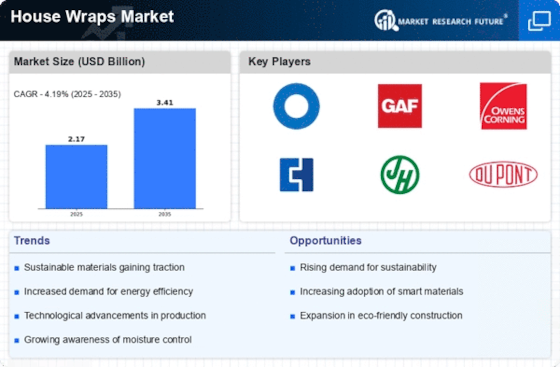
As per Market Research Future analysis, the House Wraps Market Size Was Valued at USD 2,052.25 Million in 2024. The Global House Wraps Industry Is Projected to grow from USD 2,142.14 Million in 2025 to USD 3,411.94 Million by 2035, Exhibiting A Compound Annual Growth Rate (CAGR) of 4.76% during the Forecast Period (2025 - 2035).

Key Market Trends & Highlights

The House Wraps Market, which includes protective, moisture-resistant sheets installed beneath exterior cladding in residential and commercial construction, is experiencing steady growth due to rising energy-efficiency demands, stringent building codes, and expanding construction activity worldwide.

  • Increasing enforcement of energy conservation codes and green building standards is accelerating the adoption of house wraps as essential air and moisture barrier solutions.
  • Expansion of single-family and multi-family housing, particularly in emerging economies, continues to drive significant demand for house wrap material.
  • Manufacturers are focusing on recyclable, low-VOC, and environmentally responsible house wrap products to align with global sustainability goals and green certifications.
  • Innovations such as breathable membranes, self-adhesive wraps, and enhanced UV-resistant products are improving durability and installation efficiency.
  • Extreme weather conditions and climate variability are driving demand for advanced weather-resistant building envelope solutions, including high-performance house wraps.

Market Size & Forecast

2024 Market Size 2,052.25 (USD Million)
2035 Market Size 3,411.94 (USD Million)
CAGR (2025 - 2035) 4.76%

Major Players

DUPONT, OWENS CORNING, 3M, Amcor plc, Johns Manville, Siplast, Inc, CertainTeed, LLC, Polyguard Products Inc, GAF Materials LLC, W. R. Grace & Co, And Others.

Our Impact
Enabled $4.3B Revenue Impact for Fortune 500 and Leading Multinationals
Partnering with 2000+ Global Organizations Each Year
30K+ Citations by Top-Tier Firms in the Industry

House Wraps Market Trends

Climate Goals & Decarbonization Trends

The push toward climate goals and decarbonization trends has positioned house wraps as an essential component of modern building practices. According to the UN Environment Programme (UNEP) and the Global Alliance for Buildings and Construction (GlobalABC), the building sector is one of the largest contributors to climate change, responsible for about 32% of global energy demand and 34% of CO₂ emissions. These statistics underscore the urgency of integrating energy-efficient materials and technologies into both new construction and retrofits. House wraps, which function as air and moisture barriers, play a vital role in reducing unnecessary energy consumption by improving the overall thermal performance of buildings. By limiting air leakage and preventing moisture damage, they reduce heating and cooling loads, thus cutting down on energy demand and associated emissions.

The decarbonization agenda is further reinforced by global frameworks advocating for zero-carbon building codes by 2028, particularly in high-emitting economies. The UNEP and GlobalABC roadmaps emphasize that achieving these ambitious targets requires a holistic approach to building envelopes, where solutions such as house wraps are critical to bridging performance gaps. For builders, developers, and policymakers, house wraps offer a cost-effective and scalable strategy to meet tightening carbon reduction mandates without compromising durability or indoor comfort. Additionally, national governments are aligning with these objectives by enacting policies that incentivize energy efficiency improvements. For example, the European Union’s Energy Performance of Buildings Directive (EPBD) calls for deep renovations that enhance envelope performance, while the U.S. Department of Energy (DOE) promotes advanced air-barrier solutions to support its long-term decarbonization strategy. In this context, house wraps are no longer seen as optional add-ons but as integral enablers of climate-aligned construction. As the race to decarbonize accelerates, the adoption of house wraps is expected to surge, driven by their proven ability to support energy savings, resilience, and emissions reductions in line with international climate commitments.

House Wraps Market Drivers

Variability In Regional Building Codes

One of the most persistent restraints in the house wraps market is the lack of uniformity in building codes across regions. Building envelopes and energy efficiency standards are critical to determining whether house wraps are mandated or merely recommended, yet regulations vary widely. In North America, for instance, the International Energy Conservation Code (IECC) sets clear benchmarks for air leakage and moisture control. States like New York and California have gone further by enforcing localized versions, such as the Energy Conservation Construction Code of New York State (ECCCNYS). These codes make the use of air and moisture barriers nearly unavoidable in residential and commercial projects. However, not all U.S. states have fully adopted the latest IECC standards. According to the U.S. Department of Energy, as of 2023, only around 70% of states have implemented the most up-to-date codes, leaving a significant portion of the market operating under outdated frameworks.

In contrast, the European Union enforces energy performance directives, but implementation differs by member state. Countries such as Germany and Sweden maintain rigorous building envelope requirements, while others lag behind in enforcement or scope, limiting the market penetration of house wraps. The European Construction Industry Federation (FIEC) has identified fragmented regulations as a barrier to harmonizing energy-efficiency initiatives across the continent. Emerging economies present an even greater challenge, where regulatory oversight for air barriers is often minimal or non-existent. Builders in these markets may view house wraps as an optional cost rather than a compliance necessity.  For manufacturers, this variability increases complexity. They must tailor products to meet different regional codes, raising compliance costs and slowing innovation cycles. Builders, in turn, face uncertainty about when wraps are required, resulting in uneven demand. Until a more standardized regulatory framework is achieved, this patchwork of codes will continue to restrain global growth

Stricter Energy Codes & Efficiency Mandates

Stricter energy codes and efficiency mandates have become one of the most significant drivers fueling the demand for house wraps in the global construction sector. As governments intensify their focus on energy conservation and sustainable building practices, the building envelope has come under greater regulatory scrutiny. The U.S. Department of Energy’s (DOE) technical analysis of the 2024 International Energy Conservation Code (IECC) highlights this trend, showing substantial gains over the 2021 edition, 7.8% site energy savings, 6.8% source energy savings, and 6.6% energy-cost savings. These improvements underline the necessity of advanced materials that can minimize heat loss, improve insulation performance, and enhance air and moisture control. House wraps, designed to act as a barrier against air infiltration while allowing moisture vapor to escape, directly support these regulatory objectives.

At the state level, similar advancements illustrate the growing reliance on house wraps. For example, the New York State Energy Research and Development Authority (NYSERDA) reports that adopting the 2024 Energy Conservation Construction Code of New York State (ECCCNYS) is projected to yield 19.5% site energy savings in new commercial buildings. Over a 30-year horizon, these improvements translate into a net present value savings of USD 10.72 per square foot, emphasizing the financial and environmental incentives linked to stricter codes. Achieving these energy performance thresholds necessitates high-performing air barriers, with house wraps becoming a cost-effective and reliable solution.

Globally, many regions are also updating building energy standards in alignment with carbon neutrality goals and international agreements such as the Paris Accord. The European Union’s Energy Performance of Buildings Directive (EPBD), for instance, emphasizes near-zero energy buildings, further stimulating adoption of high-efficiency envelope solutions. These mandates ensure that builders and contractors prioritize materials like house wraps, not only for compliance but also to meet market demand for sustainable construction. In this context, house wraps are no longer optional add-ons; they are becoming critical components in delivering energy-efficient, code-compliant structures worldwide.

Building Performance & Air-Tightness Requirements

Air leakage has long been identified as one of the most persistent challenges in building energy performance, directly impacting heating and cooling costs as well as occupant comfort. Research from the U.S. Department of Energy (DOE) and the National Institute of Standards and Technology (NIST) underscores that uncontrolled infiltration of outside air can contribute substantially to energy loss, often accounting for a large share of inefficiencies in both residential and commercial structures. This leakage not only drives up utility bills but also makes indoor environments harder to regulate, creating uneven temperatures and increasing strain on HVAC systems. To counter this, policymakers and regulators have increasingly emphasized the integration of continuous air barriers into modern building codes. These measures are particularly crucial in colder climates, where air infiltration can significantly undermine insulation performance, and in warmer, humid regions, where moisture-laden air entering through gaps can foster mold growth and structural damage. House wraps, which act as weather-resistant barriers, have become an indispensable tool in meeting these performance expectations. By reducing uncontrolled air movement, they help create a tighter, more predictable building envelope that aligns with both energy efficiency and occupant well-being goals.

For example, several state and municipal energy codes in the U.S. now explicitly require materials that function as continuous air barriers in new construction projects. These requirements, when combined with federal efficiency goals, have made house wraps a standard feature in high-performance building design. Additionally, retrofitting older buildings with modern wraps offers a cost-effective path to compliance, reducing operational costs while improving comfort. As the drive toward net-zero energy buildings accelerates globally, the role of house wraps in controlling air leakage will continue to expand, cementing their position as a critical element of sustainable construction.

Market Segment Insights

By Application: Residential (largest and fastest growing segment)

Based on the application, the House Wraps Market has been bifurcated into Residential, Commercial, Industrial, and Others. Residential construction constitutes the largest and most significant application segment for house wraps globally, driven by the need to protect building envelopes from environmental factors and to enhance energy efficiency, comfort, and structural durability. House wraps play a critical role in preventing water infiltration, air leakage, and moisture damage, which can compromise insulation, cause mold growth, weaken structural components, and reduce the overall lifespan of residential buildings. Materials such as Tyvek, polyethylene, polypropylene, and composite films are extensively used in single-family homes, multi-family apartments, and high-density urban housing projects, providing a combination of water resistance, air sealing, and breathability. The growing emphasis on sustainable construction and energy efficiency has amplified the demand for high-performance residential house wraps, particularly in regions where building codes and green building certifications mandate envelope protection and performance compliance.

By Form: Rolls (dominates market) vs other forms (fastest growing)

Based on the form, the House Wraps Market has been bifurcated into Rolls, Sheets, and Others. Rolls are the most prevalent form of house wraps globally, favored for their versatility, adaptability, and ease of handling across diverse construction applications. They are typically manufactured as continuous lengths of materials such as polyethylene, polypropylene, Tyvek, or composite films, allowing contractors to cut them to the required size directly on-site. This flexibility makes rolls highly suitable for residential, commercial, and industrial projects, providing coverage for both standard and irregular surfaces while minimizing the need for seams and joints, which can compromise envelope performance. Their continuous format enables rapid installation, making them particularly advantageous in large-scale construction projects, including multi-story residential complexes, commercial buildings, and industrial facilities, where efficiency and labor optimization are crucial. Rolls also facilitate seamless coverage around corners, edges, and openings, ensuring consistent air and moisture sealing, which is critical for thermal efficiency, structural protection, and long-term durability.

By End Use: New Construction (Highly anticipated) vs Maintenance & Repair (fastest growing)

Based on end-use, the House Wraps Market has been bifurcated into New Construction, Renovations, Maintenance & Repair, and Others. New construction represents the largest and most significant end-use segment in the House Wraps Market, driven by rapid urbanization, infrastructure expansion, and the continuous growth of both residential and commercial building sectors. In new construction projects, house wraps play a critical role from the outset, providing essential protection against water infiltration, air leakage, and moisture accumulation within walls, roofs, and insulation systems. By acting as a barrier to environmental stressors while allowing vapor to escape, these materials preserve the structural integrity of buildings, reduce the risk of mold or rot, and contribute to overall energy efficiency. This initial layer of protection is particularly vital in modern construction, where thermal performance, sustainability, and long-term durability are key considerations.

By Material: Polypropylene (Largest and Fastest-Growing)

Based on material, the House Wraps Market is segmented into Tyvek, Polyethylene, Polypropylene, Polyisocyanurates (PIR), and Others. The Polypropylene segment dominated the market in 2024, segment is projected to be the fastest-growing segment during the forecast period, 2025–2035.
The market for polypropylene house wraps is growing steadily in both mature and emerging regions. In North America and Europe, the material is increasingly used in specialized commercial and industrial construction where performance requirements exceed the capabilities of basic polyethylene wraps. In Asia-Pacific and Latin America, polypropylene’s affordability combined with superior durability compared to standard polyethylene makes it a viable choice for mid-range residential and commercial projects. Manufacturers are investing in innovation to improve air barrier performance, moisture management, and UV stability, ensuring that polypropylene wraps meet evolving building codes and energy efficiency standards. Its compatibility with green construction practices and long-lasting protection further drives adoption among builders emphasizing sustainable and resilient infrastructure.
Polypropylene also supports modern construction methods such as modular and prefabricated building systems. Its lightweight, durable, and flexible nature makes it suitable for off-site assembly and transportation without compromising performance. Multi-layer polypropylene wraps with advanced coatings or composite structures are being introduced to expand functionality, offering better moisture control, thermal insulation support, and resistance to tearing and punctures. As global construction activity continues to grow, particularly in regions emphasizing energy efficiency, structural durability, and sustainable materials, polypropylene house wraps are positioned as a high-performance solution that bridges the gap between cost-effectiveness and technical excellence. Manufacturers continue to focus on material innovation, regional customization, and supply chain optimization to meet demand across diverse market segments. 

Get more detailed insights about House Wraps Market

Regional Insights

House Wraps Regional Insights   

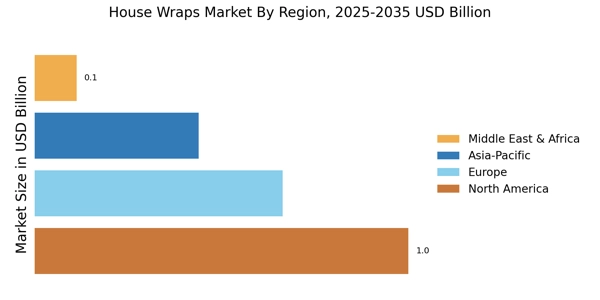
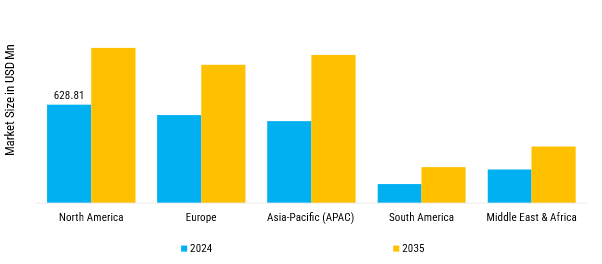
Based on region, the House Wraps Market is segmented into North America, Europe, Asia-Pacific, South America and Middle East and Africa. North America accounted for the largest market share in 2024 and is anticipated to reach USD 992.9 Million by 2035. Asia-Pacific is projected to grow at the highest CAGR of 5.5% during the forecast period.
House Wraps Market Regional Insights

Europe: Emerging Operation Market

The future outlook for the European house wraps market is highly positive, driven by a convergence of regulatory support, technological innovation, financial incentives, and sustainability awareness. Continued investment in product research and development, coupled with government policies aimed at achieving zero-carbon buildings, will sustain market growth. Renovation and retrofitting of Europe’s aging building stock, combined with increasing consumer awareness of energy efficiency and environmental impact, ensure a stable and expanding demand base. The integration of circular economy principles, alongside advancements in smart building technologies, will further reinforce the market’s trajectory, providing manufacturers with opportunities to innovate, differentiate, and deliver value across multiple segments of the construction industry. 

North America: Expanding operation Evolution

Technological advancements in material science are transforming the house wraps market. Modern house wraps now offer improved vapor permeability, UV resistance, and self-adhering membranes, enabling quicker installation and longer service life. Manufacturers are actively investing in research and development to design products that meet evolving building codes and environmental targets. NIST has evaluated the performance of different air barrier materials, confirming that innovative house wraps significantly enhance building energy efficiency and resilience. These developments not only meet regulatory demands but also cater to the construction industry’s growing emphasis on sustainable, durable, and high-performance materials. 

South America: Emerging and Growing

The South American house wraps market is experiencing a notable transformation, driven by a convergence of factors including evolving building codes, increasing demand for energy-efficient solutions, and a growing emphasis on sustainability. As the region navigates its unique challenges and opportunities, house wraps have emerged as a critical component in enhancing building performance, reducing energy consumption, and promoting environmental responsibility. In South America, the regulatory landscape for energy efficiency in buildings is gradually evolving. While the region may not yet have the stringent mandates seen in other parts of the world, there is a noticeable shift towards adopting more sustainable construction practices. Countries like Brazil, Argentina, and Chile are beginning to implement building codes that encourage energy efficiency, including the use of materials that improve thermal insulation and reduce energy consumption. 

Asia-pacific: Experiencing Dynamic Growth

The global push toward zero-carbon buildings is influencing construction practices in the APAC region. International organizations and environmental bodies are advocating for the adoption of building codes that promote energy efficiency and sustainability. This global trend is prompting APAC countries to strengthen their building regulations and standards, further driving the demand for high-performance materials like house wraps. Looking ahead, the APAC house wraps market is poised for continued growth. Factors such as urban expansion, increasing disposable incomes, and heightened environmental awareness are expected to fuel demand. Additionally, the ongoing development of smart cities and infrastructure projects presents significant opportunities for the integration of energy-efficient materials, including house wraps, into building designs.

Middle-East & Africa: Driven by Increasing Urbanization

In the MEA region, building codes and energy efficiency standards are gradually being implemented to address the challenges posed by extreme climates and resource constraints. For example, Egypt's Energy Code for Residential Buildings (EECRB), first issued in 2006, provides guidelines for passive design strategies, including building orientation and window placement, to enhance energy performance. Additionally, countries like the United Arab Emirates (UAE) and Qatar have developed their own green building rating systems, such as the Estidama Pearl Rating System and the Global Sustainability Assessment System (GSAS), respectively. These systems encourage the use of sustainable materials and energy-efficient designs in buildings, indirectly promoting the adoption of house wraps as part of the building envelope.


House Wraps Market Regional Image

Key Players and Competitive Insights

Many global, regional, and local vendors characterize the House Wraps Market. Several companies are leading the way as disruptors and innovators in the House Wraps Market by introducing groundbreaking technologies and sustainable solutions. Companies like DuPont with its Tyvek Trifecta, Owens Corning with PinkWrap, and 3M with its Scotch House Wrap are driving the market with innovations such as advanced adhesive technology, energy-efficient materials, and fire-resistant properties. 

The major players in the market Include DUPONT, OWENS CORNING, 3M, Amcor plc, Johns Manville, Siplast, Inc, CertainTeed, LLC, Polyguard Products Inc, GAF Materials LLC, W. R. Grace & Co, And Others. Market leaders in the house wraps industry are adopting several key strategies to maintain their competitive advantage and meet the growing demand for sustainable, energy-efficient building solutions. Companies like DuPont, Owens Corning, and 3M are heavily investing in innovation and research and development to introduce advanced technologies, such as adhesive-backed house wraps and liquid-applied membranes, that improve performance, ease of installation, and energy efficiency. They are also focusing on sustainability by developing eco-friendly, recyclable, and bio-based materials to cater to the rising demand for green construction. Strategic acquisitions, such as Amcor’s acquisition of Berry Global, allow these companies to expand their portfolios and increase market reach by integrating complementary building materials.

Key Companies in the House Wraps Market include

Industry Developments

April 2025: DuPont's Tyvek Trifecta high-performance barrier won a Gold Edison Award, a prestigious recognition for its ability to improve energy efficiency and fire safety in high-risk buildings. 

Future Outlook

House Wraps Market Future Outlook

The House Wraps Market is projected to grow at a 4.76% CAGR from 2025 to 2035, driven by a shift in the construction industry toward building practices that enhance durability, improve energy efficiency, and promote healthier indoor environments.

New opportunities lie in:

  • Development Of Bio-Based & Circular Materials
  • Rising Demand From Emerging Economies
  • Incentives For Energy-Efficient Retrofits

According to the United Nations’ World Urbanization Prospects, by 2050 nearly 68% of the global population will reside in urban areas, with much of this growth concentrated in India, Nigeria, and China. These demographic trends are directly fueling demand for residential and commercial construction, creating opportunities for advanced building materials such as house wraps that enhance durability and energy efficiency.

Market Segmentation

House Wraps Market Form Outlook

  • Rolls
  • Sheets
  • Others

House Wraps Market Type Outlook

  • Water-Resistive Barrier (WRB)
  • Air Barrier
  • Moisture Barrier
  • Radiant Barrier
  • Others

House Wraps Market End-Use Outlook

  • New Construction
  • Renovations
  • Maintenance Repair
  • Others

House Wraps Market Material Outlook

  • Tyvek
  • Polyethylene
  • Polypropylene
  • Polyisocyanurates (PIR)
  • Others

House Wraps Market Application Outlook

  • Residential
  • Commercial
  • Industrial
  • Others

Report Scope

Market Size 2024 2,052.2 (USD Million)
Market Size 2025 2,142.1 (USD Million)
Market Size 2035 3,411.9 (USD Million)
Compound Annual Growth Rate (CAGR) 4.76% (2025 - 2035)
Report Coverage Revenue Forecast, Competitive Landscape, Growth Factors, and Trends
Base Year 2024
Market Forecast Period 2025 - 2035
Historical Data 2019 - 2023
Market Forecast Units USD Million
Key Companies Profiled DUPONT, OWENS CORNING, 3M, Amcor plc, Johns Manville, Siplast, Inc, CertainTeed, LLC, Polyguard Products Inc, GAF Materials LLC, W. R. Grace & Co, Others.
Segments Covered By Material, By Type, By Application, By Form, By End-Use, By Regional
Key Market Opportunities

• Rising Demand From Emerging Economies 

• Development Of Bio-Based & Circular Materials

Key Market Dynamics

·  Rising Demand for Energy-Efficient Buildings 

·  Shift Toward Sustainable & Eco-Friendly Materials

Countries Covered North America, Europe, APAC, South America, MEA
Leave a Comment

FAQs

What is the current valuation of the House Wraps Market as of 2024?

The House Wraps Market was valued at 2,052.2 USD Million in 2024.

What is the projected market valuation for the House Wraps Market in 2035?

The market is projected to reach 3,411.9 USD Million by 2035.

What is the expected CAGR for the House Wraps Market during the forecast period 2025 - 2035?

The expected CAGR for the House Wraps Market during 2025 - 2035 is 4.76%.

Which companies are considered key players in the House Wraps Market?

Key players in the market include Tyvek, GAF, Owens Corning, CertainTeed, James Hardie, DuPont, BASF, Nashua, and Rmax.

What are the primary materials used in the House Wraps Market?

The primary materials include Tyvek, polyethylene, polypropylene, polyisocyanurates (PIR), and others, with valuations ranging from 0.07 to 0.95 USD Billion.

What types of barriers are included in the House Wraps Market?

The market includes Water-Resistive Barriers (WRB), Air Barriers, Moisture Barriers, Radiant Barriers, and others, with valuations from 0.25 to 1.05 USD Billion.

What are the main applications of house wraps?

House wraps are primarily used in residential, commercial, and industrial applications, with residential applications valued between 0.865 and 1.325 USD Billion.

In what forms are house wraps available in the market?

House wraps are available in rolls, sheets, and other forms, with rolls valued between 0.87 and 1.36 USD Billion.

What are the end-use categories for house wraps?

End-use categories include new construction, renovations, maintenance repair, and others, with new construction valued between 0.87 and 1.36 USD Billion.

How does the House Wraps Market's growth potential appear in the coming years?

The market's growth potential appears promising, with a projected increase in valuation from 2.172 USD Billion in 2024 to 3.412 USD Billion by 2035.

Download Free Sample

Kindly complete the form below to receive a free sample of this Report

Compare Licence

×
Features License Type
Single User Multiuser License Enterprise User
Price $4,950 $ $7,250
Maximum User Access Limit 1 User Upto 10 Users Unrestricted Access Throughout the Organization
Free Customization
Direct Access to Analyst
Deliverable Format
Platform Access
Discount on Next Purchase 10% 15% 15%
Printable Versions