Shift Towards Remote Work
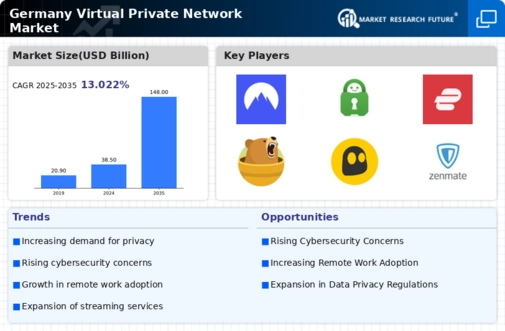
The shift towards remote work has significantly influenced the Germany virtual private network market. As more companies adopt flexible work arrangements, the need for secure remote access to corporate networks has become paramount. In 2025, it was estimated that over 60% of German employees worked remotely at least part-time, necessitating reliable VPN solutions to ensure secure connections. VPNs enable employees to access company resources safely, regardless of their location, thus facilitating productivity and collaboration. This trend is expected to continue, with businesses increasingly investing in VPN technologies to support their remote workforce, thereby propelling market growth in the coming years.
Expansion of Streaming Services
The expansion of streaming services in Germany is contributing to the growth of the virtual private network market. As consumers increasingly turn to online platforms for entertainment, they often encounter geo-restrictions that limit access to content. VPNs offer a solution by allowing users to bypass these restrictions and access a wider array of streaming options. In 2025, it was reported that the number of streaming subscribers in Germany exceeded 30 million, indicating a robust market for VPN services that cater to this demand. This trend is expected to continue, as more individuals seek to enhance their viewing experiences, thereby driving the adoption of VPN technologies.
Increasing Cybersecurity Threats
The Germany virtual private network market is experiencing a surge in demand due to escalating cybersecurity threats. With the rise of sophisticated cyberattacks, individuals and businesses are increasingly seeking robust solutions to protect their sensitive data. In 2025, it was reported that cybercrime costs in Germany reached approximately 220 billion euros, highlighting the urgent need for effective cybersecurity measures. VPNs provide an essential layer of security by encrypting internet traffic and masking users' IP addresses, thereby safeguarding against potential breaches. This growing awareness of cybersecurity risks is likely to drive further adoption of VPN services across various sectors, including finance, healthcare, and e-commerce, as organizations prioritize data protection and compliance with stringent regulations.
Growing Awareness of Data Privacy
The growing awareness of data privacy among consumers is a key driver for the Germany virtual private network market. With increasing concerns about data breaches and unauthorized surveillance, individuals are becoming more proactive in protecting their online privacy. In 2025, surveys indicated that approximately 70% of German internet users expressed concerns about their data security, leading to a heightened interest in VPN services. These tools not only provide anonymity but also empower users to control their personal information. As privacy regulations, such as the General Data Protection Regulation (GDPR), continue to shape the digital landscape, the demand for VPNs is likely to rise, as consumers seek to comply with legal requirements while safeguarding their data.
Regulatory Compliance Requirements
Regulatory compliance requirements are playing a crucial role in shaping the Germany virtual private network market. Organizations across various sectors are increasingly mandated to adhere to strict data protection laws, necessitating the implementation of secure communication channels. In 2025, it was noted that over 80% of German companies were actively seeking solutions to ensure compliance with data protection regulations. VPNs serve as a vital tool in this regard, providing encrypted connections that help organizations meet legal obligations while safeguarding sensitive information. As regulatory scrutiny intensifies, the demand for VPN services is likely to grow, as businesses prioritize compliance and risk management.