×
Request Free Sample ×

Kindly complete the form below to receive a free sample of this Report

* Please use a valid business email

Leading companies partner with us for data-driven Insights

clients tt-cursor
Hero Background

Germany Tyrosine Hydroxylase Deficiency Market

ID: MRFR/HC/53180-HCR
200 Pages
Garvit Vyas
February 2026

Germany Tyrosine Hydroxylase Deficiency Market Research Report By Severity (Mild, Moderate, Severe), By Diagnosis (Examination of Cerebrospinal Fluid, Genetic Testing), By Treatment (Medications) and By End User (Hospitals & Clinics, Diagnostic Centers) - Growth & Industry Forecast 2025 To 2035

Share:
Download PDF ×

We do not share your information with anyone. However, we may send you emails based on your report interest from time to time. You may contact us at any time to opt-out.

Germany Tyrosine Hydroxylase Deficiency Market Infographic
Purchase Options

Germany Tyrosine Hydroxylase Deficiency Market Summary

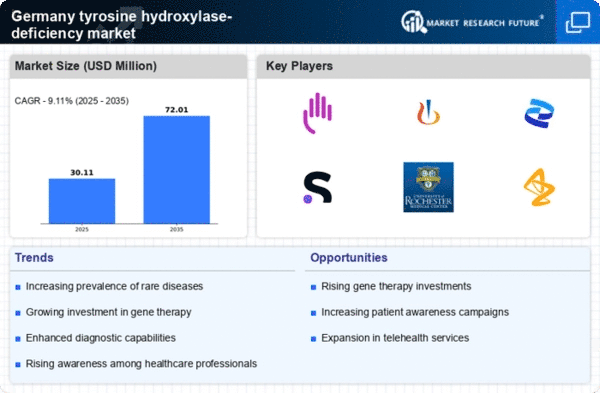
As per Market Research Future analysis, the Tyrosine Hydroxylase-deficiency market was estimated at 27.6 USD Million in 2024. The tyrosine hydroxylase-deficiency market is projected to grow from 30.11 USD Million in 2025 to 72.01 USD Million by 2035, exhibiting a compound annual growth rate (CAGR) of 9.1% during the forecast period 2025 - 2035

Key Market Trends & Highlights

The Germany tyrosine hydroxylase-deficiency market is poised for growth driven by advancements in treatment options and increased awareness.

  • The market is witnessing the emergence of targeted therapies that aim to address the specific needs of patients.
  • Increased awareness and advocacy efforts are contributing to a more informed patient population and healthcare providers.
  • Regulatory support for rare diseases is enhancing the development and approval processes for new therapies.
  • Key market drivers include the rising incidence of neurological disorders and advancements in genetic testing.

Market Size & Forecast

2024 Market Size 27.6 (USD Million)
2035 Market Size 72.01 (USD Million)
CAGR (2025 - 2035) 9.11%

Major Players

Bristol Myers Squibb (US), Novartis (CH), Pfizer (US), Sanofi (FR), Roche (CH), AstraZeneca (GB), Teva Pharmaceutical Industries (IL), Eli Lilly and Company (US)

Our Impact
Enabled $4.3B Revenue Impact for Fortune 500 and Leading Multinationals
Partnering with 2000+ Global Organizations Each Year
30K+ Citations by Top-Tier Firms in the Industry

Germany Tyrosine Hydroxylase Deficiency Market Trends

The tyrosine hydroxylase-deficiency market in Germany is currently experiencing a notable evolution, driven by advancements in genetic research and increased awareness of rare metabolic disorders. The condition, characterized by a deficiency in the enzyme responsible for synthesizing dopamine, has garnered attention from both healthcare professionals and patient advocacy groups. This heightened focus has led to improved diagnostic methods and the development of targeted therapies, which may enhance patient outcomes. Furthermore, the integration of innovative treatment options, such as enzyme replacement therapies and gene therapies, appears to be on the horizon, potentially transforming the management of this disorder. In addition, the regulatory landscape in Germany is adapting to facilitate the approval of new therapies for rare diseases. The government is likely to support initiatives aimed at expediting the development and accessibility of treatments for tyrosine hydroxylase deficiency. This supportive environment, combined with ongoing research efforts, suggests a promising future for the tyrosine hydroxylase-deficiency market. As stakeholders continue to collaborate, the potential for novel therapeutic solutions may increase, ultimately benefiting patients and healthcare providers alike. The market's trajectory indicates a growing recognition of the importance of addressing rare metabolic disorders, which could lead to enhanced funding and resources for research and treatment options.

Emergence of Targeted Therapies

The tyrosine hydroxylase-deficiency market is witnessing a shift towards the development of targeted therapies. These innovative treatments aim to address the underlying causes of the disorder, potentially improving patient outcomes. As research progresses, the focus on personalized medicine may lead to more effective interventions tailored to individual patient needs.

Increased Awareness and Advocacy

There is a growing awareness of tyrosine hydroxylase deficiency among healthcare professionals and the general public. Advocacy groups are playing a crucial role in educating stakeholders about the disorder, which may lead to earlier diagnosis and intervention. This heightened awareness could drive demand for new therapies and support services.

Regulatory Support for Rare Diseases

The regulatory environment in Germany is evolving to better accommodate the needs of patients with rare diseases. Initiatives aimed at expediting the approval process for new treatments are likely to enhance the availability of therapies for tyrosine hydroxylase deficiency. This supportive framework may encourage investment in research and development.

Germany Tyrosine Hydroxylase Deficiency Market Drivers

Advancements in Genetic Testing

Technological advancements in genetic testing are significantly impacting the tyrosine hydroxylase-deficiency market. In Germany, the availability of next-generation sequencing (NGS) has revolutionized the diagnosis of rare genetic disorders, allowing for earlier and more accurate identification of tyrosine hydroxylase deficiency. This has led to an increase in diagnosed cases, which in turn drives demand for targeted therapies and management strategies. The market is expected to grow as healthcare providers increasingly adopt these advanced testing methods, facilitating timely interventions. Moreover, the integration of genetic counseling services alongside testing is likely to enhance patient outcomes, further propelling the growth of the tyrosine hydroxylase-deficiency market.

Growing Patient Advocacy Groups

The emergence of patient advocacy groups in Germany is playing a pivotal role in shaping the tyrosine hydroxylase-deficiency market. These organizations are instrumental in raising awareness about the condition, providing support to affected families, and lobbying for better healthcare policies. Their efforts have led to increased visibility of tyrosine hydroxylase deficiency, which may encourage more individuals to seek diagnosis and treatment. Furthermore, advocacy groups often collaborate with researchers and pharmaceutical companies, facilitating clinical trials and the development of new therapies. This collaborative environment is likely to foster innovation within the tyrosine hydroxylase-deficiency market, ultimately benefiting patients and healthcare providers alike.

Regulatory Framework Enhancements

The regulatory landscape in Germany is evolving to better support the development of treatments for rare diseases, including tyrosine hydroxylase deficiency. Recent enhancements in regulatory frameworks aim to streamline the approval process for orphan drugs, which are essential for addressing the needs of patients with rare conditions. These changes may reduce the time and cost associated with bringing new therapies to market, thereby encouraging pharmaceutical companies to invest in the development of treatments for tyrosine hydroxylase deficiency. As a result, the tyrosine hydroxylase-deficiency market is likely to experience growth, with more innovative therapies becoming available to patients in the near future.

Rising Incidence of Neurological Disorders

The increasing prevalence of neurological disorders in Germany is a crucial driver for the tyrosine hydroxylase-deficiency market. Recent studies indicate that the incidence of rare genetic disorders, including tyrosine hydroxylase deficiency, is on the rise, with estimates suggesting that approximately 1 in 100,000 live births may be affected. This growing patient population necessitates the development of specialized treatments and therapies, thereby expanding the market. Furthermore, as awareness of these conditions increases among healthcare professionals and the public, the demand for diagnostic and therapeutic solutions is likely to grow. The tyrosine hydroxylase-deficiency market is thus positioned to benefit from this trend, as healthcare systems adapt to meet the needs of an expanding patient demographic.

Increased Investment in Rare Disease Research

Investment in research and development for rare diseases is a significant driver for the tyrosine hydroxylase-deficiency market. In Germany, both public and private sectors are allocating substantial funds towards understanding and treating rare genetic disorders. Reports indicate that funding for rare disease research has increased by over 30% in recent years, reflecting a growing recognition of the need for effective therapies. This influx of capital is likely to accelerate the development of innovative treatments for tyrosine hydroxylase deficiency, enhancing the market landscape. As more pharmaceutical companies enter this space, competition may lead to improved treatment options and potentially lower costs for patients.


Market Segment Insights

By Treatment Type: Medication (Largest) vs. Gene Therapy (Fastest-Growing)

The distribution of treatment types in the Germany tyrosine hydroxylase-deficiency market reveals that Medication holds the largest market share. This segment is primarily driven by the availability of traditional and innovative pharmaceuticals that have gained trust among healthcare providers. On the other hand, Dietary Management also plays a significant role, focusing on nutritional strategies that support overall health, but it lags behind Medication in terms of market presence. Gene Therapy, while currently smaller, is rapidly gaining momentum in the market, characterized by its innovative approach to treating the underlying causes of the deficiency. Growth trends within this segment are being shaped by technological advancements and increasing awareness among patients and healthcare professionals. The Medication segment is anticipated to maintain its dominance, bolstered by ongoing research and development efforts. Meanwhile, Gene Therapy is considered the fastest-growing segment, fueled by breakthroughs in genetic treatments and increasing investments in biotechnology. The rising prevalence of tyrosine hydroxylase deficiency is also driving the demand for effective therapies, making the market dynamics highly competitive and evolving.

Medication: Largest vs. Gene Therapy: Fastest-Growing

Medication remains the dominant force in the Germany tyrosine hydroxylase-deficiency market, characterized by a diverse range of available products that cater to various patient needs. This segment is well-established, with numerous pharmaceutical companies competing through innovative drugs and treatment protocols. In contrast, Gene Therapy represents an emerging and rapidly evolving area within this market. It focuses on addressing the genetic basis of the deficiency, offering hope for more permanent solutions. As research progresses, Gene Therapy is capturing the attention of both investors and healthcare providers, signifying a shift towards more advanced treatment paradigms that promise improved patient outcomes.

By Diagnosis Method: Genetic Testing (Largest) vs. Clinical Evaluation (Fastest-Growing)

In the Germany tyrosine hydroxylase-deficiency market, the market share distribution among the diagnosis methods reveals that genetic testing holds a significant portion, ensuring precise identification of the disorder. On the other hand, clinical evaluation, while less dominant, showcases rapid acceptance and growth due to its practical approach and integration into standard care protocols, appealing to healthcare providers seeking comprehensive assessment tools. Growth trends in this segment suggest an increasing awareness of genetic conditions and advancements in testing methodologies. Drivers of this growth include innovations in biochemical analysis techniques that bolster confidence in results and the expanding integration of both clinical evaluation and genetic testing in routine diagnostics, consequently enhancing patient pathways and ensuring timely treatment interventions.

Genetic Testing (Dominant) vs. Biochemical Analysis (Emerging)

Genetic testing is the dominant diagnostic method in the Germany tyrosine hydroxylase-deficiency market due to its ability to provide definitive results by identifying specific mutations associated with the disorder. This method is crucial for accurate diagnosis and informing treatment decisions. In contrast, biochemical analysis is an emerging technique, gaining traction as a complementary tool to identify biochemical markers that can indicate the presence of the deficiency. While genetic testing offers robust confirmatory data, biochemical analysis enhances the overall diagnostic arsenal by providing essential support in clinical evaluation, making it a valuable addition to the diagnostic pathway.

By Patient Age Group: Infants (Largest) vs. Children (Fastest-Growing)

In the Germany tyrosine hydroxylase-deficiency market, the distribution of market share among various patient age groups indicates that infants represent the largest segment, reflecting a significant need for early intervention treatments. This demand is primarily driven by the critical healthcare advancements made specifically for newborns and the growing awareness of metabolic disorders among healthcare providers. Conversely, children are emerging as the fastest-growing group, as more diagnoses lead to increased demand for effective management solutions for this age range, thus accelerating the development of targeted therapies. Growth trends emphasize the urgent necessity for tailored treatment plans, with a notable increase in research focused on pediatric therapies. Heightened advocacy and educational initiatives are also contributing to earlier detection and improved healthcare responses within this demographic. The influx of innovative therapies and overall investment in pediatric healthcare is expected to sustain momentum in market growth, especially for children, enhancing the focus on this age group for future advancements.

Infants: Dominant vs. Children: Emerging

Infants represent the dominant segment in the Germany tyrosine hydroxylase-deficiency market, characterized by a critical need for specialized care and immediate therapeutic options due to the nature of their condition. This group benefits from advances in newborn screening programs that facilitate early diagnosis, driving treatment urgency. In contrast, the children segment is viewed as emerging due to a faster growth rate in diagnoses and the availability of new treatment options. The shift toward treating younger populations, along with innovations tailored to their unique physiological needs, is enhancing the market appeal for therapies aimed at children. As more resources are allocated towards pediatric care, this age group is expected to experience significant development in treatment accessibility and efficacy.

By End-user: Hospitals (Largest) vs. Clinics (Fastest-Growing)

In the Germany tyrosine hydroxylase-deficiency market, hospitals represent the largest segment, capturing a significant portion of the market share owing to their comprehensive healthcare services and resources. Clinics, while currently smaller in share, are witnessing an impressive rise as more patients seek accessible healthcare options tailored to their needs. Research institutes play a crucial role in advancing treatment methodologies, contributing to the overall growth of the sector as they facilitate innovation and research-driven solutions. Growth trends indicate a promising future for hospitals as they enhance their service offerings to cater to patients with rare diseases, like tyrosine hydroxylase-deficiency. Meanwhile, the clinic segment is rapidly emerging due to the increasing demand for specialized care outside traditional hospital settings. Research institutes are expected to drive innovations, improving diagnostic tools and treatment protocols, thereby influencing patient outcomes positively. The collaboration between these segments will likely accelerate advancements in managing this condition effectively.

Hospitals (Dominant) vs. Clinics (Emerging)

Hospitals dominate the Germany tyrosine hydroxylase-deficiency market, equipped with advanced medical technology and specialists adept at managing complex cases. They offer comprehensive diagnostic and treatment options, making them the preferred choice for patients requiring intensive care. On the other hand, clinics are emerging as a viable alternative, providing specialized care in a more accessible setting. As patient preferences shift towards less invasive treatments and personalized care, clinics are adapting swiftly, enhancing their capabilities to address the needs of patients with tyrosine hydroxylase-deficiency. This dynamic allows clinics to capture a growing share of the market, fostering competition that ultimately benefits patient outcomes.

Get more detailed insights about Germany Tyrosine Hydroxylase Deficiency Market

Key Players and Competitive Insights

The competitive dynamics within the tyrosine hydroxylase-deficiency market in Germany appear to be shaped by a combination of innovation, strategic partnerships, and regional expansion. Key players such as Bristol Myers Squibb (US), Novartis (CH), and Roche (CH) are actively engaged in enhancing their market presence through various strategic initiatives. Bristol Myers Squibb (US) has focused on innovation, particularly in developing novel therapies that address the underlying causes of tyrosine hydroxylase deficiency. Meanwhile, Novartis (CH) emphasizes regional expansion, seeking to penetrate underserved markets within Germany, thereby broadening its patient base. Roche (CH) appears to be leveraging partnerships with local healthcare providers to enhance patient access to treatments, which collectively shapes a competitive environment characterized by a blend of innovation and accessibility.In terms of business tactics, companies are increasingly localizing manufacturing and optimizing supply chains to enhance efficiency and reduce costs. The market structure is moderately fragmented, with several players vying for market share. This fragmentation allows for a diverse range of treatment options, but it also necessitates that companies differentiate themselves through unique value propositions. The collective influence of these key players is significant, as they drive advancements in treatment methodologies and patient care.

In October Bristol Myers Squibb (US) announced a collaboration with a leading German research institution to develop a gene therapy aimed at addressing tyrosine hydroxylase deficiency. This strategic move is likely to enhance their research capabilities and accelerate the development of innovative treatments, positioning them as a leader in the market. The collaboration underscores the importance of leveraging local expertise to drive innovation in therapeutic solutions.

In September Novartis (CH) launched a new patient assistance program specifically targeting individuals with tyrosine hydroxylase deficiency in Germany. This initiative is strategically important as it not only improves patient access to essential medications but also strengthens Novartis's reputation as a patient-centric organization. By addressing the financial barriers faced by patients, Novartis is likely to enhance its market share and foster loyalty among healthcare providers.

In August Roche (CH) expanded its partnership with a prominent German healthcare network to facilitate better patient education and support services for those affected by tyrosine hydroxylase deficiency. This strategic action is indicative of Roche's commitment to holistic patient care, which may enhance treatment adherence and overall patient outcomes. By focusing on comprehensive support, Roche is likely to differentiate itself in a competitive landscape.

As of November current trends in the market include a strong emphasis on digitalization, sustainability, and the integration of artificial intelligence in treatment protocols. Strategic alliances are increasingly shaping the competitive landscape, allowing companies to pool resources and expertise. Looking ahead, it seems that competitive differentiation will evolve from traditional price-based competition to a focus on innovation, technological advancements, and supply chain reliability. This shift may redefine how companies approach market entry and patient engagement, ultimately leading to improved outcomes for individuals affected by tyrosine hydroxylase deficiency.

Key Companies in the Germany Tyrosine Hydroxylase Deficiency Market include

Industry Developments

The Germany Tyrosine Hydroxylase Deficiency Market has witnessed notable developments in recent months. As of September 2023, Takeda Pharmaceutical announced advancements in its Research and Development efforts for treatments specifically targeting Tyrosine Hydroxylase Deficiency, focusing on improving patient outcomes. Meanwhile, Novartis has been actively collaborating with German research institutions to enhance gene therapy options for this rare metabolic disorder. In August 2023, Merck and Sanofi launched a joint initiative aimed at raising awareness and providing support for families affected by Tyrosine Hydroxylase Deficiency in Germany.

The market has shown significant growth, with increasing investments from companies like Johnson and Johnson and Pfizer, which are enhancing their portfolios related to rare diseases.

Over the last couple of years, AbbVie and Eli Lilly have also made strides in advocacy and educational programs in Germany, strengthening their market presence. Additionally, in May 2022, Roche announced its acquisition of a biotechnology firm focused on rare diseases, thereby expanding its capabilities in the Tyrosine Hydroxylase Deficiency segment within Germany. This environment of innovation and collaboration is crucial for addressing the challenges associated with Tyrosine Hydroxylase Deficiency in the country.

Future Outlook

Germany Tyrosine Hydroxylase Deficiency Market Future Outlook

The Tyrosine Hydroxylase Deficiency Market is projected to grow at a 9.11% CAGR from 2025 to 2035, driven by advancements in gene therapy and increased awareness.

New opportunities lie in:

  • Development of targeted gene therapies for tyrosine hydroxylase-deficiency patients.
  • Expansion of telehealth services for remote patient monitoring and support.
  • Partnerships with research institutions for innovative treatment solutions.

By 2035, the market is expected to achieve substantial growth, driven by innovative therapies and strategic collaborations.

Market Segmentation

Germany Tyrosine Hydroxylase Deficiency Market End-user Outlook

  • Hospitals
  • Clinics
  • Research Institutes

Germany Tyrosine Hydroxylase Deficiency Market Treatment Type Outlook

  • Medication
  • Dietary Management
  • Gene Therapy

Germany Tyrosine Hydroxylase Deficiency Market Diagnosis Method Outlook

  • Genetic Testing
  • Clinical Evaluation
  • Biochemical Analysis

Germany Tyrosine Hydroxylase Deficiency Market Patient Age Group Outlook

  • Infants
  • Children
  • Adults

Report Scope

MARKET SIZE 2024 27.6(USD Million)
MARKET SIZE 2025 30.11(USD Million)
MARKET SIZE 2035 72.01(USD Million)
COMPOUND ANNUAL GROWTH RATE (CAGR) 9.11% (2025 - 2035)
REPORT COVERAGE Revenue Forecast, Competitive Landscape, Growth Factors, and Trends
BASE YEAR 2024
Market Forecast Period 2025 - 2035
Historical Data 2019 - 2024
Market Forecast Units USD Million
Key Companies Profiled Bristol Myers Squibb (US), Novartis (CH), Pfizer (US), Sanofi (FR), Roche (CH), AstraZeneca (GB), Teva Pharmaceutical Industries (IL), Eli Lilly and Company (US)
Segments Covered Treatment Type, Diagnosis Method, Patient Age Group, End-user
Key Market Opportunities Advancements in gene therapy present transformative potential for the tyrosine hydroxylase-deficiency market.
Key Market Dynamics Rising demand for innovative therapies drives competitive dynamics in the tyrosine hydroxylase-deficiency market.
Countries Covered Germany
Leave a Comment

FAQs

What is the expected market size of the Germany Tyrosine Hydroxylase Deficiency Market in 2024?

The expected market size of the Germany Tyrosine Hydroxylase Deficiency Market in 2024 is valued at 19.27 USD Million.

What is the projected growth rate of the Germany Tyrosine Hydroxylase Deficiency Market from 2025 to 2035?

The projected CAGR for the Germany Tyrosine Hydroxylase Deficiency Market from 2025 to 2035 is 15.631 percent.

What will the market size be in 2035 for the Germany Tyrosine Hydroxylase Deficiency Market?

By 2035, the market size for the Germany Tyrosine Hydroxylase Deficiency Market is expected to reach 95.21 USD Million.

Which companies are considered key players in the Germany Tyrosine Hydroxylase Deficiency Market?

Significant players in the Germany Tyrosine Hydroxylase Deficiency Market include Takeda Pharmaceutical, Novartis, Merck & Co., Sanofi, and Amgen.

How is the Germany Tyrosine Hydroxylase Deficiency Market segmented by severity?

The market is segmented by severity into three categories: Mild, Moderate, and Severe.

What is the market value for Mild Tyrosine Hydroxylase Deficiency in 2024?

The market value for Mild Tyrosine Hydroxylase Deficiency in 2024 is projected to be 6.0 USD Million.

What is the anticipated market value for Moderate Tyrosine Hydroxylase Deficiency in 2035?

The anticipated market value for Moderate Tyrosine Hydroxylase Deficiency in 2035 is expected to be 35.0 USD Million.

What will the market value be for Severe Tyrosine Hydroxylase Deficiency by 2035?

The market value for Severe Tyrosine Hydroxylase Deficiency is projected to reach 30.21 USD Million by 2035.

What are the driving factors behind the growth of the Germany Tyrosine Hydroxylase Deficiency Market?

Key growth drivers for the market include rising awareness of treatment options and advancements in medical research.

What trends and opportunities are emerging in the Germany Tyrosine Hydroxylase Deficiency Market?

Emerging trends include a focus on personalized medicine and enhanced drug development processes.

Download Free Sample

Kindly complete the form below to receive a free sample of this Report

Compare Licence

×
Features License Type
Single User Multiuser License Enterprise User
Price $4,950 $5,950 $7,250
Maximum User Access Limit 1 User Upto 10 Users Unrestricted Access Throughout the Organization
Free Customization
Direct Access to Analyst
Deliverable Format
Platform Access
Discount on Next Purchase 10% 15% 15%
Printable Versions