×
Request Free Sample ×

Kindly complete the form below to receive a free sample of this Report

* Please use a valid business email

Leading companies partner with us for data-driven Insights

clients tt-cursor
Hero Background

Germany Spices Market

ID: MRFR/FnB/46278-HCR
128 Pages
Snehal Singh
February 2026

Germany Spices Market Size, Share, Industry Trend & Analysis Research Report By Type (Garlic, Ginger, Turmeric, Cumin, Cinnamon, Pepper, Others), By Category (Organic, Conventional), By Form (Whole, Ground/Powder, Others) andBy End Use (Food Retail, Food Service, Food Processing)- Forecast to 2035

Share:
Download PDF ×

We do not share your information with anyone. However, we may send you emails based on your report interest from time to time. You may contact us at any time to opt-out.

Germany Spices Market Infographic
Purchase Options

Germany Spices Market Summary

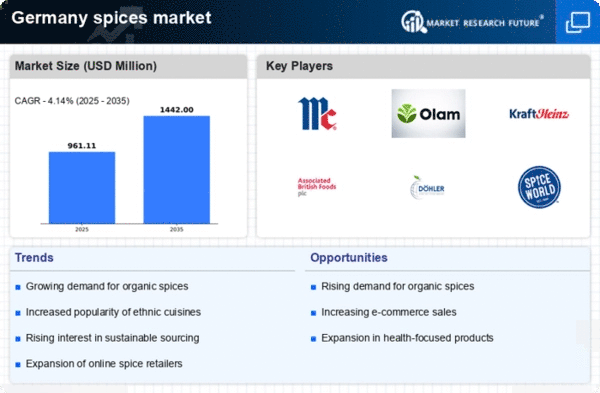
As per Market Research Future analysis, the Germany spices market Size was estimated at 922.9 USD Million in 2024. The Spices market is projected to grow from 961.11 USD Million in 2025 to 1442.0 USD Million by 2035, exhibiting a compound annual growth rate (CAGR) of 4.1% during the forecast period 2025 - 2035

Key Market Trends & Highlights

The Germany spices market is experiencing a dynamic shift driven by health consciousness and culinary diversity.

  • The market is witnessing a growing emphasis on health and wellness, influencing consumer preferences for spices.
  • Ethnic cuisine is gaining traction, with consumers increasingly seeking authentic flavors from diverse cultures.
  • E-commerce is rapidly expanding, providing consumers with convenient access to a wide variety of spices.
  • Rising demand for organic spices and culinary innovation are key drivers propelling market growth.

Market Size & Forecast

2024 Market Size 922.9 (USD Million)
2035 Market Size 1442.0 (USD Million)
CAGR (2025 - 2035) 4.14%

Major Players

McCormick & Company (US), Olam International (SG), Kraft Heinz Company (US), Associated British Foods (GB), Döhler Group (DE), Spice World (US), Badia Spices (US), Frontier Co-op (US)

Our Impact
Enabled $4.3B Revenue Impact for Fortune 500 and Leading Multinationals
Partnering with 2000+ Global Organizations Each Year
30K+ Citations by Top-Tier Firms in the Industry

Germany Spices Market Trends

The spices market in Germany is currently experiencing a dynamic evolution, driven by changing consumer preferences and an increasing interest in culinary diversity. As individuals become more adventurous in their cooking, the demand for a wide variety of spices is on the rise. This shift is reflected in the growing popularity of ethnic cuisines, which often incorporate unique spice blends. Furthermore, the trend towards health-conscious eating is influencing consumers to seek out natural and organic spice options, as they are perceived to offer enhanced flavor and potential health benefits. In addition, the spices market is witnessing a surge in online retailing, which provides consumers with greater access to a diverse range of products. E-commerce platforms are becoming essential for both consumers and suppliers, facilitating the distribution of specialty spices that may not be available in traditional brick-and-mortar stores. This trend is likely to continue as digital shopping becomes increasingly integrated into everyday life. Overall, the spices market in Germany appears poised for growth, with evolving consumer habits shaping its future landscape.

Health and Wellness Focus

There is a noticeable trend towards health and wellness in the spices market. Consumers are increasingly seeking spices that are not only flavorful but also offer health benefits. This has led to a rise in demand for organic and natural spices, as they are perceived to be healthier alternatives.

Ethnic Cuisine Popularity

The growing interest in ethnic cuisines is significantly influencing the spices market. As consumers explore diverse culinary traditions, the demand for specific spices associated with these cuisines is increasing. This trend reflects a broader cultural shift towards embracing global flavors.

E-commerce Growth

The rise of e-commerce is transforming the spices market. Online platforms are providing consumers with access to a wider variety of spices, including specialty and hard-to-find options. This shift is likely to enhance consumer convenience and broaden market reach for suppliers.

Germany Spices Market Drivers

Rising Demand for Organic Spices

The spices market in Germany is experiencing a notable shift towards organic products. Consumers are increasingly prioritizing health-conscious choices, leading to a surge in demand for organic spices. According to recent data, the organic segment is projected to grow at a CAGR of approximately 8% over the next five years. This trend is driven by heightened awareness of the benefits of organic farming practices, which are perceived to be more sustainable and environmentally friendly. As a result, retailers are expanding their organic offerings, which is likely to enhance the overall growth of the spices market. The increasing availability of organic spices in supermarkets and specialty stores further supports this trend, catering to the evolving preferences of health-oriented consumers.

Growth of the Food Service Sector

The food service sector in Germany is experiencing robust growth, which is positively impacting the spices market. As restaurants and catering services expand, the demand for a diverse range of spices is increasing. Recent statistics suggest that the food service industry is projected to grow by 5% annually over the next few years. This growth is driven by changing consumer preferences for dining experiences and the rising popularity of international cuisines. Consequently, food service providers are seeking to enhance their menus with unique spice offerings, thereby driving sales in the spices market. The collaboration between spice suppliers and food service operators is likely to foster innovation and introduce new flavors to the market.

Increased Focus on Sustainability

Sustainability is becoming a critical consideration within the spices market in Germany. Consumers are increasingly aware of the environmental impact of their purchasing decisions, leading to a demand for sustainably sourced spices. This shift is prompting companies to adopt more responsible sourcing practices, including fair trade and eco-friendly certifications. Recent surveys indicate that approximately 60% of German consumers are willing to pay a premium for sustainably sourced products. This trend not only aligns with consumer values but also enhances brand loyalty. As a result, businesses in the spices market are likely to invest in sustainable practices, which could lead to a more resilient and ethically responsible industry.

Culinary Innovation and Experimentation

Culinary innovation plays a pivotal role in shaping the spices market in Germany. Chefs and home cooks alike are increasingly experimenting with diverse spice blends and flavors, driven by a desire to create unique and memorable dishes. This trend is reflected in the growing popularity of fusion cuisine, which combines elements from various culinary traditions. Market data indicates that the demand for specialty spice blends has risen by approximately 15% in the past year alone. As consumers seek to elevate their cooking experiences, the spices market is likely to benefit from this creative exploration. Furthermore, cooking shows and social media platforms are amplifying this trend, inspiring individuals to incorporate a wider variety of spices into their meals.

Technological Advancements in Spice Processing

Technological advancements in spice processing are significantly influencing the spices market in Germany. Innovations in processing techniques, such as improved drying and grinding methods, are enhancing the quality and shelf life of spices. These advancements are crucial for maintaining flavor integrity and nutritional value, which are increasingly important to consumers. Market analysis indicates that the adoption of advanced processing technologies could lead to a reduction in production costs by up to 20%. This efficiency not only benefits manufacturers but also allows for competitive pricing in the spices market. As technology continues to evolve, it is likely to drive further growth and innovation within the industry, meeting the demands of a discerning consumer base.


Market Segment Insights

By Type: Garlic (Largest) vs. Pepper (Fastest-Growing)

In the Germany spices market, segment values exhibit distinct market share distributions. Garlic holds the largest market share due to its widespread culinary use, while Pepper follows closely behind as a well-accepted spice. Other spices like Ginger and Turmeric also contribute but at a smaller scale, showcasing the diverse preferences among consumers in Germany. The variation indicates a rich cultural culinary landscape that influences buying patterns and needs. Growth trends in this segment show a rising demand for Pepper as consumers seek out flavor enhancements and health benefits associated with spices. The inclination towards natural and organic products propels Garlic and Ginger forward, while Pepper's status as the fastest-growing reflects broader trends in global spice utilization and innovative recipes in the culinary scene of Germany. Consumers are increasingly educating themselves about the health advantages of these spices, influencing purchasing decisions and market dynamics.

Garlic: Dominant vs. Pepper: Emerging

Garlic remains dominant in the Germany spices market, revered for its versatility in various dishes and its health benefits. Its strong culinary roots have established a loyal consumer base, making it a staple in households. Meanwhile, Pepper is emerging rapidly, capitalizing on trends of global cuisines and gourmet cooking, which enhances its appeal. The growth of Pepper is attributed to its versatility in flavor profiles and its perceived health benefits. Both spices showcase a blend of tradition and innovation, appealing to a wide consumer demographic that values both taste and wellness.

By Category: Organic (Largest) vs. Conventional (Fastest-Growing)

In the Germany spices market, the Organic segment holds the largest market share, reflecting a significant consumer preference for natural and sustainable products. This trend is driven by increased health awareness and a growing number of consumers seeking cleaner label products. Meanwhile, the Conventional segment, while having less overall share, is witnessing rapid growth as it offers competitive pricing and broader availability, making it attractive to cost-sensitive consumers. The growth dynamics within the Germany spices market show a shift towards organic offerings, driven by changing consumer behaviors and preferences. The popularity of organic spices is supported by rising demand for health-conscious choices and organic certification. Conversely, the Conventional segment is expanding due to promotional activities and improved distribution channels, allowing it to capture interest from both traditional and modern retail spaces, thus positioning itself as the fastest-growing sector in the market.

Organic (Dominant) vs. Conventional (Emerging)

The Organic segment is dominant in the Germany spices market, characterized by high-quality, sustainably sourced products that appeal to environmentally-conscious consumers. Organic spices often command higher prices and are perceived as healthier alternatives, thereby fostering brand loyalty among consumers. On the other hand, the Conventional segment, regarded as emerging, provides a wide range of flavors at more accessible price points. Its growth is fueled by effective marketing strategies and increasing accessibility in mainstream retail. While Organic segments cater to niche markets with strong demand, Conventional segments capitalize on volume sales, showcasing a competitive edge in terms of affordability and availability.

By Form: Whole (Largest) vs. Ground/Powder (Fastest-Growing)

In the Germany spices market, the segment values reveal a strong market presence for Whole spices, which dominate the landscape due to their perceived quality and freshness. Ground/Powder spices, while currently holding a significant share, are gaining traction rapidly as consumers seek convenient cooking solutions. Other forms have a minor share, but still cater to niche markets. The growth drivers affecting the Form segment include increasing culinary experimentation and a rise in home cooking trends. As consumers prioritize flavor and are more health-conscious, Whole and Ground/Powder forms are positioned to benefit. The growing popularity of ethnic cuisines also supports the demand for diverse spice forms, enhancing their market potential.

Whole (Dominant) vs. Ground/Powder (Emerging)

Whole spices are considered the dominant force in the Germany spices market, appreciated for their superior flavor retention and authenticity. Consumers often prefer these because they can be ground fresh at home, enhancing the overall culinary experience. On the other hand, Ground/Powder spices are viewed as an emerging option, particularly attractive to busy households looking for convenience without compromising on taste. Though they face stiff competition, innovations in packaging and quality assurance are enabling Ground/Powder spices to establish a stronger foothold in the market, catering to the demand for readily accessible culinary solutions.

By End Use: Food Retail (Largest) vs. Food Service (Fastest-Growing)

The market share distribution within the Germany spices market reveals that Food Retail stands as the largest segment, accounting for a significant proportion of total sales. This segment benefits from the growing demand for spices in domestic cooking, with consumers increasingly seeking diverse flavors and healthy options. Both traditional supermarkets and online retailers are pivotal in driving this segment's performance, as they adapt to consumer preferences for convenience and variety. On the other hand, the Food Service segment is recognized as the fastest-growing area, propelled by the rising popularity of dining out and an expanding food service industry. Factors contributing to this growth include the increased demand for flavorful and exotic cuisines in restaurants and catering services, as well as the trend toward gourmet experiences among consumers. This segment is set to see substantial growth as it responds to evolving dining trends and consumer demand for unique flavor profiles.

Food Retail: Dominant vs. Food Service: Emerging

Food Retail is characterized by its wide array of spices available to consumers, enabling them to experiment and innovate in home cooking. The segment thrives on convenience, with both physical stores and e-commerce platforms playing crucial roles in reaching a broad audience. In contrast, Food Service is an emerging segment that has been gaining traction, focusing on supplying restaurants, catering services, and food chains. This segment caters to a sophisticated consumer base seeking high-quality, unique spices that enhance culinary offerings. As the food service industry expands, so does the need for various spices, leading to increased opportunities for suppliers and a vibrant market landscape.

Get more detailed insights about Germany Spices Market

Key Players and Competitive Insights

The spices market in Germany exhibits a dynamic competitive landscape characterized by a blend of established players and emerging brands. Key growth drivers include increasing consumer interest in culinary diversity, health-conscious eating, and the rising trend of home cooking. Major companies such as McCormick & Company (US), Olam International (SG), and Döhler Group (DE) are strategically positioned to leverage these trends. McCormick & Company (US) focuses on innovation and product diversification, while Olam International (SG) emphasizes sustainable sourcing and supply chain optimization. Döhler Group (DE) is enhancing its operational focus on natural ingredients and clean label products, collectively shaping a competitive environment that prioritizes quality and sustainability.The business tactics employed by these companies reflect a commitment to localizing manufacturing and optimizing supply chains to meet consumer demands effectively. The market structure appears moderately fragmented, with a mix of large multinational corporations and smaller niche players. This fragmentation allows for a variety of product offerings, catering to diverse consumer preferences while enabling key players to exert considerable influence over market trends.

In October McCormick & Company (US) announced the launch of a new line of organic spices aimed at health-conscious consumers. This strategic move not only aligns with the growing demand for organic products but also reinforces McCormick's commitment to sustainability and innovation. By expanding its organic offerings, the company positions itself to capture a larger share of the health-oriented segment of the market.

In September Olam International (SG) unveiled a new initiative focused on enhancing traceability in its spice supply chain. This initiative is significant as it addresses increasing consumer demand for transparency regarding sourcing practices. By implementing advanced tracking technologies, Olam aims to build consumer trust and strengthen its brand reputation, which could lead to increased market share in a competitive landscape.

In August Döhler Group (DE) entered into a strategic partnership with a local organic farming cooperative to enhance its portfolio of natural spice products. This collaboration is indicative of a broader trend towards sustainability and local sourcing, allowing Döhler to offer unique products that resonate with environmentally conscious consumers. Such partnerships may enhance the company's competitive edge by differentiating its offerings in a crowded market.

As of November current competitive trends in the spices market are increasingly defined by digitalization, sustainability, and the integration of AI technologies. Strategic alliances are becoming more prevalent, enabling companies to pool resources and expertise to innovate more effectively. The competitive differentiation is likely to evolve from traditional price-based competition towards a focus on innovation, technology, and supply chain reliability, reflecting a shift in consumer expectations and market dynamics.

Key Companies in the Germany Spices Market include

Industry Developments

The Germany Spices Market has recently seen notable developments, with companies like McCormick and Fuchs continuing to expand their product lines to meet growing consumer demand for organic and premium spices. In July 2023, Unilever announced a strategic partnership with a local herbal supplier to enhance its spice sourcing capabilities, reflecting a trend towards sustainability in the industry. Meanwhile, Schwartz has focused on increasing its market presence through online sales channels, which has boosted its consumer reach significantly.

There have been no recent prominent mergers or acquisitions reported among the key players such as Oetker, Herbaria, Nestle, or Knorr in the German spices sector, maintaining a relatively stable competitive landscape. The market has been impacted positively, with companies experiencing growth in valuations due to heightened awareness of health benefits associated with various spices, leading to greater investment in product Research and Development. In the last two years, initiatives taken by JustSpices to promote cooking with spices through digital platforms have resonated well with younger demographics, indicating a shift in consumer preferences within the market.

These developments collectively emphasize a dynamic yet stable environment in the Germany Spices Market.

Future Outlook

Germany Spices Market Future Outlook

The Spices Market in Germany is projected to grow at a 4.14% CAGR from 2025 to 2035, driven by increasing consumer demand for natural flavors and health benefits.

New opportunities lie in:

  • Expansion of organic spice product lines to meet rising health-conscious consumer preferences.
  • Development of e-commerce platforms for direct-to-consumer spice sales.
  • Investment in sustainable sourcing practices to enhance brand reputation and customer loyalty.

By 2035, the spices market is expected to achieve robust growth, reflecting evolving consumer trends and preferences.

Market Segmentation

Germany Spices Market Form Outlook

  • Whole
  • Ground/Powder
  • Others

Germany Spices Market Type Outlook

  • Garlic
  • Ginger
  • Turmeric
  • Cumin
  • Cinnamon
  • Pepper
  • Others

Germany Spices Market End Use Outlook

  • Food Retail
  • Food Service
  • Food Processing

Germany Spices Market Category Outlook

  • Organic
  • Conventional

Report Scope

MARKET SIZE 2024 922.9(USD Million)
MARKET SIZE 2025 961.11(USD Million)
MARKET SIZE 2035 1442.0(USD Million)
COMPOUND ANNUAL GROWTH RATE (CAGR) 4.14% (2025 - 2035)
REPORT COVERAGE Revenue Forecast, Competitive Landscape, Growth Factors, and Trends
BASE YEAR 2024
Market Forecast Period 2025 - 2035
Historical Data 2019 - 2024
Market Forecast Units USD Million
Key Companies Profiled McCormick & Company (US), Olam International (SG), Kraft Heinz Company (US), Associated British Foods (GB), Döhler Group (DE), Spice World (US), Badia Spices (US), Frontier Co-op (US)
Segments Covered Type, Category, Form, End Use
Key Market Opportunities Growing demand for organic and sustainably sourced spices presents a lucrative opportunity in the spices market.
Key Market Dynamics Rising consumer demand for organic spices drives innovation and competition among local suppliers in Germany.
Countries Covered Germany
Leave a Comment

FAQs

What is the anticipated market size of the Germany Spices Market in 2024?

The anticipated market size of the Germany Spices Market in 2024 is valued at 1.05 billion USD.

What is the expected market size of the Germany Spices Market by 2035?

The expected market size of the Germany Spices Market by 2035 is projected to reach 2.0 billion USD.

Who are the key players in the Germany Spices Market?

Key players in the Germany Spices Market include Oetker, Herbaria, Nestle, BDO, Schwartz, Knorr, Fuchs, Wiberg, McCormick, Unilever, Hermann, and JustSpices.

What is the market value of garlic spices in Germany in 2024?

The market value of garlic spices in Germany is 0.25 billion USD in 2024.

What market size growth is projected for ginger spices from 2024 to 2035?

The market size for ginger spices is expected to grow from 0.2 billion USD in 2024 to 0.4 billion USD in 2035.

What is the projected market value for turmeric in the Germany Spices Market in 2035?

The projected market value for turmeric in the Germany Spices Market by 2035 is 0.3 billion USD.

What is the expected growth trend for the cinnamon segment from 2024 to 2035?

The cinnamon segment is expected to grow from 0.25 billion USD in 2024 to 0.6 billion USD by 2035.

What challenges does the Germany Spices Market currently face?

The market currently faces challenges such as fluctuating prices of raw materials and competition from global suppliers.

What opportunities exist for growth in the Germany Spices Market?

Opportunities for growth in the Germany Spices Market include increasing consumer demand for organic and health-oriented spice products.

Download Free Sample

Kindly complete the form below to receive a free sample of this Report

Compare Licence

×
Features License Type
Single User Multiuser License Enterprise User
Price $4,950 $5,950 $7,250
Maximum User Access Limit 1 User Upto 10 Users Unrestricted Access Throughout the Organization
Free Customization
Direct Access to Analyst
Deliverable Format
Platform Access
Discount on Next Purchase 10% 15% 15%
Printable Versions