×
Request Free Sample ×

Kindly complete the form below to receive a free sample of this Report

* Please use a valid business email

Leading companies partner with us for data-driven Insights

clients tt-cursor
Hero Background

Germany Porcine Vaccines Market

ID: MRFR/Pharma/49052-HCR
200 Pages
Rahul Gotadki
February 2026

Germany Porcine Vaccines Market Size, Growth Research Report By Type (Inactivated vaccines, Live attenuated vaccines, Toxoid vaccines, Recombinant vaccines, Conjugate vaccines, DNA vaccines), By Disease Indication (PED (Porcine Epidemic Diarrhea), PRRS (Porcine Reproductive & Respiratory Syndrome), Swine influenza, Aujeszky's disease (AD), Porcine Circovirus Associated Disease (PCVAD), Others) and By End-user (Veterinary Hospitals, Hog Production Farm) - Competitor Industry Analysis and Trends Forecast Till 2035

Share:
Download PDF ×

We do not share your information with anyone. However, we may send you emails based on your report interest from time to time. You may contact us at any time to opt-out.

Germany Porcine Vaccines Market Infographic
Purchase Options

Germany Porcine Vaccines Market Summary

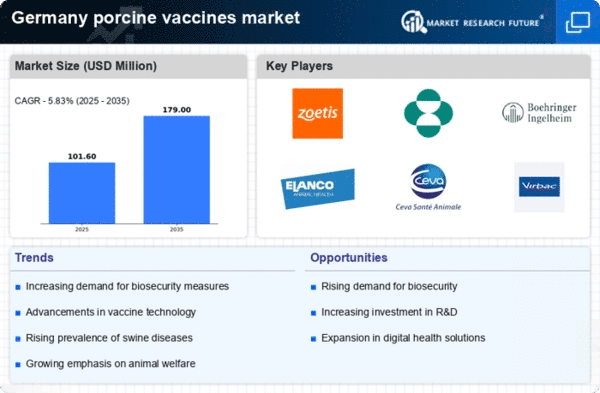
As per Market Research Future analysis, the Germany porcine vaccines market size was estimated at 96.0 USD Million in 2024. The Germany porcine vaccines market is projected to grow from 101.6 USD Million in 2025 to 179.0 USD Million by 2035, exhibiting a compound annual growth rate (CAGR) of 5.8% during the forecast period 2025 - 2035

Key Market Trends & Highlights

The Germany porcine vaccines market is experiencing robust growth driven by technological advancements and increasing demand for disease prevention.

  • The largest segment in the Germany porcine vaccines market is the inactivated vaccines, while the fastest-growing segment is the live attenuated vaccines.
  • There is a notable rise in demand for disease prevention among livestock producers, reflecting a shift towards proactive health management.
  • Advancements in vaccine technology are enhancing efficacy and safety, thereby fostering greater adoption among farmers.
  • Key market drivers include increasing livestock production and rising awareness of animal health, which are shaping the future of the industry.

Market Size & Forecast

2024 Market Size 96.0 (USD Million)
2035 Market Size 179.0 (USD Million)
CAGR (2025 - 2035) 5.83%

Major Players

Zoetis (US), Merck Animal Health (US), Boehringer Ingelheim (DE), Elanco Animal Health (US), Ceva Santé Animale (FR), Virbac (FR), Heska Corporation (US), Vetoquinol (FR)

Our Impact
Enabled $4.3B Revenue Impact for Fortune 500 and Leading Multinationals
Partnering with 2000+ Global Organizations Each Year
30K+ Citations by Top-Tier Firms in the Industry

Germany Porcine Vaccines Market Trends

The porcine vaccines market is currently experiencing notable developments, driven by increasing awareness of animal health and the rising demand for safe and effective vaccines. In Germany, the emphasis on biosecurity measures in pig farming has led to a greater focus on vaccination programs. Farmers are increasingly recognizing the importance of immunization in preventing diseases that can significantly impact herd productivity and overall economic viability. This trend is further supported by advancements in vaccine technology, which are enhancing the efficacy and safety profiles of available products. As a result, the market is likely to witness a shift towards more innovative solutions that cater to the specific needs of swine producers. Moreover, regulatory frameworks in Germany are evolving to support the development and approval of new vaccines. The government is actively promoting research initiatives aimed at improving vaccine formulations and delivery methods. This proactive approach may lead to a more robust pipeline of products in the porcine vaccines market. Additionally, the increasing collaboration between public and private sectors is fostering an environment conducive to innovation. As the market continues to grow, stakeholders are expected to prioritize sustainable practices, ensuring that vaccine production aligns with environmental standards and animal welfare considerations. This holistic approach could potentially reshape the landscape of the porcine vaccines market in the near future.

Rising Demand for Disease Prevention

There is a growing emphasis on disease prevention within the porcine vaccines market. Farmers are increasingly aware of the economic implications of disease outbreaks, leading to heightened investment in vaccination programs. This trend reflects a broader understanding of the role that vaccines play in maintaining herd health and productivity.

Advancements in Vaccine Technology

Innovations in vaccine technology are significantly influencing the porcine vaccines market. New formulations and delivery methods are being developed to enhance the effectiveness and safety of vaccines. These advancements are likely to improve immunization rates among swine populations, thereby contributing to overall herd health.

Regulatory Support for Innovation

The regulatory landscape is evolving to facilitate the introduction of new vaccines in the porcine vaccines market. Government initiatives aimed at promoting research and development are fostering collaboration between industry stakeholders. This supportive environment may lead to a more diverse range of vaccine options for farmers.

Germany Porcine Vaccines Market Drivers

Increasing Livestock Production

The porcine vaccines market in Germany is experiencing growth due to the rising demand for livestock production. As the population increases, the need for pork as a protein source escalates. This trend necessitates enhanced health management practices, including vaccination programs to prevent diseases that can affect swine. The German livestock sector has seen a notable increase in production, with pork accounting for approximately 40% of total meat consumption. Consequently, farmers are investing in vaccines to ensure herd health and productivity, which is vital for meeting market demands. The focus on biosecurity measures further propels the porcine vaccines market, as producers seek to mitigate risks associated with disease outbreaks. This driver indicates a robust market potential as the industry adapts to changing consumer preferences and regulatory requirements.

Regulatory Framework Enhancements

The regulatory landscape surrounding the porcine vaccines market in Germany is evolving, with authorities implementing stricter guidelines to ensure vaccine safety and efficacy. This regulatory support is crucial for fostering innovation within the industry. The German Federal Ministry of Food and Agriculture (BMEL) has been actively involved in establishing frameworks that encourage research and development of new vaccines. These regulations aim to protect animal health while also addressing public concerns regarding food safety. As a result, manufacturers are motivated to invest in the development of novel vaccines that comply with these regulations. This driver suggests that a robust regulatory environment can stimulate growth in the porcine vaccines market, as it encourages the introduction of advanced products that meet both industry standards and consumer expectations.

Rising Awareness of Animal Health

There is a growing awareness of animal health and welfare among consumers and producers in Germany, which significantly impacts the porcine vaccines market. As consumers become more conscious of the origins of their food, there is an increasing demand for ethically produced meat. This shift in consumer behavior compels farmers to adopt better health management practices, including vaccination programs. The emphasis on animal welfare is reflected in the rising investments in veterinary care and preventive measures. Consequently, the porcine vaccines market is likely to expand as producers seek to enhance the health of their herds and ensure compliance with welfare standards. This driver indicates a potential for market growth as stakeholders prioritize animal health in their production processes.

Technological Innovations in Vaccines

Technological advancements play a crucial role in shaping the porcine vaccines market in Germany. Innovations such as recombinant vaccines and adjuvant technologies enhance the efficacy and safety of vaccines. These developments are essential for addressing emerging diseases and improving the overall health of swine populations. The market has seen a shift towards more effective vaccine formulations, which can lead to higher immunogenicity and longer-lasting protection. Furthermore, the integration of digital technologies in vaccine delivery and monitoring systems is becoming increasingly prevalent. This trend not only streamlines vaccination processes but also provides valuable data for farmers, enabling them to make informed decisions regarding herd management. As a result, the porcine vaccines market is likely to benefit from these technological advancements, fostering a more resilient livestock sector.

Economic Factors Influencing Production Costs

Economic conditions in Germany are influencing the porcine vaccines market, particularly in relation to production costs. Fluctuations in feed prices, labor costs, and overall economic stability can impact farmers' willingness to invest in vaccines. When production costs rise, farmers may prioritize essential expenditures, potentially affecting vaccine uptake. However, the long-term benefits of vaccination, such as reduced disease incidence and improved productivity, often outweigh initial costs. Additionally, government subsidies and support programs aimed at enhancing livestock health can alleviate some financial burdens. This economic driver suggests that while short-term challenges may exist, the overall trend towards investing in health management solutions, including vaccines, remains strong in the porcine vaccines market.


Market Segment Insights

By Type: Inactivated vaccines (Largest) vs. Live attenuated vaccines (Fastest-Growing)

In the Germany porcine vaccines market, the largest segment is dominated by inactivated vaccines, which hold the most significant market share due to their established efficacy and widespread acceptance among veterinarians and farmers. In contrast, live attenuated vaccines are experiencing rapid growth, fueled by innovations in vaccine technology and the increasing demand for preventive healthcare in swine farming. This dynamic has led to a competitive landscape where market players are investing heavily in R&D to enhance product offerings. The growth trends for inactivated vaccines remain strong, largely attributed to their perceived safety and effectiveness in preventing major swine diseases. On the other hand, live attenuated vaccines are projected to witness the fastest growth due to their cost-effectiveness and enhanced immune response. Additionally, the rising awareness of zoonotic diseases and the need for sustainable livestock management practices are driving the adoption of these vaccines in the market, making it a focal point for industry stakeholders.

Vaccines: Inactivated (Dominant) vs. Live Attenuated (Emerging)

Inactivated vaccines represent the dominant segment in the Germany porcine vaccines market, primarily known for their safety profile and proven track record in disease prevention. Veterinarians favor these vaccines due to their reliability and low risk of adverse effects in pigs. In contrast, live attenuated vaccines are emerging as a competitive alternative, offering benefits like broad-spectrum immunity and reduced costs. These vaccines maintain viability through a controlled reduction of pathogenicity, leading to effective immune responses. As awareness of animal health improves and technological advancements continue, both segments exhibit growth potential, with inactivated vaccines leading the charge while live attenuated vaccines capitalize on innovative developments to carve out a larger market share.

By Disease Indication: PRRS (Largest) vs. PED (Fastest-Growing)

In the Germany porcine vaccines market, the distribution of market share among the disease indications reveals that Porcine Reproductive & Respiratory Syndrome (PRRS) holds the largest portion, reflecting its significant impact on swine health and production efficiency. In contrast, Porcine Epidemic Diarrhea (PED) is emerging rapidly, capturing an increasing share due to rising incidences and heightened awareness among farmers and veterinarians regarding the need for effective vaccinations. Growth trends in this segment are influenced by several factors, including the escalating outbreaks of viral diseases in swine populations and advancements in vaccine technologies. Specifically, the adoption of innovative vaccine formulations and extensive educational initiatives for livestock caretakers contribute to the growing demand for PRRS vaccines, while PED vaccines are experiencing a technological shift, making them more effective and accessible in the market.

PRRS (Dominant) vs. PED (Emerging)

PRRS vaccines dominate the Germany porcine vaccines market due to their established efficacy in controlling one of the most devastating diseases affecting pigs, leading to significant economic losses. The demand for these vaccines is driven by farmers' urgent need to manage disease outbreaks and improve herd productivity. On the other hand, PED vaccines are emerging rapidly, gaining attention for their role in combating severe diarrhea that impacts young piglets. The increasing incidence of PED outbreaks has led to innovations in vaccine development, creating products that are more effective and easily administered. This shift reflects a broader trend in the market, where ongoing research and development are paramount to meet the evolving challenges posed by swine diseases.

By End-user: Veterinary Hospitals (Largest) vs. Hog Production Farm (Fastest-Growing)

In the Germany porcine vaccines market, the distribution of market share among the end-user segments reveals that veterinary hospitals hold a significant share due to their established networks and trust within the farming community. This segment benefits from continuous demand for health services and preventive measures for swine, thereby commanding a substantial portion of the market.

Veterinary Hospitals (Dominant) vs. Hog Production Farm (Emerging)

Veterinary hospitals are the dominant force in the Germany porcine vaccines market, providing critical healthcare services that ensure the well-being of swine populations. They are equipped with advanced diagnostic tools and maintain strong relationships with local farmers, which drives consistent demand for vaccines. In contrast, hog production farms represent an emerging segment, characterized by rising investments in biosecurity and disease prevention strategies. As these farms increasingly focus on maintaining herd health and productivity, they demonstrate a growing appetite for innovative vaccine solutions, making them a fast-evolving segment within the market.

Get more detailed insights about Germany Porcine Vaccines Market

Key Players and Competitive Insights

The porcine vaccines market in Germany is characterized by a competitive landscape that is increasingly shaped by innovation, strategic partnerships, and a focus on sustainability. Key players such as Boehringer Ingelheim (DE), Zoetis (US), and Merck Animal Health (US) are at the forefront, leveraging their extensive research capabilities and market presence to drive growth. Boehringer Ingelheim (DE) emphasizes its commitment to developing novel vaccines that address emerging health challenges in swine, while Zoetis (US) focuses on expanding its product portfolio through strategic acquisitions and partnerships. Merck Animal Health (US) appears to be enhancing its digital capabilities to improve customer engagement and streamline operations, indicating a trend towards digital transformation in the sector.The business tactics employed by these companies reflect a concerted effort to optimize supply chains and localize manufacturing processes. The market structure is moderately fragmented, with several players vying for market share, yet the influence of major companies remains substantial. This competitive dynamic fosters an environment where innovation and operational efficiency are paramount, as companies seek to differentiate themselves in a crowded marketplace.

In October Boehringer Ingelheim (DE) announced the launch of a new vaccine targeting Porcine Reproductive and Respiratory Syndrome (PRRS), a significant advancement in swine health management. This strategic move not only reinforces the company's position as a leader in vaccine development but also addresses a critical need in the industry, potentially reducing economic losses for farmers. The introduction of this vaccine is expected to enhance herd immunity and improve overall productivity in swine operations.

In September Zoetis (US) expanded its partnership with a leading German agricultural university to advance research in swine health. This collaboration aims to develop innovative vaccine solutions and improve disease management practices. By aligning with academic institutions, Zoetis (US) is likely to enhance its research capabilities and accelerate the development of next-generation vaccines, thereby solidifying its competitive edge in the market.

In August Merck Animal Health (US) unveiled a new digital platform designed to provide farmers with real-time data on vaccine efficacy and herd health. This initiative reflects a growing trend towards the integration of technology in animal health, enabling farmers to make informed decisions based on data analytics. The platform is expected to enhance customer loyalty and drive sales by providing added value beyond traditional vaccine offerings.

As of November the competitive trends in the porcine vaccines market are increasingly influenced by digitalization, sustainability, and the integration of artificial intelligence (AI) in product development. Strategic alliances among key players are shaping the landscape, fostering innovation and collaboration. The shift from price-based competition to a focus on technological advancements and supply chain reliability is evident, suggesting that future differentiation will hinge on the ability to innovate and respond to evolving market demands.

Key Companies in the Germany Porcine Vaccines Market include

Industry Developments

The Germany Porcine Vaccines Market has recently witnessed significant developments, reflecting an evolving industry landscape. In October 2023, CEVA Animal Health announced the introduction of a novel vaccine aimed at enhancing resistance against swine influenza, which is gaining attention among local pig producers. Additionally, Virbac has expanded its portfolio by launching two new products targeting Porcine reproductive and respiratory syndrome (PRRS) in September 2023, which has attracted considerable interest in the market. 

Recent mergers and acquisitions have shaped the competitive landscape, as Elanco Animal Health acquired a strategic stakeholder in the German market in August 2023, enhancing its operational capabilities. The increased focus on sustainable farming practices combined with regulatory support from the German Federal Ministry of Food and Agriculture is driving innovations in vaccine development.

Furthermore, the market valuation has experienced a growth trajectory in the last two years, spurring investment in Research and Development with emphasis on improving vaccine efficacy. Notably, earlier in March 2022, Boehringer Ingelheim launched a comprehensive vaccination protocol aimed at reducing antibiotic use in swine, which has resonated well within the industry. As such, the Germany Porcine Vaccines Market is demonstrating dynamic shifts in product offerings, regulatory encouragement, and consolidation trends among key players.

Future Outlook

Germany Porcine Vaccines Market Future Outlook

The Porcine Vaccines Market is projected to grow at a 5.83% CAGR from 2025 to 2035, driven by increasing disease outbreaks, advancements in vaccine technology, and rising demand for pork products.

New opportunities lie in:

  • Development of customized vaccine formulations for specific regional diseases.
  • Expansion of e-commerce platforms for vaccine distribution.
  • Investment in research for novel adjuvants to enhance vaccine efficacy.

By 2035, the porcine vaccines market is expected to achieve robust growth and innovation.

Market Segmentation

Germany Porcine Vaccines Market Type Outlook

  • Inactivated vaccines
  • Live attenuated vaccines
  • Toxoid vaccines
  • Recombinant vaccines
  • Conjugate vaccines
  • DNA vaccines

Germany Porcine Vaccines Market End-user Outlook

  • Veterinary Hospitals
  • Hog Production Farm

Germany Porcine Vaccines Market Disease Indication Outlook

  • PED (Porcine Epidemic Diarrhea)
  • PRRS (Porcine Reproductive & Respiratory Syndrome)
  • Swine influenza
  • Aujeszky's disease (AD)
  • Porcine Circovirus Associated Disease (PCVAD)
  • Others

Report Scope

MARKET SIZE 2024 96.0(USD Million)
MARKET SIZE 2025 101.6(USD Million)
MARKET SIZE 2035 179.0(USD Million)
COMPOUND ANNUAL GROWTH RATE (CAGR) 5.83% (2025 - 2035)
REPORT COVERAGE Revenue Forecast, Competitive Landscape, Growth Factors, and Trends
BASE YEAR 2024
Market Forecast Period 2025 - 2035
Historical Data 2019 - 2024
Market Forecast Units USD Million
Key Companies Profiled Zoetis (US), Merck Animal Health (US), Boehringer Ingelheim (DE), Elanco Animal Health (US), Ceva Santé Animale (FR), Virbac (FR), Heska Corporation (US), Vetoquinol (FR)
Segments Covered Type, Disease Indication, End-user
Key Market Opportunities Advancements in vaccine technology enhance disease prevention in the porcine vaccines market.

Key Market Dynamics Rising demand for innovative porcine vaccines driven by regulatory changes and heightened biosecurity measures in Germany.
Countries Covered Germany
Leave a Comment

FAQs

What is the expected market size of the Germany Porcine Vaccines Market in 2024?

The Germany Porcine Vaccines Market is expected to be valued at 96.0 million USD in 2024.

What will the market size reach by 2035?

By 2035, the market size of the Germany Porcine Vaccines Market is expected to reach 177.0 million USD.

What is the projected CAGR for the Germany Porcine Vaccines Market from 2025 to 2035?

The expected CAGR for the Germany Porcine Vaccines Market from 2025 to 2035 is 5.719%.

Which type of porcine vaccines is expected to dominate the market in 2024?

In 2024, inactivated vaccines are expected to hold the largest market share at 40.0 million USD.

What is the estimated market value of live attenuated vaccines in 2035?

The estimated market value of live attenuated vaccines in 2035 is projected to be 55.0 million USD.

Who are the key players in the Germany Porcine Vaccines Market?

Key players in the market include CEVA Animal Health, Zoetis, Elanco Animal Health, and Boehringer Ingelheim.

What is the market size for toxoid vaccines in 2024?

The market size for toxoid vaccines in Germany is projected to be 10.0 million USD in 2024.

How much is the market valued for recombinant vaccines in 2035?

The market for recombinant vaccines is expected to be valued at 15.0 million USD in 2035.

What challenges does the Germany Porcine Vaccines Market face?

Challenges include regulatory hurdles and maintaining vaccine efficacy against evolving pathogens.

What opportunities exist for growth in the Germany Porcine Vaccines Market?

Opportunities for growth stem from advancements in vaccine technologies and increasing demand for pork products.

Download Free Sample

Kindly complete the form below to receive a free sample of this Report

Compare Licence

×
Features License Type
Single User Multiuser License Enterprise User
Price $4,950 $5,950 $7,250
Maximum User Access Limit 1 User Upto 10 Users Unrestricted Access Throughout the Organization
Free Customization
Direct Access to Analyst
Deliverable Format
Platform Access
Discount on Next Purchase 10% 15% 15%
Printable Versions