×
Request Free Sample ×

Kindly complete the form below to receive a free sample of this Report

* Please use a valid business email

Leading companies partner with us for data-driven Insights

clients tt-cursor
Hero Background

Germany Pet Food Market

ID: MRFR/Agri/42713-HCR
128 Pages
Harshita Gorade
February 2026

Germany Pet Food Market Size, Share, Industry Trend & Analysis Research Report: By Pet Type Outlook (Cat, Dog, Fish, Others), By Product Type Outlook (Dry Food, Wet Food, SnacksTreats), andBy Distribution Channel Outlook (Store-Based, Non-Store-Based)- Forecast to 2035 \n

Share:
Download PDF ×

We do not share your information with anyone. However, we may send you emails based on your report interest from time to time. You may contact us at any time to opt-out.

Germany Pet Food Market Infographic
Purchase Options

Germany Pet Food Market Summary

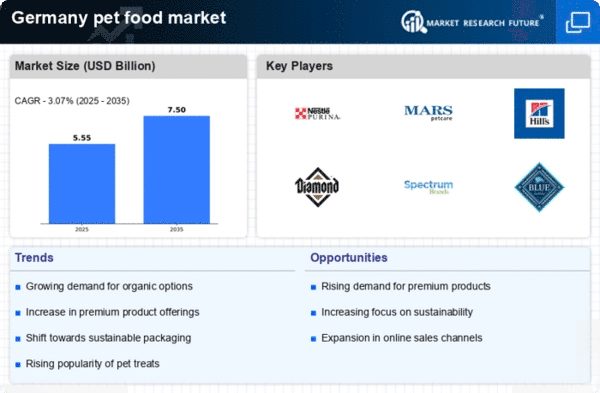
As per Market Research Future analysis, the Germany pet food market size was estimated at 5.38 USD Billion in 2024. The Germany pet food market is projected to grow from 5.55 USD Billion in 2025 to 7.5 USD Billion by 2035, exhibiting a compound annual growth rate (CAGR) of 3.0% during the forecast period 2025 - 2035

Key Market Trends & Highlights

The Germany pet food market is experiencing a notable shift towards premiumization and health-focused products.

  • The market is witnessing a rise in premium products, reflecting a growing consumer preference for high-quality pet food.
  • Natural ingredients are becoming increasingly popular, as pet owners seek healthier options for their pets.
  • E-commerce is rapidly expanding, driven by the convenience of online shopping and digital marketing strategies.
  • Key market drivers include increasing pet ownership and a heightened focus on health and wellness among consumers.

Market Size & Forecast

2024 Market Size 5.38 (USD Billion)
2035 Market Size 7.5 (USD Billion)
CAGR (2025 - 2035) 3.07%

Major Players

Nestle Purina PetCare (US), Mars Petcare (US), Hill's Pet Nutrition (US), Diamond Pet Foods (US), Spectrum Brands (US), Blue Buffalo (US), WellPet (US), General Mills (US), Unicharm (JP)

Our Impact
Enabled $4.3B Revenue Impact for Fortune 500 and Leading Multinationals
Partnering with 2000+ Global Organizations Each Year
30K+ Citations by Top-Tier Firms in the Industry

Germany Pet Food Market Trends

The pet food market in Germany is currently experiencing a dynamic evolution, driven by changing consumer preferences and an increasing focus on pet health and wellness. Pet owners are becoming more discerning, seeking high-quality, nutritious options for their animals. This shift is reflected in the growing demand for premium and organic products, which are perceived as healthier alternatives. Additionally, the trend towards natural ingredients is gaining traction, as consumers become more aware of the benefits of feeding their pets diets free from artificial additives and fillers. This heightened awareness is likely to influence purchasing decisions, as pet owners prioritize the well-being of their companions. Moreover, the pet food market is witnessing a rise in online sales channels, which offer convenience and a wider selection of products. E-commerce platforms are becoming increasingly popular, allowing consumers to easily access various brands and types of pet food. This trend is further supported by the growing use of mobile technology, enabling pet owners to shop for their pets' needs from the comfort of their homes. As the market continues to adapt to these changes, it appears that innovation and quality will remain at the forefront of consumer expectations, shaping the future landscape of pet food offerings in Germany.

Rise of Premium Products

There is a noticeable increase in the demand for premium pet food options. Consumers are willing to invest more in high-quality ingredients, reflecting a shift towards health-conscious choices for their pets. This trend suggests that brands focusing on superior formulations may find greater success.

Natural Ingredients Trend

The preference for natural ingredients is becoming more pronounced among pet owners. Many consumers are actively seeking products that contain no artificial additives or preservatives. This inclination towards clean labels indicates a broader movement towards transparency in pet food production.

Growth of E-commerce

The pet food market is experiencing a significant shift towards online shopping. E-commerce platforms are gaining traction, providing consumers with easy access to a diverse range of products. This trend highlights the importance of digital presence for brands aiming to capture the attention of modern pet owners.

Germany Pet Food Market Drivers

Increasing Pet Ownership

The pet food market in Germany experiences a notable boost due to the rising trend of pet ownership. Recent statistics indicate that approximately 50% of households in Germany own at least one pet, with dogs and cats being the most common. This increase in pet ownership correlates with a growing demand for diverse and high-quality pet food products. As more individuals consider pets as family members, they are willing to invest in premium pet food options, thereby driving growth in the pet food market. Furthermore, the emotional bond between pets and their owners often leads to increased spending on pet care, including nutrition, which is a critical component of the pet food market.

Health and Wellness Focus

There is a discernible shift towards health and wellness among pet owners in Germany, which significantly influences the pet food market. Owners are increasingly seeking products that promote the health of their pets, leading to a surge in demand for organic and natural pet food options. According to recent data, the organic pet food segment has grown by over 20% in the last year alone. This trend reflects a broader societal movement towards healthier lifestyles, which extends to pet care. Consequently, manufacturers are responding by developing innovative formulations that cater to specific health needs, such as grain-free or hypoallergenic diets, thereby enhancing the competitive landscape of the pet food market.

Sustainability Initiatives

Sustainability has emerged as a pivotal driver in the pet food market, particularly in Germany, where consumers are increasingly concerned about environmental impact. Many pet food brands are adopting sustainable practices, such as using eco-friendly packaging and sourcing ingredients responsibly. This shift is not merely a trend but appears to be a fundamental change in consumer expectations. Recent surveys indicate that over 60% of pet owners in Germany prefer brands that demonstrate a commitment to sustainability. As a result, companies that prioritize eco-conscious practices are likely to gain a competitive edge in the pet food market, appealing to a growing demographic of environmentally aware consumers.

E-commerce Growth and Digital Marketing

The rise of e-commerce is transforming the pet food market in Germany, providing consumers with unprecedented access to a wide range of products. Online sales channels have expanded significantly, with many pet owners opting for the convenience of purchasing pet food online. Recent data suggests that e-commerce sales in the pet food sector have increased by approximately 30% over the past year. This shift is accompanied by innovative digital marketing strategies that target pet owners through social media and personalized advertising. As more consumers embrace online shopping, companies that effectively leverage digital platforms are likely to enhance their market presence and drive sales in the pet food market.

Technological Advancements in Production

Technological advancements are reshaping the pet food market in Germany, enhancing production efficiency and product quality. Innovations such as automated manufacturing processes and advanced nutritional analysis tools allow companies to create tailored pet food products that meet specific dietary needs. This technological evolution not only improves the consistency and safety of pet food but also enables manufacturers to respond swiftly to changing consumer preferences. As a result, the market is witnessing an influx of specialized products, including breed-specific and age-specific formulations. The integration of technology in production processes is likely to continue driving growth in the pet food market, as companies strive to meet the demands of discerning pet owners.


Market Segment Insights

By Type: Dry Food (Largest) vs. Snacks and Treats (Fastest-Growing)

In the Germany pet food market, the segment distribution reveals that dry food holds the largest market share, appealing to pet owners due to its convenience and long shelf life. Wet food follows, capturing a substantial share as well, particularly favored for its palatability among pets. Snacks and treats have been gaining traction, reflecting the growing trend of pet pampering and health-conscious options aimed at pet owners. Raw food and food supplements, while smaller segments, are gradually carving out their niches, resonating with specific consumer preferences. Growth trends in this segment are driven by a combination of factors, notably the increasing pet ownership and a shift towards premiumization in pet products. The rise in health awareness among pet owners has accelerated the demand for high-quality snacks and food supplements that promote pet wellness. Additionally, evolving pet dietary preferences are prompting innovations in raw food and treat options, positioning the snacks and treats segment as a dynamic and rapidly evolving area of the market.

Dry Food: Dominant vs. Snacks and Treats: Emerging

Dry food remains the dominant force in the Germany pet food market, primarily due to its affordability, extended shelf life, and ease of storage. It attracts a loyal customer base, particularly among budget-conscious pet owners. Conversely, snacks and treats are emerging rapidly, embodying the trend of treating pets as family members. This category is characterized by diverse offerings, ranging from gourmet treats to health-focused varieties, catering to the increasing demands for quality and nutrition. The growing inclination towards indulgent snack options for pets symbolizes changing consumer attitudes, where pet owners seek to enhance their pets' overall well-being while enjoying delightful flavors.

By Animal Type: Dogs (Largest) vs. Cats (Fastest-Growing)

In the Germany pet food market, the distribution of market share among various animal types showcases distinct preferences. Dogs dominate the market, capturing the largest share, followed closely by cats which are gaining traction. Birds and other pets have a smaller yet significant presence, indicating diverse consumer interests across pet ownership. This varied distribution reflects the unique relationship German households have with their pets, prioritizing specific food products based on animal type. The growth trends in this segment reveal a dynamic landscape, particularly with cats emerging as the fastest-growing segment. Factors such as an increase in cat ownership and a shift towards premium, health-oriented cat foods are driving this growth. Furthermore, the rise of e-commerce platforms has facilitated access to a wider range of products tailored for these pet types, contributing to their popularity in the Germany pet food market.

Dogs: Dominant vs. Cats: Emerging

Dogs remain the dominant segment in the Germany pet food market, characterized by robust sales in traditional kibble, wet food, and specialized dietary options. This segment's success is attributed to the strong emotional bond between dog owners and their pets, leading to increased spending on quality food products. In contrast, the cat segment, while smaller, is rapidly emerging due to lifestyle changes that favor feline companionship. As more households adopt cats, there is a growing demand for innovative and high-quality cat food, including grain-free and organic options. This duality in the market illustrates how consumer preferences evolve, with dogs leading the way but cats gaining ground as a vibrant and essential part of the pet food landscape.

By Distribution Channel: Online Retail (Largest) vs. Pet Specialty Stores (Fastest-Growing)

In the distribution channel segment, Online Retail commands the largest share, driven by the increasing trend towards digital shopping among pet owners. Offline Retail, which includes both Supermarkets and Hypermarkets and Pet Specialty Stores, also holds significant market share but trails behind online offerings. The convenience of home delivery and a broader range of products available online have contributed to Online Retail's dominance. Looking at growth trends, Pet Specialty Stores are emerging as the fastest-growing segment, appealing to niche markets that seek specialized products tailored for specific pet needs. Consumer preferences are shifting towards premium options, which are often more readily available in specialty stores. Meanwhile, traditional channels like Supermarkets and Hypermarkets are adapting to the rise of e-commerce by enhancing their online presence to remain competitive.

Online Retail (Dominant) vs. Supermarkets and Hypermarkets (Emerging)

Online Retail remains the dominant channel in the distribution of pet food, characterized by its extensive product variety, competitive pricing, and the convenience of home delivery. This segment appeals greatly to tech-savvy pet owners who appreciate the ease of ordering online. On the other hand, Supermarkets and Hypermarkets are recognized as an emerging segment, adapting to changing consumer behaviors by enhancing their online platforms and providing click-and-collect services. They remain crucial for consumers who prefer in-store purchasing but are increasingly recognizing the importance of a robust online presence to cater to the evolving shopping habits.

By Formulation: Organic (Largest) vs. Grain-Free (Fastest-Growing)

In the formulation landscape of the Germany pet food market, Organic holds a significant share as the largest segment, favored by consumers looking for high-quality and natural ingredients for their pets. Grain-Free is emerging rapidly, showcasing a strong demand among health-conscious pet owners who are keen on allergen-free diets, thus actively contributing to the evolving market dynamics. The market is witnessing substantial growth driven by an increased awareness of pet nutrition and health benefits associated with specific formulations. Organic products are gaining traction due to their perceived quality, while Grain-Free options are appealing to pet owners seeking to improve their pets' digestive health. This trend is further fueled by rising disposable incomes and an inclination toward premium pet food products in the Germany pet food market.

Organic: Dominant vs. Grain-Free: Emerging

Organic pet food products dominate the formulation segment, characterized by their use of certified organic ingredients that assure pet owners of quality and safety. This segment appeals to a discerning consumer base that prioritizes sustainability and environmental impact, leading to a steady increase in sales. On the other hand, Grain-Free formulations are rapidly establishing their presence as an emerging choice among pet owners, particularly for pets with dietary sensitivities. These products often contain alternative sources of carbohydrates, such as peas and lentils, making them attractive to health-conscious consumers. The growth of both segments highlights a shift towards premium and specialized pet nutrition in the Germany pet food market.

Get more detailed insights about Germany Pet Food Market

Key Players and Competitive Insights

The pet food market in Germany exhibits a dynamic competitive landscape characterized by a blend of established players and emerging brands. Key growth drivers include increasing pet ownership, a rising trend towards premium and organic products, and heightened consumer awareness regarding pet health and nutrition. Major companies such as Nestle Purina PetCare (US), Mars Petcare (US), and Hill's Pet Nutrition (US) are strategically positioned to leverage these trends. Nestle Purina PetCare (US) focuses on innovation in product formulations, while Mars Petcare (US) emphasizes sustainability and responsible sourcing. Hill's Pet Nutrition (US) is known for its veterinary partnerships, which enhance its credibility in the health-focused segment. Collectively, these strategies shape a competitive environment that is increasingly oriented towards quality and sustainability.In terms of business tactics, companies are localizing manufacturing to reduce supply chain vulnerabilities and optimize logistics. The market structure appears moderately fragmented, with a few dominant players holding substantial market shares. This fragmentation allows for niche brands to thrive, particularly those that cater to specific dietary needs or preferences. The collective influence of these key players fosters a competitive atmosphere where innovation and consumer engagement are paramount.

In October Mars Petcare (US) announced a partnership with a leading technology firm to develop AI-driven pet nutrition solutions. This strategic move is likely to enhance product personalization, allowing consumers to tailor diets based on their pets' unique health requirements. Such advancements may position Mars Petcare as a frontrunner in the tech-driven segment of the market, appealing to tech-savvy pet owners.

In September Nestle Purina PetCare (US) launched a new line of organic pet food products aimed at health-conscious consumers. This initiative reflects a growing consumer preference for natural ingredients and transparency in sourcing. By tapping into this trend, Nestle Purina PetCare not only strengthens its market position but also aligns with the increasing demand for sustainable and ethically produced pet food.

In August Hill's Pet Nutrition (US) expanded its veterinary partnership program, collaborating with more clinics to promote its prescription diet products. This expansion is strategically significant as it enhances brand credibility and fosters consumer trust, particularly among pet owners seeking specialized nutrition for their pets. Such initiatives may lead to increased market penetration and customer loyalty.

As of November current competitive trends in the pet food market include a pronounced focus on digitalization, sustainability, and the integration of AI technologies. Strategic alliances are increasingly shaping the landscape, enabling companies to pool resources and expertise. Looking ahead, competitive differentiation is likely to evolve from traditional price-based competition towards innovation, technological advancements, and supply chain reliability. This shift underscores the importance of agility and responsiveness in meeting the evolving demands of pet owners.

Key Companies in the Germany Pet Food Market include

Industry Developments

The Germany Pet Food Market has recently witnessed significant developments, marked by a growing consumer preference for premium and organic pet foods amidst increasing pet ownership. Companies such as Fressnapf and Mars have expanded their offerings with a rise in demand for natural ingredients and sustainable packaging. In terms of company movements, Mars Petcare announced plans in September 2023 to enhance its supply chain to improve efficiency without compromising quality. Furthermore, in August 2023, Purina and Dogswell reported a collaboration focused on nutritional innovation tailored for German pet owners.

Notably, in October 2022, a merger between Champion Petfoods and Hill’s Pet Nutrition was publicly announced, aimed at expanding their reach in the competitive market. The market's valuation has seen considerable growth, influenced by the increasing willingness of consumers to invest in high-quality pet food, driving sales for companies like WellPet and Acana. In recent years, the overall market has been bolstered by factors such as the rise of e-commerce, with reports from 2021 indicating a 30% growth in online pet food sales in Germany, showing a shift in consumer shopping behavior, especially during and post-pandemic.

Future Outlook

Germany Pet Food Market Future Outlook

The Pet Food Market in Germany is projected to grow at a 3.07% CAGR from 2025 to 2035, driven by premiumization, health trends, and sustainability.

New opportunities lie in:

  • Expansion of subscription-based delivery services for pet food
  • Development of plant-based and alternative protein pet food products
  • Investment in smart packaging technologies for enhanced product freshness

By 2035, the market is expected to exhibit robust growth and innovation.

Market Segmentation

Germany Pet Food Market Type Outlook

  • Dry Food
  • Wet Food
  • Snacks and Treats
  • Raw Food
  • Food Supplements

Germany Pet Food Market Animal Type Outlook

  • Dogs
  • Cats
  • Birds
  • Others

Germany Pet Food Market Formulation Outlook

  • Organic
  • Natural
  • Grain-Free
  • High-Protein

Germany Pet Food Market Distribution Channel Outlook

  • Online Retail
  • Offline Retail
  • Pet Specialty Stores
  • Supermarkets and Hypermarkets

Report Scope

MARKET SIZE 2024 5.38(USD Billion)
MARKET SIZE 2025 5.55(USD Billion)
MARKET SIZE 2035 7.5(USD Billion)
COMPOUND ANNUAL GROWTH RATE (CAGR) 3.07% (2025 - 2035)
REPORT COVERAGE Revenue Forecast, Competitive Landscape, Growth Factors, and Trends
BASE YEAR 2024
Market Forecast Period 2025 - 2035
Historical Data 2019 - 2024
Market Forecast Units USD Billion
Key Companies Profiled Nestle Purina PetCare (US), Mars Petcare (US), Hill's Pet Nutrition (US), Diamond Pet Foods (US), Spectrum Brands (US), Blue Buffalo (US), WellPet (US), General Mills (US), Unicharm (JP)
Segments Covered Type, Animal Type, Distribution Channel, Formulation
Key Market Opportunities Growing demand for premium, natural ingredients in the pet food market presents significant opportunities.
Key Market Dynamics Rising demand for premium pet food reflects changing consumer preferences towards health-conscious and sustainable options.
Countries Covered Germany
Leave a Comment

FAQs

What is the expected market size of the Germany Pet Food Market in 2024?

The Germany Pet Food Market is expected to be valued at 5.5 USD Billion in 2024.

What is the projected market size for the Germany Pet Food Market in 2035?

By 2035, the Germany Pet Food Market is projected to reach a value of 8.5 USD Billion.

What is the expected CAGR for the Germany Pet Food Market from 2025 to 2035?

The expected CAGR for the Germany Pet Food Market from 2025 to 2035 is 4.037%.

Which pet type holds the largest market share in the Germany Pet Food Market?

The dog segment holds the largest market share, valued at 2.5 USD Billion in 2024.

How much is the cat segment valued at in the Germany Pet Food Market for 2024?

The cat segment is valued at 1.5 USD Billion in the Germany Pet Food Market for 2024.

What is the projected value of the fish segment in the Germany Pet Food Market by 2035?

By 2035, the fish segment is projected to be valued at 1.0 USD Billion.

Who are the key players in the Germany Pet Food Market?

Major players include Fressnapf, Mars, Dogswell, Acana, and Purina.

What is the expected value of the 'Others' segment in the Germany Pet Food Market for 2024?

The 'Others' segment is expected to be valued at 0.8 USD Billion in 2024.

What is the estimated market size for dog food in 2035?

The dog food segment is estimated to reach 3.7 USD Billion by 2035.

What growth opportunities exist in the Germany Pet Food Market?

The market seeks growth through increasing pet ownership and premium pet food trends.

Download Free Sample

Kindly complete the form below to receive a free sample of this Report

Compare Licence

×
Features License Type
Single User Multiuser License Enterprise User
Price $4,950 $5,950 $7,250
Maximum User Access Limit 1 User Upto 10 Users Unrestricted Access Throughout the Organization
Free Customization
Direct Access to Analyst
Deliverable Format
Platform Access
Discount on Next Purchase 10% 15% 15%
Printable Versions