Increased Competition
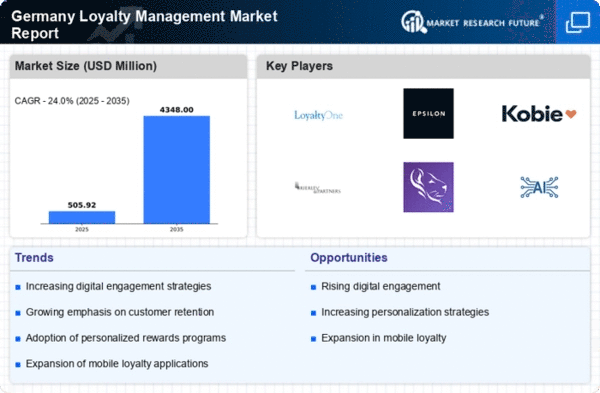
Increased competition within the loyalty management market in Germany is driving businesses to enhance their loyalty offerings. As more companies recognize the value of customer retention, they are investing in more sophisticated loyalty programs. This competitive landscape compels brands to differentiate themselves through unique rewards and experiences. Data suggests that companies with robust loyalty programs can achieve a customer retention rate of up to 80%. Therefore, businesses are likely to focus on creating distinctive loyalty strategies that not only attract new customers but also retain existing ones, thereby shaping the overall dynamics of the loyalty management market.
Regulatory Compliance
Regulatory compliance is a critical driver impacting the loyalty management market in Germany. With stringent data protection laws, such as the General Data Protection Regulation (GDPR), companies must ensure that their loyalty programs adhere to legal standards. This compliance not only protects consumer data but also builds trust between brands and customers. Failure to comply can result in hefty fines, which could reach up to €20 million or 4% of annual global turnover, whichever is higher. Consequently, businesses are increasingly investing in compliance measures within their loyalty management strategies, which in turn shapes the market landscape.
Technological Advancements
Technological advancements play a pivotal role in shaping the loyalty management market in Germany. The integration of artificial intelligence (AI) and machine learning into loyalty programs allows businesses to analyze customer behavior more effectively. This capability enables companies to create targeted marketing campaigns that can increase customer retention rates. Reports suggest that businesses leveraging advanced technology in their loyalty strategies can see an increase in customer engagement by up to 30%. As technology continues to evolve, the loyalty management market must adapt to incorporate these innovations, ensuring that companies can provide seamless and efficient customer experiences.
Evolving Consumer Expectations
The loyalty management market in Germany is currently influenced by evolving consumer expectations. As customers become more discerning, they demand personalized experiences that resonate with their preferences. This shift necessitates that businesses adapt their loyalty programs to meet these expectations. According to recent surveys, approximately 70% of consumers in Germany express a preference for brands that offer tailored rewards. This trend indicates a growing need for companies to invest in data analytics and customer insights to enhance their loyalty strategies. The loyalty management market must therefore evolve to provide innovative solutions that align with these changing consumer demands, ensuring that businesses remain competitive in a saturated marketplace.
Shift Towards Sustainable Practices
The loyalty management market in Germany is witnessing a shift towards sustainable practices as consumers become more environmentally conscious. Brands that incorporate sustainability into their loyalty programs are likely to attract a growing segment of eco-aware customers. Research indicates that around 60% of German consumers are willing to change their shopping habits to reduce environmental impact. This trend compels businesses to rethink their loyalty strategies, integrating eco-friendly initiatives that resonate with their customer base. As sustainability becomes a core value for many consumers, the loyalty management market must adapt to reflect these priorities, potentially leading to innovative program designs.